laat ons je terugbellen.

Regenerate Outcomes Farming Project

Regenerate Outcomes Farming Project

Multiple locations across the United Kingdom 🇬🇧

Multiple locations across the United Kingdom 🇬🇧

4.0/5.0

4.0/5.0

Verra

Verra

Oxford Categorie:

3

3

Kopersbescherming

25,000+ ha

of British farmland in the programma

70+

farms enrolled

30 years

farmer commitment period

60 cm

physical soil sampling depth

Carbon impact

Regenerate Outcomes generates verified carbon removals by helping British farmers rebuild soil organic carbon across arable, livestock, and mixed farming systems. Under Verra VCS methodology VM0042 Improved Agricultural Land Management, the project quantifies measurable increases in soil carbon stocks from regenerative practices including reduced tillage, cover cropping, diverse rotations, integrated livestock, and reduced synthetic input use. Each tonne of COâ‚‚e sequestered is third-party verified before a credit is issued on Verra's public registry.

The project applies a Verra non-permanence buffer of approximately 12%, withheld from every issuance to insure against reversal risk. Soil carbon stocks are physically resampled every five years to 60 cm depth by Agricarbon, using robotic processing and laboratory analysis rather than modelling or digital soil mapping. This combination of long-term farmer agreements (30 years), conservative buffer reserves, and direct measurement places the project firmly in the high-integrity tier of agricultural carbon programmes.

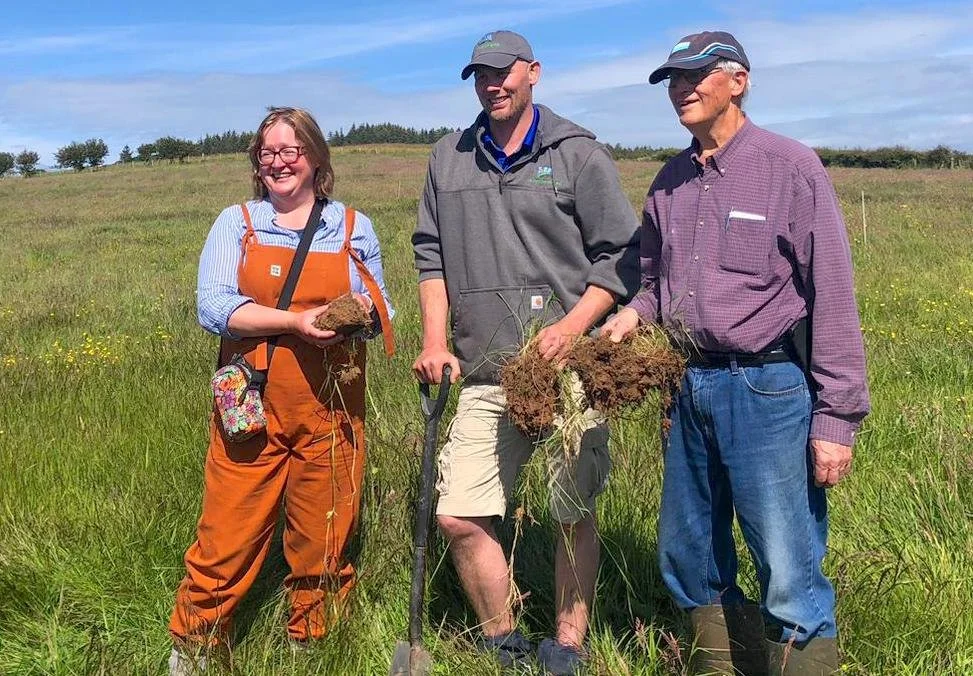
a farmer in the Regenerate Outcomes Farming Project

Mentoring as the additionality engine

What makes Regenerate Outcomes distinctive is that it does not simply pay for outcomes — it teaches the practices that generate them. Every member receives long-term, one-to-one mentoring from Understanding Ag (led by regenerative farming pioneers Gabe Brown, Dr Allen Williams, and Shane New) together with 3LM, the UK hub of the Savory Network. Farmers benefit from a Whole Farm Plan every two years, annual in-person sessions, direct WhatsApp access to mentors, and a free two-day Soil Academy.

This intensive support is the basis for additionality under VCS. Without the programme's education, baselining, and revenue model, the practice changes that drive soil carbon gains would not credibly occur — particularly at the depth and scale required to meet Verra's evidentiary standards. Farmers receive 67% of the credits generated (in cash or credits, their choice), with the remaining 33% covering programme delivery. Farmers carry no upfront cost and no exit liability, removing the financial barriers that have historically stalled regenerative adoption in the UK.

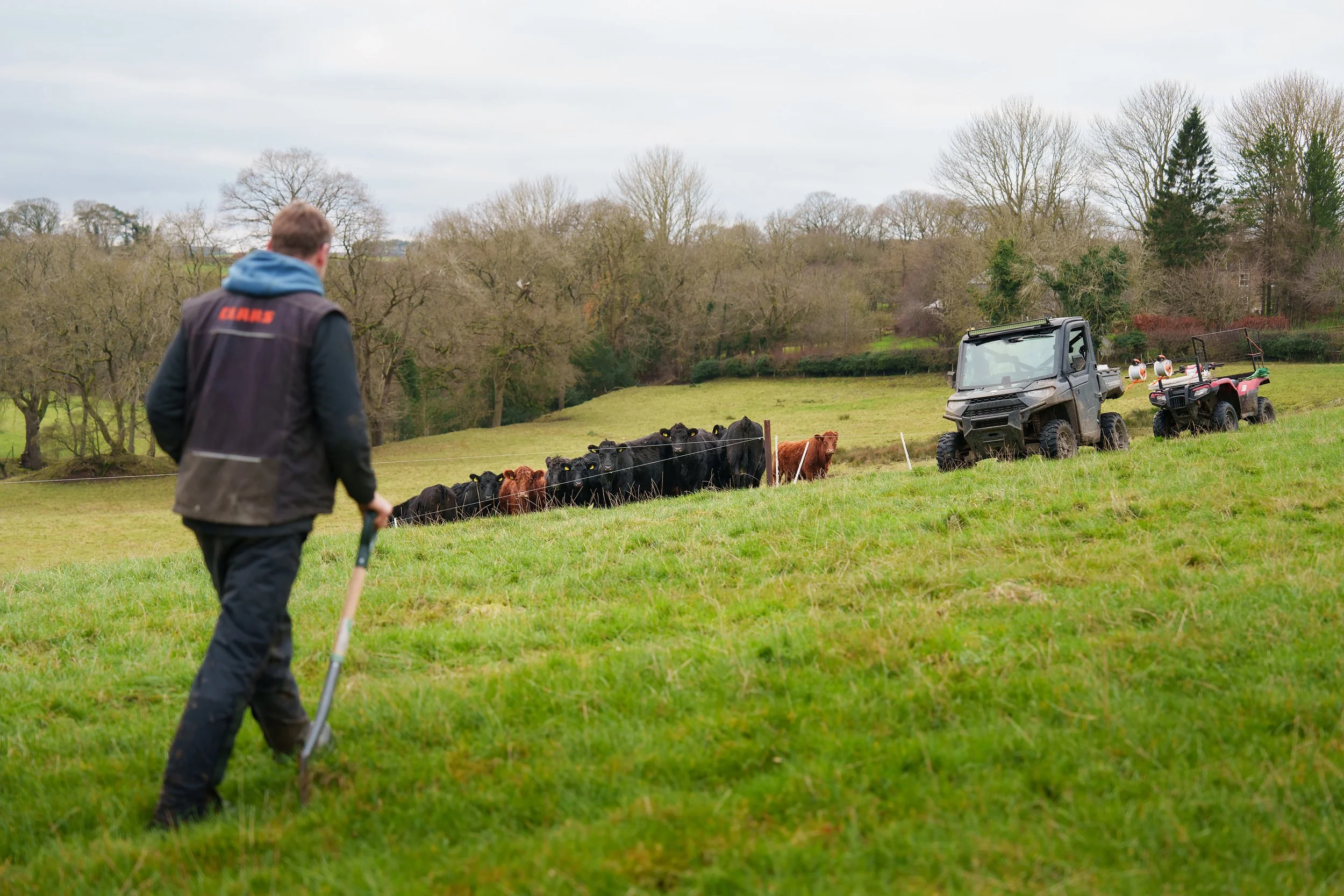
A farmer walking amongst the Regenerate Outcomes Farming Project

Co-benefits across British farmland

Beyond carbon, the project delivers measurable benefits for water quality, biodiversity, and rural economic resilience. Reduced synthetic fertiliser and pesticide use cuts nitrate and pesticide runoff into UK watercourses, supporting compliance with Water Framework Directive objectives. Diverse rotations and reduced tillage rebuild soil structure, improving water retention, reducing flood and drought vulnerability, and re-establishing habitat for soil fauna, pollinators, and farmland birds.

For farm businesses, the programme directly improves profitability. By cutting input dependency, improving grassland productivity, and adding a verified environmental revenue stream, member farms become more resilient to volatile input prices and weather shocks. The programme is also fully compatible with UK government schemes — Sustainable Farming Incentive (SFI) and Countryside Stewardship — allowing farmers to stack public payments with private carbon revenue on the same land.

Carbon impact

Regenerate Outcomes generates verified carbon removals by helping British farmers rebuild soil organic carbon across arable, livestock, and mixed farming systems. Under Verra VCS methodology VM0042 Improved Agricultural Land Management, the project quantifies measurable increases in soil carbon stocks from regenerative practices including reduced tillage, cover cropping, diverse rotations, integrated livestock, and reduced synthetic input use. Each tonne of COâ‚‚e sequestered is third-party verified before a credit is issued on Verra's public registry.

The project applies a Verra non-permanence buffer of approximately 12%, withheld from every issuance to insure against reversal risk. Soil carbon stocks are physically resampled every five years to 60 cm depth by Agricarbon, using robotic processing and laboratory analysis rather than modelling or digital soil mapping. This combination of long-term farmer agreements (30 years), conservative buffer reserves, and direct measurement places the project firmly in the high-integrity tier of agricultural carbon programmes.

a farmer in the Regenerate Outcomes Farming Project

Mentoring as the additionality engine

What makes Regenerate Outcomes distinctive is that it does not simply pay for outcomes — it teaches the practices that generate them. Every member receives long-term, one-to-one mentoring from Understanding Ag (led by regenerative farming pioneers Gabe Brown, Dr Allen Williams, and Shane New) together with 3LM, the UK hub of the Savory Network. Farmers benefit from a Whole Farm Plan every two years, annual in-person sessions, direct WhatsApp access to mentors, and a free two-day Soil Academy.

This intensive support is the basis for additionality under VCS. Without the programme's education, baselining, and revenue model, the practice changes that drive soil carbon gains would not credibly occur — particularly at the depth and scale required to meet Verra's evidentiary standards. Farmers receive 67% of the credits generated (in cash or credits, their choice), with the remaining 33% covering programme delivery. Farmers carry no upfront cost and no exit liability, removing the financial barriers that have historically stalled regenerative adoption in the UK.

A farmer walking amongst the Regenerate Outcomes Farming Project

Co-benefits across British farmland

Beyond carbon, the project delivers measurable benefits for water quality, biodiversity, and rural economic resilience. Reduced synthetic fertiliser and pesticide use cuts nitrate and pesticide runoff into UK watercourses, supporting compliance with Water Framework Directive objectives. Diverse rotations and reduced tillage rebuild soil structure, improving water retention, reducing flood and drought vulnerability, and re-establishing habitat for soil fauna, pollinators, and farmland birds.

For farm businesses, the programme directly improves profitability. By cutting input dependency, improving grassland productivity, and adding a verified environmental revenue stream, member farms become more resilient to volatile input prices and weather shocks. The programme is also fully compatible with UK government schemes — Sustainable Farming Incentive (SFI) and Countryside Stewardship — allowing farmers to stack public payments with private carbon revenue on the same land.

Carbon impact

Regenerate Outcomes generates verified carbon removals by helping British farmers rebuild soil organic carbon across arable, livestock, and mixed farming systems. Under Verra VCS methodology VM0042 Improved Agricultural Land Management, the project quantifies measurable increases in soil carbon stocks from regenerative practices including reduced tillage, cover cropping, diverse rotations, integrated livestock, and reduced synthetic input use. Each tonne of COâ‚‚e sequestered is third-party verified before a credit is issued on Verra's public registry.

The project applies a Verra non-permanence buffer of approximately 12%, withheld from every issuance to insure against reversal risk. Soil carbon stocks are physically resampled every five years to 60 cm depth by Agricarbon, using robotic processing and laboratory analysis rather than modelling or digital soil mapping. This combination of long-term farmer agreements (30 years), conservative buffer reserves, and direct measurement places the project firmly in the high-integrity tier of agricultural carbon programmes.

a farmer in the Regenerate Outcomes Farming Project

Mentoring as the additionality engine

What makes Regenerate Outcomes distinctive is that it does not simply pay for outcomes — it teaches the practices that generate them. Every member receives long-term, one-to-one mentoring from Understanding Ag (led by regenerative farming pioneers Gabe Brown, Dr Allen Williams, and Shane New) together with 3LM, the UK hub of the Savory Network. Farmers benefit from a Whole Farm Plan every two years, annual in-person sessions, direct WhatsApp access to mentors, and a free two-day Soil Academy.

This intensive support is the basis for additionality under VCS. Without the programme's education, baselining, and revenue model, the practice changes that drive soil carbon gains would not credibly occur — particularly at the depth and scale required to meet Verra's evidentiary standards. Farmers receive 67% of the credits generated (in cash or credits, their choice), with the remaining 33% covering programme delivery. Farmers carry no upfront cost and no exit liability, removing the financial barriers that have historically stalled regenerative adoption in the UK.

A farmer walking amongst the Regenerate Outcomes Farming Project

Co-benefits across British farmland

Beyond carbon, the project delivers measurable benefits for water quality, biodiversity, and rural economic resilience. Reduced synthetic fertiliser and pesticide use cuts nitrate and pesticide runoff into UK watercourses, supporting compliance with Water Framework Directive objectives. Diverse rotations and reduced tillage rebuild soil structure, improving water retention, reducing flood and drought vulnerability, and re-establishing habitat for soil fauna, pollinators, and farmland birds.

For farm businesses, the programme directly improves profitability. By cutting input dependency, improving grassland productivity, and adding a verified environmental revenue stream, member farms become more resilient to volatile input prices and weather shocks. The programme is also fully compatible with UK government schemes — Sustainable Farming Incentive (SFI) and Countryside Stewardship — allowing farmers to stack public payments with private carbon revenue on the same land.

What is VM0042 and why does it matter?

VM0042 Improved Agricultural Land Management is Verra's methodology for quantifying greenhouse gas emission reductions and soil organic carbon removals from regenerative farming. It covers reduced tillage, optimised fertiliser and residue management, diversified cropping, improved water and irrigation use, and improved grazing management — providing a single framework that handles the full range of practices found on a working farm.

In October 2025, the Integrity Council for the Voluntary Carbon Market (ICVCM) approved VM0042 v2.2 for its Core Carbon Principles (CCP) label, with one important condition: soil organic carbon must be measured using a quantification technique approved under the methodology other than Digital Soil Mapping. Regenerate Outcomes meets this condition: it uses Agricarbon's physical soil sampling and laboratory analysis to 60 cm — not modelling or remote-sensed DSM. This positions the project favourably for CCP-aligned demand from corporate buyers seeking the highest-integrity tier of agricultural credits available.

The methodology requires conservative baseline assumptions, third-party validation and verification, and a non-permanence buffer that insures against reversal. Combined with Verra's public registry, full credit traceability, and ICROA endorsement, VM0042 is widely regarded as the most credible international standard for soil carbon removals.

Certificeringsstandaard


Verra is the world's largest voluntary carbon standard, managing the Verified Carbon Standard (VCS) Program and Verra registry. Founded in 2005, it sets the rules for project design, additionality, quantification, and verification across more than 2,000 registered projects globally. Verra is recognised for good governance by the Integrity Council for the Voluntary Carbon Market (ICVCM) and ICROA. The VCS methodology used by Regenerate Outcomes — VM0042 v2.2 — received ICVCM CCP approval in October 2025, the highest available quality designation in the voluntary carbon market. All issued credits are publicly traceable on the Verra registry under Project ID 4453.

SDG's van de Verenigde Naties

Sustainable food production through healthier soils, improved yields, and reduced reliance on synthetic inputs.

Long-term mentoring, Whole Farm Plans, and a free annual Soil Academy delivered by Understanding Ag and 3LM.

Lower fertiliser and pesticide runoff into UK watercourses, supporting Water Framework Directive outcomes.

Additional verified income stream for farm businesses, with 67% of credit revenue returned to farmers.

Direct soil carbon removals through verified regenerative farming on over 25,000 hectares of British farmland.

Restoration of soil biology, improved habitat for pollinators and farmland birds, and reduced soil erosion across enrolled farms.

SDG's van de Verenigde Naties

Sustainable food production through healthier soils, improved yields, and reduced reliance on synthetic inputs.

Long-term mentoring, Whole Farm Plans, and a free annual Soil Academy delivered by Understanding Ag and 3LM.

Lower fertiliser and pesticide runoff into UK watercourses, supporting Water Framework Directive outcomes.

Additional verified income stream for farm businesses, with 67% of credit revenue returned to farmers.

Direct soil carbon removals through verified regenerative farming on over 25,000 hectares of British farmland.

Restoration of soil biology, improved habitat for pollinators and farmland birds, and reduced soil erosion across enrolled farms.

Beoordeling door Regreener

Regenerate Outcomes is a credible soil carbon project for European buyers looking for high-integrity, locally relevant removals. It builds carbon in British farm soils through regenerative practices like cover cropping, reduced tillage, and rotational grazing, supported by long-term farmer agreements and hands-on mentoring. Soil carbon is measured through physical sampling rather than models or satellite estimates, and the project is registered under Verra's main agricultural methodology (VM0042), which recently received the ICVCM's quality label. A buffer reserve provides some protection against reversal. There are limitations worth understanding. Carbon stored in soil is less permanent than carbon locked into rock or deep underground, sequestration rates in UK soils are modest by international standards, and the project is still building its verification track record. For companies in sectors like food, drink, retail, and FMCG, it can be a useful component of a removals portfolio, ideally alongside longer-lasting options to balance the overall permanence profile.


1

1

2

2

3

3

4

4

5

5

0

1

2

3

4

4.9

5

Beoordeelt het algehele projectontwerp, de methodologie, doelen en opzet.

Beoordeelt het algehele projectontwerp, de methodologie, doelen en opzet.

Algemene projectgegevens

Algemene projectgegevens

Algemene projectgegevens

4.0

4.0

4.1

4.1

4.2

4.2

4.3

4.3

Evalueert daadwerkelijke, verifieerbare broeikasgasreducties (COâ‚‚-equivalent tonnage, permanentie).

Evalueert daadwerkelijke, verifieerbare broeikasgasreducties (COâ‚‚-equivalent tonnage, permanentie).

CO2 impact

CO2 impact

CO2 impact

Beoordeelt de positieve impact op biodiversiteit, lokale gemeenschappen en de veerkracht van ecosystemen.

Beoordeelt de positieve impact op biodiversiteit, lokale gemeenschappen en de veerkracht van ecosystemen.

Nevenvoordelen

Nevenvoordelen

Nevenvoordelen

4.0

4.0

Evalueert projectverantwoordelijkheid, controleert nauwkeurigheid en de betrouwbaarheid van gerapporteerde resultaten.

Evalueert projectverantwoordelijkheid, controleert nauwkeurigheid en de betrouwbaarheid van gerapporteerde resultaten.

Rapportage & dMRV

Rapportage & dMRV

Rapportage & dMRV

Beoordelingen in overeenstemming met normen, marktkredibiliteit en bescherming van reputatie.

Beoordelingen in overeenstemming met normen, marktkredibiliteit en bescherming van reputatie.

Naleving & Reputatie

Naleving & Reputatie

Naleving & Reputatie

Algemene gewogen score

3.99 / 5

3.99 / 5

Begin met het steunen van dit hoogwaardige project

Voer uw gegevens in en ons team neemt contact op over de volgende stappen.

Begin met het steunen van dit hoogwaardige project

Voer uw gegevens in en ons team neemt contact op over de volgende stappen.