
have us call you right now.

Klim Soil+

Klim Soil+

Germany

Germany

4.5/5.0

4.5/5.0

Emission Removal

Tüv Rheinland

Tüv Rheinland

Oxford Category:

4

4

Buyer Protection

900,000

hectares

4,000

farmers on platform

25%

buffer for permanence

Overview

Carbon impact

Klim’s Soil+ project removes carbon dioxide from the atmosphere by increasing soil organic carbon and reduces greenhouse gas emissions from farming activities. By adopting regenerative practices - such as reduced tillage, crop rotation, and organic amendments, farmers enhance soil’s ability to store carbon, addressing Germany’s 52.2 million metric tons of annual agricultural CO2 equivalent emissions.

The project targets CO2, methane, and nitrous oxide by optimizing fertilizer and pesticide use, as well as cutting fossil fuel consumption. A 25% buffer on removal credits guarantees permanence, while rigorous quantification using an advanced soil model and thourough calculations ensures accuracy. Annual verification and five-year baseline reassessments maintain alignment with evolving practices.

Beyond emissions reductions, the project improves soil health and resilience, creating a scalable model for climate mitigation across Europe.

Impact on local communities & environmental

Klim’s Soil+ project delivers financial, environmental, and climate resilience benefits for farming communities. Farmers receive upfront payments for 75% of the carbon they sequester, with the remaining 25% paid after five years if regenerative practices are maintained. This structure provides immediate financial relief while encouraging long-term sustainability.

The project’s digital platform fosters knowledge sharing, offering tools to simulate practices, track progress, and access expert advice - helping farmers overcome adoption barriers. Regenerative practices like minimal tillage and cover cropping restore soil health, improving water retention, nutrient cycling, and biodiversity. Healthier soils reduce erosion and degradation, ensuring long-term productivity.

Environmentally, the project enhances water quality by minimizing synthetic fertilizer and pesticide runoff, protecting aquatic ecosystems and human communities. Climate resilience is another key benefit: soils rich in organic carbon better withstand extreme weather, securing food production and stabilizing incomes. By lowering production costs and reducing reliance on synthetic inputs, Klim strengthens both individual farms and the broader rural economy, promoting sustainable livelihoods and ecological balance.

Overview

Carbon impact

Klim’s Soil+ project removes carbon dioxide from the atmosphere by increasing soil organic carbon and reduces greenhouse gas emissions from farming activities. By adopting regenerative practices - such as reduced tillage, crop rotation, and organic amendments, farmers enhance soil’s ability to store carbon, addressing Germany’s 52.2 million metric tons of annual agricultural CO2 equivalent emissions.

The project targets CO2, methane, and nitrous oxide by optimizing fertilizer and pesticide use, as well as cutting fossil fuel consumption. A 25% buffer on removal credits guarantees permanence, while rigorous quantification using an advanced soil model and thourough calculations ensures accuracy. Annual verification and five-year baseline reassessments maintain alignment with evolving practices.

Beyond emissions reductions, the project improves soil health and resilience, creating a scalable model for climate mitigation across Europe.

Impact on local communities & environmental

Klim’s Soil+ project delivers financial, environmental, and climate resilience benefits for farming communities. Farmers receive upfront payments for 75% of the carbon they sequester, with the remaining 25% paid after five years if regenerative practices are maintained. This structure provides immediate financial relief while encouraging long-term sustainability.

The project’s digital platform fosters knowledge sharing, offering tools to simulate practices, track progress, and access expert advice - helping farmers overcome adoption barriers. Regenerative practices like minimal tillage and cover cropping restore soil health, improving water retention, nutrient cycling, and biodiversity. Healthier soils reduce erosion and degradation, ensuring long-term productivity.

Environmentally, the project enhances water quality by minimizing synthetic fertilizer and pesticide runoff, protecting aquatic ecosystems and human communities. Climate resilience is another key benefit: soils rich in organic carbon better withstand extreme weather, securing food production and stabilizing incomes. By lowering production costs and reducing reliance on synthetic inputs, Klim strengthens both individual farms and the broader rural economy, promoting sustainable livelihoods and ecological balance.

Overview

Carbon impact

Klim’s Soil+ project removes carbon dioxide from the atmosphere by increasing soil organic carbon and reduces greenhouse gas emissions from farming activities. By adopting regenerative practices - such as reduced tillage, crop rotation, and organic amendments, farmers enhance soil’s ability to store carbon, addressing Germany’s 52.2 million metric tons of annual agricultural CO2 equivalent emissions.

The project targets CO2, methane, and nitrous oxide by optimizing fertilizer and pesticide use, as well as cutting fossil fuel consumption. A 25% buffer on removal credits guarantees permanence, while rigorous quantification using an advanced soil model and thourough calculations ensures accuracy. Annual verification and five-year baseline reassessments maintain alignment with evolving practices.

Beyond emissions reductions, the project improves soil health and resilience, creating a scalable model for climate mitigation across Europe.

Impact on local communities & environmental

Klim’s Soil+ project delivers financial, environmental, and climate resilience benefits for farming communities. Farmers receive upfront payments for 75% of the carbon they sequester, with the remaining 25% paid after five years if regenerative practices are maintained. This structure provides immediate financial relief while encouraging long-term sustainability.

The project’s digital platform fosters knowledge sharing, offering tools to simulate practices, track progress, and access expert advice - helping farmers overcome adoption barriers. Regenerative practices like minimal tillage and cover cropping restore soil health, improving water retention, nutrient cycling, and biodiversity. Healthier soils reduce erosion and degradation, ensuring long-term productivity.

Environmentally, the project enhances water quality by minimizing synthetic fertilizer and pesticide runoff, protecting aquatic ecosystems and human communities. Climate resilience is another key benefit: soils rich in organic carbon better withstand extreme weather, securing food production and stabilizing incomes. By lowering production costs and reducing reliance on synthetic inputs, Klim strengthens both individual farms and the broader rural economy, promoting sustainable livelihoods and ecological balance.

Overview

Carbon impact

Klim’s Soil+ project removes carbon dioxide from the atmosphere by increasing soil organic carbon and reduces greenhouse gas emissions from farming activities. By adopting regenerative practices - such as reduced tillage, crop rotation, and organic amendments, farmers enhance soil’s ability to store carbon, addressing Germany’s 52.2 million metric tons of annual agricultural CO2 equivalent emissions.

The project targets CO2, methane, and nitrous oxide by optimizing fertilizer and pesticide use, as well as cutting fossil fuel consumption. A 25% buffer on removal credits guarantees permanence, while rigorous quantification using an advanced soil model and thourough calculations ensures accuracy. Annual verification and five-year baseline reassessments maintain alignment with evolving practices.

Beyond emissions reductions, the project improves soil health and resilience, creating a scalable model for climate mitigation across Europe.

Impact on local communities & environmental

Klim’s Soil+ project delivers financial, environmental, and climate resilience benefits for farming communities. Farmers receive upfront payments for 75% of the carbon they sequester, with the remaining 25% paid after five years if regenerative practices are maintained. This structure provides immediate financial relief while encouraging long-term sustainability.

The project’s digital platform fosters knowledge sharing, offering tools to simulate practices, track progress, and access expert advice - helping farmers overcome adoption barriers. Regenerative practices like minimal tillage and cover cropping restore soil health, improving water retention, nutrient cycling, and biodiversity. Healthier soils reduce erosion and degradation, ensuring long-term productivity.

Environmentally, the project enhances water quality by minimizing synthetic fertilizer and pesticide runoff, protecting aquatic ecosystems and human communities. Climate resilience is another key benefit: soils rich in organic carbon better withstand extreme weather, securing food production and stabilizing incomes. By lowering production costs and reducing reliance on synthetic inputs, Klim strengthens both individual farms and the broader rural economy, promoting sustainable livelihoods and ecological balance.

What is regenerative farming

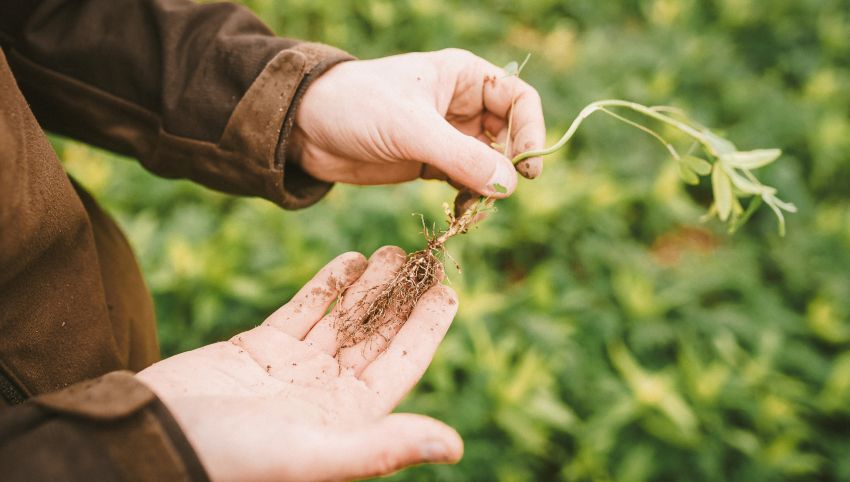
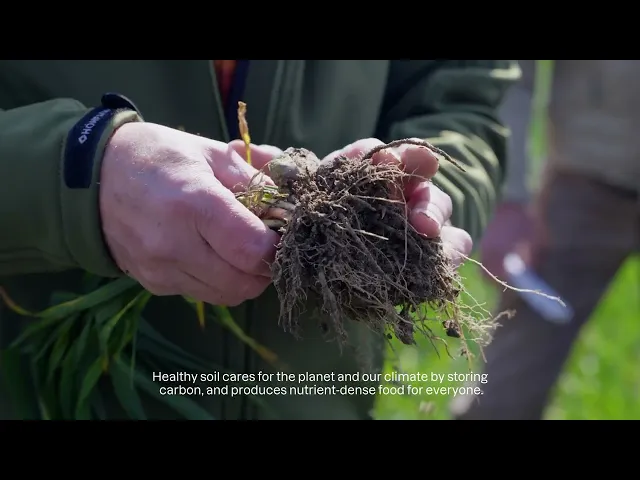
Regenerative farming marks a transformative shift from conventional agriculture, moving away from short-term yield maximization toward long-term soil and ecosystem restoration. This approach is built on key principles: minimizing soil disturbance, keeping living roots in the soil year-round, and promoting biodiversity. Together, these practices rebuild soil organic matter, enhance water retention, and foster a resilient, balanced agricultural system.

By emulating natural ecosystems, regenerative farming integrates plants, animals, and microorganisms into a protected soil from erosion and enrich it with organic matter, while diverse crop rotations disrupt pest and disease cycles, reducing dependence on chemical inputs. When applicable, livestock integration further boosts soil fertility through manure and managed grazing, reinforcing the system’s sustainability.

Unlike conventional methods - which often deplete soil health and rely on synthetic inputs - regenerative farming creates a self-renewing system. It reduces input costs, improves long-term productivity, and aligns economic and environmental goals. This holistic focus on ecosystem health addresses critical agricultural challenges, including soil degradation, biodiversity loss, and climate change, while offering farmers a viable path to sustainable, resilient food production.

Certification Standard


TÜV Rheinland is a globally recognized independent testing, inspection, and certification body founded in 1872. In the realm of climate projects, TÜV Rheinland provides rigorous validation and verification services to ensure compliance with international standards such as the Clean Development Mechanism (CDM), Gold Standard, and Verified Carbon Standard (VCS). Their work focuses on assessing the credibility and effectiveness of greenhouse gas (GHG) reduction initiatives, renewable energy projects, and sustainability programs. TÜV Rheinland’s expertise helps projects demonstrate their environmental integrity, supporting transparency and trust in carbon markets. Their services are widely utilized by project developers, governments, and businesses worldwide.

United Nations' Sustainable Development Goals

Sustainable food production through improved soil health and yields.

Reduced pesticide/fertilizer runoff improves water quality.

Direct contribution to sustainable food production

Direct climate action via carbon sequestration and emission reductions

Reduction of mineral fertilizer input prevents marine pollution from land-based activity

Enhanced biodiversity and ecosystem restoration

United Nations' Sustainable Development Goals

Sustainable food production through improved soil health and yields.

Reduced pesticide/fertilizer runoff improves water quality.

Direct contribution to sustainable food production

Direct climate action via carbon sequestration and emission reductions

Reduction of mineral fertilizer input prevents marine pollution from land-based activity

Enhanced biodiversity and ecosystem restoration

United Nations' Sustainable Development Goals

Sustainable food production through improved soil health and yields.

Reduced pesticide/fertilizer runoff improves water quality.

Direct contribution to sustainable food production

Direct climate action via carbon sequestration and emission reductions

Reduction of mineral fertilizer input prevents marine pollution from land-based activity

Enhanced biodiversity and ecosystem restoration

United Nations' Sustainable Development Goals

Sustainable food production through improved soil health and yields.

Reduced pesticide/fertilizer runoff improves water quality.

Direct contribution to sustainable food production

Direct climate action via carbon sequestration and emission reductions

Reduction of mineral fertilizer input prevents marine pollution from land-based activity

Enhanced biodiversity and ecosystem restoration

Regreener's Rating

Klim’s Soil+ project may not rely on tried and tested, high-tech carbon removal innovations, but its scalable, science-backed approach to regenerative agriculture makes it a cornerstone of the transition to net-zero agriculture. By incentivizing farmers to adopt practices that restore soil health and sequester carbon, the project addresses one of the most persistent and overlooked climate challenges: the degradation of agricultural soils, which are responsible for over 50 million tons of CO2e emissions annually in Germany alone. With a robust methodology aligned with ISO 14064-2:2018 and Verra VM0042 v2.0, Klim ensures that every ton of CO2 removed is measurable, permanent, and additional. The project’s 25% buffer pool further guarantees the integrity of its carbon credits, setting a standard for risk management in soil-based carbon projects. Beyond its direct climate impact, Soil+ delivers tangible co-benefits that align with global sustainability goals. It enhances biodiversity by revitalizing degraded soils, improves water quality by reducing agricultural runoff, and strengthens rural economies by providing farmers with upfront financial incentives and long-term agronomic support. The project’s digital platform and modular design make it adaptable and scalable across different geographies, ensuring that regenerative practices are not only adopted but sustained over time. For corporations and investors seeking high-integrity, high-impact climate solutions, Klim offers a low-risk, transformative opportunity - demonstrating that effective climate action doesn’t require disruption, but rather practical, farmer-centric innovation.

1

1

2

2

3

3

4

4

5

5

0

1

2

3

4

4.9

5

Evaluates the overall project design, methodology, goals and set-up.

Evaluates the overall project design, methodology, goals and set-up.

Evaluates the overall project design, methodology, goals and set-up.

General Project Details

General Project Details

General Project Details

4.4

4.4

Evaluates actual, verifiable GHG reductions (CO₂-equivalent tonnage, permanence).

Evaluates actual, verifiable GHG reductions (CO₂-equivalent tonnage, permanence).

Evaluates actual, verifiable GHG reductions (CO₂-equivalent tonnage, permanence).

Carbon Impact

Carbon Impact

Carbon Impact

4.2

4.2

Assesses the positive impact on biodiversity, local communities, and ecosystem resilience.

Assesses the positive impact on biodiversity, local communities, and ecosystem resilience.

Assesses the positive impact on biodiversity, local communities, and ecosystem resilience.

Co-benefits

Co-benefits

Co-benefits

4.0

4.0

Evaluates project accountability, monitoring accuracy, and the reliability of reported outcomes.

Evaluates project accountability, monitoring accuracy, and the reliability of reported outcomes.

Evaluates project accountability, monitoring accuracy, and the reliability of reported outcomes.

Reporting & dMRV

Reporting & dMRV

Reporting & dMRV

4.9

4.9

Reviews alignment with standards, market credibility, and reputation protection.

Reviews alignment with standards, market credibility, and reputation protection.

Reviews alignment with standards, market credibility, and reputation protection.

Compliance & Reputation

Compliance & Reputation

Compliance & Reputation

4.2

4.2

Overall weighted score

4.2 / 5

4.2 / 5

Start supporting this high-quality project

Enter your details and out team will reach out about next steps.

Start supporting this high-quality project

Enter your details and out team will reach out about next steps.

Start supporting this high-quality project

Enter your details and out team will reach out about next steps.