
have us call you right now.
Reforestation of the Bonjoge Forest in Kenya
Reforestation of the Bonjoge Forest in Kenya
" width="512px"><path d="M 0 512 L 0 0 L 512 0 L 512 512 Z" fill="transparent" height="512px" id="R7jQxmFE0" width="512px"/><path d="M 256 512 C 397.385 512 512 397.385 512 256 C 512 114.615 397.385 0 256 0 C 114.615 0 0 114.615 0 256 C 0 397.385 114.615 512 256 512 Z" fill="rgb(240, 240, 240)" height="512px" id="YcJKp69HX" width="512px"/><path d="M 230.598 0 C 129.104 0 41.408 59.065 0 144.696 L 461.195 144.696 C 419.788 59.065 332.091 0 230.598 0 Z" fill="rgb(0, 0, 0)" height="144.696px" id="ZwF8EUpRo" transform="translate(25.402 0)" width="461.195px"/><path d="M 230.598 144.696 C 129.104 144.696 41.408 85.631 0 0 L 461.195 0 C 419.788 85.631 332.091 144.696 230.598 144.696 Z" fill="rgb(73, 110, 45)" height="144.69600000000003px" id="ap1kXRMcN" transform="translate(25.402 367.304)" width="461.195px"/><path d="M 499.911 0 L 12.089 0 C 4.247 24.569 0 50.744 0 77.913 C 0 105.082 4.247 131.257 12.089 155.826 L 499.91 155.826 C 507.753 131.257 512 105.082 512 77.913 C 512 50.744 507.753 24.569 499.911 0 Z" fill="rgb(162, 0, 29)" height="155.82600000000002px" id="PNRhdWZpW" transform="translate(0 178.087)" width="512px"/><path d="M 159.43 13.993 L 129.113 0 L 79.715 111.851 L 30.317 0 L 0 13.993 L 61.328 151.692 L 0 289.391 L 30.317 303.384 L 79.715 191.533 L 129.113 303.384 L 159.43 289.391 L 98.102 151.692 Z" fill="rgb(240, 240, 240)" height="303.384px" id="VetR3r3u_" transform="translate(176.285 104.308)" width="159.42999999999998px"/><path d="M 41.182 20.185 C 29.446 7.368 20.591 0 20.591 0 C 20.591 0 11.736 7.367 0 20.185 L 0 269.205 C 11.736 282.024 20.591 289.392 20.591 289.392 C 20.591 289.392 29.446 282.025 41.182 269.206 Z" fill="rgb(240, 240, 240)" height="289.39200000000005px" id="XABPHW8O_" transform="translate(235.409 111.304)" width="41.182000000000016px"/><path d="M 0 51.928 L 0 205.44 C 12.402 227.415 27.581 245.427 38.957 257.369 L 38.957 0 C 27.581 11.941 12.401 29.954 0 51.928 Z" fill="rgb(162, 0, 29)" height="257.369px" id="DnuMwjQ6u" transform="translate(200.348 127.315)" width="38.956999999999994px"/><path d="M 38.957 51.928 C 26.554 29.953 11.376 11.941 0 0 L 0 257.369 C 11.375 245.427 26.554 227.415 38.957 205.44 Z" fill="rgb(162, 0, 29)" height="257.369px" id="lHrMSWSyJ" transform="translate(272.695 127.315)" width="38.956999999999994px"/><path d="M 0 0 L 0 153.512 C 12.555 131.263 22.261 104.954 22.261 76.757 C 22.261 48.56 12.555 22.25 0 0 Z" fill="rgb(0, 0, 0)" height="153.512px" id="iL6EeP09w" transform="translate(311.652 179.243)" width="22.261000000000024px"/><path d="M 22.261 0 L 22.261 153.512 C 9.706 131.263 0 104.954 0 76.757 C 0 48.56 9.706 22.25 22.261 0 Z" fill="rgb(0, 0, 0)" height="153.512px" id="S_uCxva3B" transform="translate(178.087 179.243)" width="22.261000000000024px"/></g></svg>)
Kisumu, Kenya
Kisumu, Kenya
Buyer Protection

1,700,000
Trees planted

679
Hectares restored

2,150
Ha forest area
Why this project?
Old Bonjoge Forest covers 2,150 hectares on the Nandi Escarpment above Kisumu, Kenya's third largest city. It is the only substantial woodland near the metropolitan area, which is why EarthLungs describes it as the city's lungs, and it is a watershed draining into Lake Victoria that supplies drinking water to the surrounding communities. Both of those functions are under pressure. Large parts of the forest have been cleared to make room for a fast-growing population, the remaining stands have been overharvested for charcoal and fuelwood, and much of the exposed ground is now overrun with invasive species.
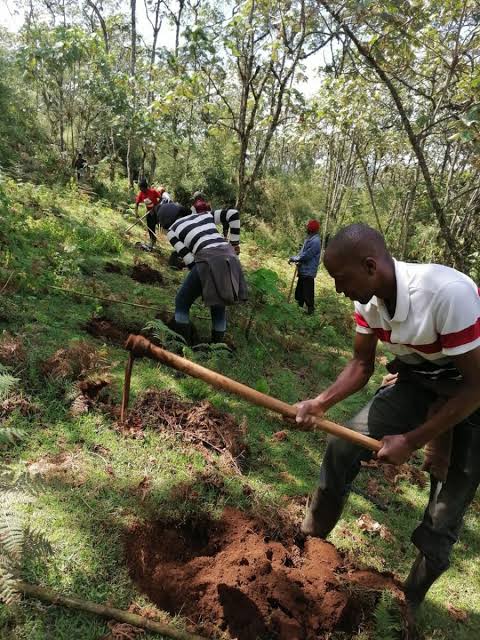
Together with veritree and planting partner EarthLungs Reforestation Foundation, we are restoring the forest and its watersheds so that Kisumu keeps its clean air and clean water. The work starts with community-run nurseries producing indigenous seedlings, and includes fruit and bamboo trees that give the surrounding households something to harvest and sell. Restoring the canopy protects the water. Giving people an income from a standing forest is what keeps it standing.
Impact on Local communities
Lake Victoria is Africa's largest lake and the second largest freshwater lake in the world, and the rivers running off the Nandi Escarpment feed it. When the forest cover on that escarpment goes, the water quality and flow reaching Kisumu go with it. Restoring the canopy at Bonjoge is watershed management as much as it is reforestation.
The economics of charcoal are what put the forest at risk, so the project works on those directly. Alongside planting, EarthLungs has established beehives in the Bonjoge forest through the Pollinate and Protect programme. Honey, beeswax and other by-products give households a revenue stream that depends on the forest staying intact, and one that continues after planting activity at a given site finishes. Bees pollinate the recovering forest at the same time. EarthLungs also provides long-term employment and health insurance to the people doing the work, which is unusual in restoration and one of the reasons we selected them as a partner.
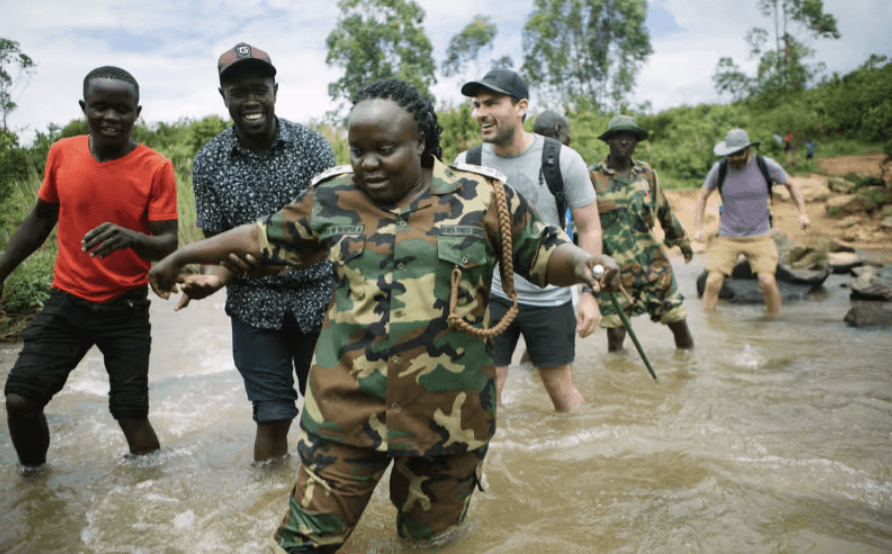
The socio-economic effects reach further than the planting sites. When veritree's team first surveyed Bonjoge, they found that community members had to cross a fast-flowing river every day to reach town, school and market. In the two preceding months, in dry season, five people had been swept away by the current and one had died. Corporate investment in the restoration of Old Bonjoge Forest allowed the community to fund new infrastructure, including a new bridge across that river. Ecologists talk about restoration reconnecting fragmented landscapes. At Bonjoge it reconnected the people living on either side of the water.
What the reforestation efforts focus on
Protecting Kisumu's water supply: restoring canopy cover on the watershed that drains into Lake Victoria and supplies drinking water to neighbouring communities.
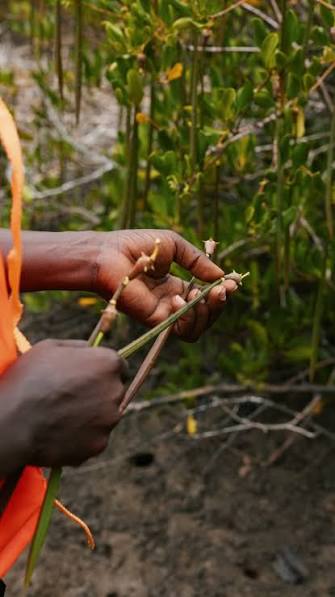
Rebuilding indigenous forest cover: community-run nurseries produce indigenous seedlings to replace cleared and overharvested stands and to suppress invasive species.
Food security and household income: fruit and bamboo trees give surrounding households something to harvest, eat and sell.
An alternative to charcoal: beehives established through the Pollinate and Protect programme generate honey and beeswax revenue that depends on the forest remaining standing.
Stable local employment: EarthLungs provides long-term employment and health insurance to the planting teams, not seasonal day labour alone.
Monitoring progress with technology: every planting event is recorded on the veritree platform with geospatial data layers tracking land use and canopy recovery.
Why this project?
Old Bonjoge Forest covers 2,150 hectares on the Nandi Escarpment above Kisumu, Kenya's third largest city. It is the only substantial woodland near the metropolitan area, which is why EarthLungs describes it as the city's lungs, and it is a watershed draining into Lake Victoria that supplies drinking water to the surrounding communities. Both of those functions are under pressure. Large parts of the forest have been cleared to make room for a fast-growing population, the remaining stands have been overharvested for charcoal and fuelwood, and much of the exposed ground is now overrun with invasive species.
Together with veritree and planting partner EarthLungs Reforestation Foundation, we are restoring the forest and its watersheds so that Kisumu keeps its clean air and clean water. The work starts with community-run nurseries producing indigenous seedlings, and includes fruit and bamboo trees that give the surrounding households something to harvest and sell. Restoring the canopy protects the water. Giving people an income from a standing forest is what keeps it standing.
Impact on Local communities
Lake Victoria is Africa's largest lake and the second largest freshwater lake in the world, and the rivers running off the Nandi Escarpment feed it. When the forest cover on that escarpment goes, the water quality and flow reaching Kisumu go with it. Restoring the canopy at Bonjoge is watershed management as much as it is reforestation.
The economics of charcoal are what put the forest at risk, so the project works on those directly. Alongside planting, EarthLungs has established beehives in the Bonjoge forest through the Pollinate and Protect programme. Honey, beeswax and other by-products give households a revenue stream that depends on the forest staying intact, and one that continues after planting activity at a given site finishes. Bees pollinate the recovering forest at the same time. EarthLungs also provides long-term employment and health insurance to the people doing the work, which is unusual in restoration and one of the reasons we selected them as a partner.
The socio-economic effects reach further than the planting sites. When veritree's team first surveyed Bonjoge, they found that community members had to cross a fast-flowing river every day to reach town, school and market. In the two preceding months, in dry season, five people had been swept away by the current and one had died. Corporate investment in the restoration of Old Bonjoge Forest allowed the community to fund new infrastructure, including a new bridge across that river. Ecologists talk about restoration reconnecting fragmented landscapes. At Bonjoge it reconnected the people living on either side of the water.
What the reforestation efforts focus on
Protecting Kisumu's water supply: restoring canopy cover on the watershed that drains into Lake Victoria and supplies drinking water to neighbouring communities.
Rebuilding indigenous forest cover: community-run nurseries produce indigenous seedlings to replace cleared and overharvested stands and to suppress invasive species.
Food security and household income: fruit and bamboo trees give surrounding households something to harvest, eat and sell.
An alternative to charcoal: beehives established through the Pollinate and Protect programme generate honey and beeswax revenue that depends on the forest remaining standing.
Stable local employment: EarthLungs provides long-term employment and health insurance to the planting teams, not seasonal day labour alone.
Monitoring progress with technology: every planting event is recorded on the veritree platform with geospatial data layers tracking land use and canopy recovery.
Why this project?
Old Bonjoge Forest covers 2,150 hectares on the Nandi Escarpment above Kisumu, Kenya's third largest city. It is the only substantial woodland near the metropolitan area, which is why EarthLungs describes it as the city's lungs, and it is a watershed draining into Lake Victoria that supplies drinking water to the surrounding communities. Both of those functions are under pressure. Large parts of the forest have been cleared to make room for a fast-growing population, the remaining stands have been overharvested for charcoal and fuelwood, and much of the exposed ground is now overrun with invasive species.
Together with veritree and planting partner EarthLungs Reforestation Foundation, we are restoring the forest and its watersheds so that Kisumu keeps its clean air and clean water. The work starts with community-run nurseries producing indigenous seedlings, and includes fruit and bamboo trees that give the surrounding households something to harvest and sell. Restoring the canopy protects the water. Giving people an income from a standing forest is what keeps it standing.
Impact on Local communities
Lake Victoria is Africa's largest lake and the second largest freshwater lake in the world, and the rivers running off the Nandi Escarpment feed it. When the forest cover on that escarpment goes, the water quality and flow reaching Kisumu go with it. Restoring the canopy at Bonjoge is watershed management as much as it is reforestation.
The economics of charcoal are what put the forest at risk, so the project works on those directly. Alongside planting, EarthLungs has established beehives in the Bonjoge forest through the Pollinate and Protect programme. Honey, beeswax and other by-products give households a revenue stream that depends on the forest staying intact, and one that continues after planting activity at a given site finishes. Bees pollinate the recovering forest at the same time. EarthLungs also provides long-term employment and health insurance to the people doing the work, which is unusual in restoration and one of the reasons we selected them as a partner.
The socio-economic effects reach further than the planting sites. When veritree's team first surveyed Bonjoge, they found that community members had to cross a fast-flowing river every day to reach town, school and market. In the two preceding months, in dry season, five people had been swept away by the current and one had died. Corporate investment in the restoration of Old Bonjoge Forest allowed the community to fund new infrastructure, including a new bridge across that river. Ecologists talk about restoration reconnecting fragmented landscapes. At Bonjoge it reconnected the people living on either side of the water.
What the reforestation efforts focus on
Protecting Kisumu's water supply: restoring canopy cover on the watershed that drains into Lake Victoria and supplies drinking water to neighbouring communities.
Rebuilding indigenous forest cover: community-run nurseries produce indigenous seedlings to replace cleared and overharvested stands and to suppress invasive species.
Food security and household income: fruit and bamboo trees give surrounding households something to harvest, eat and sell.
An alternative to charcoal: beehives established through the Pollinate and Protect programme generate honey and beeswax revenue that depends on the forest remaining standing.
Stable local employment: EarthLungs provides long-term employment and health insurance to the planting teams, not seasonal day labour alone.
Monitoring progress with technology: every planting event is recorded on the veritree platform with geospatial data layers tracking land use and canopy recovery.
Project Partner

This project is run by veritree, a data-driven restorative platform that connects nature-based solutions, including reforestation, to businesses and customers who want to lead the restorative economy. With on-the-ground monitoring and blockchain verification, veritree improves transparency at each step of the reforestation process and builds trust through data and tools that revitalise ecosystems, strengthen communities and build climate solutions. veritree is a certified B Corporation and has more than 100 million trees pledged across its global portfolio.
Planting at Old Bonjoge Forest is carried out by EarthLungs Reforestation Foundation, a Kenyan not-for-profit that partners with local communities to rehabilitate, reforest and protect degraded forest land, and that operates within the Kenya Forest Service Adopt a Forest framework.
Gallery


Gallery
Gallery
Location
Kisumu, Kenya
Kisumu, Kenya
United Nations' Sustainable Development Goals

Planting, nursery work and beekeeping create paid work in communities where formal employment is scarce, and EarthLungs pairs that work with long-term contracts and health insurance.

A restored watershed means cleaner drinking water for the communities downstream, and health insurance provided through EarthLungs extends care to planting teams and their families.

Old Bonjoge Forest is a watershed draining into Lake Victoria that supplies drinking water to the communities around Kisumu. Restoring canopy cover on the escarpment protects both the quality and the flow of that water.

Fruit and bamboo trees, honey and beeswax give households income streams that continue long after planting finishes, which is what turns a restoration project into a local economy.

Investment in Old Bonjoge Forest funded community infrastructure alongside the planting, including a new bridge over a river that people previously crossed daily at real risk to their lives.

1,698,231 trees have been planted across 679 hectares of the Bonjoge site so far, rebuilding carbon stocks on land that had been cleared and overharvested.

Restoration replaces invasive species with indigenous forest on the only substantial woodland near Kisumu, rebuilding habitat on the Nandi Escarpment.

The project brings together Regreener, veritree, EarthLungs Reforestation Foundation and local community groups, operating within the Kenya Forest Service Adopt a Forest framework.
United Nations' Sustainable Development Goals
Planting, nursery work and beekeeping create paid work in communities where formal employment is scarce, and EarthLungs pairs that work with long-term contracts and health insurance.
A restored watershed means cleaner drinking water for the communities downstream, and health insurance provided through EarthLungs extends care to planting teams and their families.
Old Bonjoge Forest is a watershed draining into Lake Victoria that supplies drinking water to the communities around Kisumu. Restoring canopy cover on the escarpment protects both the quality and the flow of that water.
Fruit and bamboo trees, honey and beeswax give households income streams that continue long after planting finishes, which is what turns a restoration project into a local economy.
Investment in Old Bonjoge Forest funded community infrastructure alongside the planting, including a new bridge over a river that people previously crossed daily at real risk to their lives.
1,698,231 trees have been planted across 679 hectares of the Bonjoge site so far, rebuilding carbon stocks on land that had been cleared and overharvested.
Restoration replaces invasive species with indigenous forest on the only substantial woodland near Kisumu, rebuilding habitat on the Nandi Escarpment.
The project brings together Regreener, veritree, EarthLungs Reforestation Foundation and local community groups, operating within the Kenya Forest Service Adopt a Forest framework.

Start supporting this high-quality project


Enter your details and out team will reach out about next steps.
Start supporting this high-quality project
Enter your details and out team will reach out about next steps.