
have us call you right now.

The 5 best Biochar Carbon Credit and Offset Projects of 2026

The 5 best Biochar Carbon Credit and Offset Projects of 2026

Last updated:

Apr 29, 2025

Apr 29, 2025

Jan 7, 2026

Jan 7, 2026

6 min read

6 min read

Introduction

Biochar is one of the only carbon removal methods that can lock away CO2 for over 1,000 years - yet most companies buying offsets have never considered it Unlike traditional offset methods, biochar provides a permanent, scalable, and science-backed approach to carbon removal, while delivering co-benefits like soil regeneration and rural economic development. With corporations under increasing pressure to meet net-zero commitments, the demand for high-quality carbon removal solutions has never been greater. Yet, not all biochar projects are created equal. Verification, additionality, and long-term impact separate the best from the rest.

This guide highlights 2026’s leading biochar carbon credit projects, helping you identify the most effective options for your sustainability strategy. Whether you’re new to or looking to diversify your carbon portfolio, biochar offers a unique combination of durability and tangible environmental benefits.

What are biochar carbon credits?

Biochar carbon credits are verified carbon credits generated by converting organic waste into stable carbon via pyrolysis. The resulting biochar locks CO₂ into soil for hundreds to thousands of years — making it one of the most permanent carbon removal solutions available. One credit equals the verified removal of one metric ton of CO₂ equivalent.

According to our insights, the best biochar projects of 2026 are: Aperam BioEnergia (Brazil), Pacific Biochar (North America), Carboneers Biochar Project (Ghana), Premier Forest Products (UK) and Carbo Culture (Global).

Why Biochar? The Science Behind the Solution

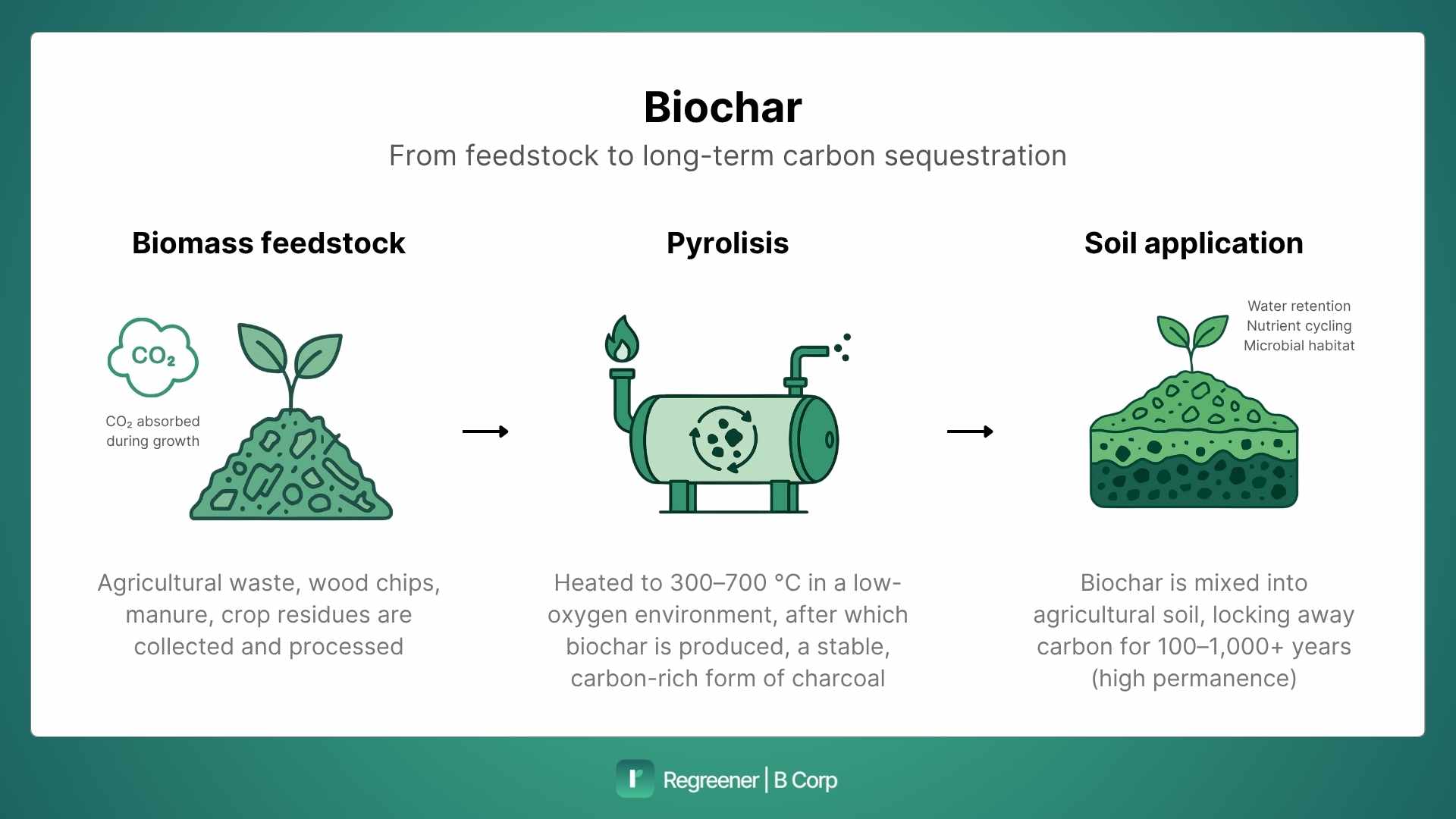
Biochar is a carbon-rich material produced by heating organic waste—such as agricultural residues or wood chips—in a low-oxygen environment, a process known as pyrolysis. The result is a stable form of carbon that can be stored in soils for centuries or even millennia, effectively locking away CO2 that would otherwise be released into the atmosphere. This makes biochar one of the most durable carbon offset solutions available today.

Beyond carbon sequestration, biochar enhances soil fertility, improves water retention, and reduces the need for chemical fertilizers. These co-benefits make it particularly attractive for businesses seeking to align their carbon offsetting efforts with broader sustainability goals, such as regenerative agriculture and circular economy principles. Biochar also contributes to multiple United Nations Sustainable Development Goals (SDGs), including climate action (SDG 13), responsible consumption (SDG 12), and life on land (SDG 15).

Compared to other carbon removal methods, like afforestation or direct air capture, biochar stands out for its cost-effectiveness and scalability. Biochar can store carbon for over 1,000 years - roughly ten times longer than most forest-based offsets. It also addresses multiple sustainability challenges simultaneously, making it a versatile tool for corporate climate strategies.
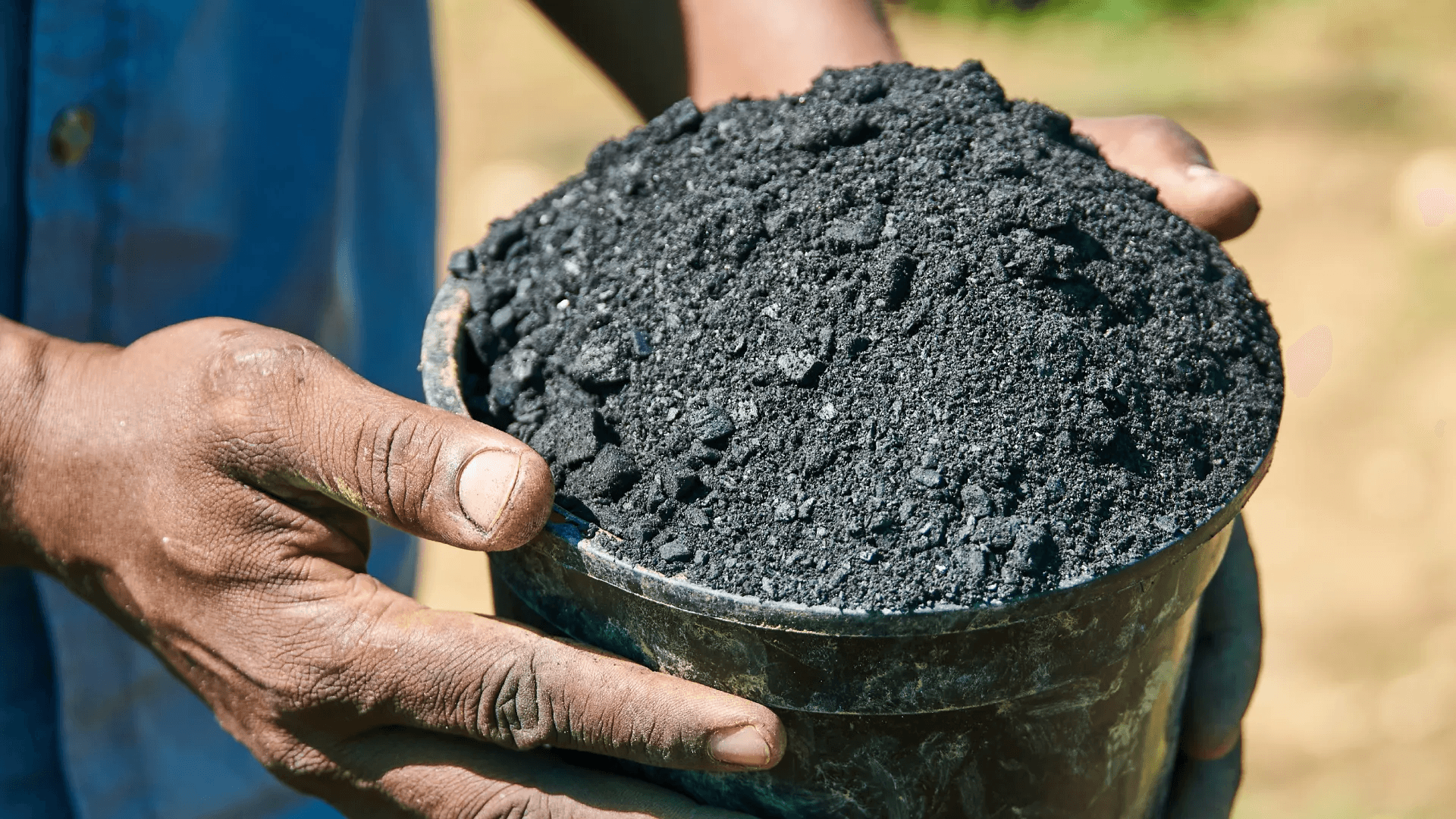
two hands holding biochar for carbon removal

What Makes a High-Quality Biochar Carbon Credit?

Not all biochar projects deliver the same level of impact. To ensure your investment in carbon offsets is both credible and effective, focus on the following criteria:

Verification and Certification High-quality biochar projects are certified by reputable standards such as Puro.earth or Verra. These organizations rigorously assess projects for additionality, permanence, and co-benefits (such as biodiversity or community development). The Oxford Offsetting Principles also emphasize the importance of Category 5: Carbon Removal and Storage, which includes biochar as a key solution for long-term carbon sequestration.

Additionality ensures that the carbon removal is directly attributable to the project’s intervention. Permanence guarantees that the stored carbon won’t be re-released due to poor management or environmental factors. Look for projects that use stable feedstocks and robust monitoring, reporting, and verification (MRV) protocols.

The best biochar projects provide clear documentation of their feedstock sources, production methods, and end-use applications. Transparency builds trust and ensures that your carbon offsetting efforts are both legitimate and impactful.

Beyond carbon removal, top-tier biochar projects contribute to soil health, renewable energy, and local economies. For example, some initiatives use pyrolysis to generate bioenergy, creating a closed-loop system that reduces reliance on fossil fuels.

By prioritizing these factors, businesses can avoid greenwashing and select projects that deliver real, measurable results.

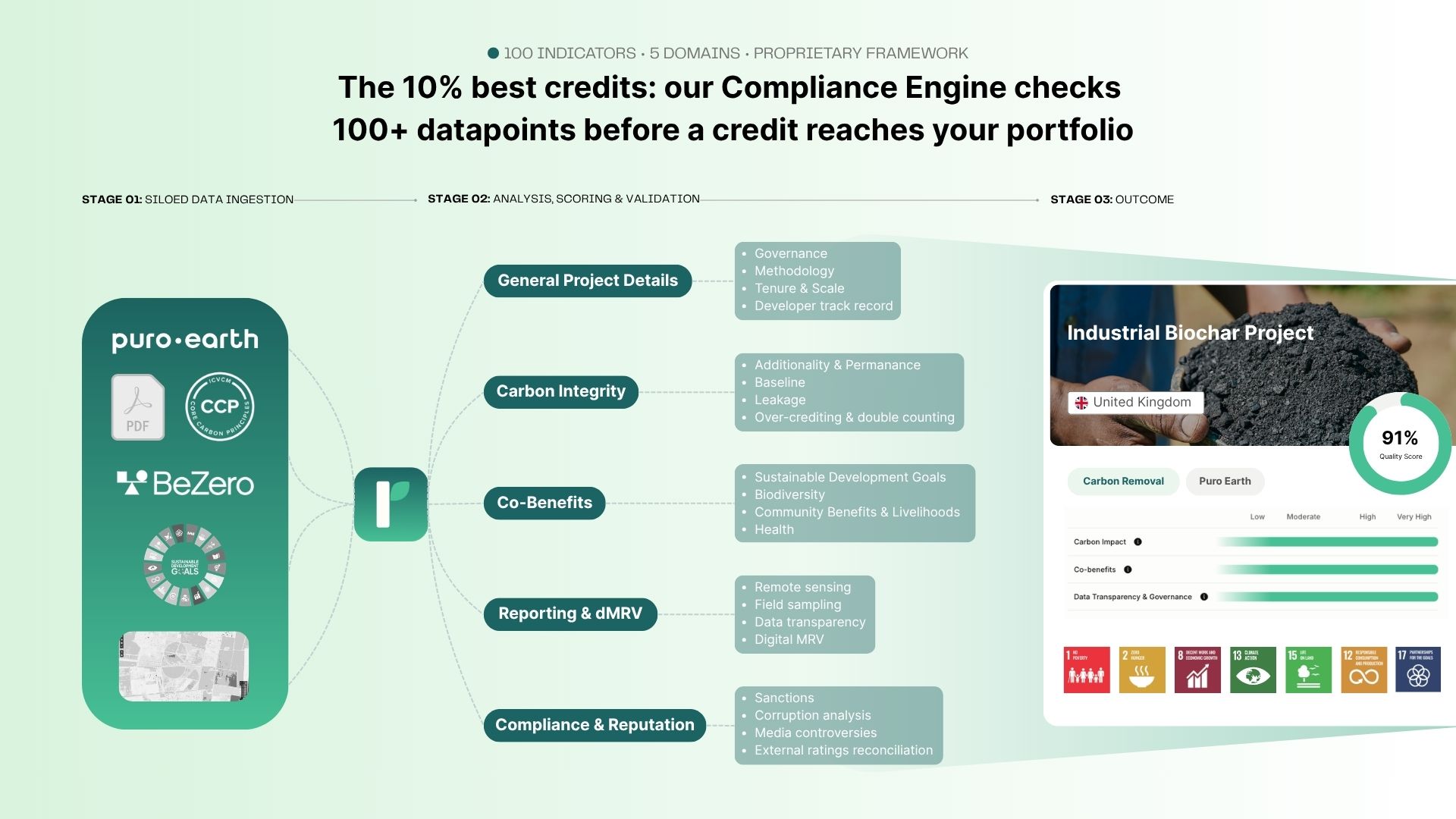
Regreener Quality Framework: At Regreener, we assess every biochar project against 100+ data points, including independent ratings from BeZero and Renoster — ensuring only the top 5% of global projects reach our clients' portfolios
the quality framework of Regreener.earth

2026’s Top 5 Biochar Carbon Credit Projects for Carbon Offsetting

To help you navigate the growing market, we’ve identified five leading biochar projects for 2026. Each has been selected for its scalability, certification, and alignment with corporate sustainability goals.

1. Aperam BioEnergia (Brazil)

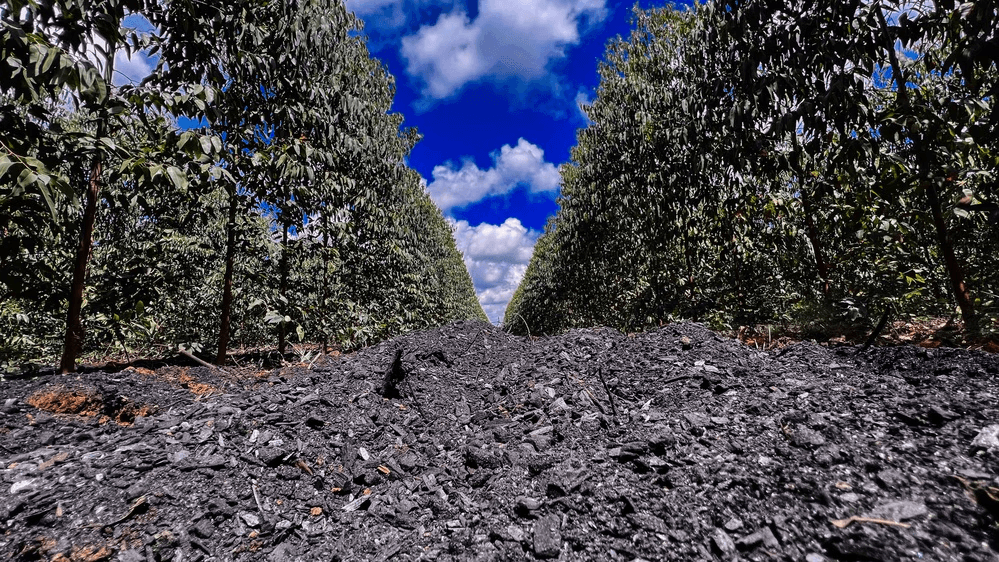
Aperam BioEnergia, certified by Puro.earth, is one of the largest biochar projects globally, producing 10,000 tonnes of biochar annually in 2025, with plans to triple production by 2026. The project uses pyrolysis technology to convert forestry residues into biochar, supporting sustainable forest management and carbon removal in Minas Gerais, Brazil. It has sold over 100,000 tonnes of carbon removal credits since 2021, making it a trusted choice for businesses seeking high-impact carbon offsets.
aperam bioeneregia brazil biochar carbon removal

2. Pacific Biochar (North America)

Based in the Pacific Northwest, this Verra-certified project converts wood waste from sustainable forestry operations into biochar. The initiative partners with Indigenous communities to restore degraded lands, making it a leader in community-driven CO2 compensation. Its scalable model has already removed thousands of tons of CO2 annually, with plans to expand in 2026.

3. Carboneers Biochar Project (Ghana)

Developed by Carboneers, this project in Ghana converts agricultural waste into biochar, reducing open burning and improving soil fertility for local farmers. Certified by C-Sink, the initiative supports rural job creation and sustainable agriculture, making it a high-impact option for businesses looking to contribute to Global South sustainability.
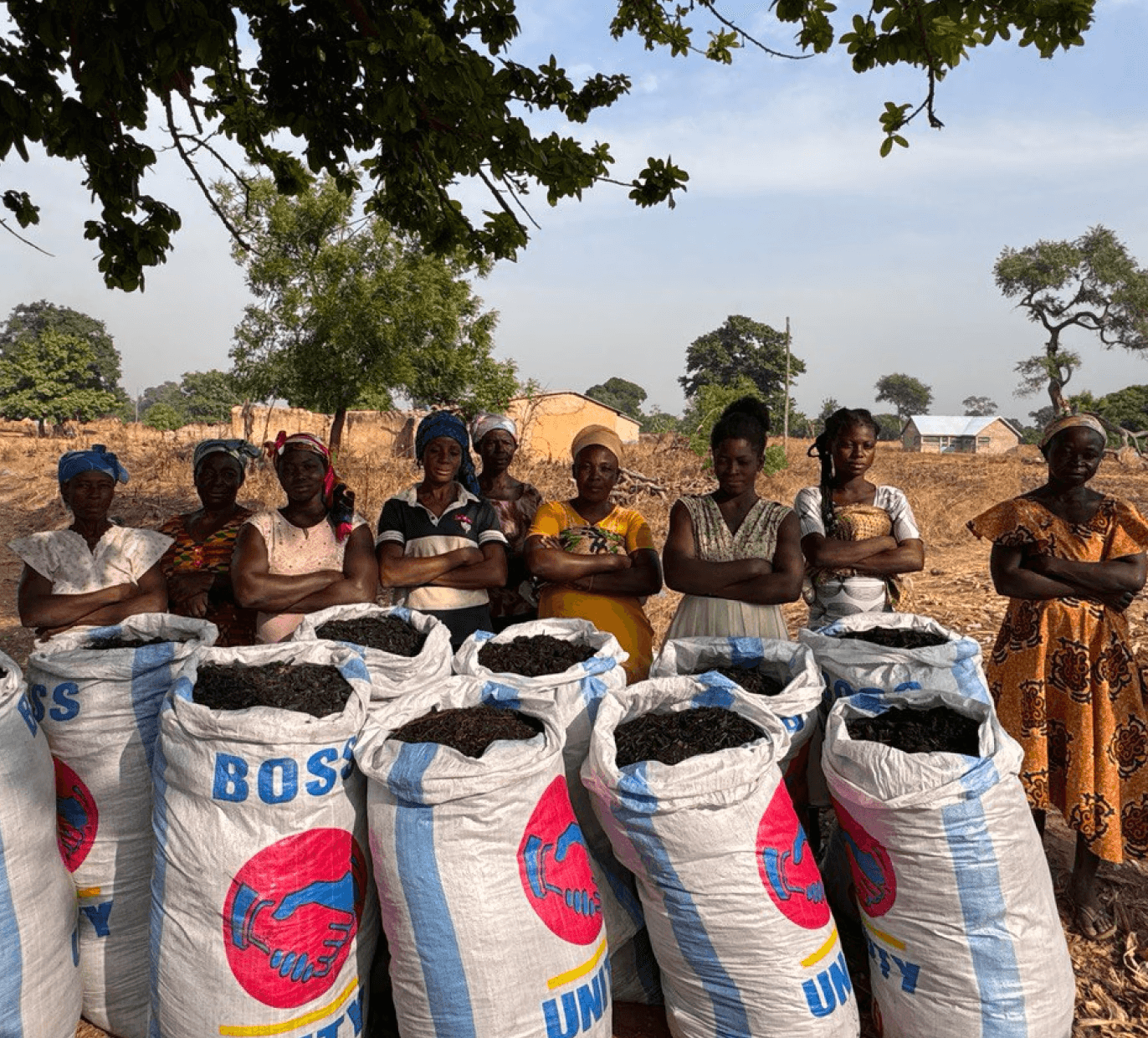
carboneers biochar project in Ghana

4. Premier Forest Products (UK)

Premier Forest Products transforms wood waste into carbon-dense biochar bricks through pyrolysis, a process that aligns with the Puro.earth biochar methodology. Operated out of South Wales in the UK, the project sequesters 2.96 tons of CO2 for every ton of biochar produced, making it one of the most efficient biochar projects in Europe.

5. Carbo Culture (Global)

A pioneer in distributed biochar production, Carbo Culture operates modular pyrolysis units that can be deployed worldwide. Certified by Puro.earth, the project focuses on urban and industrial waste streams, offering a flexible solution for corporations with global footprints. Its innovative approach ensures that biochar production is both scalable and adaptable to local conditions.

Project Name

Location

Certification (with Link)

Annual Removal (tons CO2)

Key Co-Benefits

Aperam BioEnergia

Brazil

Puro.earth

30,000+

Sustainable forestry, large-scale carbon removal

Pacific Biochar

North America

Verra

15,000+

Indigenous partnerships, forest restoration

Carboneers Biochar Project

Ghana

C-Sink

8,000+

Rural job creation, reduced deforestation

Premier Forest Products

UK

Puro.earth


12,000+

Waste reduction, high carbon sequestration

Carbo Culture

Global

Puro.earth

20,000+

Waste reduction, modular scalability

How to Integrate Biochar Credits Into Your Offset Strategy

For businesses committed to net-zero targets, biochar credits offer a practical way to balance unavoidable emissions with high-quality removals. Here’s how to get started:

Align With Science-Based Targets Use biochar credits to complement emission reductions within your value chain. The Science Based Targets initiative (SBTi) recognizes carbon removal as a critical component of corporate climate strategies, provided it is used alongside decarbonization efforts.

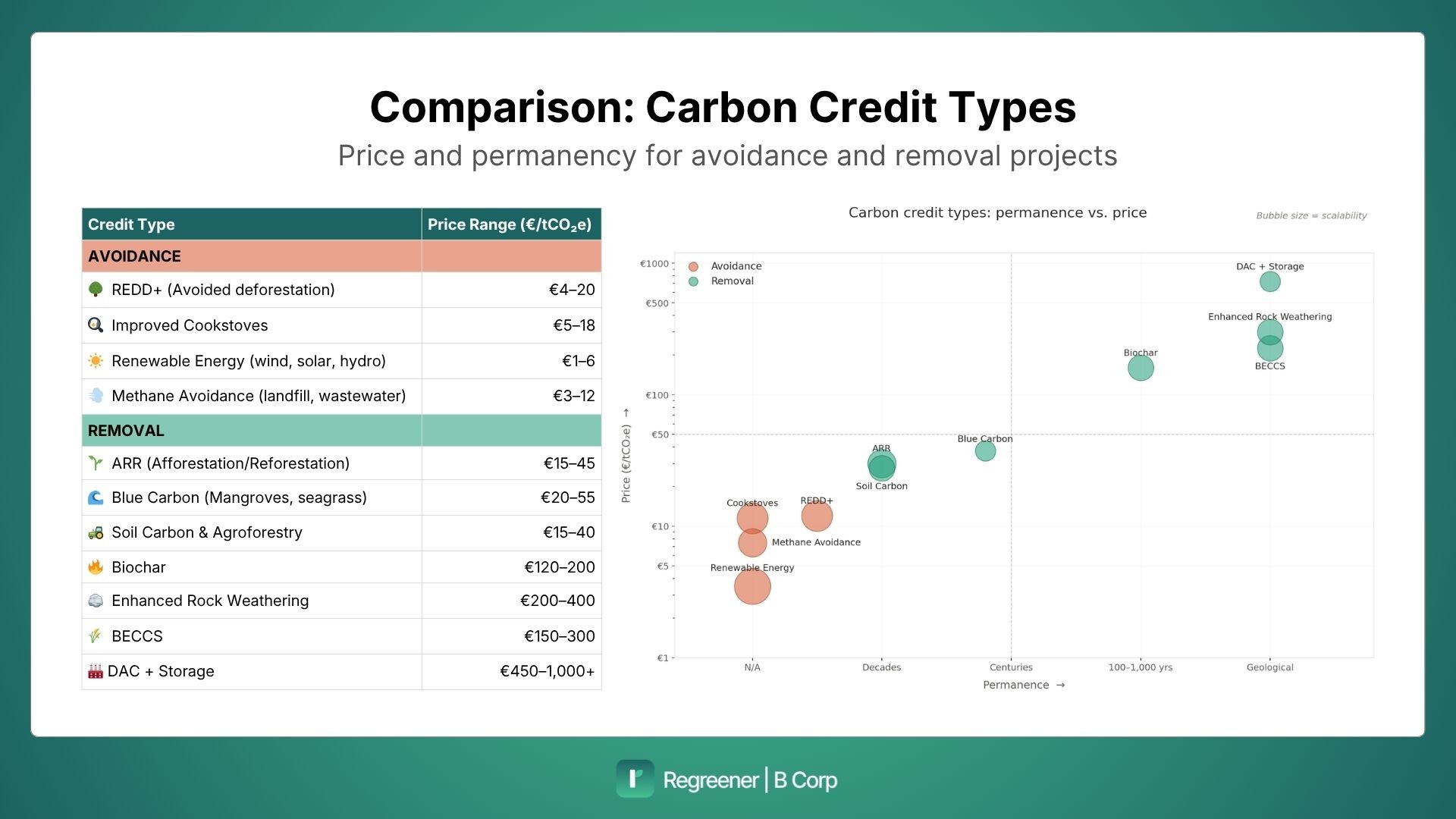
Diversify Your Carbon Portfolio Biochar’s permanence and co-benefits make it an ideal addition to a diversified offset portfolio. Combine it with avoidance credits (e.g., renewable energy) and other removal methods (e.g., direct air capture) to mitigate risk and maximize impact.

Report With Confidence Biochar projects certified by Puro.earth or Verra provide robust data for ESG reporting, including CDP disclosures and annual sustainability reports. Highlighting these investments can enhance your brand’s credibility and stakeholder trust.

Engage Stakeholders Communicate your carbon offsetting efforts transparently. Share stories about the projects you support, such as Carboneers’ work in Ghana, to demonstrate your commitment to global sustainability.

Success Story: how we helped our client BDO compose a Carbon Credit portfolio focussed on high-quality carbon removals.
Risks and Challenges in the Biochar Market

The global biochar carbon credit market grew by more than 40% in volume in 2025. While biochar holds immense promise, businesses should be aware of potential challenges:

Supply Constraints The biochar market is still maturing, and high demand may lead to temporary supply shortages. To secure credits, consider multi-year agreements with project developers.

Quality Variability Not all biochar is equal. Work with trusted platforms or advisors to vet projects for additionality, permanence, and ethical sourcing.

Regulatory Uncertainty As carbon markets evolve, stay informed about changes in certification standards and compliance requirements. Partnering with established organizations like Puro.earth can help future-proof your investments.

By addressing these risks proactively, you can build a resilient carbon offset strategy that delivers long-term value.

The Future of Biochar: Innovations to Watch

The biochar sector is rapidly evolving, with several trends shaping its future:

Technological Advancements Innovations in pyrolysis efficiency and mobile production units are making biochar more accessible and cost-effective. Companies like Carbo Culture are leading the way with decentralized models that reduce transportation emissions.

Policy Support Governments are increasingly recognizing biochar’s potential. The EU Carbon Removal Certification Framework and the U.S. Inflation Reduction Act (IRA) include incentives for biochar production. The IRA, for example, provides:

  • $8.45 billion for the Environmental Quality Incentives Program (EQIP), supporting farmers who adopt biochar for soil health.

  • $100 million for Wood Innovation Grants, funding biochar and innovative wood products.

  • Updated Section 45Q tax credits for carbon sequestration, potentially offering up to $250/ton CO2e for carbon removal projects, including biochar.

Emerging Markets Africa, Southeast Asia, and Latin America are becoming hotspots for biochar projects, thanks to their abundant biomass resources and strong community engagement. These regions offer high-impact opportunities for businesses looking to expand their carbon offsetting efforts.
Next Steps: How to Buy Biochar Carbon Credits for your Company

Biochar carbon credits represent a scalable, durable, and socially responsible solution for carbon offsetting. By investing in verified projects, businesses can achieve their carbon offset goals while supporting global sustainability.

Ready to take the next step? Reach out to our team to discuss our services and Biochar projects.

Introduction

Biochar is one of the only carbon removal methods that can lock away CO2 for over 1,000 years - yet most companies buying offsets have never considered it Unlike traditional offset methods, biochar provides a permanent, scalable, and science-backed approach to carbon removal, while delivering co-benefits like soil regeneration and rural economic development. With corporations under increasing pressure to meet net-zero commitments, the demand for high-quality carbon removal solutions has never been greater. Yet, not all biochar projects are created equal. Verification, additionality, and long-term impact separate the best from the rest.

This guide highlights 2026’s leading biochar carbon credit projects, helping you identify the most effective options for your sustainability strategy. Whether you’re new to or looking to diversify your carbon portfolio, biochar offers a unique combination of durability and tangible environmental benefits.

What are biochar carbon credits?

Biochar carbon credits are verified carbon credits generated by converting organic waste into stable carbon via pyrolysis. The resulting biochar locks CO₂ into soil for hundreds to thousands of years — making it one of the most permanent carbon removal solutions available. One credit equals the verified removal of one metric ton of CO₂ equivalent.

According to our insights, the best biochar projects of 2026 are: Aperam BioEnergia (Brazil), Pacific Biochar (North America), Carboneers Biochar Project (Ghana), Premier Forest Products (UK) and Carbo Culture (Global).

Why Biochar? The Science Behind the Solution

Biochar is a carbon-rich material produced by heating organic waste—such as agricultural residues or wood chips—in a low-oxygen environment, a process known as pyrolysis. The result is a stable form of carbon that can be stored in soils for centuries or even millennia, effectively locking away CO2 that would otherwise be released into the atmosphere. This makes biochar one of the most durable carbon offset solutions available today.

Beyond carbon sequestration, biochar enhances soil fertility, improves water retention, and reduces the need for chemical fertilizers. These co-benefits make it particularly attractive for businesses seeking to align their carbon offsetting efforts with broader sustainability goals, such as regenerative agriculture and circular economy principles. Biochar also contributes to multiple United Nations Sustainable Development Goals (SDGs), including climate action (SDG 13), responsible consumption (SDG 12), and life on land (SDG 15).

Compared to other carbon removal methods, like afforestation or direct air capture, biochar stands out for its cost-effectiveness and scalability. Biochar can store carbon for over 1,000 years - roughly ten times longer than most forest-based offsets. It also addresses multiple sustainability challenges simultaneously, making it a versatile tool for corporate climate strategies.

two hands holding biochar for carbon removal

What Makes a High-Quality Biochar Carbon Credit?

Not all biochar projects deliver the same level of impact. To ensure your investment in carbon offsets is both credible and effective, focus on the following criteria:

Verification and Certification High-quality biochar projects are certified by reputable standards such as Puro.earth or Verra. These organizations rigorously assess projects for additionality, permanence, and co-benefits (such as biodiversity or community development). The Oxford Offsetting Principles also emphasize the importance of Category 5: Carbon Removal and Storage, which includes biochar as a key solution for long-term carbon sequestration.

Additionality ensures that the carbon removal is directly attributable to the project’s intervention. Permanence guarantees that the stored carbon won’t be re-released due to poor management or environmental factors. Look for projects that use stable feedstocks and robust monitoring, reporting, and verification (MRV) protocols.

The best biochar projects provide clear documentation of their feedstock sources, production methods, and end-use applications. Transparency builds trust and ensures that your carbon offsetting efforts are both legitimate and impactful.

Beyond carbon removal, top-tier biochar projects contribute to soil health, renewable energy, and local economies. For example, some initiatives use pyrolysis to generate bioenergy, creating a closed-loop system that reduces reliance on fossil fuels.

By prioritizing these factors, businesses can avoid greenwashing and select projects that deliver real, measurable results.

Regreener Quality Framework: At Regreener, we assess every biochar project against 100+ data points, including independent ratings from BeZero and Renoster — ensuring only the top 5% of global projects reach our clients' portfolios

the quality framework of Regreener.earth

2026’s Top 5 Biochar Carbon Credit Projects for Carbon Offsetting

To help you navigate the growing market, we’ve identified five leading biochar projects for 2026. Each has been selected for its scalability, certification, and alignment with corporate sustainability goals.

1. Aperam BioEnergia (Brazil)

Aperam BioEnergia, certified by Puro.earth, is one of the largest biochar projects globally, producing 10,000 tonnes of biochar annually in 2025, with plans to triple production by 2026. The project uses pyrolysis technology to convert forestry residues into biochar, supporting sustainable forest management and carbon removal in Minas Gerais, Brazil. It has sold over 100,000 tonnes of carbon removal credits since 2021, making it a trusted choice for businesses seeking high-impact carbon offsets.

aperam bioeneregia brazil biochar carbon removal

2. Pacific Biochar (North America)

Based in the Pacific Northwest, this Verra-certified project converts wood waste from sustainable forestry operations into biochar. The initiative partners with Indigenous communities to restore degraded lands, making it a leader in community-driven CO2 compensation. Its scalable model has already removed thousands of tons of CO2 annually, with plans to expand in 2026.

3. Carboneers Biochar Project (Ghana)

Developed by Carboneers, this project in Ghana converts agricultural waste into biochar, reducing open burning and improving soil fertility for local farmers. Certified by C-Sink, the initiative supports rural job creation and sustainable agriculture, making it a high-impact option for businesses looking to contribute to Global South sustainability.

carboneers biochar project in Ghana

4. Premier Forest Products (UK)

Premier Forest Products transforms wood waste into carbon-dense biochar bricks through pyrolysis, a process that aligns with the Puro.earth biochar methodology. Operated out of South Wales in the UK, the project sequesters 2.96 tons of CO2 for every ton of biochar produced, making it one of the most efficient biochar projects in Europe.

5. Carbo Culture (Global)

A pioneer in distributed biochar production, Carbo Culture operates modular pyrolysis units that can be deployed worldwide. Certified by Puro.earth, the project focuses on urban and industrial waste streams, offering a flexible solution for corporations with global footprints. Its innovative approach ensures that biochar production is both scalable and adaptable to local conditions.

Project Name

Location

Certification (with Link)

Annual Removal (tons CO2)

Key Co-Benefits

Aperam BioEnergia

Brazil

Puro.earth

30,000+

Sustainable forestry, large-scale carbon removal

Pacific Biochar

North America

Verra

15,000+

Indigenous partnerships, forest restoration

Carboneers Biochar Project

Ghana

C-Sink

8,000+

Rural job creation, reduced deforestation

Premier Forest Products

UK

Puro.earth


12,000+

Waste reduction, high carbon sequestration

Carbo Culture

Global

Puro.earth

20,000+

Waste reduction, modular scalability

How to Integrate Biochar Credits Into Your Offset Strategy

For businesses committed to net-zero targets, biochar credits offer a practical way to balance unavoidable emissions with high-quality removals. Here’s how to get started:

Align With Science-Based Targets Use biochar credits to complement emission reductions within your value chain. The Science Based Targets initiative (SBTi) recognizes carbon removal as a critical component of corporate climate strategies, provided it is used alongside decarbonization efforts.

Diversify Your Carbon Portfolio Biochar’s permanence and co-benefits make it an ideal addition to a diversified offset portfolio. Combine it with avoidance credits (e.g., renewable energy) and other removal methods (e.g., direct air capture) to mitigate risk and maximize impact.

Report With Confidence Biochar projects certified by Puro.earth or Verra provide robust data for ESG reporting, including CDP disclosures and annual sustainability reports. Highlighting these investments can enhance your brand’s credibility and stakeholder trust.

Engage Stakeholders Communicate your carbon offsetting efforts transparently. Share stories about the projects you support, such as Carboneers’ work in Ghana, to demonstrate your commitment to global sustainability.

Success Story: how we helped our client BDO compose a Carbon Credit portfolio focussed on high-quality carbon removals.

Risks and Challenges in the Biochar Market

The global biochar carbon credit market grew by more than 40% in volume in 2025. While biochar holds immense promise, businesses should be aware of potential challenges:

Supply Constraints The biochar market is still maturing, and high demand may lead to temporary supply shortages. To secure credits, consider multi-year agreements with project developers.

Quality Variability Not all biochar is equal. Work with trusted platforms or advisors to vet projects for additionality, permanence, and ethical sourcing.

Regulatory Uncertainty As carbon markets evolve, stay informed about changes in certification standards and compliance requirements. Partnering with established organizations like Puro.earth can help future-proof your investments.

By addressing these risks proactively, you can build a resilient carbon offset strategy that delivers long-term value.

The Future of Biochar: Innovations to Watch

The biochar sector is rapidly evolving, with several trends shaping its future:

Technological Advancements Innovations in pyrolysis efficiency and mobile production units are making biochar more accessible and cost-effective. Companies like Carbo Culture are leading the way with decentralized models that reduce transportation emissions.

Policy Support Governments are increasingly recognizing biochar’s potential. The EU Carbon Removal Certification Framework and the U.S. Inflation Reduction Act (IRA) include incentives for biochar production. The IRA, for example, provides:

  • $8.45 billion for the Environmental Quality Incentives Program (EQIP), supporting farmers who adopt biochar for soil health.

  • $100 million for Wood Innovation Grants, funding biochar and innovative wood products.

  • Updated Section 45Q tax credits for carbon sequestration, potentially offering up to $250/ton CO2e for carbon removal projects, including biochar.

Emerging Markets Africa, Southeast Asia, and Latin America are becoming hotspots for biochar projects, thanks to their abundant biomass resources and strong community engagement. These regions offer high-impact opportunities for businesses looking to expand their carbon offsetting efforts.

Next Steps: How to Buy Biochar Carbon Credits for your Company

Biochar carbon credits represent a scalable, durable, and socially responsible solution for carbon offsetting. By investing in verified projects, businesses can achieve their carbon offset goals while supporting global sustainability.

Ready to take the next step? Reach out to our team to discuss our services and Biochar projects.

About the Author

Boris Bekkering of Regreener
Boris Bekkering

Boris is Commercial Director at Regreener and joined the company in 2022. He holds a masters degree in Environment & Resource Management and has prior professional experience in energy transition focused venture capital. Boris is passionate about helping companies navigate carbon markets and enjoys supporting businesses in aligning sustainability targets. He believes ambitious targets combined with transparent communication can propel companies to sustainable and commercial progress. In his spare time, Boris enjoys his many hobbies that are all happening on the water or in nature.

TABLE OF CONTENTS

Share Article

FAQs

What is a carbon credit?

A carbon credit is a tradable certificate that represents the removal or reduction of one metric ton of carbon dioxide (CO2) or its equivalent in other greenhouse gases from the atmosphere. Companies, governments, and individuals can buy carbon credits to offset their own emissions, supporting projects like reforestation or the production of biochar.

How much does a biochar carbon credit cost in 2026?

Biochar carbon credits typically range from €100 to €300 per tonne of CO2 in 2026, depending on the project's certification, feedstock, and production method. This premium over nature-based offsets reflects biochar's exceptional permanence and verifiability. For businesses building a high-integrity carbon portfolio, the higher price point comes with significantly lower reversal risk compared to forestry-based credits.

How long does biochar store CO2?

Biochar stores carbon for hundreds to thousands of years - most certified biochar projects demonstrate a minimum mean residence time of 100 years, with high-stability biochars (H:Corg ratio below 0.4) documented to persist for over 1,000 years. This makes biochar one of the most permanent carbon removal solutions available, far outlasting forest offsets, which carry reversal risks from fire, disease, and land-use change.

What's the difference between biochar credits and BECCS?

Both biochar and BECCS (Bioenergy with Carbon Capture and Storage) use biomass to remove CO2, but they work very differently. Biochar converts organic waste via pyrolysis into a stable solid that is applied to soil, storing carbon without complex infrastructure. BECCS burns biomass for energy and captures the resulting CO2 for geological storage — a process that is technically promising but currently expensive, energy-intensive, and limited in scale. Biochar is available today at commercial scale through certified projects, while BECCS remains largely in pilot phase.

What are the best carbon credit providers in 2026?

In 2026, top carbon credit providers include Regreener, South Pole, ClimatePartner, Anthesis, and Rabo Carbon Bank. These companies stand out for their verified impact, transparency, and project quality across both carbon removal and carbon reduction initiatives.

Greenwashing-proof climate action

Join 200+ companies making impact with Regreener