
have us call you right now.
" width="512px"><path d="M 0 512 L 0 0 L 512 0 L 512 512 Z" fill="transparent" height="512px" id="ZgeQxKH1h" width="512px"/><path d="M 256 512 C 397.385 512 512 397.385 512 256 C 512 114.615 397.385 0 256 0 C 114.615 0 0 114.615 0 256 C 0 397.385 114.615 512 256 512 Z" fill="rgb(109, 165, 68)" height="512px" id="kr39BIdIS" width="512px"/><path d="M 211.478 0 L 422.956 155.826 L 211.478 311.652 L 0 155.826 Z" fill="rgb(255, 218, 68)" height="311.65200000000004px" id="oY3wGrzfT" transform="translate(44.522 100.174)" width="422.956px"/><path d="M 89.043 178.086 C 138.22 178.086 178.086 138.22 178.086 89.043 C 178.086 39.866 138.22 0 89.043 0 C 39.866 0 0 39.866 0 89.043 C 0 138.22 39.866 178.086 89.043 178.086 Z" fill="rgb(240, 240, 240)" height="178.086px" id="NXjBT5u3D" transform="translate(166.957 166.957)" width="178.086px"/><path d="M 44.493 0 C 29.009 0 14.066 2.355 0 6.725 C 0.623 55.365 40.227 94.609 89.015 94.609 C 119.183 94.609 145.827 79.592 161.934 56.641 C 134.377 22.144 91.976 0 44.493 0 Z" fill="rgb(0, 82, 180)" height="94.60899999999998px" id="YuM_1pp4I" transform="translate(166.985 250.435)" width="161.93399999999997px"/><path d="M 169.218 106.103 C 170.29 100.579 170.869 94.88 170.869 89.043 C 170.869 39.865 131.003 0 81.826 0 C 45.132 0 13.632 22.201 0 53.899 C 12.05 51.402 24.526 50.087 37.305 50.087 C 89.022 50.086 135.808 71.584 169.218 106.103 Z" fill="rgb(0, 82, 180)" height="106.10300000000001px" id="YS5disLCa" transform="translate(174.175 166.957)" width="170.86899999999997px"/></g></svg>)
Oxford Category:
Buyer Protection

152,067
tCO₂e avoided annual emissions

99.5% efficiency
methane destruction pollution

1,000+
homes powered with energy
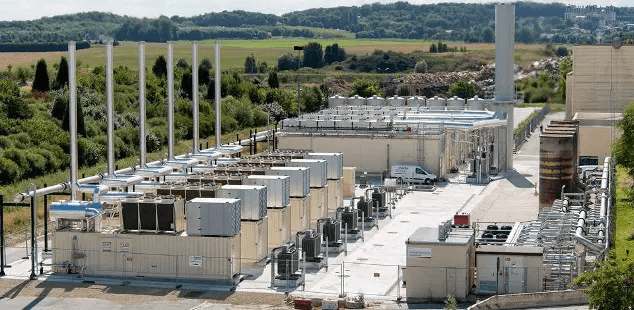
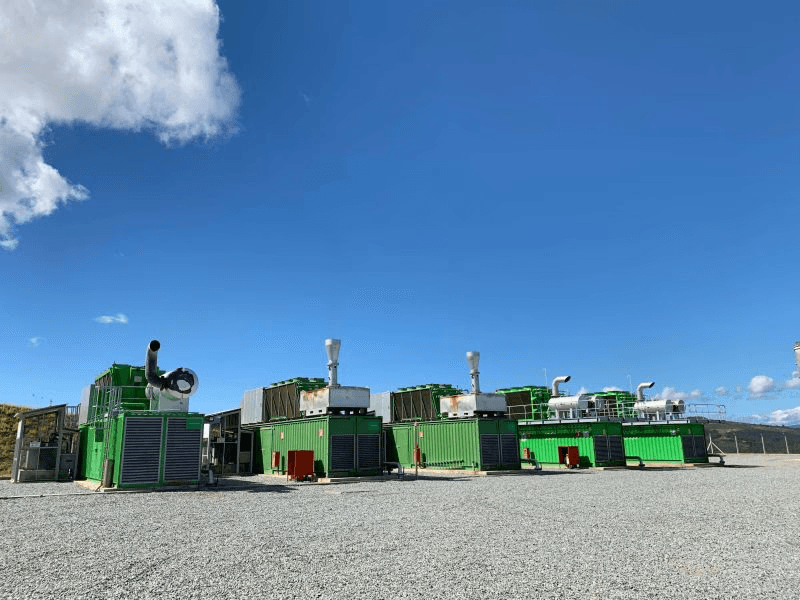
What is methane capture?
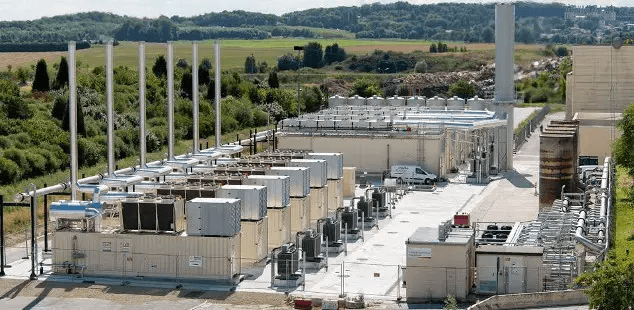
When organic waste (like food scraps, paper, or yard waste) decomposes in a landfill, it produces landfill gas (LFG), which is roughly 50% methane (CH₄) - a potent greenhouse gas - and 50% carbon dioxide (CO₂) along with small amounts of other compounds. Without intervention, this gas escapes into the atmosphere, contributing to air pollution and climate impact. Methane capture projects collect the gasses emitted from decomposing waste in landfills using a network of wells and pipes.
The captured gas is then either flared (burned off in a controlled flare to convert methane into less harmful CO₂) or used as fuel to generate electricity, replacing fossil fuel-based power. The process starts with drilling wells into the landfill, installing a vacuum system to extract the gas, and treating it to remove impurities. If used for energy, the methane powers engines or turbines, producing renewable electricity while preventing emissions. Continuous monitoring ensures the system operates efficiently, and the verified emissions reductions can be sold as carbon credits. This approach not only cuts pollution and odor but also creates clean energy, improves local air quality, and reduces safety risks from methane buildup.
Project Partner
This project is verified by Verified Carbon Standard (Verra). VCS was established in 2007 and is a full-fledged carbon offset program developed and run by the non-profit Verra. It focuses on GHG reduction attributes only and does not require projects to have additional environmental or social benefits. The VCS is broadly supported by the carbon offset industry (project developers, large offset buyers, verifiers, and projects consultants) and is active globally.
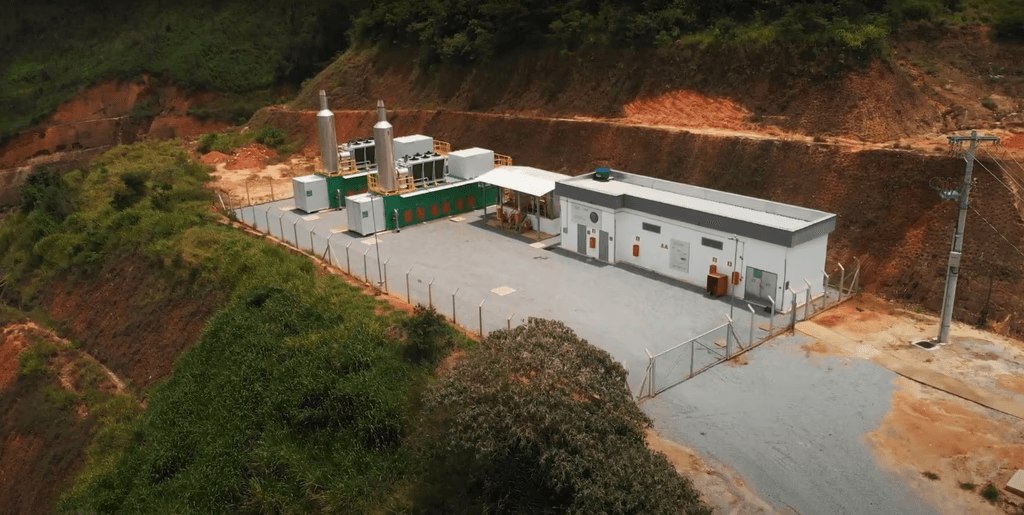
Location


Regreener's Rating
While landfill methane capture may lack the novelty of emerging carbon removal technologies, its proven effectiveness makes it indispensable in the global transition to net-zero. With over 1 million tons of CO₂e mitigated in its first crediting period this project demonstrates the power of scalable, well-executed emissions reductions in a sector where methane, a greenhouse gas 84x more potent than CO₂ over 20 years, remains a persistent challenge. Beyond its direct climate impact, the project delivers co-benefits that align with sustainable development goals: improved local air quality through the destruction of harmful pollutants. For corporations and investors prioritizing measurable, additional, and socially responsible climate action, Brusque represents a low-risk, high-impact opportunity - proving that not all climate solutions need to be disruptive to be transformative. In an era where credibility and transparency are paramount, this project stands out as a model of reliability and real-world effectiveness.