REDD+ accounts for 25% of all carbon credit retirements in the voluntary market - making it the single largest project type available to corporate buyers. It is also the most scrutinised. Verra's new VM0048 methodology, the collapse of Rimba Raya, and a wave of Guardian and AP investigations have reshaped what "high-quality" means for forest protection credits.
We ran the full REDD+ project landscape through Regreener's 100+ datapoint quality framework - cross-referencing BeZero and Sylvera ratings, verifying operational status, checking for open investigations, and stress-testing buyer signals. These five projects survive that test in 2026. The others don't make the cut.
What Is a Carbon Credit?
A carbon credit represents one metric ton of CO2 or equivalent greenhouse gases that has been either avoided, reduced, or removed from the atmosphere. Credits are generated by verified projects - ranging from forest protection to biochar production - and purchased by companies to compensate for emissions they cannot yet eliminate internally. Each credit is independently verified to prevent double-counting and ensure real climate impact. For B2B buyers, carbon credits provide a measurable way to address residual emissions while supporting broader sustainable development outcomes.
What Is REDD+?
REDD+ stands for Reducing Emissions from Deforestation and Forest Degradation. It is a United Nations-backed framework that creates financial value for standing forests in developing countries, giving landowners and communities a commercial incentive to protect rather than clear them.
The "+" in REDD+ reflects its expanded scope beyond simple deforestation prevention: it includes sustainable forest management, conservation, and the enhancement of forest carbon stocks. When a REDD+ project prevents deforestation or forest degradation, it generates carbon credits that can be sold to companies and governments. Revenue flows to conservation activities, local communities, and biodiversity protection.
Forests cover nearly a third of the Earth's land surface and hold vast carbon stocks. Protecting them could contribute up to 30% of the emissions reductions needed by 2030 - making high-quality REDD+ one of the most scalable nature-based solutions available to corporate buyers today.
How Regreener Evaluates REDD+ Projects
Not all REDD+ projects are equal - and 2026 has made that clearer than ever. While Verra's VCS standard sets a quality baseline, individual project performance varies significantly on carbon integrity, governance, community engagement, and reputational risk.
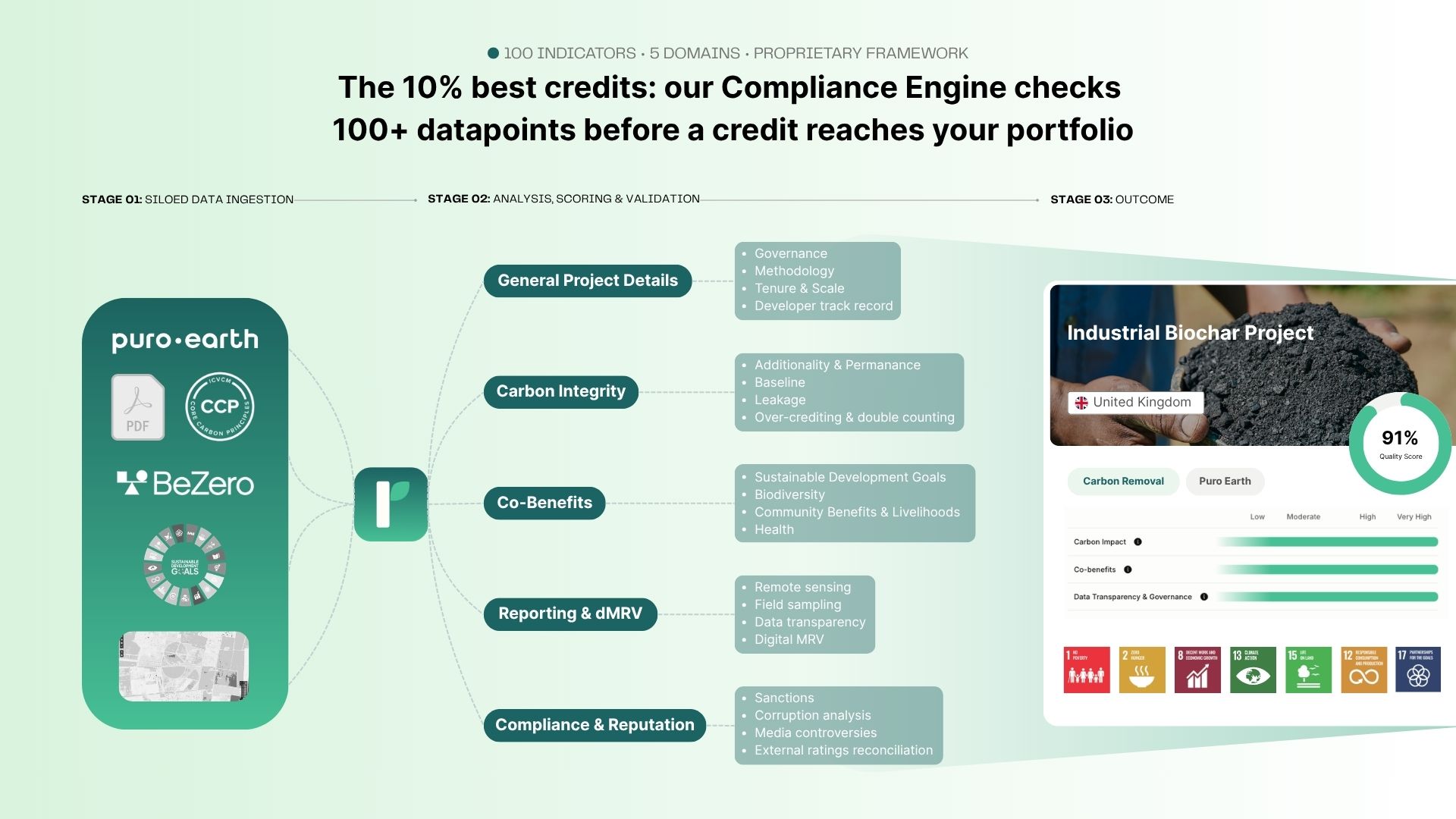
At Regreener, we assess every REDD+ project through our proprietary quality framework, scoring 100+ datapoints across five domains: carbon impact, additionality and permanence, governance and transparency, environmental co-benefits, and social impact. For REDD+ specifically, we apply four additional filters before recommending any project to clients:
Independent rating. Every project on this list has been rated by BeZero Carbon or Sylvera. A rating of BBB or above signals a moderate-to-high likelihood of delivering one genuine tonne of CO2 avoidance per credit. We do not recommend unrated REDD+ projects to buyers who need defensible reporting credentials.
Operational and issuing credits. We only include projects with a proven track record of verified credit issuances. No pre-issuance promises, no suspended registry accounts, no projects under active regulatory review.
No open investigations or reputational flags. We cross-check each project against media investigations, Human Rights Watch reports, academic scrutiny, and registry audit findings. Projects named in Guardian investigations, subject to Verra suspension, or facing unresolved community rights allegations do not appear on this list.
VM0048 transition readiness. Verra's consolidated REDD+ methodology (VM0048) is now mandatory for all registered REDD+ projects and sets jurisdictional baselines to address historic over-crediting. We assess each project's transition status and flag any risk of substantial credit volume reduction.
How Much Do REDD+ Carbon Credits Cost in 2026?
REDD+ credit pricing in 2026 has bifurcated sharply around quality. Generic, unrated REDD+ credits have dropped below €3-5 per tonne - reflecting eroded buyer confidence following years of integrity scandals. High-rated projects tell a different story.
Abatable analysis sets a minimum floor price of €12 per tonne for VM0048-compliant credits from high-quality projects, with conservative scenarios reaching €30. The market is pricing integrity.
For mid-sized European companies offsetting 500-2,000 tonnes annually, a REDD+ portfolio focused on rated, operationally active projects typically costs between €8,000 and €50,000 per year - depending on project selection, vintage, and volume.
The key pricing drivers:
Independent rating (BeZero/Sylvera/Calyx): AA projects command a 4-5x premium over C-rated credits. The premium is earned.
Vintage: Credits from 2020 onwards reflect current methodological standards. Pre-2020 vintages from some projects carry reputational and methodological risk.
Co-benefit certification: VCS + CCB Gold or Triple Gold projects attract a price premium from buyers with biodiversity and community reporting requirements.
VM0048 compliance: Projects already transitioned to the new methodology carry lower regulatory risk and are better positioned for CSRD and SBTi reporting defensibility.
The 5 Best REDD+ Carbon Credits of 2026
Project | Location | Registry ID | Annual CO2 Impact | Certification |
|---|---|---|---|---|
1. Katingan Mentaya | Indonesia | VCS 1477 | 7.5M+ tCO2e | VCS + CCB Gold |
2. Keo Seima Wildlife Sanctuary | Cambodia | VCS 1650 | 1.4M+ tCO2e | VCS + CCB Gold |
3. Tambopata-Bahuaja Biodiversity Reserve | Peru | VCS 1067 | 4.5M+ tCO2e (10yr) | VCS + CCB Gold |
4. Envira Amazonia | Brazil | VCS 1382 | 1.2M+ tCO2e | VCS + CCB Triple Gold |
5. Matavén Forest | Colombia | VCS 1566 | 3.6M+ tCO2e | VCS + CCB Gold |
1. Katingan Mentaya Project (Indonesia, VCS 1477)
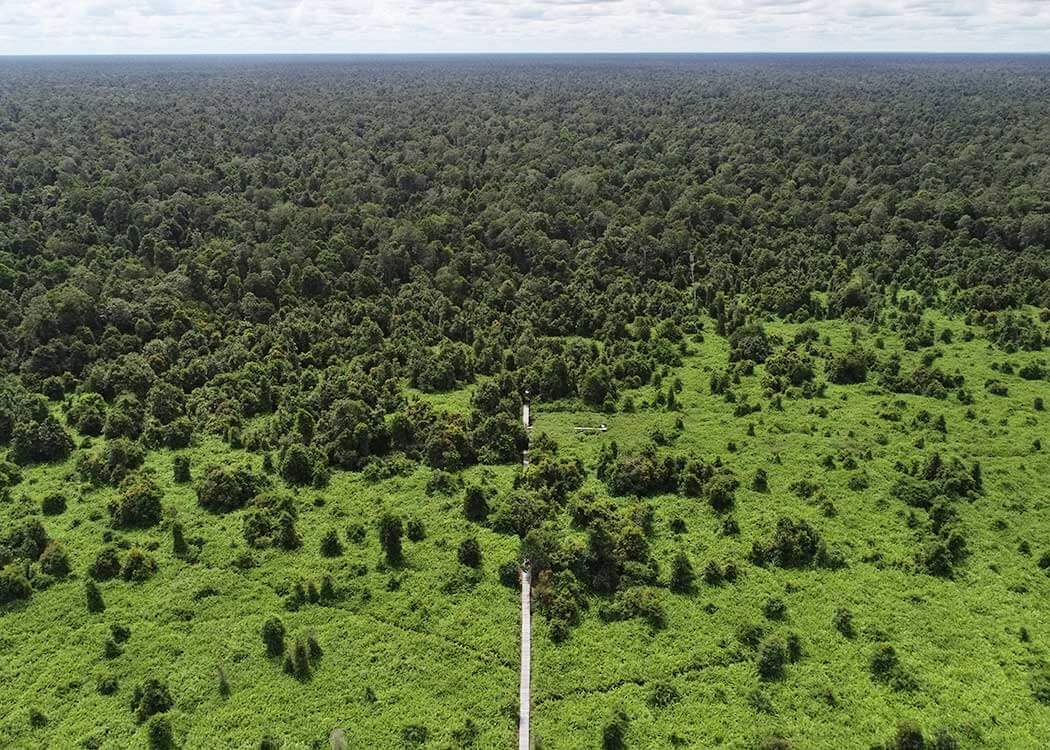
Location: Central Kalimantan, Indonesia
Annual CO2 Impact: 7.5M+ tCO2e
Project Type: REDD+ (Peatland Conservation)
BeZero Rating: AA - the highest available rating in the REDD+ category
Overview
The Katingan Mentaya Project protects over 150,000 hectares of peatland forest in Central Kalimantan - one of the most carbon-dense ecosystems on the planet. Peatlands store carbon accumulated over thousands of years; when drained and burned, they release it in a matter of days. Katingan prevents that from happening, making it not just a forest protection project but a climate emergency response.
The project holds a BeZero AA rating and has been cited by Sylvera as a benchmark for REDD+ quality - the standard other projects are measured against. It is community-driven, combining scientific rigor with traditional knowledge from 34 participating villages.
Key Benefits
Climate: Permanently avoids over 7.5 million tonnes of CO2 annually by protecting peatlands that store carbon for millennia.
Biodiversity: Preserves critical habitat for endangered orangutans, sun bears, and over 500 bird species found nowhere else on Earth.
Community: Empowers 34 villages through sustainable livelihood programs in agroforestry, healthcare, and education, while respecting indigenous land rights.
SDGs: Aligns with SDG 13 (Climate Action), SDG 15 (Life on Land), and SDG 1 (No Poverty).
Why It Stands Out
Katingan is the only REDD+ project to have achieved a BeZero AA rating - a designation reflecting a very high likelihood of genuine CO2 avoidance per credit. It uses satellite monitoring, third-party audits, and open-source data reporting, setting a transparency standard the rest of the market aspires to. Its VM0048 transition is the most watched in the sector precisely because its track record is strong.
2. Keo Seima Wildlife Sanctuary (Cambodia, VCS 1650)
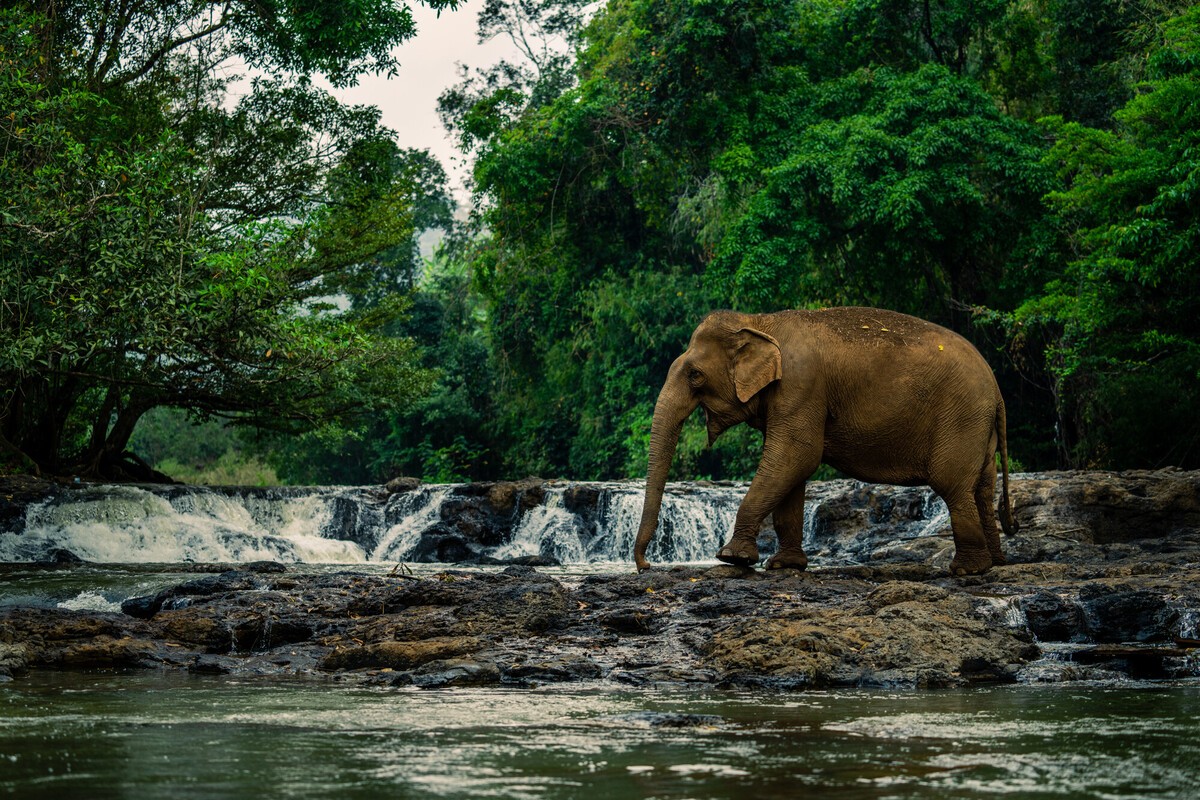
Location: Mondulkiri Province, Cambodia
Annual CO2 Impact: 1.4M+ tCO2e
Project Type: REDD+ (Avoided Unplanned Deforestation)
Certification: VCS + CCB Gold
Overview
The Keo Seima Wildlife Sanctuary REDD+ project protects over 290,000 hectares of tropical rainforest in one of the last unfragmented forest landscapes in Southeast Asia. It sits within the Indo-Burma Biodiversity Hotspot - one of the world's most ecologically significant and threatened regions.
The project is operated by the Wildlife Conservation Society (WCS) in partnership with Cambodia's Ministry of Environment - one of the strongest institutional governance structures in the REDD+ market. WCS has been active in Cambodia since 1999. Over the project's lifetime, it has sold the equivalent of 20 million tonnes of carbon, channelling over $1 million directly to local communities through its "Cash for Communities" benefit-sharing mechanism.
Key Benefits
Climate: Avoids 1.4 million tonnes of CO2e annually by protecting intact rainforest from illegal land clearance, logging, and agricultural conversion driven by large-scale Chinese infrastructure investment in the region.
Biodiversity: Protects 84 threatened species including the black-shanked douc, pileated gibbon, Asian elephant, and sun bear. The sanctuary forms part of the EBA 144 South Vietnam Lowlands Endemic Bird Area.
Community: The project was the first in Cambodia to use a fully independent free, prior, and informed consent (FPIC) process, with independent legal advice for the 20 villages inside and surrounding the protected area. Indigenous Community Land Titles (ICTs) have been established for the Bunong people.
SDGs: Aligns with SDG 10 (Reduced Inequalities), SDG 13 (Climate Action), and SDG 15 (Life on Land).
Why It Stands Out
Keo Seima is the largest REDD+ project in Cambodia's land-use sector and is specifically cited by Sylvera as an example of quality nature-based carbon. What sets it apart from other WCS projects in the region is its community governance model: the FPIC process used at Keo Seima has become a sector reference point for indigenous rights in REDD+ development. No registry suspensions, no human rights investigations, no integrity flags.
3. Tambopata-Bahuaja Biodiversity Reserve (Peru, VCS 1067)
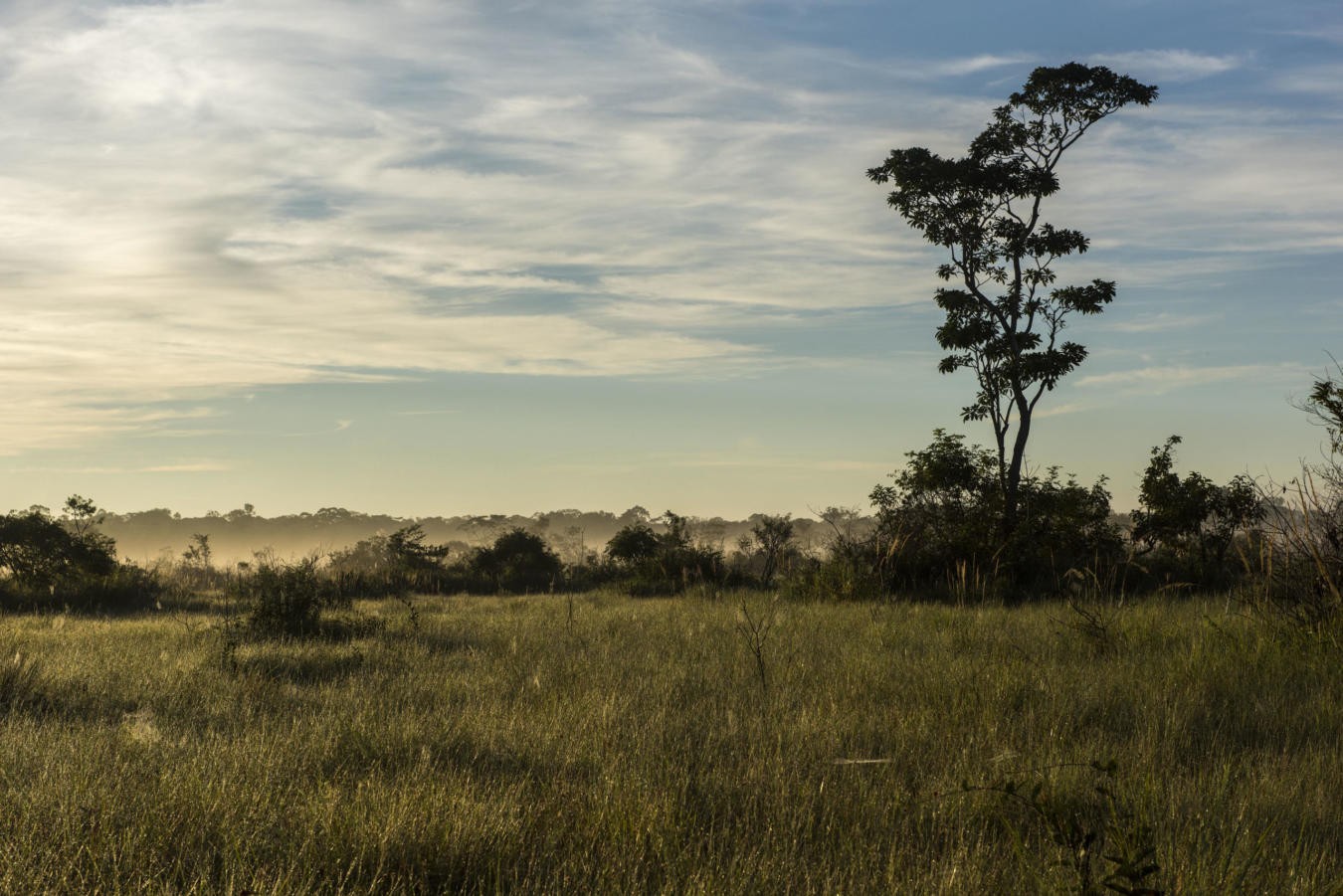
Location: Madre de Dios, Peru
Annual CO2 Impact: 4.5M+ tCO2e (first 10-year period)
Project Type: REDD+ (Avoided Unplanned Deforestation + Buffer Zone Agroforestry)
BeZero Rating: BB - moderate-to-high likelihood of genuine CO2 avoidance
Overview
The Tambopata-Bahuaja Biodiversity Reserve REDD+ project protects 573,000+ hectares of Amazon rainforest in Madre de Dios - recognised as the "Biodiversity Capital of Peru." It is operated by AIDER, a Peruvian NGO with over 25 years of track record in sustainable forest management and REDD+ project development. That local institutional depth matters: it means the project is not dependent on a foreign developer for its long-term viability.
What makes Tambopata structurally distinctive is its buffer zone strategy. Rather than simply protecting the forest boundary, the project actively creates economic alternatives to deforestation by supporting 339 cocoa farmers in the COOPASER cooperative - transitioning degraded agricultural land to sustainable cacao production. The project also addresses illegal gold mining directly, introducing mercury-free extraction methods to reduce one of the Amazon's most damaging environmental threats.
Key Benefits
Climate: Avoids over 4.5 million tonnes of CO2e emissions during the first 10-year crediting period, protecting lowland and foothill rainforests that are the only Amazon ecosystems connected to both cloud forests and moist savannahs.
Biodiversity: Protects endemic species including the Harpy Eagle, Black Caiman, and Giant Otter. The reserve borders the Bahuaja-Sonene National Park, forming a connected ecological corridor.
Community: Supports 339+ cocoa farming families through COOPASER, delivering income diversification and forest-friendly livelihoods that reduce deforestation pressure from the outside in.
SDGs: Aligns with SDG 2 (Zero Hunger), SDG 8 (Decent Work), SDG 13 (Climate Action), and SDG 15 (Life on Land).
Why It Stands Out
Tambopata holds a BeZero BB rating - a solid, commercially relevant quality mark that Fastmarkets notes is trading at a premium above the BB midpoint, reflecting buyer confidence. Its integrated approach - forest protection plus agroforestry buffer zone plus mining remediation - addresses multiple deforestation drivers simultaneously. This is what sustainable forest management looks like when done properly.
4. Envira Amazonia Project (Brazil, VCS 1382)
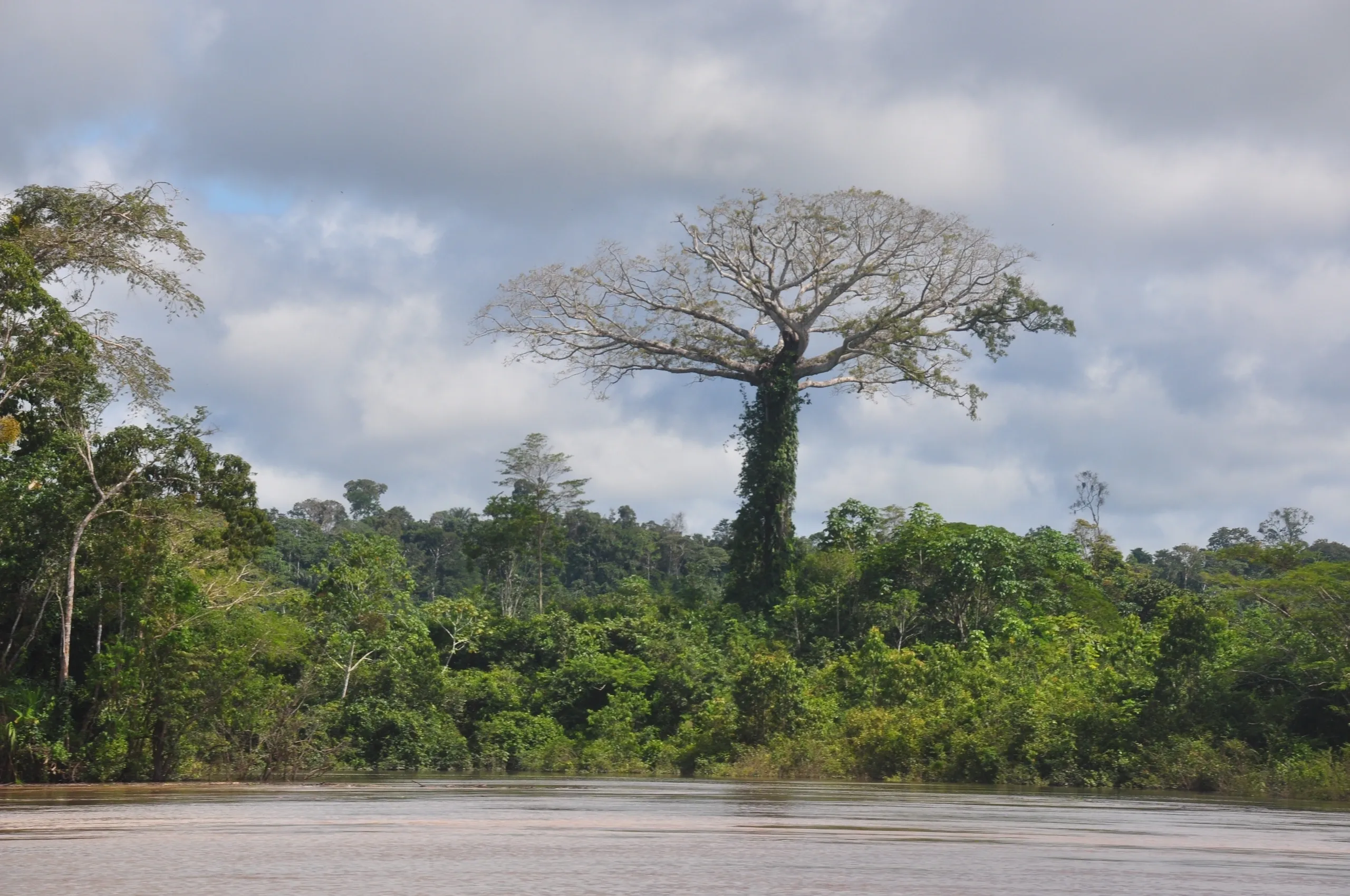
Location: Acre State, Brazil
Annual CO2 Impact: 1.2M+ tCO2e
Project Type: REDD+ (Avoided Unplanned Deforestation)
Certification: VCS + CCB Triple Gold - an exceptionally rare distinction
Overview
The Envira Amazonia Project protects approximately 39,000 hectares of tropical rainforest in Acre - the Brazilian state that has historically been most committed to forest conservation. Acre borders both Peru and Bolivia; its forests form part of the western Amazon arc, which is under increasing pressure from the Interoceanic Highway and expanding cattle and soy frontiers.
Envira Amazonia holds a CCB Triple Gold certification - a distinction that requires independently verified Gold Level performance across all three domains: climate, community, AND biodiversity. Fewer than a handful of REDD+ projects globally have achieved this. The project is developed by CarbonCo and independently audited by Rainforest Alliance, with the validation conducted to both VCS v3.4 and CCB Third Edition standards. Corporate buyers include Gruppo TIM, which used Envira Amazonia credits for the certified carbon neutrality of their websites, publicly disclosed as recently as 2025.
Key Benefits
Climate: Avoids approximately 1.2 million tonnes of CO2 annually over a 30-year crediting period, preventing deforestation in an area exposed to agricultural encroachment and illegal logging.
Biodiversity: Protects habitat for 23 IUCN Red List species in a region where forest connectivity is critical to species migration corridors between the Peruvian and Brazilian Amazon.
Community: Supports local and indigenous communities through sustainable livelihood programs, with direct revenue sharing tied to forest protection outcomes.
SDGs: Aligns with SDG 13 (Climate Action), SDG 15 (Life on Land), and SDG 1 (No Poverty).
Why It Stands Out
The CCB Triple Gold certification is the strongest co-benefit endorsement available in the REDD+ market. It is difficult to achieve - it requires independent verification of measurable outcomes across climate adaptation, biodiversity conservation, and community development simultaneously. For buyers who need to substantiate nature-positive or community-impact claims alongside carbon metrics, Envira Amazonia is one of the strongest available options in the Brazilian Amazon.
5. Matavén Forest REDD+ Project (Colombia, VCS 1566)
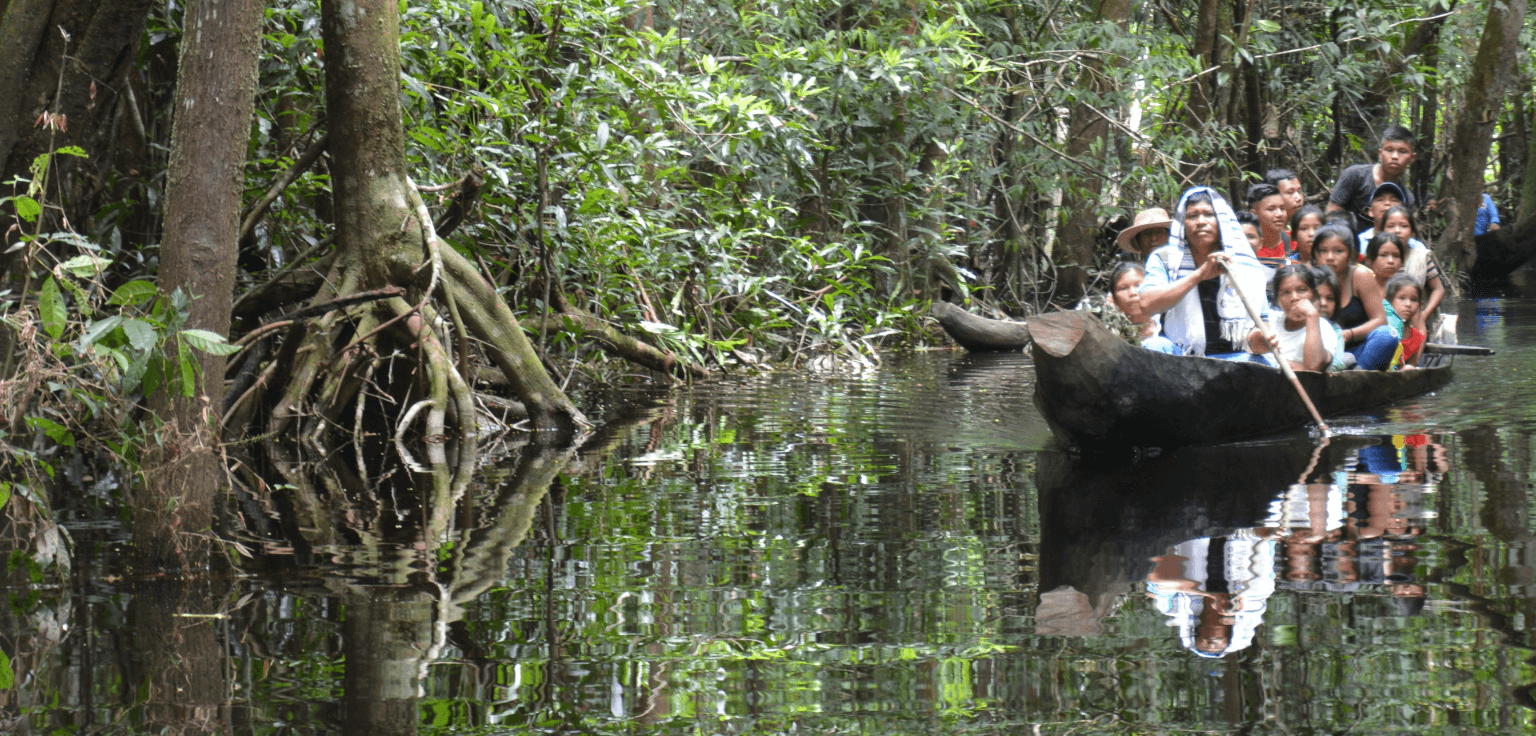
Location: Orinoco-Amazon transition zone, Colombia
Annual CO2 Impact: 3.6M+ tCO2e
Project Type: REDD+ (Avoided Deforestation and Community-Led Conservation)
Certification: VCS + CCB Gold Level
Overview
The Matavén Forest REDD+ Project is among the most exceptional examples of indigenous-led climate action in the voluntary carbon market. It protects over 1.15 million hectares of tropical forest - Colombia's largest well-preserved transition zone between the Orinoco savannahs and the Amazon rainforest.
The project is led by ACATISEMA - the Association of Indigenous Cabildos and Traditional Authorities of the Matavén Forest - in genuine governance partnership with six ethnic groups: Sikuani, Piaroa, Puinave, Curripaco, Cubeo, and Piapoco. This is not carbon finance with community consultation bolted on. The project was designed by and for the 15,900+ indigenous people who have managed these forests for generations. Its CCB Gold Level certification reflects that.
Key Benefits
Climate: Avoids 3.6 million tonnes of CO2 annually by preventing deforestation and forest degradation driven by illegal cattle grazing, land grabbing, and resource extraction.
Biodiversity: Protects a hotspot containing 249 bird species, 198 butterfly species, and 121 plant species - many endemic to the region. The forest acts as a critical ecological corridor between the Orinoco and Amazon basins.
Community: Delivers access to education, healthcare, sanitation, food security, and sustainable livelihoods for 15,900+ people from six ethnic groups. Women's leadership in governance and conservation decision-making is explicitly embedded in the project design.
SDGs: Aligns with SDG 3 (Good Health), SDG 4 (Quality Education), SDG 6 (Clean Water), SDG 13 (Climate Action), and SDG 15 (Life on Land).
Why It Stands Out
Matavén is a global benchmark for what indigenous-led forest conservation can achieve at scale. Its governance model - traditional authority structures running a VCS-verified carbon project - has attracted attention from both the scientific community and institutional carbon buyers. It demonstrates that permanence is not just a technical question about buffer pools: when the communities who own the forest have full agency over its management, the long-term prognosis is structurally stronger.
What B2B Buyers Need to Know About REDD+ in 2026
VM0048 - Verra's New REDD+ Methodology
The most important development in REDD+ for corporate buyers in 2025-2026 is Verra's release of VM0048 - a consolidated methodology that fundamentally changes how baselines are set for avoided deforestation projects.
Under older methodologies, individual project developers set their own deforestation baselines - estimates of how much forest would have been cleared without the project. Investigations found this discretion was frequently used to inflate credit volumes, generating credits that represented little or no real emissions reduction. The Berkeley Carbon Trading Project estimated that only a fraction of issued REDD+ credits reflect genuine climate benefit.
VM0048 addresses this by shifting baseline-setting to the jurisdictional level. Verra now produces a single deforestation risk map for each country or state, and projects are allocated their baseline from that map. This removes developer discretion and aligns all projects within a jurisdiction to the same conservative standard.
The consequence: credit volumes from many REDD+ projects will fall substantially as they transition to VM0048. Abatable modelling suggests emissions avoidance estimates could drop 30-90% for some Brazilian projects under the new approach. This is why high-rated, VM0048-ready projects are commanding premiums - their credits will hold their value as weaker projects see issuances collapse.
All five projects on this list are registered under the VCS program and subject to mandatory VM0048 transition. Their strong independent ratings suggest they are better positioned than average to absorb this transition without significant quality degradation.
The CCP Label and What It Means for REDD+
The Integrity Council for the Voluntary Carbon Market (ICVCM) has approved the CCP label for REDD+ projects using Verra's VM0048 methodology. As of early 2026, CCP-labelled REDD+ credits are emerging as the preferred choice for companies reporting under CSRD or following SBTi guidance.
CCP-labelled credits do not exist as a separate category - they are VCS credits whose methodology has received ICVCM programme accreditation. As VM0048 rolls out and projects complete their transition, the share of REDD+ credits eligible for the CCP label will grow through 2026-2027. Buyers should ask their provider whether the specific credits they are purchasing will qualify.
How to Choose the Right REDD+ Credit for Your Business
With REDD+ integrity now more scrutinised than ever, project selection is a due diligence exercise, not a procurement checkbox. These are the criteria that matter:
Independent rating (BeZero/Sylvera). The single most reliable proxy for credit quality. A rating of BBB or above means an independent expert has assessed the project's carbon accounting, additionality, and permanence methodology and found it credible. Unrated credits carry unknown risk.
Operational status and registry standing. Verify the project is active and issuing credits on the Verra Registry. A credit from a project with a suspended registry account, an inactivated methodology, or an open government investigation is not a credit you want in your sustainability report.
CCB certification and co-benefit verification. VCS alone confirms carbon accounting. CCB Gold or Triple Gold confirms that biodiversity and community benefits have been independently verified - not just claimed. For buyers reporting under CSRD, the distinction matters.
VM0048 transition status. Ask your provider whether the project has already transitioned to VM0048 or has a confirmed timeline. Projects operating under legacy methodologies face potential credit volume reductions that could affect supply continuity.
Price vs. vintage. High-rated, post-2020 vintage credits from the projects on this list trade at a premium - but it is a premium worth paying. The reputational risk of holding low-rated credits in your sustainability disclosure is far higher than the per-tonne price difference.
At Regreener, we work with 200+ European businesses to build REDD+ portfolios that hold up under CSRD reporting scrutiny, SBTi alignment, and stakeholder due diligence. We do not recommend any project we would not stake our own reputation on.
The Future of REDD+: What to Watch in 2026-2030
VM0048 rollout will reshape the project landscape over the next two to three years. Expect credit volumes from lower-quality projects to fall sharply. Higher-rated projects with conservative historical baselines will strengthen their market position.
CCP label expansion for REDD+ projects using VM0048 will increase buyer confidence and potentially open REDD+ credits to compliance-adjacent use cases under CORSIA and national carbon markets.
Jurisdictional REDD+ (JREDD+) - national or state-level programs certified under ART-TREES - is emerging as a complement to project-level credits. Countries including Guyana, Costa Rica, and several Brazilian states are developing JREDD+ programmes that could deliver large volumes of high-integrity credits by 2028-2030.
Corporate commitments are moving beyond individual project purchases toward multi-year portfolio agreements. Companies locking in supply from high-rated REDD+ projects now are better positioned for both price stability and reporting credibility.
Next Steps: Buying REDD+ Carbon Credits Through Regreener
REDD+ is not a commodity you buy off a shelf. The quality gap between the top 10% of projects and the bottom half is wider than in almost any other credit category - and the consequences of getting it wrong are reputational, not just financial.
Start by mapping your offset need and reporting context. How many tonnes do you need to cover, and what framework are you reporting under? A CSRD reporter needs audit-ready documentation. An SBTi net-zero claimant needs credits that meet the "beyond-value-chain mitigation" criteria. The answer shapes which projects and vintages are appropriate.
From there, define your co-benefit priorities. Katingan and Keo Seima are strong biodiversity plays. Tambopata addresses community livelihoods and environmental remediation. Matavén is the right fit for buyers whose ESG narrative centres on indigenous rights. Envira Amazonia's CCB Triple Gold makes it the strongest option for buyers who need to substantiate nature-positive claims.
Most clients end up combining two or three projects rather than concentrating in one.
Regreener has helped 200+ European businesses build carbon portfolios that hold up under regulatory scrutiny. Explore our case studies to see how we have helped companies including BDO and Spark Optimus navigate this process.