
If you're evaluating carbon removal credits through Puro.earth, you're already past the 'should we offset?' question. The real question is: which projects deliver the most durable, verified removal for your money?
Puro.earth is the leading standard for exactly this: engineered, durable, verified removal. But which projects actually deliver? We vetted the field using Regreener's 100+ datapoint quality framework. Here are the five Puro.earth carbon removal projects we'd put client money behind in 2026.
What Is a Carbon Removal Credit?
A carbon removal credit represents the permanent removal of one metric ton of CO2 from the atmosphere. Unlike traditional carbon offsets, which focus on avoiding emissions, carbon removal credits ensure that CO2 is actively captured and stored for the long term.
This approach is essential for addressing historical emissions and achieving true net-zero goals. Carbon removal methods include biochar, enhanced weathering, and direct air capture (DAC), each offering unique benefits for climate action.
Puro addresses this challenge by certifying projects that meet strict criteria for durability, measurability, and additionality. Through its CO2 Removal Certificate (CORC) standard, Puro.earth ensures that every ton of CO2 removed is real, permanent, and verifiable. For businesses committed to making a tangible climate impact, Puro.earth provides a trusted platform to invest in scalable, science-backed carbon removal solutions.
What Is Puro.earth?
Puro.earth is the world’s first certification standard and registry dedicated exclusively to carbon removal. It certifies and trades CO₂ Removal Certificates (CORCs), where each CORC represents one metric ton of CO₂ permanently removed from the atmosphere.
Puro.earth ensures that all projects meet strict criteria for durability, measurability, and additionality. The platform connects businesses with high-quality carbon removal projects, enabling them to invest in real climate solutions.
The companies buying CORCs aren't niche players. Microsoft, Shopify, and Zurich Insurance Group all retire CORCs through the Puro Registry to underpin their net-zero commitments. In Q1 2025, Puro.earth passed the milestone of one million CORCs issued — with biochar and geologically stored carbon accounting for over two-thirds of total issuances. That kind of institutional demand signals exactly what the market is telling you: removal credits aren't optional anymore, they're becoming the standard for credible corporate climate action.
"Puro.earth is the only carbon standard that exclusively certifies durable engineered removal — no avoidance credits, no nature-based offsets."
What Makes a Carbon Removal Credit High Quality?
Not all carbon removal credits are created equal. High-quality credits must meet several key criteria:
Durability: The CO₂ must be stored for centuries or longer, ensuring that the removal is permanent.
Measurability: The amount of CO₂ removed must be accurately quantified and verified.
Additionality: The removal must go beyond what would have happened under business-as-usual conditions.
Transparency: Projects must provide clear, accessible data on their methods, impacts, and verification processes.
Puro.earth’s CORC standard ensures that all certified projects meet these criteria, providing confidence for buyers.
"A CORC represents one metric ton of CO₂ removed and durably stored for 100+ years — verified by independent third-party auditors."
How We Selected These Projects
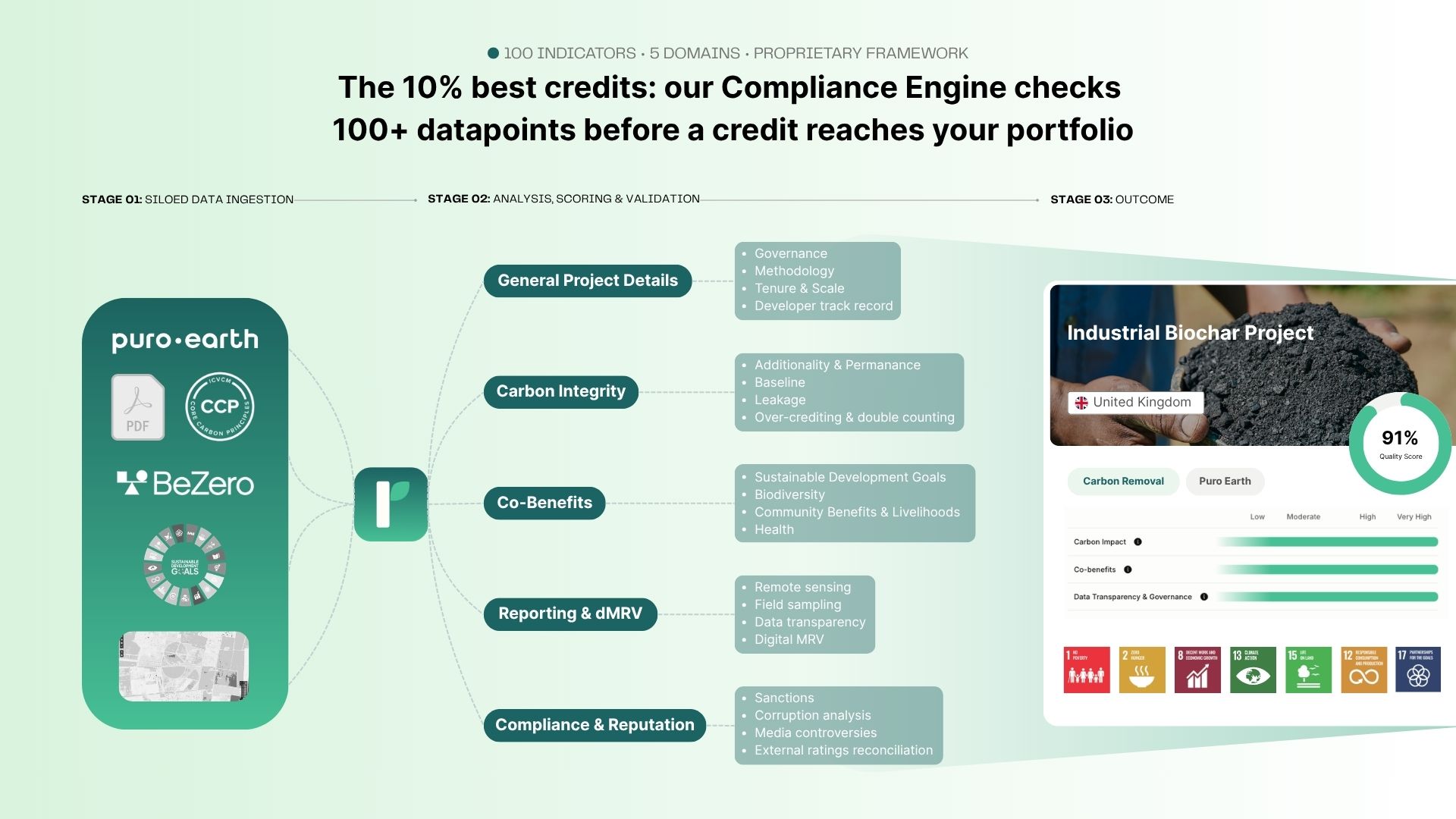
Not every project on the Puro.earth registry belongs in a "best of" list. Over 50 certified suppliers issue CORCs — but verified removal volume, operational track record, and real-world co-benefits vary between them.
At Regreener, we evaluate carbon removal projects using our proprietary quality framework, which scores across 100+ datapoints covering five domains: carbon impact, co-benefits, governance and transparency, durability, and monitoring and reporting. For this list, we applied four additional filters specific to Puro.earth CORCs:
Proven issuance track record. We only included projects that have actually issued CORCs — not projects still in development or awaiting first verification. Paper promises don't remove carbon.
Minimum 100-year storage durability. All projects on this list meet Puro.earth's CORC 100+ threshold, meaning the carbon is stored for at least a century. We prioritised projects with evidence of multi-century or millennial-scale permanence.
Meaningful annual removal volume. We filtered for projects removing at least 3,000 tCO₂ per year. Smaller pilots are valuable for innovation but less relevant for corporate buyers who need volume.
Verified co-benefits beyond carbon. Every project on this list delivers measurable social, economic, or ecological outcomes alongside removal — from farmer income and soil restoration to green job creation and biodiversity protection.
Projects that lacked transparent reporting, had unresolved audit findings, or relied on unproven storage mechanisms were excluded — regardless of their Puro.earth certification status. Certification is the baseline, not the finish line.
"At Regreener, we've evaluated over 30 Puro.earth projects using our 100+ datapoint quality framework before recommending any to our 200+ B2B clients."
The 5 Best Puro.earth Carbon Removal Projects of 2025
1. Riberalta Biochar Project (Bolivia)
Project Type: Biochar
Location: Riberalta, Bolivia
Annual Removal: 10,000+ tCO₂
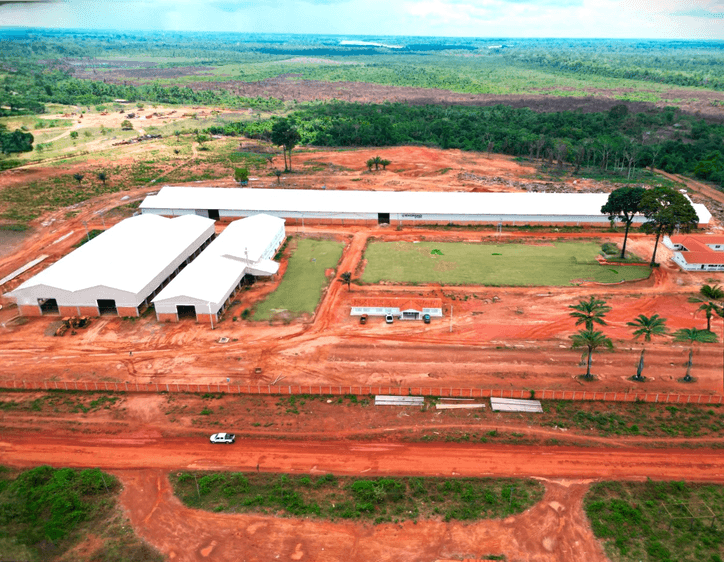
The Riberalta project converts agricultural waste into biochar through pyrolysis — a process that heats biomass in the absence of oxygen, locking carbon into a stable solid form that persists in soil for centuries. The project supports local farming communities by improving soil fertility, reducing dependence on synthetic fertilizers, and easing deforestation pressure in the surrounding area.
Key Benefits:
Climate: Removes 10,000+ tCO₂ annually through pyrolysis of agricultural waste.
Social: Provides additional income for local farming communities.
Biodiversity: Reduces pressure on nearby forests, protecting ecosystems.
SDGs: Supports SDG 13 (Climate Action), SDG 15 (Life on Land), and SDG 2 (Zero Hunger).
"Biochar accounts for over 34% of all CORCs issued to date, making it the most deployed removal method on the Puro.earth registry."
2. Novocarbo Rhine Biochar (Germany)
Project Type: Biochar
Location: Multiple sites across Germany (including Grevesmühlen, Bochum, and the Rhine region)
Annual Removal: 3,200+ tCO₂ per site (scaling rapidly)
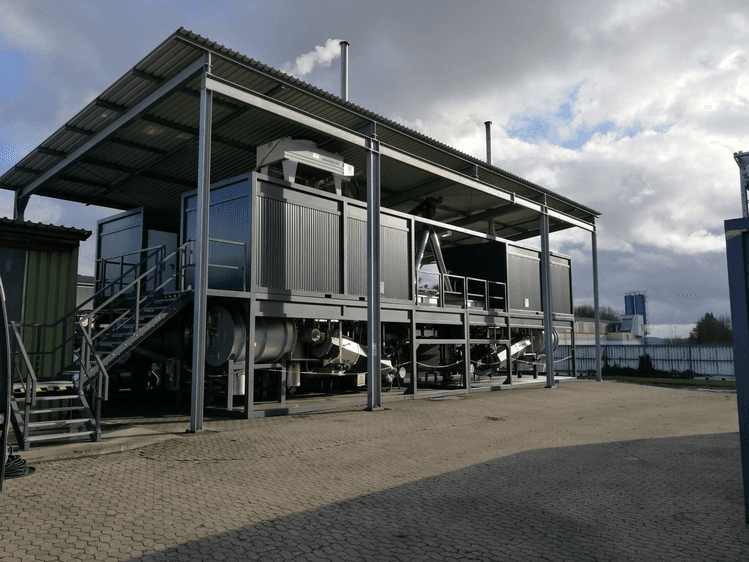
Novocarbo operates a growing network of Carbon Removal Parks across Germany, using state-of-the-art PYREG pyrolysis technology to convert biogenic residues — primarily forest residues, woodchip production waste, and green waste — into high-quality, EBC-certified biochar.
The process simultaneously generates renewable heat, which Novocarbo supplies to local district heating networks through its heat-as-a-service model. The biochar is applied in agriculture as a soil conditioner, in blue-green infrastructure projects (such as sponge-city stormwater management in Scandinavia), and increasingly in industrial applications like biochar-infused asphalt and concrete. Novocarbo's credits are verified under the Puro Standard and issued as CORCs with 100+ year durability.
Key Benefits:
Climate: Each Carbon Removal Park removes 3,200+ tCO₂ annually, with plans to scale to 200 sites by 2033.
Social: Creates green industrial jobs and supplies climate-neutral heat to municipal utilities.
Biodiversity: Uses only certified regional biomass residues; biochar application enhances soil health and water filtration.
SDGs: Supports SDG 13 (Climate Action), SDG 7 (Affordable and Clean Energy), and SDG 9 (Industry, Innovation, and Infrastructure).
3. Climeworks Mammoth DAC Plant (Iceland)
Project Type: Direct Air Capture (DAC)
Location: Hellisheiði, Iceland
Annual Removal: up to 36,000+ tCO₂
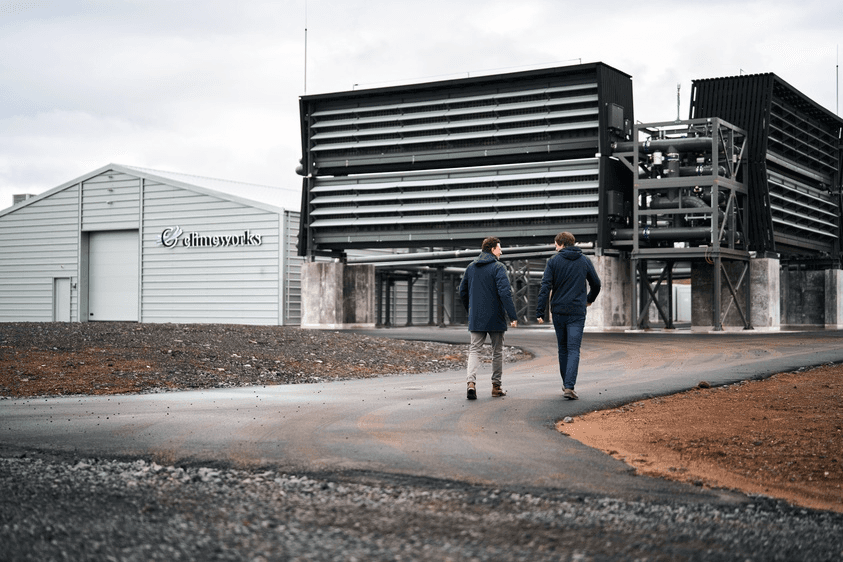
Climeworks' Mammoth plant is the world's largest operational direct air capture and storage (DAC+S) facility — roughly nine times the capacity of its predecessor, Orca, which launched on a neighbouring site in 2021.
Mammoth uses 72 modular collector containers fitted with solid sorbent filters to capture CO₂ directly from the atmosphere. The captured CO₂ is then injected underground in partnership with Carbfix, where it mineralises into stable rock within approximately two years.
The entire process runs on renewable geothermal energy from Iceland's Hellisheiði power plant, minimising operational emissions. Climeworks is one of the most established players in the DAC sector, with over seven years of field experience and corporate offtake agreements with buyers including Microsoft, JPMorgan Chase, and Swiss Re.
Key Benefits:
Climate: Designed to capture up to 36,000 tCO₂ per year, with geological storage offering millennial-scale permanence.
Social: Creates green jobs in Iceland’s clean energy sector.
Biodiversity: Minimal land and water use compared to other methods.
SDGs: Contributes to SDG 7 (Affordable and Clean Energy) and SDG 13 (Climate Action).
4. Farm Gai Kaisa Biochar (Nambia)

Project Type: Biochar
Location: Namibia
CORCs Issued: 19,500+
Farm Gai Kaisa is the largest industrial biochar project in Africa, operated by Carbon Capital in partnership with biochar developer Planboo. The project uses retort kiln technology to convert encroacher bush — invasive acacia species that degrade Namibia's savannah rangelands — into high-quality biochar. This turns an ecological liability into a durable carbon removal product: the biochar is applied to local agricultural soils, where it improves water retention, restores soil health, and sequesters carbon for centuries.
The project has received a Sylvera A rating, one of the highest quality assessments in the carbon removal market, and is registered on the Puro.earth registry under the Biochar Methodology (Edition 2022). With over 19,500 CORCs issued and a 100% delivery track record, Farm Gai Kaisa is a proven, scalable operation.
Key Benefits:
Climate: Over 19,500 CORCs issued to date, with ongoing production scaling.
Social: Sustains 85 direct jobs and channels millions into the rural Namibian economy monthly.
Biodiversity: Removes invasive encroacher bush, restoring native savannah ecosystems and improving rangeland carrying capacity.
SDGs: Supports SDG 13 (Climate Action), SDG 15 (Life on Land), SDG 8 (Decent Work and Economic Growth), and SDG 2 (Zero Hunger).
5. Fasera TSB Facility (Australia)
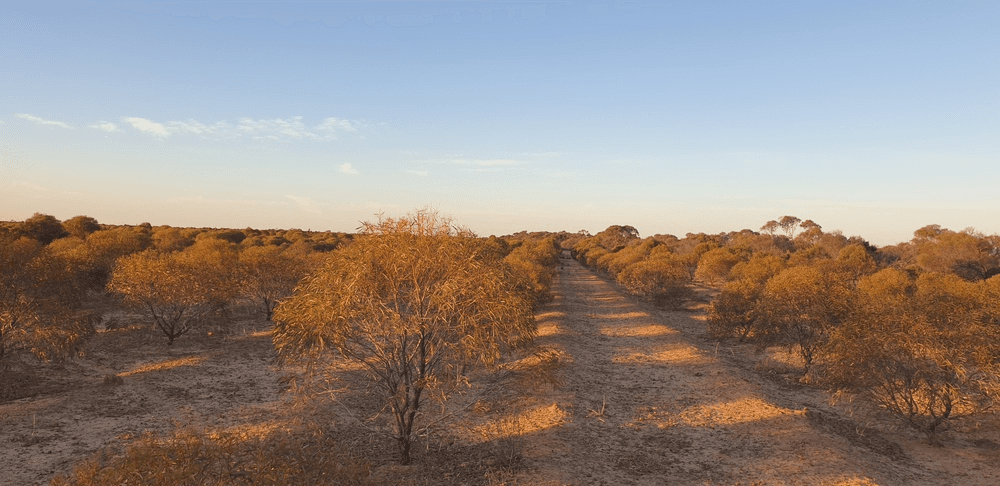
Project Type: Terrestrial Storage of Biomass (TSB)
Location: Australia
Annual Removal: 8,000+ tCO₂
Fasera's Terrestrial Storage of Biomass (TSB) project uses one of Puro.earth's newer carbon removal methodologies. TSB works by sourcing woody biomass — such as logging residues and wood waste — and burying it in purpose-built underground storage chambers designed to inhibit decomposition.
By isolating lignin-rich biomass from oxygen and moisture, the method prevents the carbon from re-entering the atmosphere, achieving durable sequestration for 100+ years with over 90% carbon efficiency.
Unlike biochar (which transforms biomass through pyrolysis) or DAC (which uses industrial filtration), TSB leverages the carbon already captured by trees through photosynthesis and simply prevents its release. The Puro.earth methodology for TSB was developed in 2023 and Fasera is among the first certified suppliers under this standard.
Key Benefits:
Climate: Removes 8,000+ tCO₂ annually by replacing emissions-intensive materials.
Social: Supports local forestry jobs and rural economies.
Biodiversity: Reduces demand for virgin timber, protecting forests.
SDGs: Aligns with SDG 9 (Industry, Innovation, and Infrastructure) and SDG 13 (Climate Action).
Comparison: Which Project Fits Your Goals?
Project | Type | Removal | Key Benefits | Best For |
|---|---|---|---|---|
Riberalta Biochar | Biochar | 10,000+ tCO₂/yr | Soil fertility, farmer income | Agricultural co-benefits and rural development |
Novocarbo Carbon Removal Parks | Biochar | 3,200+ tCO₂/yr per site | Green heat, soil health, industrial applications | European operations with scalable, multi-site deployment |
Climeworks Mammoth | Direct Air Capture (DAC) | Up to 36,000 tCO₂/yr | Millennial-scale geological storage, minimal land use | Corporates with net-zero commitments requiring highest permanence |
Farm Gai Kaisa | Biochar | 19,500+ CORCs issued | Rangeland restoration, 85 jobs, Sylvera A-rated | Buyers seeking proven African projects with biodiversity co-benefits |
Fasera TSB Facility | Terrestrial Storage of Biomass | CORC 100+ | 90%+ carbon efficiency, low cost | Organisations looking for emerging, cost-effective removal methods |
Explore our Case Studies: for our clients (such as BDO, Capital A and Shift4Good) seeking removal-only portfolios, we typically recommend a mix of biochar for immediate deployment and DAC for long-term permanence.
How to Buy Carbon Removal Credits (CORCs) from Puro.earth through Regreener
Puro.earth doesn't sell CORCs directly — you buy them through certified suppliers and resellers. That means your choice of partner matters just as much as your choice of project.
Regreener is one of the few carbon credit providers that specialises in high-integrity removal credits, including Puro.earth CORCs. Here's what sets us apart:
We vet every project before it enters a client portfolio. Our proprietary quality framework scores carbon credit projects across 100+ datapoints — covering carbon impact, co-benefits, governance, durability, and reporting. Not every Puro.earth-certified project makes the cut. We only recommend projects we'd stake our reputation on.
We build portfolios, not shopping carts. Most buyers don't need a single project — they need a balanced removal portfolio that covers different methods, geographies, and risk profiles. We typically advise clients to combine immediately deployable methods like biochar with high-permanence technologies like DAC, tailored to their sector, budget, and reporting requirements.
We handle procurement, retirement, and reporting. From selecting the right CORCs to retiring them in the Puro Registry under your company's name, we manage the full process. You get audit-ready documentation for your sustainability report, ESG disclosures, or SBTi net-zero claim — without the administrative overhead.
We're B Corp certified and trusted by 200+ companies. Regreener is one of the few carbon credit providers in Europe with B Corp certification. Our clients range from mid-market companies taking their first step into carbon removal to multinationals building enterprise-grade offsetting programmes. We operate with full transparency on pricing, project selection, and impact reporting.
We stay ahead of the standards. The voluntary carbon market is evolving fast — SBTi V2.0, VCMI Claims Code, ICVCM Core Carbon Principles or Oxford Offsetting Principles. We track these developments daily and proactively adjust client portfolios to stay aligned. When you work with Regreener, your removal strategy doesn't become outdated six months after you sign.
Risks and Considerations
When investing in carbon removal projects, it is important to consider several risks and factors to ensure the integrity and effectiveness of your investment.
Durability is a key consideration, as not all carbon removal methods offer the same level of permanence. For example, biochar and mineralization can store CO₂ for centuries to millennia, while some nature-based solutions may require ongoing monitoring to ensure that the carbon remains sequestered. Prioritizing methods with proven long-term storage, such as direct air capture or enhanced weathering, can help mitigate this risk.
Scalability is another important factor. Some carbon removal technologies, like direct air capture, are capital-intensive but have the potential for massive scaling in the future. Others, such as biochar, are lower-cost and can be deployed immediately. Balancing your portfolio between immediately deployable solutions and high-potential technologies can help you achieve both short-term and long-term climate goals.
Cost is also a significant consideration. Carbon removal credits are generally more expensive than traditional avoidance offsets, reflecting their greater climate impact. Prices can range from $50 to $600 per metric ton of CO₂, depending on the method. While the higher cost may be a barrier for some, it is important to recognize that this investment delivers real, measurable climate benefits. Early adoption of these technologies can also help drive down future costs as they become more widespread.
Additionality and Measurement are critical to ensuring that your investment delivers real impact. It is essential to verify that the projects you support go beyond business-as-usual practices and that their CO₂ removal is accurately measured and reported. Puro.earth’s CORC standard guarantees both additionality and precise measurement, providing confidence in the integrity of your credits.
💡 Expert tip: "Don't put all your removal budget into one method. We advise clients to split between biochar (proven, affordable, deployable now) and DAC (highest permanence, future-proofing your portfolio). A 70/30 split is a solid starting point." —
Bernard de Wit, Founder
Red Flags to Avoid:
Projects that lack third-party certification.
Methods with unproven durability or unclear storage mechanisms.
Projects that do not provide transparent data on their removal and storage processes.
Claims of scalability that are not backed by evidence or credible plans.
By carefully considering these risks and factors, you can make informed decisions that align with your sustainability goals and contribute to meaningful climate action.
Next Steps: Buying Puro.earth CORC's
The five Puro.earth projects highlighted represent the most promising carbon removal solutions available today. Biochar projects like Riberalta and Farm Gai Kaisa offer scalable, nature-based removal, while enhanced weathering (Novocarbo) and DAC (Climeworks Mammoth) provide permanent, high-tech solutions. For industries like construction, Fasera’s wood-based storage delivers durable and practical decarbonization.
Ready to take the next step? Whether you're looking to offset emissions, enhance your sustainability strategy, or explore high-integrity carbon projects, expert guidance can help you make the right choices. Contact Regreener today to speak with our team and start your journey toward meaningful climate impact.