
Not all carbon credit traders are equal - and in 2026, picking the wrong one is an ESG liability. Here's who actually makes the cut, ranked on the criteria that matter: project quality, risk management, pricing transparency, and compliance fit.
The carbon market has evolved dramatically over the past decade, shifting from a niche offsetting tool to a core component of corporate sustainability strategies. Yet not all traders are created equal. Some leverage cutting-edge technology, while others focus on personalized service. After evaluating a range of options, we’ve identified the five best carbon credit traders of 2026.
This guide will help you understand what sets these traders apart, what to watch out for when making your selection, and why the right partnership can make or break your carbon offsetting strategy.
Quick answer: The 5 best carbon credit traders of 2026 are: Regreener, AirCarbon Exchange, Carbon Trade Exchange, Toucan Protocol, and Xpansiv — ranked on project quality, risk mitigation, pricing transparency, client support, and compliance expertise.
Want to know which credits fit your company's climate strategy?
Book a free consultation today
What is a Carbon Credit?
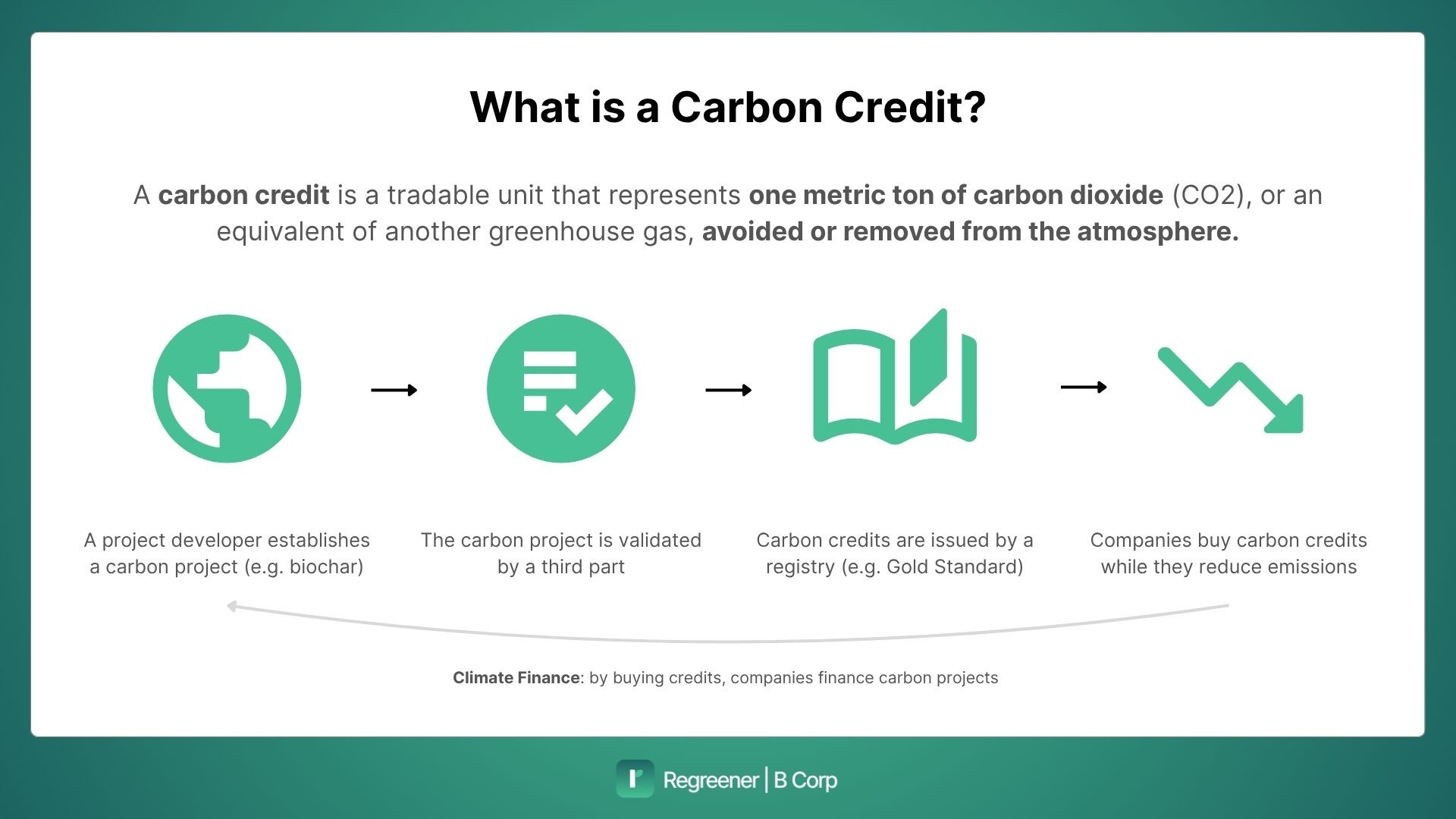
A carbon credit represents one metric ton of carbon dioxide (CO₂) or its equivalent in other greenhouse gases that has been either removed from the atmosphere or prevented from being emitted. These credits are generated by projects that reduce, avoid, or sequester emissions—such as reforestation, biochar, or enhanced rock weathering initiatives.
Companies, governments, and individuals can purchase carbon credits to offset their own emissions, helping them achieve net-zero or carbon-neutral goals. Each credit is verified by independent third parties to ensure its legitimacy, preventing double-counting and ensuring real climate impact. Carbon credits play a crucial role in financing sustainable development, particularly in regions where traditional funding is scarce, while providing a measurable way to compensate for unavoidable emissions.
What is the definition of a Carbon Credit Trader?
A carbon credit trader is a company that acts as an intermediary between carbon credit project developers and corporate buyers. Rather than generating credits themselves, traders source, curate, and procure credits on behalf of their clients — handling due diligence, quality verification, and portfolio construction so buyers don't have to navigate the market alone.
The best traders go beyond simple transactions: they advise on strategy, manage regulatory risk, and ensure every credit in your portfolio meets the standards required for credible ESG reporting. Think of them as the specialist procurement partner for your carbon strategy — distinct from self-serve trading platforms (where you buy directly without guidance) and full-service climate consultancies (which focus primarily on measurement and reduction).
Carbon Credit Trader vs. Broker vs. Platform: What's the Difference?
If you've spent any time researching carbon credits, you've likely encountered these three terms used interchangeably — but they describe meaningfully different types of companies, and choosing the right one depends on what your business actually needs.
A carbon credit trader sources, curates, and procures credits on behalf of corporate clients. They take an active role in quality assessment, portfolio construction, and ongoing strategy — acting as an extension of your procurement or sustainability team. Traders typically work with a curated selection of projects they've vetted themselves, which means you benefit from their expertise rather than having to evaluate the market independently. Regreener operates as a trader.
A carbon credit broker facilitates transactions between buyers and sellers without necessarily taking a position on quality or strategy. Brokers match supply with demand and earn a commission on each transaction. They can provide access to a wide range of credits, but the due diligence on project quality typically remains the buyer's responsibility. Brokers are most useful for sophisticated buyers who already know what they want and simply need execution.
A carbon credit platform or exchange is a digital marketplace where buyers can browse, compare, and purchase credits directly — often without human advisory support. Platforms like Xpansiv or Carbon Trade Exchange offer transparency and price discovery, but they require the buyer to have sufficient in-house expertise to evaluate projects independently. They are best suited to companies with dedicated carbon procurement teams or those making high-volume, standardized purchases.
The bottom line: if your company is building a carbon strategy for the first time, navigating EU compliance requirements, or wants credits that can withstand external ESG scrutiny, a trader is typically the right starting point. If you have in-house expertise and need scale or liquidity, a platform or broker may complement your approach.
Want to know which credits fit your company's climate strategy?
Book a free consultation today
How We Evaluated the Top 5 Carbon Credit Traders
To create this ranking, we analyzed each trader using the following weighted criteria:
Evaluation Criteria
Criteria | Why It Matters |
|---|---|
Project Quality | Ensures credits represent real, additional emissions reductions |
Risk Mitigation | Protects buyers from greenwashing and regulatory risks |
Pricing Transparency | Eliminates hidden fees and unexpected costs |
Client Support | Provides dedicated guidance throughout the trading process |
Compliance Expertise | Navigates complex and evolving regulations like EU CBAM and Article 6 |
Article 6 & SBTi Alignment | Ensures credits are compatible with Paris Agreement mechanisms and Science Based Targets — increasingly required by corporate sustainability teams and auditors |
The 5 Best Carbon Credit Traders of 2026
1. Regreener: The Gold Standard for Risk-Free, High-Impact Carbon Credits
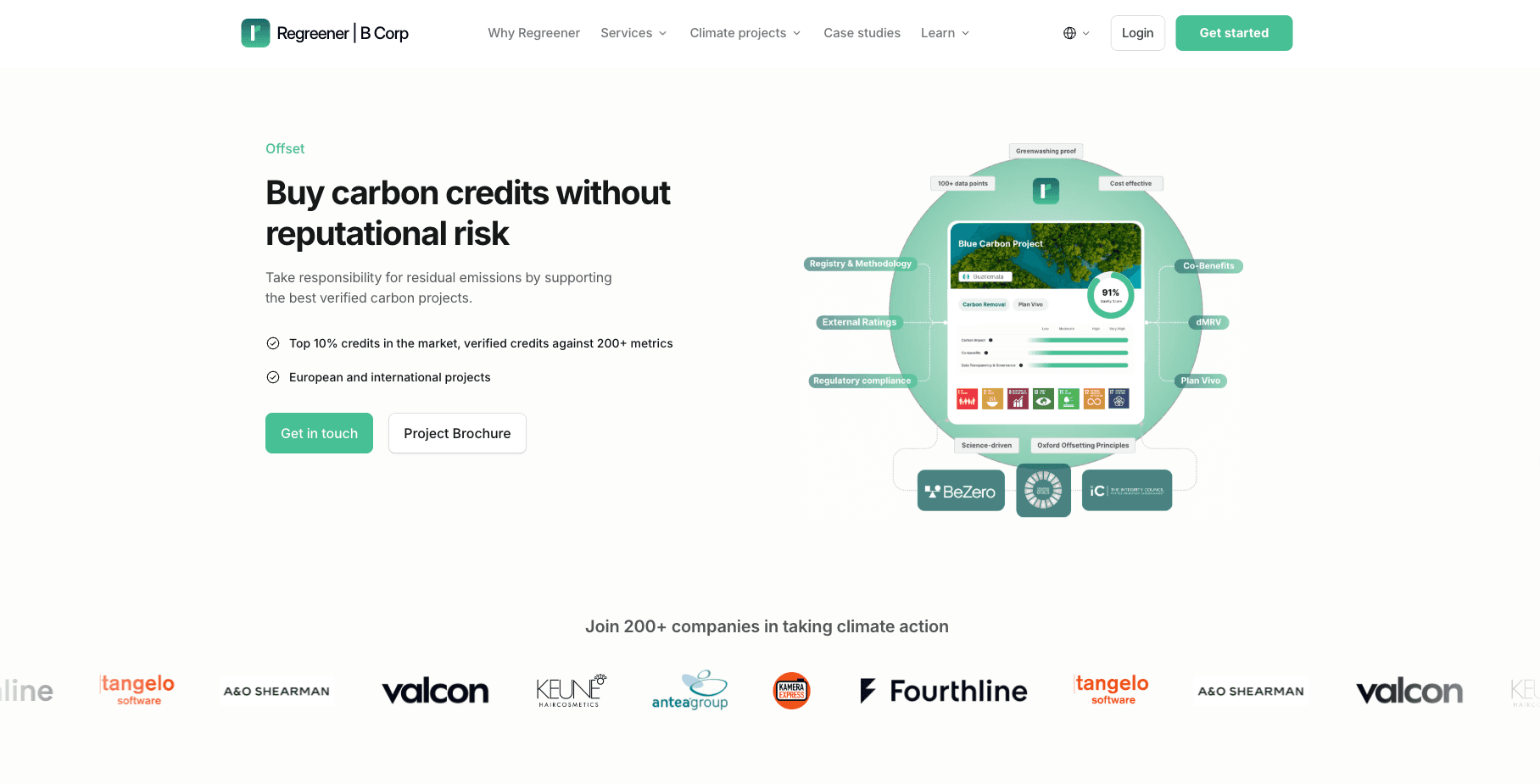
Best for: companies in the EU that want a dedicated partner to manage quality, risk, and strategy — not just a platform to buy from.
Regreener stands out as the only trader in our ranking that combines proprietary risk analysis with a truly client-centric approach. Unlike traditional brokers that simply facilitate transactions, Regreener acts as an extension of your procurement team, aligning carbon trading with your broader sustainability goals.
Notable features:
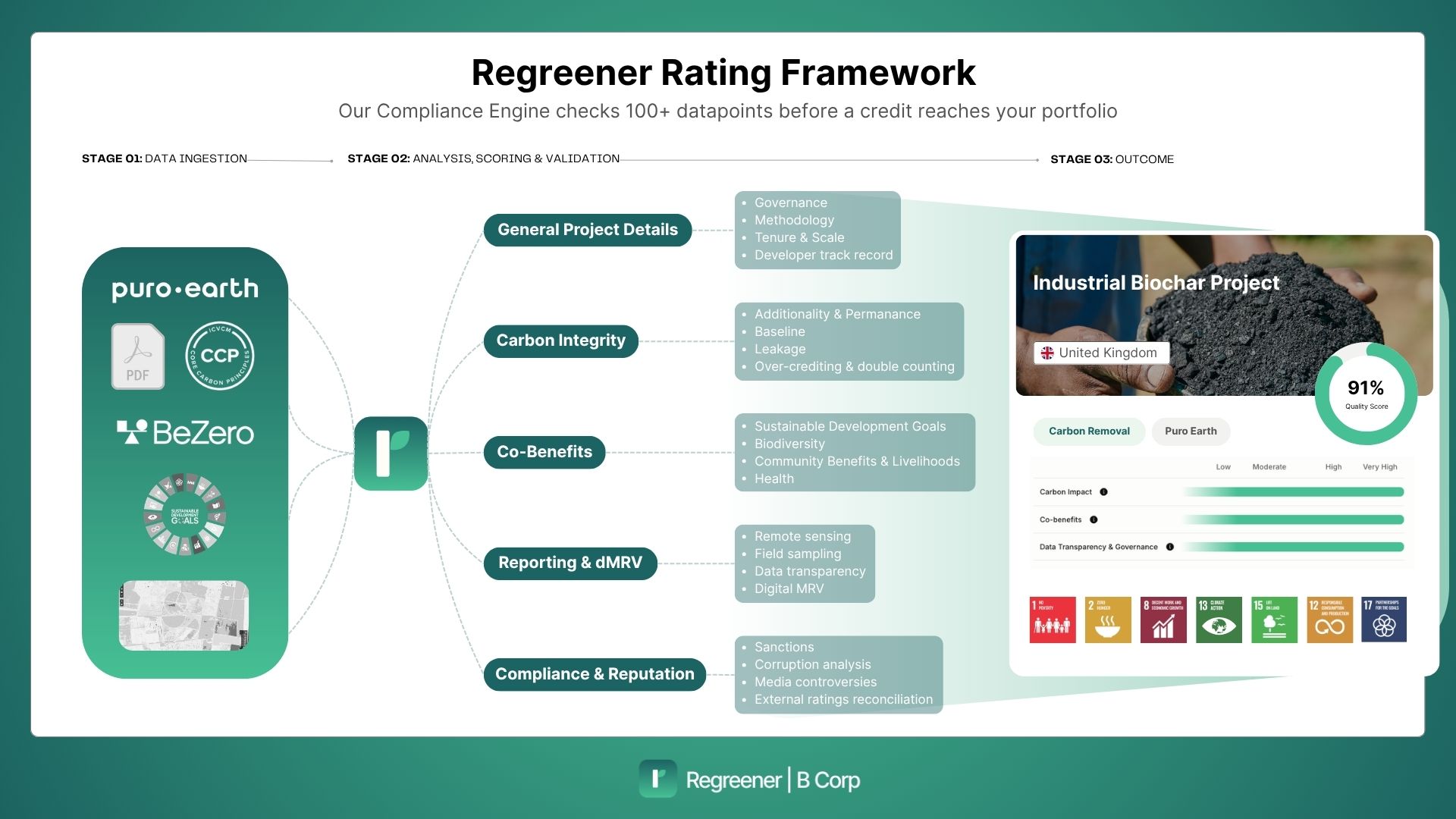
Proprietary risk assessment: Our 200+ data-point model evaluates credits across five risk categories, ensuring only the top 10% of projects make it to our clients.
Direct project developer relationships: By working directly with project developers, we eliminate middlemen and pass the savings to our clients.
Tailored trading strategies: Whether you need compliance credits for EU ETS or high-impact voluntary offsets, we create customized portfolios that match your specific requirements.
Focus on high-integrity projects: We specialize in tech-based avoidance and nature-based removal projects that deliver measurable climate benefits.
Alignment with leading frameworks: Our portfolios are structured in line with the Oxford Offsetting Principles and compatible with Science Based Targets initiative (SBTi) requirements, ensuring your credits hold up to external scrutiny — including CDP disclosures and third-party ESG audits.
"Our 100+ data-point model evaluates credits across five risk categories, ensuring only the top 10% of projects make it to our clients. So far, we have helped over 200 companies with best-practice carbon offsetting."
One thing to consider: Regreener operates as a curated, high-touch service rather than a self-serve platform. If you're looking to trade high volumes on a spot basis without advisory support, a market exchange like Xpansiv may better suit your needs.
For businesses that view carbon trading as more than a box-ticking exercise, Regreener offers a partnership that drives real sustainability progress.
2. AirCarbon Exchange
As the world’s first fully digital carbon exchange, AirCarbon Exchange brings unparalleled liquidity and transparency to carbon trading. Their platform supports both spot and futures trading, making it ideal for businesses that need flexibility in their carbon strategy.
Notable features:
First exchange to offer traditional finance-grade carbon contracts
Strong presence in Asia-Pacific markets
Focus on compliance-grade credits (CORSIA, EU ETS)
Transparent, auction-based pricing model
One thing to consider: AirCarbon Exchange is primarily built for large-volume compliance buyers with in-house carbon expertise. Smaller companies or those new to carbon markets may find the platform complex to navigate without external support.
AirCarbon Exchange is particularly well-suited for large corporations with global operations that require access to multiple compliance markets. Their technology-driven approach appeals to businesses that prioritize market efficiency and price discovery.
3. Carbon Trade Exchange
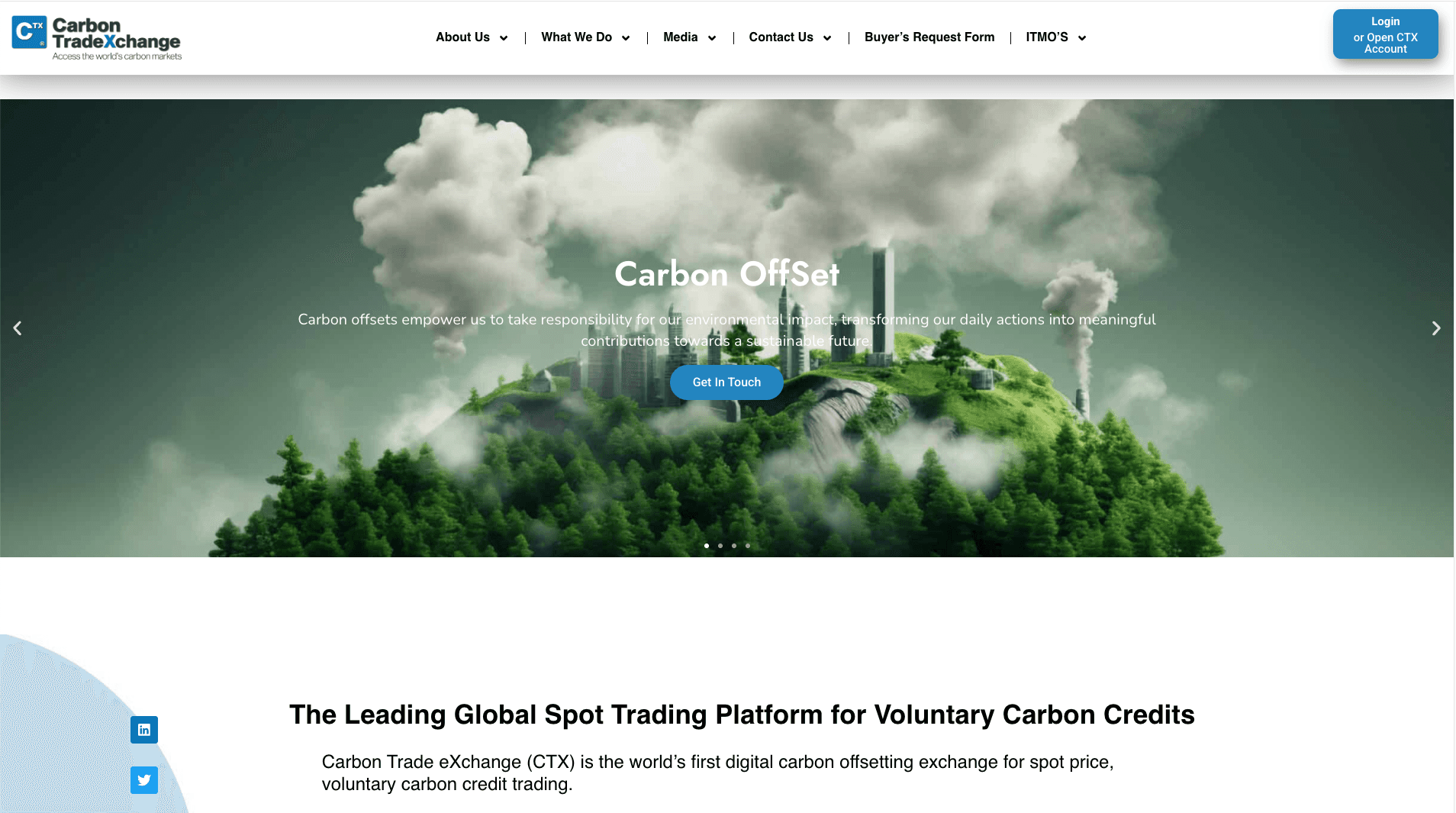
Carbon Trade Exchange (CTX) has carved out a niche as the go-to platform for small and medium-sized enterprises entering the carbon market. Their user-friendly interface and lower entry barriers make carbon trading accessible to businesses that might be overwhelmed by more complex platforms.
Notable features:
Intuitive platform for spot trading
Wide range of project types including renewable energy and forestry
Competitive pricing for smaller transaction volumes
Strong customer support for first-time buyers
One thing to consider: CTX's strength is accessibility — but businesses with more complex needs, such as tailored portfolio construction, Scope 3 strategy, or compliance reporting, may find their offering too limited as their carbon programme matures.
CTX proves that carbon trading isn’t just for multinational corporations. Their platform democratizes access to high-quality credits, though businesses with more complex needs may find their offerings limited compared to full-service traders.
4. Toucan Protocol
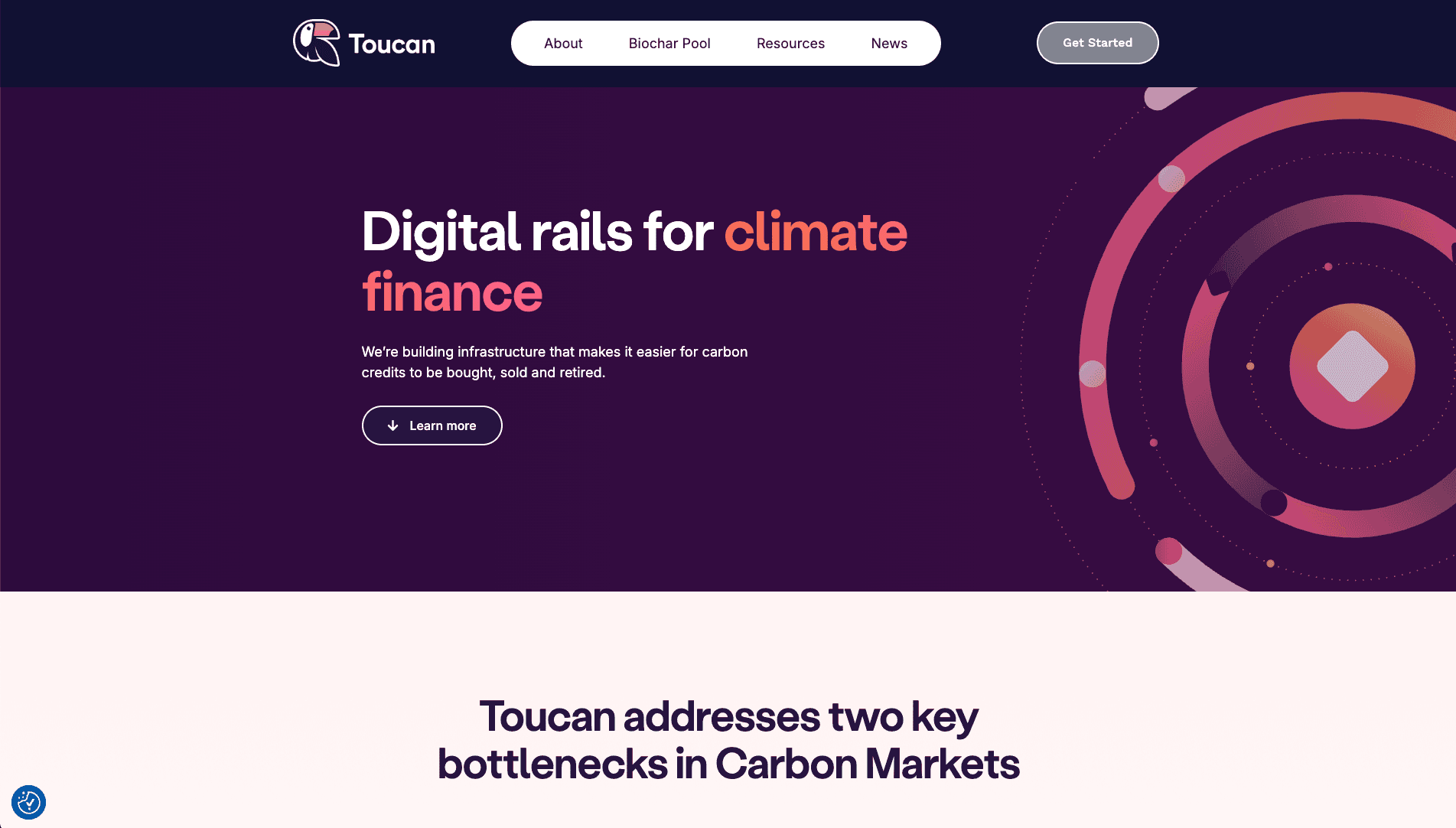
Best for: Tech-forward companies already engaged in Web3 or blockchain-based sustainability initiatives who want on-chain transparency for their carbon credits.
For businesses operating in the Web3 space or those interested in the intersection of carbon markets and decentralized finance, Toucan Protocol offers a unique value proposition. By tokenizing carbon credits, they’re creating new opportunities for transparency and liquidity.
Notable features:
Tokenized carbon credits (TCO2) that can be traded on-chain
Integration with DeFi protocols
Partnerships with regenerative finance (Refi) projects
Enhanced transparency through blockchain technology
One thing to consider: The regulatory environment for tokenized carbon credits is still evolving, and some tokenized credits have faced criticism for quality concerns. Companies with conservative ESG reporting requirements should seek additional legal and compliance guidance before purchasing on-chain credits.
Toucan’s approach appeals particularly to tech-savvy buyers and companies already engaged in blockchain-based sustainability initiatives. However, businesses should be aware that the regulatory landscape for tokenized carbon credits is still evolving.
5. Xpansiv

Xpansiv operates one of the world’s largest markets for environmental commodities, offering a comprehensive suite of tools for large-scale carbon traders. Their platform stands out for its advanced data analytics and reporting capabilities.
Strengths include:
Global marketplace with diverse credit types
Sophisticated data tools for tracking and reporting
Strong presence in both voluntary and compliance markets
Scalable solutions for enterprise buyers
One thing to consider: Xpansiv is infrastructure for sophisticated market participants — it is not a managed service. Businesses without dedicated carbon procurement expertise will need external advisory support to use the platform effectively.
Xpansiv is ideal for businesses that need to manage complex carbon portfolios across multiple jurisdictions. Their data-rich approach provides the insights needed to make informed trading decisions at scale.
What Sets Regreener Apart?
While all the traders in our ranking offer valuable services, Regreener’s combination of proprietary risk assessment and client-focused trading creates unique value for businesses serious about their carbon strategy.
Success Story: read how Spark Optimus leveraged their partnership with Regreener to offset residual emissions through high-quality carbon removal, boosting employee engagement - and enhancing their ESG Strategy.
Beyond project-level verification, we assess every credit for alignment with the Science Based Targets initiative (SBTi) and the Oxford Offsetting Principles — the two frameworks most commonly referenced by corporate sustainability teams and their auditors.
We also track independent quality ratings from agencies such as BeZero Carbon and Sylvera, giving our clients a second opinion on credit integrity that goes beyond registry certification alone. For companies operating in the EU, we specifically flag credits with Article 6 authorization status, which is increasingly relevant for businesses navigating CBAM compliance and cross-border emissions reporting.
Trader | Best For | Market Type | Approx. Pricing | Key Standard |
|---|---|---|---|---|
Regreener | Companies wanting a strategic, risk-managed partner | Voluntary (VCM) | Contact for quote | Verra, Gold Standard, Puro.earth, CORSIA, CCP |
AirCarbon Exchange | Large corporates needing compliance market access | Compliance + Voluntary | Exchange-based, market rate | CORSIA, EU ETS |
Carbon Trade Exchange | SMEs entering the carbon market for the first time | Voluntary (VCM) | From ~$10/ton | Verra, Gold Standard |
Toucan Protocol | Web3-native companies exploring tokenized credits | Voluntary (on-chain) | Market rate (on-chain) | Verra (tokenized) |
Xpansiv | Enterprises managing large, multi-jurisdiction portfolios | Compliance + Voluntary | Exchange-based, market rate | Verra, ACR, CAR |
Beyond Offsets: A Strategic Trading Partner
Unlike traditional carbon traders that treat each transaction in isolation, we take a holistic view of your sustainability goals. Our team works to understand your business operations, supply chain, and long-term objectives before recommending any credits.
This strategic approach allows us to:
Identify trading opportunities that align with your broader ESG strategy
Help you navigate the transition from offsetting to insetting
Provide guidance on emerging regulations and market trends
Create customized portfolios that balance cost, impact, and risk
The 5-Area Risk Model Explained
Our proprietary risk assessment evaluates every potential credit across five critical dimensions:
Additionality: Would the emissions reductions have occurred without the carbon revenue?
Permanence: How likely are the reductions to be reversed?
Leakage: Does the project simply shift emissions elsewhere?
Overestimation: Are the claimed reductions accurately measured?
Social and Environmental Safeguards: Does the project benefit local communities and ecosystems?
"A carbon credit trader that works directly with project developers eliminates up to two layers of markup, directly lowering your cost per ton."
This comprehensive approach ensures that every credit we trade meets the highest standards of integrity. View our risk assessment framework.
Common Pitfalls When Choosing a Carbon Credit Trader
Even with reputable traders, businesses can encounter problems if they’re not careful. Watch out for these common issues:
Greenwashing risks: some traders prioritize volume over quality. Always ask for detailed project documentation and third-party verifications. The Integrity Council for the Voluntary Carbon Market (ICVCM) provides helpful guidelines.
Hidden fees: transparent pricing should be non-negotiable. Look for traders that clearly disclose all costs upfront.
Overpromising on impact: be wary of claims that sound too good to be true. Real emissions reductions require real work.
Lack of compliance expertise: with regulations evolving rapidly, you need a trader that stays ahead of the curve.
One-size-fits-all solutions: your carbon strategy should be as unique as your business. Avoid traders that offer generic packages.
Ignoring framework compatibility: not all high-quality credits are compatible with SBTi or Oxford Principles requirements. If your company has made a science-based net-zero commitment, ensure your trader understands these frameworks and can confirm that your portfolio meets their criteria — before you sign any contract.
For a more comprehensive guide to avoiding these pitfalls, read this article.
💡 Expert tip: "Always request project-level documentation before committing to a trader. Any reputable partner will share full MRV reports, verification certificates, and registry serial numbers without hesitation. If they don't, walk away." — Bernard de Wit, Founder, Regreener

Explore our Guide: the best Carbon Credit Projects of 2026
Learn about the latest best practices, high-quality projects and strategic options
Carbon Market Trends Shaping Trader Selection in 2026
The carbon trading landscape is undergoing rapid transformation as we move in 2026. Regulatory frameworks are evolving at an unprecedented pace, with initiatives like the EU’s Carbon Border Adjustment Mechanism (CBAM) and revisions to Article 6 of the Paris Agreement reshaping how businesses approach their trading strategies and compliance obligations. At the same time, technology is playing an increasingly pivotal role, as blockchain and digital platforms enhance transparency, reduce fraud, and improve liquidity across global markets.
Alongside these shifts, there is a noticeable transition in market preferences, with demand for carbon removal solutions growing rapidly—even as avoidance credits remain the dominant choice for many organizations. While the maturation of carbon markets is gradually leading to more stable pricing, external economic and geopolitical factors continue to introduce volatility, requiring traders and buyers to stay agile.
This dynamic environment is further energized by the surge in corporate net-zero commitments, as companies across industries ramp up their climate ambitions and seek high-quality credits to meet their sustainability targets. Together, these trends are not only redefining the mechanics of carbon trading but also elevating its strategic importance in the global effort to combat climate change.
Staying informed about these trends will be crucial for businesses engaged in carbon trading. The World Economic Forum’s carbon market resources offer valuable insights.
Next Steps: Partnering with a Trusted Carbon Credit Trader
Selecting the right carbon credit trader is one of the most important decisions your business will make on its sustainability journey. The five traders profiled here represent the best options available in 2025, each with its own strengths and specializations.
For businesses that view carbon trading as more than a compliance exercise—those that see it as an opportunity to drive real climate action while creating business value—we believe Regreener offers the most comprehensive solution.
Want to know which credits fit your company's climate strategy?
Book a free consultation today