have us call you right now.

Carbon Offtake Agreements: The Complete Buyer's Guide (2026)

Last updated:

8 minute read

8 minute read

Summary:

  • A carbon offtake agreement is a multi-year contract in which a buyer commits to purchase a defined volume of a carbon project's future credits at an agreed price, delivered on a set schedule. Most run 5 to 15 years.

  • The buyer secures long-term supply and price certainty, while the developer gains the contracted revenue needed to finance and scale the project.

  • It is the carbon-market equivalent of a power purchase agreement, and in 2025 companies signed roughly $12.25 billion of these contracts, according to Sylvera.

Summary:

  • A carbon offtake agreement is a multi-year contract in which a buyer commits to purchase a defined volume of a carbon project's future credits at an agreed price, delivered on a set schedule. Most run 5 to 15 years.

  • The buyer secures long-term supply and price certainty, while the developer gains the contracted revenue needed to finance and scale the project.

  • It is the carbon-market equivalent of a power purchase agreement, and in 2025 companies signed roughly $12.25 billion of these contracts, according to Sylvera.

Summary:

  • A carbon offtake agreement is a multi-year contract in which a buyer commits to purchase a defined volume of a carbon project's future credits at an agreed price, delivered on a set schedule. Most run 5 to 15 years.

  • The buyer secures long-term supply and price certainty, while the developer gains the contracted revenue needed to finance and scale the project.

  • It is the carbon-market equivalent of a power purchase agreement, and in 2025 companies signed roughly $12.25 billion of these contracts, according to Sylvera.

In 2025, companies signed roughly $12.25 billion in carbon offtake agreements, according to Sylvera, more than twelve times the value of credits retired on the spot market that same year. The signal is hard to miss: serious corporate buyers have stopped treating carbon credits as a year-end purchase and started contracting supply years in advance.

This guide is the hub for everything Regreener has published on carbon offtake agreements. It covers how they work, what sits in the contract, how offtake compares to spot and forward buying, how to run due diligence, and how to pick a partner. Each section links to a deeper article when you want the full detail.

What is a carbon offtake agreement?

A carbon offtake agreement is a multi-year contract in which a buyer commits to purchase a defined volume of a carbon project's future credits at an agreed price, delivered on a set schedule.

The structure is borrowed directly from energy and mining, where an offtake contract is how a project raises finance before it produces anything. If a power purchase agreement is how a wind farm gets built, a carbon offtake agreement is how a direct air capture plant, a reforestation project, or an enhanced rock weathering operation gets built.

Most agreements run 5 to 15 years. The buyer gets first call on scarce future supply at a known price; the developer gets bankable, contracted revenue that turns a plan into a fundable project. For the full mechanics, definitions, and worked examples, read our full guide to what a carbon offtake agreement is.

Why offtake agreements matter in 2026

Two forces are pushing buyers toward long-term contracting. High-integrity supply, especially durable carbon removal, is scarce and slow to build, and the best projects sell their early vintages years ahead of issuance. At the same time, corporate net-zero targets now carry deadlines, so a buyer who waits for the spot market risks paying more for whatever is left.

An offtake agreement answers both problems at once. It secures volume from a specific project and fixes the commercial terms before demand tightens further. The $12.25 billion contracted in 2025 is the market repricing certainty of supply as the thing worth paying for.

"Buyers who lock in supply through an offtake agreement are not just hedging price. They are buying the right to a specific project's output, which is the scarce asset as the removals market matures."

- Bernard de Wit, Founder, Regreener

Offtake vs spot vs forward: which procurement model fits

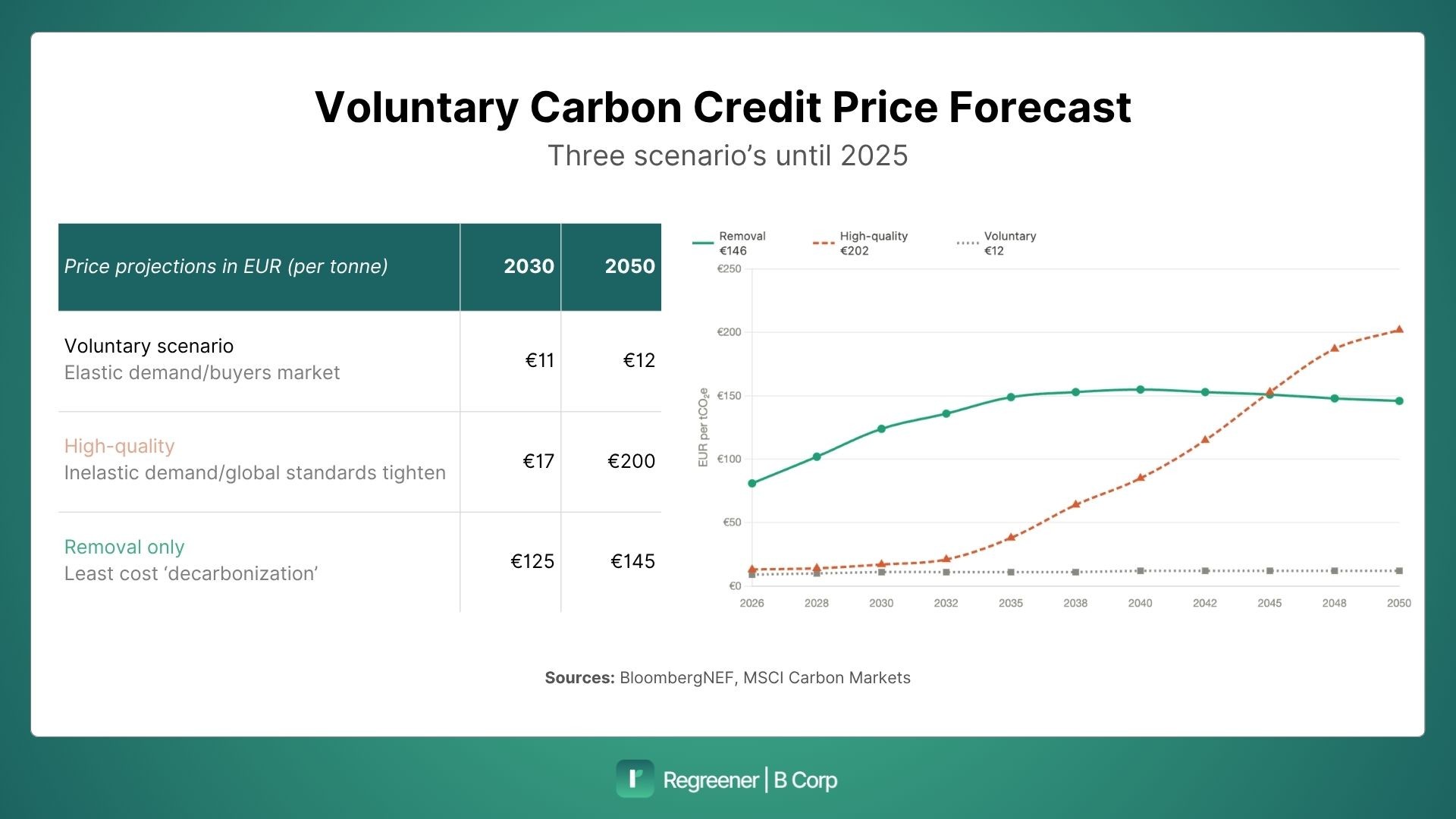
There are three ways to buy carbon credits, and they suit different needs. Spot purchases are credits bought as they are available, with instant delivery and full flexibility, but exposed to price swings.

Forward contracts lock in a defined volume of pre-issuance credits for delivery in one to five years, usually with payment upfront.

Offtake agreements are the longest commitment, 5 to 15 years, and tie the buyer to a specific project's output over time.

For a full breakdown of price behaviour and when each model wins, read Spot vs Forward vs Offtake: carbon credit pricing in 2026. If your choice is really between a multi-year commitment and buying afresh each year, Carbon Offtake vs Annual Purchase: which to choose walks through that decision directly.

Take-or-pay vs take-and-pay

Offtake contracts come in a few commercial forms. Under a take-or-pay contract, the buyer pays for the contracted volume whether or not they take delivery, which gives the developer the strongest revenue certainty.

Under a take-and-pay contract, the buyer pays only for credits actually delivered. Throughput contracts and long-term sale and purchase agreements sit alongside these. The form you agree to changes who carries the risk when a project under-delivers.
The key contract terms buyers negotiate

A carbon offtake agreement lives or dies on eight terms. Each one allocates commercial value and risk between buyer and developer:

  • Volume and delivery schedule - how many credits, of which vintages, delivered when.

  • Pricing mechanism - fixed, indexed, or floor-and-ceiling.

  • Quality criteria - the standard, methodology, and registry the credits must meet.

  • Make-good and replacement - what the developer owes if a delivery falls short.

  • Reversal risk and buffer obligations - who covers a loss if stored carbon is released.

  • Representations and warranties - the developer's binding claims about the project.

  • Force majeure - which events excuse non-delivery.

  • Termination rights - how either side can exit, and at what cost.

Get these right and the agreement is bankable for the developer and safe for the buyer. Get them wrong and a good project can still produce a bad contract. Our guide to the key contract terms in a carbon offtake agreement breaks down each clause and where buyers most often lose value.

How to run due diligence on a project

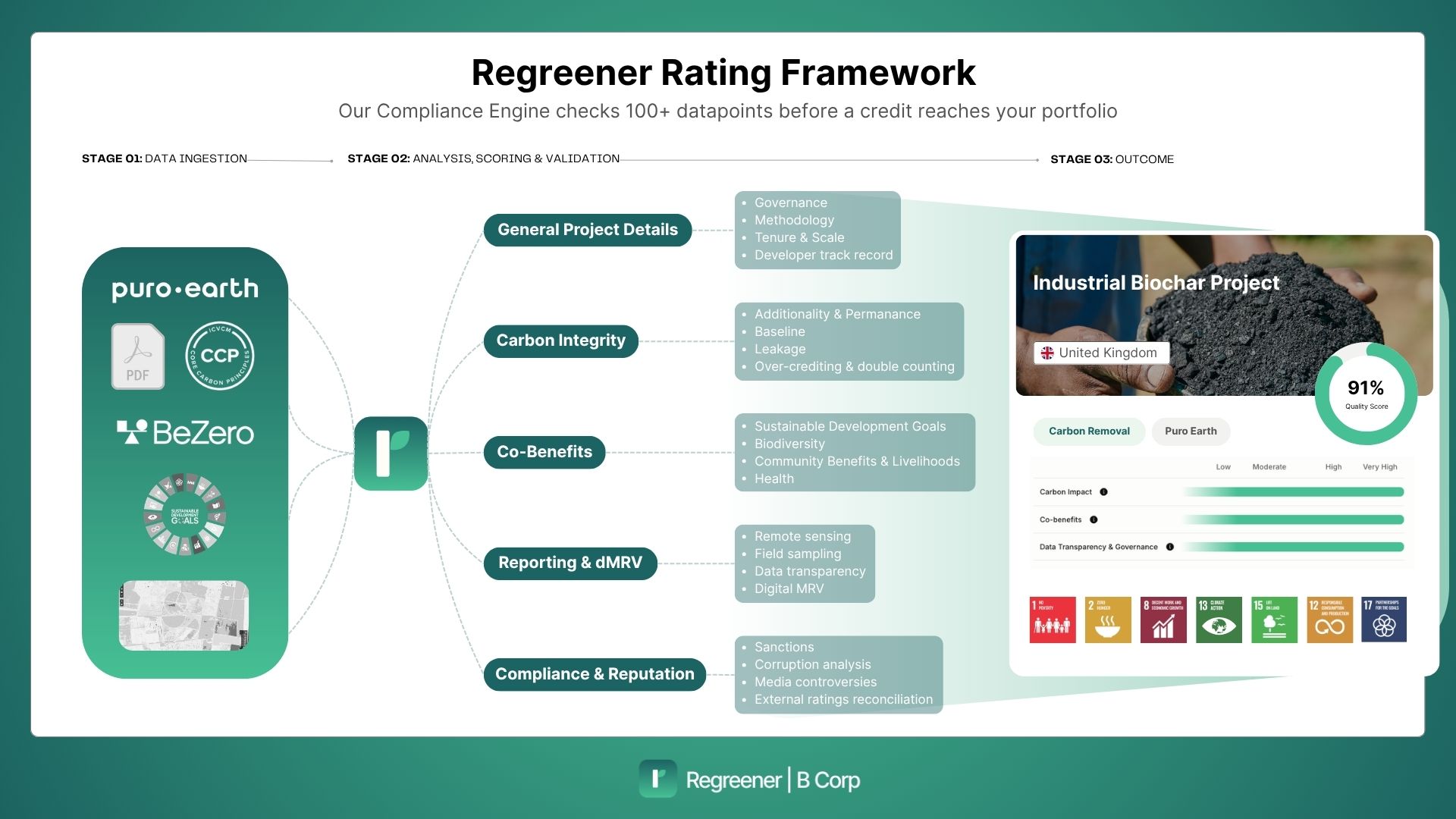
Before you commit to a decade of a project's output, the project has to survive scrutiny on the fundamentals that determine whether a credit is real. That means additionality (the reductions would not have happened anyway), permanence (the carbon stays out of the atmosphere), verification and MRV (independent measurement, reporting, and verification), leakage (emissions are not simply pushed elsewhere), and the strength of the registry and methodology behind it, such as Verra or Gold Standard.

The ICVCM Core Carbon Principles now give buyers a shared benchmark for integrity, and serious offtake diligence checks a project against them. Our carbon offtake due diligence checklist turns this into a practical, item-by-item review you can run before signing.
Choosing an offtake partner

The counterparty matters as much as the project. A multi-year agreement is only as good as the developer's or intermediary's ability to deliver across the full term, honour make-good provisions, and stay solvent.

Track record, delivery history, transparency, and financial standing all sit inside counterparty risk, and they are the difference between a contract that performs and one that leaves you short in year six. Our guide on how to choose your carbon offtake partner sets out the questions to ask and the red flags to watch for.

Risks and how buyers manage them

Every offtake agreement carries four main risks: delivery risk (the project produces fewer credits than contracted), reversal risk (stored carbon is released, common in nature-based storage), counterparty risk (the developer cannot perform), and price risk (the market moves against your fixed price).

Well-structured contracts manage these through buffer pools, make-good and replacement clauses, staged payments tied to verified delivery, and diversification across more than one project. The contract terms above are the tools; risk allocation is what you are really negotiating.

What offtake looks like in practice

Microsoft's agreement with Neustark is a useful reference point for how large buyers are using offtake to fund durable removal. Microsoft has contracted removal capacity from Neustark's mineralization technology, which permanently stores CO2 in recycled construction materials, exactly the kind of capital-intensive, long-duration project that offtake finance exists to build. The full breakdown is in our Microsoft and Neustark carbon offtake case study.

Is a carbon offtake agreement right for you?

Offtake makes sense when three things are true: you have a multi-year net-zero commitment with volume you can forecast, you want price certainty and guaranteed access to a specific quality of supply, and you can commit capital ahead of delivery. If your needs are small, uncertain, or year-to-year, spot or a shorter forward is usually the better fit, and our buyer's guide to carbon offtake agreements helps you size the decision.

Regreener structures offtake and portfolio agreements for corporate buyers and vets every project against the integrity criteria above, so the credits you contract today still stand up years from now. Talk to a Regreener expert about structuring your carbon offtake agreement.

In 2025, companies signed roughly $12.25 billion in carbon offtake agreements, according to Sylvera, more than twelve times the value of credits retired on the spot market that same year. The signal is hard to miss: serious corporate buyers have stopped treating carbon credits as a year-end purchase and started contracting supply years in advance.

This guide is the hub for everything Regreener has published on carbon offtake agreements. It covers how they work, what sits in the contract, how offtake compares to spot and forward buying, how to run due diligence, and how to pick a partner. Each section links to a deeper article when you want the full detail.

What is a carbon offtake agreement?

A carbon offtake agreement is a multi-year contract in which a buyer commits to purchase a defined volume of a carbon project's future credits at an agreed price, delivered on a set schedule.

The structure is borrowed directly from energy and mining, where an offtake contract is how a project raises finance before it produces anything. If a power purchase agreement is how a wind farm gets built, a carbon offtake agreement is how a direct air capture plant, a reforestation project, or an enhanced rock weathering operation gets built.

Most agreements run 5 to 15 years. The buyer gets first call on scarce future supply at a known price; the developer gets bankable, contracted revenue that turns a plan into a fundable project. For the full mechanics, definitions, and worked examples, read our full guide to what a carbon offtake agreement is.

Why offtake agreements matter in 2026

Two forces are pushing buyers toward long-term contracting. High-integrity supply, especially durable carbon removal, is scarce and slow to build, and the best projects sell their early vintages years ahead of issuance. At the same time, corporate net-zero targets now carry deadlines, so a buyer who waits for the spot market risks paying more for whatever is left.

An offtake agreement answers both problems at once. It secures volume from a specific project and fixes the commercial terms before demand tightens further. The $12.25 billion contracted in 2025 is the market repricing certainty of supply as the thing worth paying for.

"Buyers who lock in supply through an offtake agreement are not just hedging price. They are buying the right to a specific project's output, which is the scarce asset as the removals market matures."

- Bernard de Wit, Founder, Regreener

Offtake vs spot vs forward: which procurement model fits

There are three ways to buy carbon credits, and they suit different needs. Spot purchases are credits bought as they are available, with instant delivery and full flexibility, but exposed to price swings.

Forward contracts lock in a defined volume of pre-issuance credits for delivery in one to five years, usually with payment upfront.

Offtake agreements are the longest commitment, 5 to 15 years, and tie the buyer to a specific project's output over time.

For a full breakdown of price behaviour and when each model wins, read Spot vs Forward vs Offtake: carbon credit pricing in 2026. If your choice is really between a multi-year commitment and buying afresh each year, Carbon Offtake vs Annual Purchase: which to choose walks through that decision directly.

Take-or-pay vs take-and-pay

Offtake contracts come in a few commercial forms. Under a take-or-pay contract, the buyer pays for the contracted volume whether or not they take delivery, which gives the developer the strongest revenue certainty.

Under a take-and-pay contract, the buyer pays only for credits actually delivered. Throughput contracts and long-term sale and purchase agreements sit alongside these. The form you agree to changes who carries the risk when a project under-delivers.

The key contract terms buyers negotiate

A carbon offtake agreement lives or dies on eight terms. Each one allocates commercial value and risk between buyer and developer:

  • Volume and delivery schedule - how many credits, of which vintages, delivered when.

  • Pricing mechanism - fixed, indexed, or floor-and-ceiling.

  • Quality criteria - the standard, methodology, and registry the credits must meet.

  • Make-good and replacement - what the developer owes if a delivery falls short.

  • Reversal risk and buffer obligations - who covers a loss if stored carbon is released.

  • Representations and warranties - the developer's binding claims about the project.

  • Force majeure - which events excuse non-delivery.

  • Termination rights - how either side can exit, and at what cost.

Get these right and the agreement is bankable for the developer and safe for the buyer. Get them wrong and a good project can still produce a bad contract. Our guide to the key contract terms in a carbon offtake agreement breaks down each clause and where buyers most often lose value.

How to run due diligence on a project

Before you commit to a decade of a project's output, the project has to survive scrutiny on the fundamentals that determine whether a credit is real. That means additionality (the reductions would not have happened anyway), permanence (the carbon stays out of the atmosphere), verification and MRV (independent measurement, reporting, and verification), leakage (emissions are not simply pushed elsewhere), and the strength of the registry and methodology behind it, such as Verra or Gold Standard.

The ICVCM Core Carbon Principles now give buyers a shared benchmark for integrity, and serious offtake diligence checks a project against them. Our carbon offtake due diligence checklist turns this into a practical, item-by-item review you can run before signing.

Choosing an offtake partner

The counterparty matters as much as the project. A multi-year agreement is only as good as the developer's or intermediary's ability to deliver across the full term, honour make-good provisions, and stay solvent.

Track record, delivery history, transparency, and financial standing all sit inside counterparty risk, and they are the difference between a contract that performs and one that leaves you short in year six. Our guide on how to choose your carbon offtake partner sets out the questions to ask and the red flags to watch for.

Risks and how buyers manage them

Every offtake agreement carries four main risks: delivery risk (the project produces fewer credits than contracted), reversal risk (stored carbon is released, common in nature-based storage), counterparty risk (the developer cannot perform), and price risk (the market moves against your fixed price).

Well-structured contracts manage these through buffer pools, make-good and replacement clauses, staged payments tied to verified delivery, and diversification across more than one project. The contract terms above are the tools; risk allocation is what you are really negotiating.

What offtake looks like in practice

Microsoft's agreement with Neustark is a useful reference point for how large buyers are using offtake to fund durable removal. Microsoft has contracted removal capacity from Neustark's mineralization technology, which permanently stores CO2 in recycled construction materials, exactly the kind of capital-intensive, long-duration project that offtake finance exists to build. The full breakdown is in our Microsoft and Neustark carbon offtake case study.

Is a carbon offtake agreement right for you?

Offtake makes sense when three things are true: you have a multi-year net-zero commitment with volume you can forecast, you want price certainty and guaranteed access to a specific quality of supply, and you can commit capital ahead of delivery. If your needs are small, uncertain, or year-to-year, spot or a shorter forward is usually the better fit, and our buyer's guide to carbon offtake agreements helps you size the decision.

Regreener structures offtake and portfolio agreements for corporate buyers and vets every project against the integrity criteria above, so the credits you contract today still stand up years from now. Talk to a Regreener expert about structuring your carbon offtake agreement.

In 2025, companies signed roughly $12.25 billion in carbon offtake agreements, according to Sylvera, more than twelve times the value of credits retired on the spot market that same year. The signal is hard to miss: serious corporate buyers have stopped treating carbon credits as a year-end purchase and started contracting supply years in advance.

This guide is the hub for everything Regreener has published on carbon offtake agreements. It covers how they work, what sits in the contract, how offtake compares to spot and forward buying, how to run due diligence, and how to pick a partner. Each section links to a deeper article when you want the full detail.

What is a carbon offtake agreement?

A carbon offtake agreement is a multi-year contract in which a buyer commits to purchase a defined volume of a carbon project's future credits at an agreed price, delivered on a set schedule.

The structure is borrowed directly from energy and mining, where an offtake contract is how a project raises finance before it produces anything. If a power purchase agreement is how a wind farm gets built, a carbon offtake agreement is how a direct air capture plant, a reforestation project, or an enhanced rock weathering operation gets built.

Most agreements run 5 to 15 years. The buyer gets first call on scarce future supply at a known price; the developer gets bankable, contracted revenue that turns a plan into a fundable project. For the full mechanics, definitions, and worked examples, read our full guide to what a carbon offtake agreement is.

Why offtake agreements matter in 2026

Two forces are pushing buyers toward long-term contracting. High-integrity supply, especially durable carbon removal, is scarce and slow to build, and the best projects sell their early vintages years ahead of issuance. At the same time, corporate net-zero targets now carry deadlines, so a buyer who waits for the spot market risks paying more for whatever is left.

An offtake agreement answers both problems at once. It secures volume from a specific project and fixes the commercial terms before demand tightens further. The $12.25 billion contracted in 2025 is the market repricing certainty of supply as the thing worth paying for.

"Buyers who lock in supply through an offtake agreement are not just hedging price. They are buying the right to a specific project's output, which is the scarce asset as the removals market matures."

- Bernard de Wit, Founder, Regreener

Offtake vs spot vs forward: which procurement model fits

There are three ways to buy carbon credits, and they suit different needs. Spot purchases are credits bought as they are available, with instant delivery and full flexibility, but exposed to price swings.

Forward contracts lock in a defined volume of pre-issuance credits for delivery in one to five years, usually with payment upfront.

Offtake agreements are the longest commitment, 5 to 15 years, and tie the buyer to a specific project's output over time.

For a full breakdown of price behaviour and when each model wins, read Spot vs Forward vs Offtake: carbon credit pricing in 2026. If your choice is really between a multi-year commitment and buying afresh each year, Carbon Offtake vs Annual Purchase: which to choose walks through that decision directly.

Take-or-pay vs take-and-pay

Offtake contracts come in a few commercial forms. Under a take-or-pay contract, the buyer pays for the contracted volume whether or not they take delivery, which gives the developer the strongest revenue certainty.

Under a take-and-pay contract, the buyer pays only for credits actually delivered. Throughput contracts and long-term sale and purchase agreements sit alongside these. The form you agree to changes who carries the risk when a project under-delivers.

The key contract terms buyers negotiate

A carbon offtake agreement lives or dies on eight terms. Each one allocates commercial value and risk between buyer and developer:

  • Volume and delivery schedule - how many credits, of which vintages, delivered when.

  • Pricing mechanism - fixed, indexed, or floor-and-ceiling.

  • Quality criteria - the standard, methodology, and registry the credits must meet.

  • Make-good and replacement - what the developer owes if a delivery falls short.

  • Reversal risk and buffer obligations - who covers a loss if stored carbon is released.

  • Representations and warranties - the developer's binding claims about the project.

  • Force majeure - which events excuse non-delivery.

  • Termination rights - how either side can exit, and at what cost.

Get these right and the agreement is bankable for the developer and safe for the buyer. Get them wrong and a good project can still produce a bad contract. Our guide to the key contract terms in a carbon offtake agreement breaks down each clause and where buyers most often lose value.

How to run due diligence on a project

Before you commit to a decade of a project's output, the project has to survive scrutiny on the fundamentals that determine whether a credit is real. That means additionality (the reductions would not have happened anyway), permanence (the carbon stays out of the atmosphere), verification and MRV (independent measurement, reporting, and verification), leakage (emissions are not simply pushed elsewhere), and the strength of the registry and methodology behind it, such as Verra or Gold Standard.

The ICVCM Core Carbon Principles now give buyers a shared benchmark for integrity, and serious offtake diligence checks a project against them. Our carbon offtake due diligence checklist turns this into a practical, item-by-item review you can run before signing.

Choosing an offtake partner

The counterparty matters as much as the project. A multi-year agreement is only as good as the developer's or intermediary's ability to deliver across the full term, honour make-good provisions, and stay solvent.

Track record, delivery history, transparency, and financial standing all sit inside counterparty risk, and they are the difference between a contract that performs and one that leaves you short in year six. Our guide on how to choose your carbon offtake partner sets out the questions to ask and the red flags to watch for.

Risks and how buyers manage them

Every offtake agreement carries four main risks: delivery risk (the project produces fewer credits than contracted), reversal risk (stored carbon is released, common in nature-based storage), counterparty risk (the developer cannot perform), and price risk (the market moves against your fixed price).

Well-structured contracts manage these through buffer pools, make-good and replacement clauses, staged payments tied to verified delivery, and diversification across more than one project. The contract terms above are the tools; risk allocation is what you are really negotiating.

What offtake looks like in practice

Microsoft's agreement with Neustark is a useful reference point for how large buyers are using offtake to fund durable removal. Microsoft has contracted removal capacity from Neustark's mineralization technology, which permanently stores CO2 in recycled construction materials, exactly the kind of capital-intensive, long-duration project that offtake finance exists to build. The full breakdown is in our Microsoft and Neustark carbon offtake case study.

Is a carbon offtake agreement right for you?

Offtake makes sense when three things are true: you have a multi-year net-zero commitment with volume you can forecast, you want price certainty and guaranteed access to a specific quality of supply, and you can commit capital ahead of delivery. If your needs are small, uncertain, or year-to-year, spot or a shorter forward is usually the better fit, and our buyer's guide to carbon offtake agreements helps you size the decision.

Regreener structures offtake and portfolio agreements for corporate buyers and vets every project against the integrity criteria above, so the credits you contract today still stand up years from now. Talk to a Regreener expert about structuring your carbon offtake agreement.

About the Author

bernard de wit of regreener
Bernard de Wit

Bernard is the Founder of Regreener, starting in 2020 after studying Law in Leiden (the Netherlands) and Oxford (United Kingdom). Passionate about climate action and carbon credit markets, he helps companies take trustworthy, impactful climate action by sharing insights and best practices. Since 2020, he has assessed hundreds carbon projects against Regreener's 100+ datapoint quality framework. He writes regularly on voluntary carbon market integrity, Article 6 mechanisms, and the SBTi Net-Zero Standard v2.0. When he’s not writing or advising businesses on their sustainability goals, you might find Bernard on the tennis court or catching up with friends.

TABLE OF CONTENTS

Share Article

Share Article

FAQs

What is a carbon offtake agreement in simple terms?

It is a long-term contract, usually 5 to 15 years, where a buyer agrees to purchase a set volume of a carbon project's future credits at an agreed price. It gives the buyer secure supply and the developer the revenue certainty needed to finance the project.

How is an offtake agreement different from a forward contract?

A forward contract is a shorter commitment, typically one to five years, for a defined volume of pre-issuance credits, often paid upfront. An offtake agreement runs longer and ties the buyer to a specific project's ongoing output over its lifetime.

What is a take-or-pay carbon offtake agreement?

In a take-or-pay contract, the buyer pays for the contracted volume whether or not they take delivery. It gives developers the strongest revenue certainty and is common where a project needs guaranteed cash flow to secure financing.

How long do carbon offtake agreements last?

Most run 5 to 15 years. Early-stage removal projects sometimes ask for longer commitments to underwrite the capital cost of building the facility.

Are carbon offtake agreements only for large companies?

No. While early deals were dominated by large corporates, offtake and portfolio structures are increasingly available to mid-sized buyers who want secure, high-integrity supply without buying on the spot market every year.

Greenwashing-proof carbon removal

Portrait of a climate strategist

Get a free consultation with Regreener's carbon removal experts