have us call you right now.

The 5 Best Cookstove Carbon Credits of 2026

The 5 Best Cookstove Carbon Credits of 2026

Last updated:

Apr 29, 2025

Apr 29, 2025

6 minute read

6 minute read

Direct answer: The five highest-integrity cookstove carbon credit projects available to corporate buyers in 2026 are (1) BURN Manufacturing with AIM Carbon, the first cookstove developer to receive the ICVCM's Core Carbon Principles Label, (2) EcoSafi in Kenya, the only cookstove project worldwide with a BeZero 'A' rating, (3) Envirofit International, the developer of Africa's first Article 6.2 cookstove deal in Ghana with Switzerland's KliK Foundation, (4) Toyola Energy in Ghana, a Gold Standard veteran with pay-as-you-go distribution across West Africa, and (5) DelAgua Rwanda, a VCS VM0050 project with TotalEnergies as named buyer. Expect to pay between $15 and $39 per tonne CO₂e depending on integrity tier.

Every year, traditional cooking with wood, charcoal, and dung causes 3.2 million premature deaths and emits roughly the same CO₂ as global aviation. Clean cookstove carbon credit projects exist to change both numbers at once. After two years of intense press scrutiny, the projects that remain at the top of the voluntary carbon market in 2026 are the ones that survived it: projects with metered monitoring, conservative baselines, and independent A-grade ratings. This article compares the five that meet that bar.

What is a Carbon Credit?

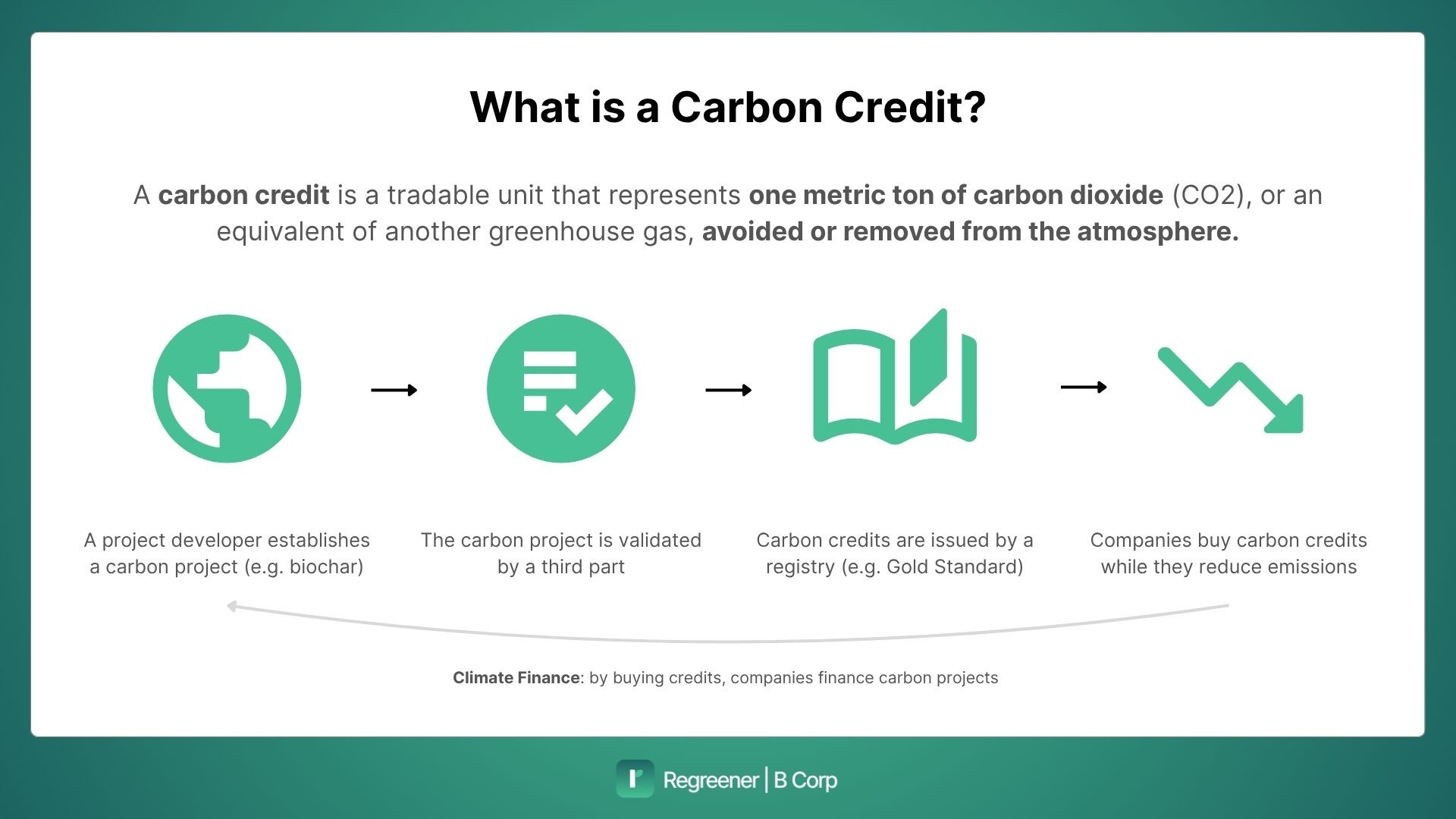
A carbon credit represents one metric ton of carbon dioxide (CO2) or its equivalent in other greenhouse gases that has been either removed from the atmosphere or prevented from being emitted. These credits are generated by projects that reduce, avoid, or sequester emissions, such as reforestation, renewable energy, or clean cooking initiatives. Companies, governments, and individuals can purchase carbon credits to offset their own emissions, helping them achieve net-zero or carbon-neutral goals. Each credit is verified by independent third parties to ensure its legitimacy, preventing double-counting and ensuring real climate impact. Carbon credits play a crucial role in financing sustainable development, particularly in regions where traditional funding is scarce, while providing a measurable way to compensate for unavoidable emissions.
What Are Clean Cookstove Projects?

Clean cookstove projects replace traditional, polluting stoves with more efficient, less polluting alternatives, such as improved biomass, LPG, or electric stoves. These projects aim to:

  • Reduce emissions of CO2 and black carbon, a potent short-lived climate pollutant.

  • Improve indoor air quality, reducing respiratory diseases and premature deaths.

  • Empower women and girls by reducing the time spent collecting fuel and cooking.

  • Support local economies through job creation and fuel savings.

Cookstove projects are scalable and cost-effective, making them a key solution for both climate action and sustainable development.

Why Cookstove Credits Matter in 2026

In 2026, cookstove credits are gaining traction for several reasons. Black carbon, the second-largest contributor to global warming after CO2, can be significantly reduced through clean cookstove projects, helping to slow near-term climate change. These projects also play a crucial role in preventing millions of premature deaths caused by indoor air pollution, particularly among women and children.

Beyond climate and health benefits, clean cookstove initiatives contribute to social equity by creating jobs, reducing fuel costs, and freeing up time for education and economic activities. As a result, corporations are increasingly seeking high-integrity, community-focused cookstove projects to meet their ESG and net-zero goals.

Challenges in Cookstove Carbon Projects

Cookstove carbon credits had a difficult two years in the press. In August 2023, Climate Home News reported that millions of cookstove credits represented "fake emission cuts." In December 2023, Channel 4 News visited a VCS-certified Malawi cookstove project and found that more than half of the households visited were not using the stoves they had received, despite the developer claiming 100% uptake. In January 2024, a peer-reviewed study from UC Berkeley published in Nature Sustainability concluded that cookstove projects in the voluntary market were on average 9.2 times over-credited. The Guardian, Financial Times, and Reuters all covered the findings. In February 2024, C-Quest Capital became embroiled in a separate scandal involving allegedly fraudulent cookstove credits, with its founder later facing criminal charges.

Regreener does treat this coverage seriously but is also careful to write off the project category all together. The same period also produced the corrective response: the ICVCM Core Carbon Principles, Gold Standard's metered methodologies (TPDDTEC and MMECD), Calyx Global's transparent rating tiers, and BeZero's first-ever 'A' rating for a cookstove project. Cookstove projects deliver some of the most tangible co-benefits in the voluntary carbon market: measurable reductions in indoor air pollution, fuel costs, time burden on women, and pressure on forests. Well-designed projects do reduce emissions at material scale.

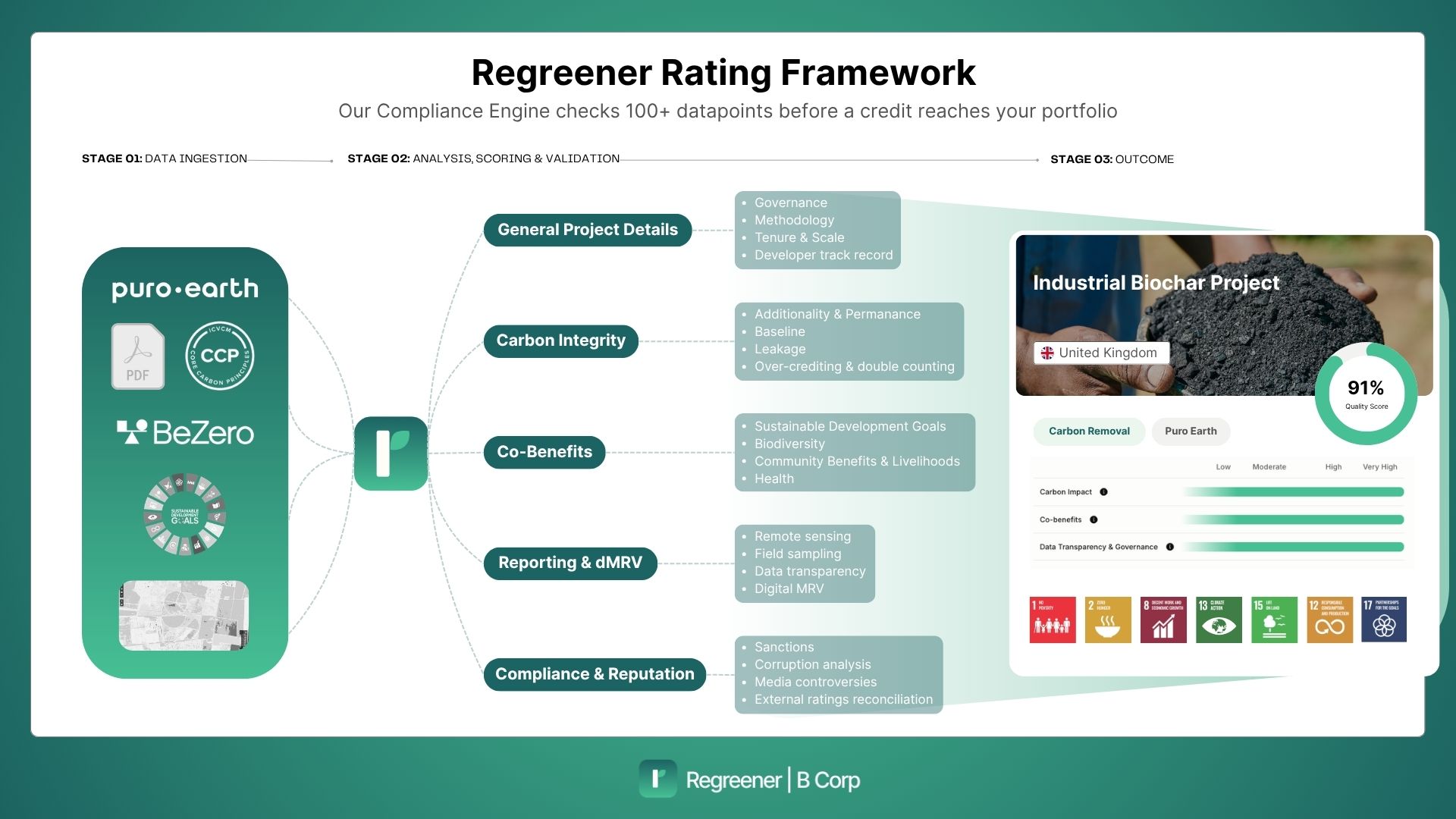
What changed is the bar. Regreener now only sources cookstove credits from projects with CCP labels, metered MRV, conservative locally-validated fNRB values, kitchen performance test (KPT) data, and independent ratings from BeZero, Sylvera, or Calyx. Projects without all of these stay off our shortlist regardless of price. That is the discipline that separates the 2026 generation of cookstove credits from the legacy projects that earned the headlines. The specific risk categories every buyer should screen for are below.
Overcrediting

Legacy projects often used inflated fNRB (fraction of non-renewable biomass) values from outdated CDM defaults of 80–90%, when locally validated MoFuSS modelling showed actual values closer to 30–40% (Sylvera, 2023). Combined with low monitoring rates (some studies indicate that many projects monitor less than 1% of distributed stoves), this resulted in credits that did not accurately represent real reductions. To address this, look for projects with conservative baselines, MoFuSS-derived or 30% fNRB values, and third-party validation, particularly those rated AA or higher by BeZero, Sylvera, or Calyx Global.

Faulty Technology and Low Adoption

Many stoves may break down, be used incorrectly, or be abandoned due to cultural preferences or issues with fuel availability. For instance, rocket stoves, a common type of improved cookstove, have sometimes been found to increase black carbon emissions rather than reduce them. The Channel 4 News investigation in Malawi found that more than half of households visited were not using the stoves they had been given. To mitigate these risks, prioritise projects that offer durable stoves, include local maintenance programs, and provide verified usage data via IoT sensors, Stove Use Monitors (SUMS), or regular Kitchen Performance Tests.

Health and Social Claims

Not all cookstove projects deliver the health benefits they promise, especially if users revert to traditional cooking methods. Qualitative claims about health improvements can be uncertain without robust monitoring and evidence. Choose projects that include long-term monitoring and provide evidence of sustained behaviour change among users.

Equity and Accessibility

Some cookstove projects fail to reach the poorest households or exclude women from decision-making processes, which can limit their social impact. The 2024 Swedwatch and Green Governance Africa report on C-Quest Capital's projects in Zimbabwe documented cases where communities received no revenue from the carbon trading and were not consulted about the projects. Support projects that implement inclusive distribution models, offer gender-focused training, and operate transparent benefit-sharing arrangements with host communities.

Lessons for Buyers

When evaluating cookstove projects, a due diligence checklist should include verifying additionality, adoption rates, independent audits, and named off-takers. Be cautious of red flags such as lack of transparency, vague health claims, missing benefit-sharing arrangements, or the absence of post-distribution follow-up.

Cookstove credits have taken some of the heaviest scrutiny in the voluntary carbon market, and understandably so. But you cannot replace 3.2 million annual deaths from indoor air pollution and the deforestation pressure of 2.1 billion people cooking on open fires with a different project type. Done properly, this category still has a place in a sound climate strategy.

Boris Bekkering, Commercial Director, Regreener

What Changed in 2025: CCP Labels, Article 6, and CORSIA Demand

Three sector developments make 2026 different from any year before it. First, in July 2025 BURN Manufacturing's Kenyan Global Cookstoves project became the first cookstove project worldwide to receive the ICVCM's Core Carbon Principles (CCP) Label. The entire supply was sold before issuance, with Patch reporting that CCP-approved credits now account for roughly 40% of demand on its platform. Calyx Global followed with a first-of-its-kind "Tier 1" rating for the non-metered Aborify Togo project, proving that high integrity is not limited to metered stoves.

Second, in September 2025 Envirofit International closed Africa's first Article 6.2 cookstove deal in Ghana. Switzerland's KliK Foundation signed a fixed-price offtake agreement, with Spark+ Africa Fund providing a $4M debt facility (later expanded by $2.85M) and ACT Commodities serving as registered project owner. The deal targets 120,000 cookstoves and signals that compliance-grade buyers are now buying cookstove credits directly.

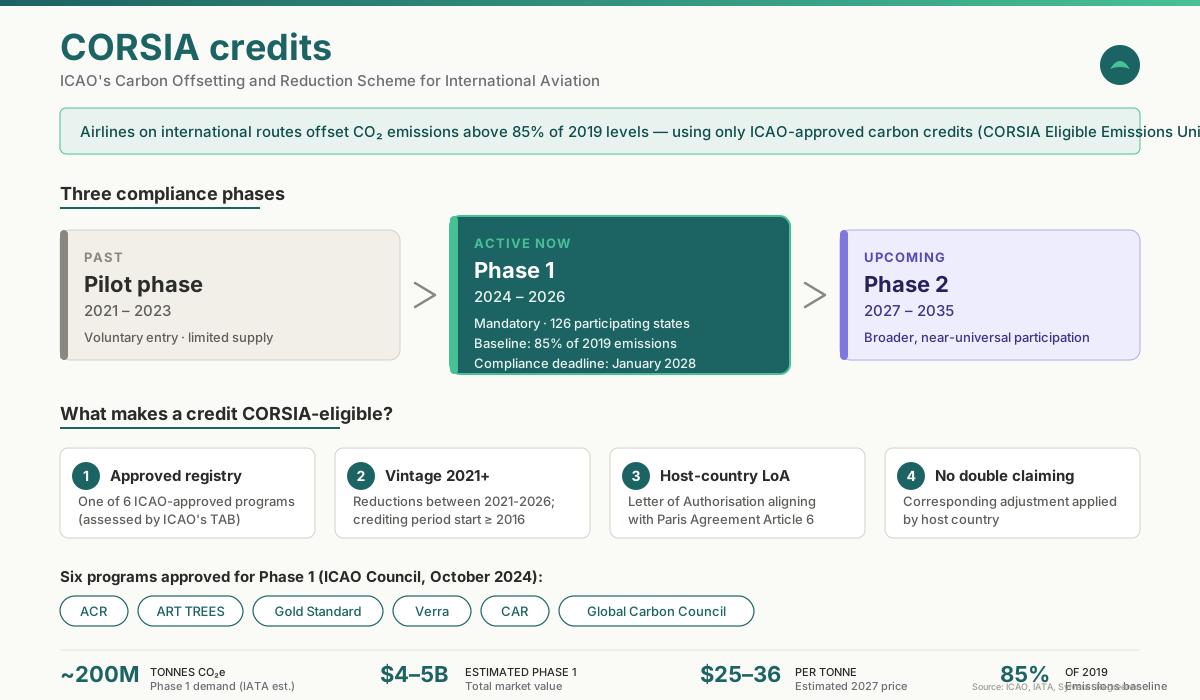
Third, under CORSIA's first phase (2024–2026), cookstove projects could supply up to 57% of compliant credit demand from airlines. Combined, these shifts mean buyers can now access cookstove credits that meet the strictest integrity standards on the market, at prices that reflect that quality. Abatable's 2025 floor price analysis put high-integrity cookstove credits at $15 minimum and $39+ for top-tier projects.The 5 Best Cookstove Carbon Credits of 2026
The 5 Best Cookstove Carbon Credits of 2026

To identify the top cookstove projects of 2026, we focused on those with the highest ratings from Sylvera, BeZero, and Calyx Global, and on those eligible for ICVCM Core Carbon Principles labelling. These projects stand out for their additionality, permanence, co-benefits, and transparency.

Project Name

Verification Standard

Location

Annual Impact (CO2)

Co-Benefits

Transparency Tools

BURN Manufacturing (AIM Carbon)

Gold Standard TPDDTEC & MMECD; ICVCM CCP-labelled

Kenya, Uganda, Tanzania, Malawi (14 African countries)

1.5M+ tons/year

Health, gender equality, job creation

Digital MRV, IoT sensors, real-time monitoring

EcoSafi (GS11352 & GS12082)

Gold Standard Metered & Measured Methodology

Kenya, Uganda

500K+ tons/year

Women's empowerment, fuel savings, education

Metered MRV, blockchain tracking, community surveys

Envirofit International (Ghana, Article 6.2)

Verra VCS, Gold Standard, Paris Agreement Article 6.2 corresponding adjustments

Ghana (plus India, Africa, Latin America)

1M+ tons/year

Child health, fuel efficiency, job creation

Satellite data, independent verification, KPTs

Toyola Energy

Gold Standard (one of the first cookstove projects registered, 2009)

Ghana, Nigeria, Togo, Benin, Senegal

300K+ tons/year

Air quality, economic development, local manufacturing

Pay-as-you-go adoption tracking, third-party audits

DelAgua Rwanda

Verra VCS, VM0050 (metered methodology), Article 6 Corresponding Adjustment labels

Rwanda, Sierra Leone, The Gambia

2M+ credits issued to date (Rwanda alone)

Forest conservation, women's health, household time savings

Kitchen Performance Tests (KPTs), Water Boiling Tests (WBTs), usage surveys, 5-year monitoring

1. BURN Manufacturing (AIM Carbon)

  • Location: Kenya, Uganda, Tanzania, Malawi (14 African countries in total)

  • Annual CO2 Impact: 1.5M+ tons/year; 9.5M+ Gold Standard credits issued to date

  • Project Type: Improved Biomass and Electric Cookstoves

Overview

BURN Manufacturing, in partnership with AIM Carbon, is operating the largest-ever digitally monitored cookstove project, distributing 1.2 million stoves across Africa. The project uses digital MRV (dMRV) technology, including IoT sensors and real-time monitoring, to ensure transparency and accuracy in carbon accounting. BURN operates across the full carbon value chain, from product design and manufacturing to in-house monitoring and credit issuance, which is rare among cookstove developers. The project uses Gold Standard's TPDDTEC and MMECD methodologies, the most rigorous biomass and electric cooking methodologies available.

Key Benefits

  • Climate: Avoids over 1.5 million tons of CO2 annually by replacing traditional stoves with highly efficient biomass and electric alternatives.

  • Health: Reduces indoor air pollution by 90%, preventing respiratory diseases and improving child health.

  • Community: Creates local jobs in manufacturing, distribution, and maintenance, with a focus on empowering women. BURN employs over 3,500 people across Africa.

Why It Stands Out

In July 2025, BURN's Kenyan Global Cookstoves project became the first cookstove project worldwide to receive the ICVCM Core Carbon Principles Label, with the entire credit supply sold before issuance. BURN's CCP-labelled credits have been distributed through Patch, which reported that CCP-approved credits represent roughly 40% of demand on its platform. The project is also CORSIA-eligible, opening compliance demand from airlines.

2. EcoSafi
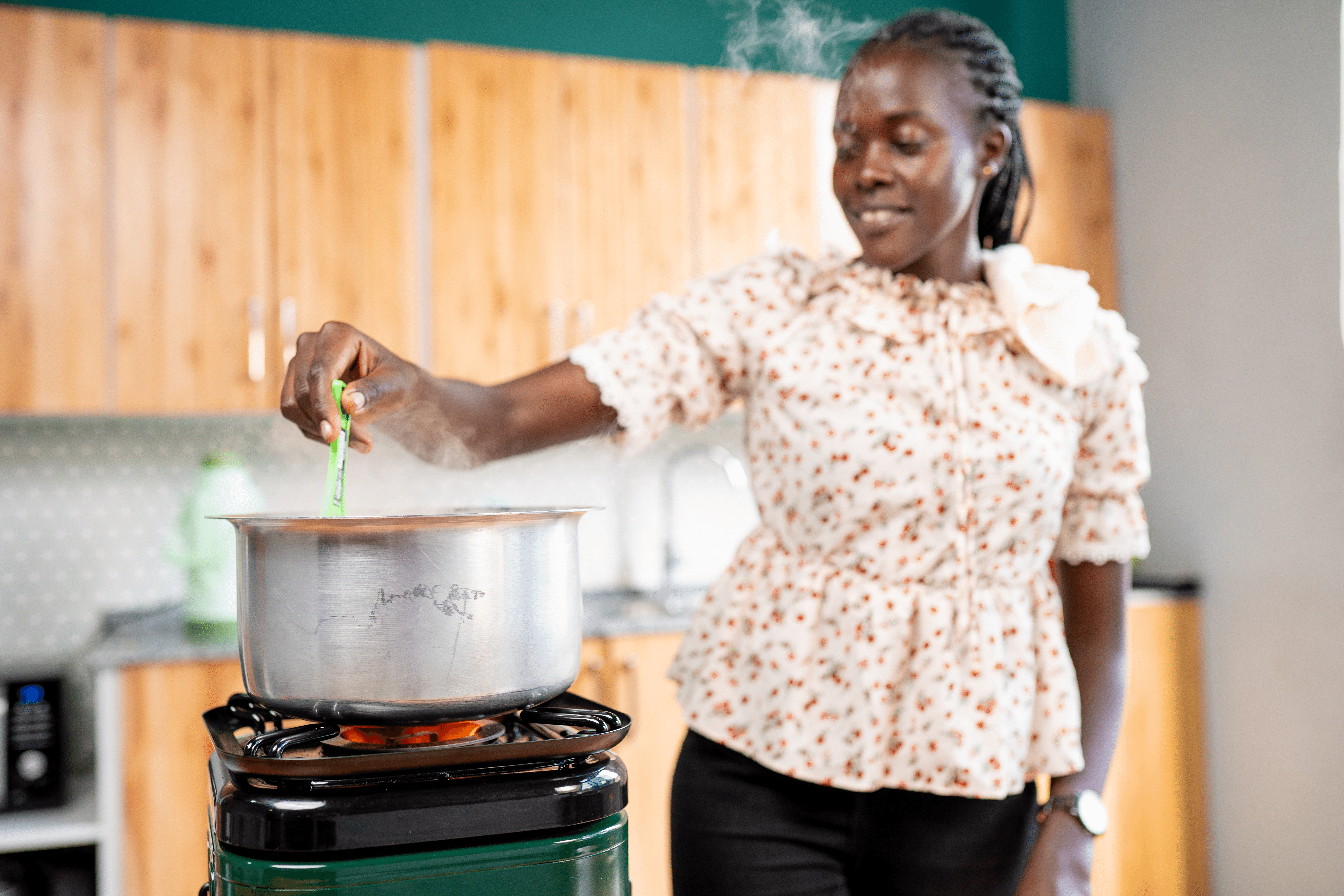
  • Location: Kenya, Uganda

  • Annual CO2 Impact: 500K+ tons/year

  • Project Type: Biomass Pellet Cookstoves (gasifying)

EcoSafi is the first cookstove project in Africa to receive an 'A' rating from BeZero, the highest rating ever given to a cookstove project. The project distributes clean, modern gasifying stoves powered by sustainable biofuel pellets made entirely from sugarcane waste, reducing deforestation and improving indoor air quality. EcoSafi was the first cookstove company in Africa to issue carbon offsets under the strict new Gold Standard Metered and Measured Methodology. The GS11352 and GS12082 projects are part of EcoSafi's portfolio.

Key Benefits

  • Climate: Avoids 500,000+ tons of CO2 annually by replacing traditional stoves with pellet-based alternatives.

  • Health: BetterStoves are 98% cleaner than charcoal cooking, lowering the risk of respiratory and heart diseases.

  • Community: Free stove distribution with a $5 service fee plus low-cost fuel subscription, putting clean cooking within reach of low-income households.

Why It Stands Out

EcoSafi remains the only cookstove project worldwide to hold a BeZero 'A' rating. Initial credits sold at $35 per tonne CO₂e, roughly 10 times the average cookstove credit price at the time, demonstrating real buyer demand for top-integrity supply. EcoSafi is also a portfolio company of Nefco (the Nordic Green Bank) through its Modern Cooking Facility for Africa.

3. Envirofit International (Ghana, Article 6.2)
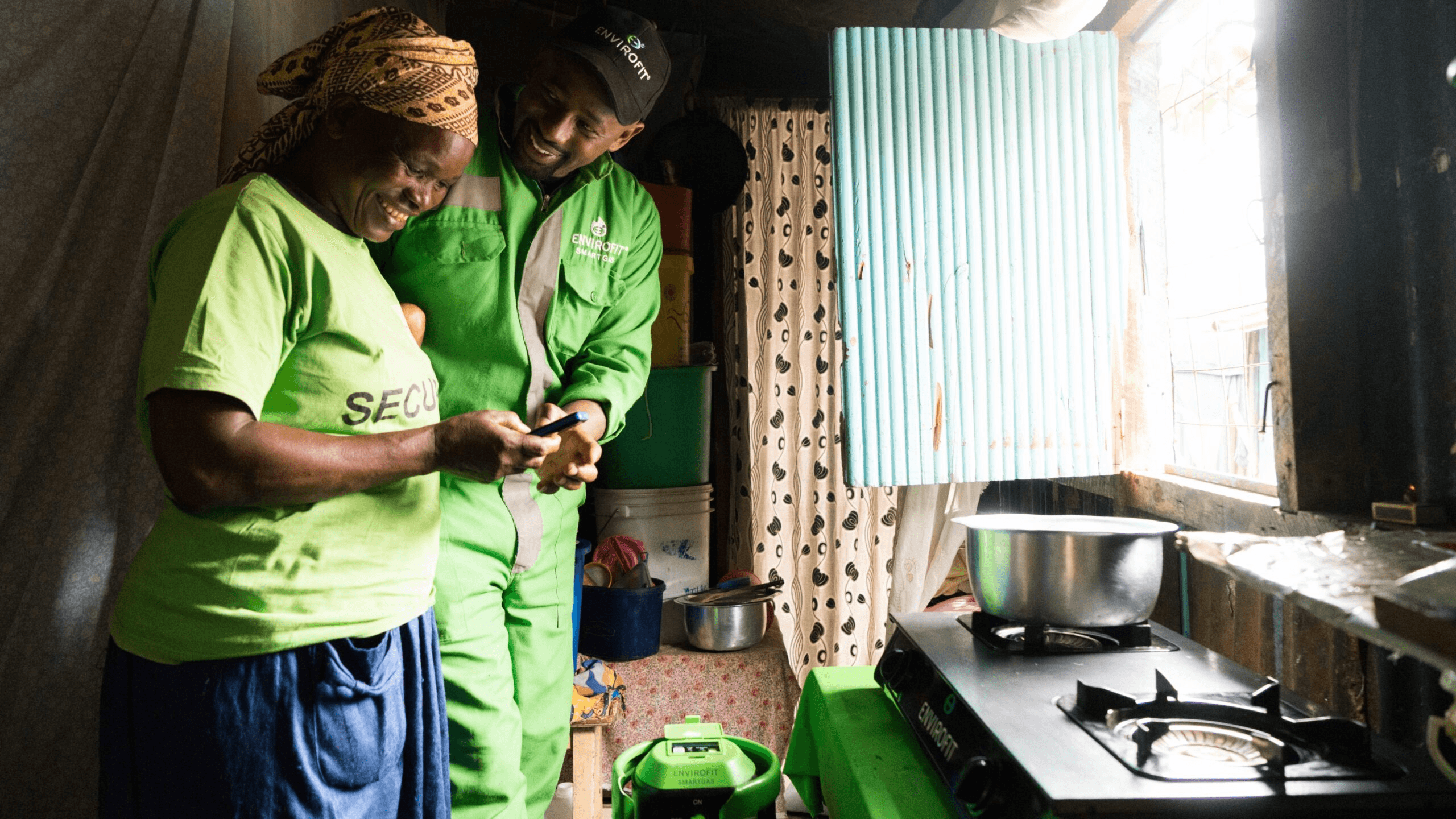
  • Location: Ghana (plus operations across India, Africa, and Latin America)

  • Annual CO2 Impact: 1M+ tons/year across the global portfolio

  • Project Type: Improved Biomass and LPG Cookstoves

Overview

Envirofit International is a global leader in clean cookstove technology, with projects across India, Africa, and Latin America. In September 2025, Envirofit closed Africa's first Article 6.2 cookstove deal in Ghana, a landmark transaction under the Paris Agreement's bilateral framework. The company's stoves are Gold Standard and VCS certified, and Envirofit uses satellite data, Kitchen Performance Tests, and independent verification to ensure accurate carbon accounting.

Key Benefits

  • Climate: Avoids over 1 million tons of CO2 annually by replacing traditional stoves with efficient biomass and LPG alternatives.

  • Health: Improves indoor air quality, reducing respiratory diseases and child mortality.

  • Community: Creates local jobs in manufacturing, sales, and maintenance, with a focus on women's empowerment.

Why It Stands Out

Envirofit's Ghana project is backed by a fixed-price offtake from Switzerland's KliK Foundation, with financing from Spark+ Africa Fund ($4M plus $2.85M expansion) and ACT Commodities as registered project owner. It is the first cookstove project under Article 6.2 of the Paris Agreement, with a target of 120,000 cookstoves. Compliance-grade buyers buying cookstove credits directly is a strong signal that the highest tier of the market now treats this project type as bankable.

4. Toyola Energy
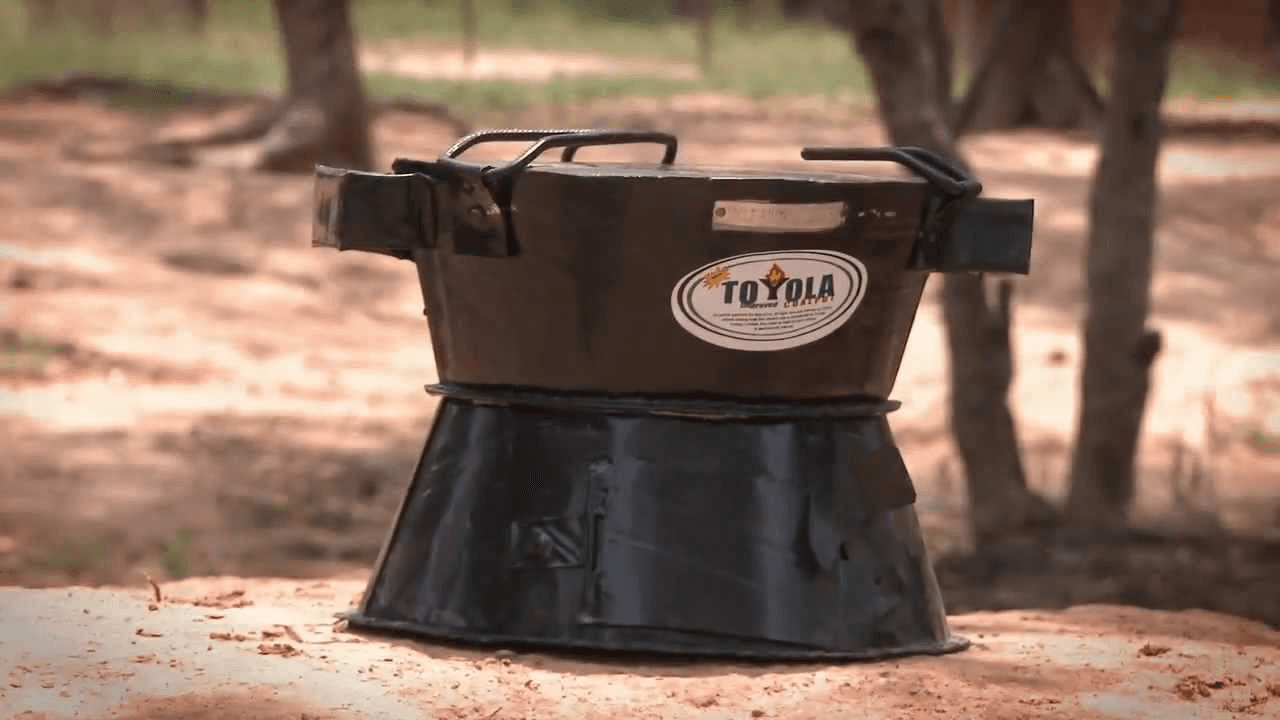
  • Location: Ghana, Nigeria, Togo, Benin, Senegal

  • Annual CO2 Impact: 300K+ tons/year

  • Project Type: Improved Biomass Cookstoves

Overview

Toyola Energy implemented one of the first cookstove carbon offset projects registered by Gold Standard in Ghana (2009) and now operates a Programme of Activities across multiple West African countries. The project uses a pay-as-you-go "Toyola Money Box" model to ensure affordability and high adoption rates. Toyola's stoves are designed to reduce fuel use by 50% and cut indoor air pollution by 60%, and the company won the Ashden International Gold Award for Sustainability.

Key Benefits

  • Climate: Avoids 300,000+ tons of CO2 annually by improving stove efficiency and reducing fuelwood consumption.

  • Health: Lowers exposure to harmful smoke, reducing respiratory infections and eye diseases.

  • Community: Supports local manufacturing and creates jobs for women along the value chain in stove production, distribution, and sales.

Why It Stands Out

Toyola's pay-as-you-go model and locally produced stoves ensure long-term adoption and economic benefits for communities. As one of the longest-running Gold Standard cookstove programmes in Africa, Toyola has 15+ years of issuance history and a verified track record, which matters for buyers running due diligence against the methodology changes of the past 24 months.4. Envirofit International

5. DelAgua Rwanda
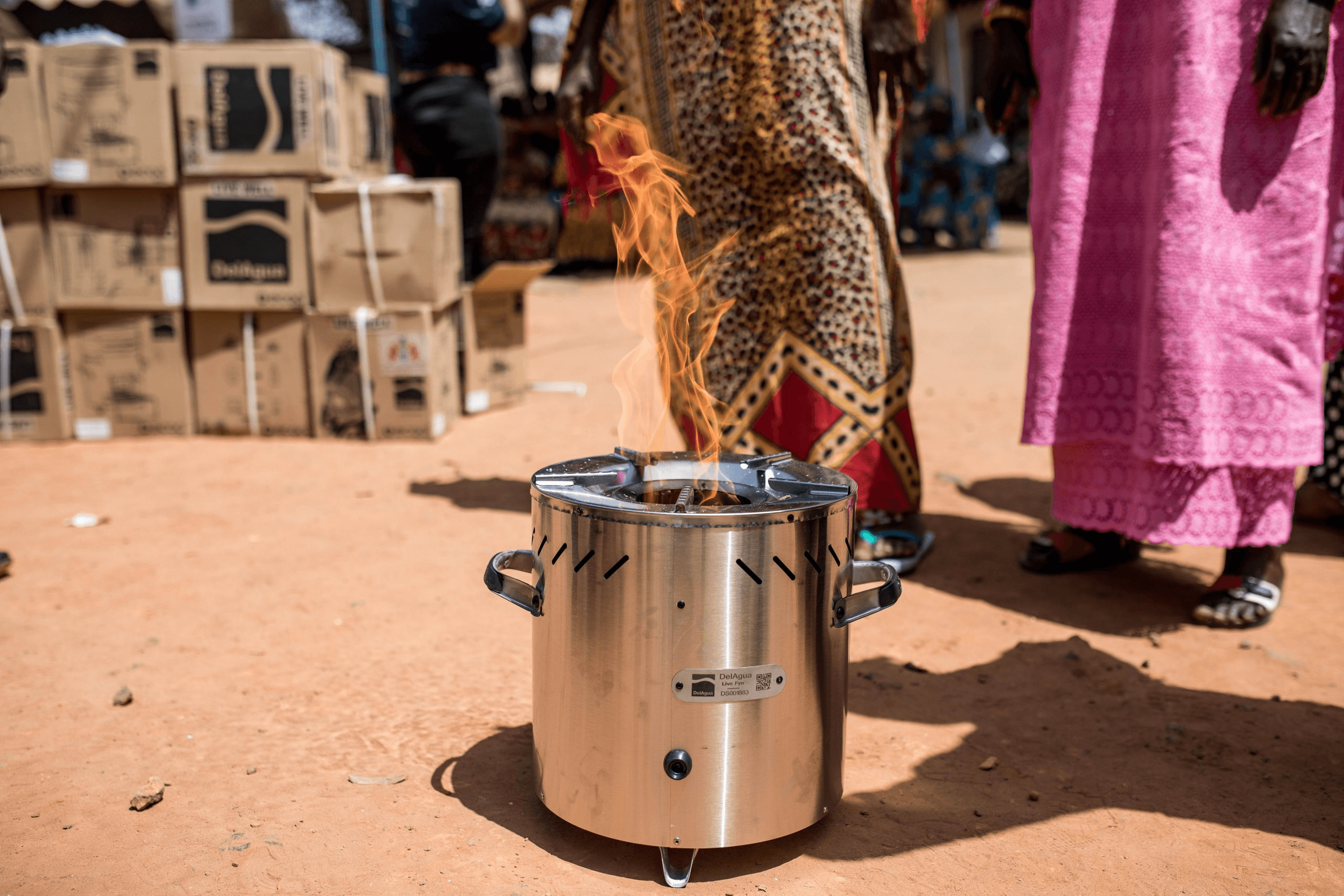
  • Location: Rwanda (plus Sierra Leone and The Gambia under the wider Live Well programme)

  • Annual CO2 Impact: ~2.0 million credits issued under VM0050 to date in Rwanda alone

  • Project Type: Improved Biomass Rocket Cookstoves, free-of-charge distribution

Overview

DelAgua is the world's leading carbon project developer in clean cookstoves for rural sub-Saharan Africa. Through its Live Well programme (Tubeho Neza in Rwanda, Livɛ Fyn in Sierra Leone), DelAgua has distributed more than 1.9 million stoves and reached over 7 million people. The Rwanda projects were transitioned to Verra's new VM0050 methodology in 2025, with more frequent Kitchen Performance Tests, Water Boiling Tests, and household-level usage surveys to meet the latest integrity bar.

Key Benefits

  • Climate: ~2.0 million Verra-issued credits from Rwanda alone; reduces wood consumption by 71% and harmful smoke emissions by 81% compared to traditional open fires.

  • Health: Substantial reductions in household air pollution and associated respiratory disease.

  • Community: Stoves are distributed free of charge, with lifelong integrated education and support, reaching communities previously excluded from clean cooking because of affordability.

Why It Stands Out

DelAgua's Rwanda projects were the first cookstove credits to receive Article 6 Corresponding Adjustment labels from Verra (December 2023). In November 2025, TotalEnergies partnered with DelAgua to fund the distribution of 200,000 additional cookstoves to 800,000 Rwandans, with TotalEnergies acquiring the resulting carbon credits. The combination of a metered methodology (VM0050), a named blue-chip corporate buyer (TotalEnergies), and CORSIA eligibility makes this one of the most defensible cookstove portfolios available to buyers in 2026.

  • Location: India, Africa, Latin America

  • Annual CO2 Impact: 1M+ tons/year

  • Project Type: Improved Biomass and LPG Cookstoves

How to Choose the Right Cookstove Credit for Your Business

When selecting cookstove credits, consider several key factors:

Permanence and durability matter, so look for projects with multi-year monitoring and high user retention rates. Ensure that emissions reductions are real and additional, rather than simply replacing stoves that would have been adopted regardless.

Align the project's co-benefits with your ESG goals, such as health improvements, gender equality, or local economic development. Prioritize projects with certifications from reputable standards like Gold Standard or Verra VCS, ideally with the ICVCM Core Carbon Principles label or equivalent integrity tagging, and ensure they have robust social safeguards in place.

Transparency is also essential, so demand open data on stove usage, emissions reductions, and community feedback. Finally, consider your budget: cookstove credits in 2026 range from approximately $15 per tonne for legacy non-metered projects to $39+ for top-integrity CCP-labelled credits, per Abatable's floor price analysis. Reference the Clean Cooking Alliance Buyer's Guide for a sector-wide reference framework.

Regreener's own cookstove shortlist for 2026 requires every project to clear five thresholds: CCP Label or equivalent integrity certification, metered or SUMS-verified usage data, conservative locally-validated fNRB values, a recent BeZero, Sylvera, or Calyx rating of B or higher, and documented community benefit-sharing arrangements. For further sector-level context, the RMI technical explainer on cookstove credits is a thorough reference.

Want to know which credits fit your company's climate strategy?

Book a free consultation today

The Future of Cookstove Projects: Trends to Watch in 2026–2030

Three forces are reshaping the cookstove sector through 2030: ICVCM integrity standards, Article 6.2 bilateral deals, and CORSIA-driven aviation demand. As governments integrate clean cooking into Nationally Determined Contributions (NDCs), the corresponding adjustments framework is creating new compliance-grade supply.

Technological innovations, such as IoT-enabled stoves, pay-as-you-go financing, and digital MRV, are improving transparency and adoption rates. Revenue from clean cookstove carbon credits in Africa more than quadrupled to $107 million in 2024 from $25 million in 2020 (IEA), with cookstove projects accounting for 80% of energy carbon credit transactions in Africa over the past 10 years.

By 2030, only projects that survive CCP review and meet metered-MRV standards will retain buyer demand. Locking in a relationship with a top-tier developer now means securing supply before CORSIA airlines and Article 6.2 buyers tighten the market further.

Supporting Cookstove Projects, Next Steps

The 2026 cookstove market rewards buyers who do their homework. BURN, EcoSafi, Envirofit, Toyola, and DelAgua are the five projects we currently shortlist for clients, but the right pick depends on your budget per tonne, your CSRD reporting position, the co-benefits your ESG team prioritises, and whether you need CORSIA-eligible or Article 6-tagged supply.

Top-tier cookstove credits are also selling out before issuance. BURN's first CCP-labelled supply was fully contracted before it hit the market. KliK Foundation locked in Envirofit's Ghana volumes through a fixed-price offtake. TotalEnergies pre-purchased DelAgua's next 200,000-stove rollout in Rwanda. Buyers who wait until Q4 to source CCP-aligned cookstove credits are increasingly finding the best supply already gone.


a plane flying in the sky with the word go written in it

Explore our Guide: the best Carbon Credit Projects of 2026

Learn about the latest best practices, high-quality projects and strategic options

Direct answer: The five highest-integrity cookstove carbon credit projects available to corporate buyers in 2026 are (1) BURN Manufacturing with AIM Carbon, the first cookstove developer to receive the ICVCM's Core Carbon Principles Label, (2) EcoSafi in Kenya, the only cookstove project worldwide with a BeZero 'A' rating, (3) Envirofit International, the developer of Africa's first Article 6.2 cookstove deal in Ghana with Switzerland's KliK Foundation, (4) Toyola Energy in Ghana, a Gold Standard veteran with pay-as-you-go distribution across West Africa, and (5) DelAgua Rwanda, a VCS VM0050 project with TotalEnergies as named buyer. Expect to pay between $15 and $39 per tonne CO₂e depending on integrity tier.

Every year, traditional cooking with wood, charcoal, and dung causes 3.2 million premature deaths and emits roughly the same CO₂ as global aviation. Clean cookstove carbon credit projects exist to change both numbers at once. After two years of intense press scrutiny, the projects that remain at the top of the voluntary carbon market in 2026 are the ones that survived it: projects with metered monitoring, conservative baselines, and independent A-grade ratings. This article compares the five that meet that bar.

What is a Carbon Credit?

A carbon credit represents one metric ton of carbon dioxide (CO2) or its equivalent in other greenhouse gases that has been either removed from the atmosphere or prevented from being emitted. These credits are generated by projects that reduce, avoid, or sequester emissions, such as reforestation, renewable energy, or clean cooking initiatives. Companies, governments, and individuals can purchase carbon credits to offset their own emissions, helping them achieve net-zero or carbon-neutral goals. Each credit is verified by independent third parties to ensure its legitimacy, preventing double-counting and ensuring real climate impact. Carbon credits play a crucial role in financing sustainable development, particularly in regions where traditional funding is scarce, while providing a measurable way to compensate for unavoidable emissions.

What Are Clean Cookstove Projects?

Clean cookstove projects replace traditional, polluting stoves with more efficient, less polluting alternatives, such as improved biomass, LPG, or electric stoves. These projects aim to:

  • Reduce emissions of CO2 and black carbon, a potent short-lived climate pollutant.

  • Improve indoor air quality, reducing respiratory diseases and premature deaths.

  • Empower women and girls by reducing the time spent collecting fuel and cooking.

  • Support local economies through job creation and fuel savings.

Cookstove projects are scalable and cost-effective, making them a key solution for both climate action and sustainable development.

Why Cookstove Credits Matter in 2026

In 2026, cookstove credits are gaining traction for several reasons. Black carbon, the second-largest contributor to global warming after CO2, can be significantly reduced through clean cookstove projects, helping to slow near-term climate change. These projects also play a crucial role in preventing millions of premature deaths caused by indoor air pollution, particularly among women and children.

Beyond climate and health benefits, clean cookstove initiatives contribute to social equity by creating jobs, reducing fuel costs, and freeing up time for education and economic activities. As a result, corporations are increasingly seeking high-integrity, community-focused cookstove projects to meet their ESG and net-zero goals.

Challenges in Cookstove Carbon Projects

Cookstove carbon credits had a difficult two years in the press. In August 2023, Climate Home News reported that millions of cookstove credits represented "fake emission cuts." In December 2023, Channel 4 News visited a VCS-certified Malawi cookstove project and found that more than half of the households visited were not using the stoves they had received, despite the developer claiming 100% uptake. In January 2024, a peer-reviewed study from UC Berkeley published in Nature Sustainability concluded that cookstove projects in the voluntary market were on average 9.2 times over-credited. The Guardian, Financial Times, and Reuters all covered the findings. In February 2024, C-Quest Capital became embroiled in a separate scandal involving allegedly fraudulent cookstove credits, with its founder later facing criminal charges.

Regreener does treat this coverage seriously but is also careful to write off the project category all together. The same period also produced the corrective response: the ICVCM Core Carbon Principles, Gold Standard's metered methodologies (TPDDTEC and MMECD), Calyx Global's transparent rating tiers, and BeZero's first-ever 'A' rating for a cookstove project. Cookstove projects deliver some of the most tangible co-benefits in the voluntary carbon market: measurable reductions in indoor air pollution, fuel costs, time burden on women, and pressure on forests. Well-designed projects do reduce emissions at material scale.

What changed is the bar. Regreener now only sources cookstove credits from projects with CCP labels, metered MRV, conservative locally-validated fNRB values, kitchen performance test (KPT) data, and independent ratings from BeZero, Sylvera, or Calyx. Projects without all of these stay off our shortlist regardless of price. That is the discipline that separates the 2026 generation of cookstove credits from the legacy projects that earned the headlines. The specific risk categories every buyer should screen for are below.

Overcrediting

Legacy projects often used inflated fNRB (fraction of non-renewable biomass) values from outdated CDM defaults of 80–90%, when locally validated MoFuSS modelling showed actual values closer to 30–40% (Sylvera, 2023). Combined with low monitoring rates (some studies indicate that many projects monitor less than 1% of distributed stoves), this resulted in credits that did not accurately represent real reductions. To address this, look for projects with conservative baselines, MoFuSS-derived or 30% fNRB values, and third-party validation, particularly those rated AA or higher by BeZero, Sylvera, or Calyx Global.

Faulty Technology and Low Adoption

Many stoves may break down, be used incorrectly, or be abandoned due to cultural preferences or issues with fuel availability. For instance, rocket stoves, a common type of improved cookstove, have sometimes been found to increase black carbon emissions rather than reduce them. The Channel 4 News investigation in Malawi found that more than half of households visited were not using the stoves they had been given. To mitigate these risks, prioritise projects that offer durable stoves, include local maintenance programs, and provide verified usage data via IoT sensors, Stove Use Monitors (SUMS), or regular Kitchen Performance Tests.

Health and Social Claims

Not all cookstove projects deliver the health benefits they promise, especially if users revert to traditional cooking methods. Qualitative claims about health improvements can be uncertain without robust monitoring and evidence. Choose projects that include long-term monitoring and provide evidence of sustained behaviour change among users.

Equity and Accessibility

Some cookstove projects fail to reach the poorest households or exclude women from decision-making processes, which can limit their social impact. The 2024 Swedwatch and Green Governance Africa report on C-Quest Capital's projects in Zimbabwe documented cases where communities received no revenue from the carbon trading and were not consulted about the projects. Support projects that implement inclusive distribution models, offer gender-focused training, and operate transparent benefit-sharing arrangements with host communities.

Lessons for Buyers

When evaluating cookstove projects, a due diligence checklist should include verifying additionality, adoption rates, independent audits, and named off-takers. Be cautious of red flags such as lack of transparency, vague health claims, missing benefit-sharing arrangements, or the absence of post-distribution follow-up.

Cookstove credits have taken some of the heaviest scrutiny in the voluntary carbon market, and understandably so. But you cannot replace 3.2 million annual deaths from indoor air pollution and the deforestation pressure of 2.1 billion people cooking on open fires with a different project type. Done properly, this category still has a place in a sound climate strategy.

Boris Bekkering, Commercial Director, Regreener

What Changed in 2025: CCP Labels, Article 6, and CORSIA Demand

Three sector developments make 2026 different from any year before it. First, in July 2025 BURN Manufacturing's Kenyan Global Cookstoves project became the first cookstove project worldwide to receive the ICVCM's Core Carbon Principles (CCP) Label. The entire supply was sold before issuance, with Patch reporting that CCP-approved credits now account for roughly 40% of demand on its platform. Calyx Global followed with a first-of-its-kind "Tier 1" rating for the non-metered Aborify Togo project, proving that high integrity is not limited to metered stoves.

Second, in September 2025 Envirofit International closed Africa's first Article 6.2 cookstove deal in Ghana. Switzerland's KliK Foundation signed a fixed-price offtake agreement, with Spark+ Africa Fund providing a $4M debt facility (later expanded by $2.85M) and ACT Commodities serving as registered project owner. The deal targets 120,000 cookstoves and signals that compliance-grade buyers are now buying cookstove credits directly.

Third, under CORSIA's first phase (2024–2026), cookstove projects could supply up to 57% of compliant credit demand from airlines. Combined, these shifts mean buyers can now access cookstove credits that meet the strictest integrity standards on the market, at prices that reflect that quality. Abatable's 2025 floor price analysis put high-integrity cookstove credits at $15 minimum and $39+ for top-tier projects.The 5 Best Cookstove Carbon Credits of 2026

The 5 Best Cookstove Carbon Credits of 2026

To identify the top cookstove projects of 2026, we focused on those with the highest ratings from Sylvera, BeZero, and Calyx Global, and on those eligible for ICVCM Core Carbon Principles labelling. These projects stand out for their additionality, permanence, co-benefits, and transparency.

Project Name

Verification Standard

Location

Annual Impact (CO2)

Co-Benefits

Transparency Tools

BURN Manufacturing (AIM Carbon)

Gold Standard TPDDTEC & MMECD; ICVCM CCP-labelled

Kenya, Uganda, Tanzania, Malawi (14 African countries)

1.5M+ tons/year

Health, gender equality, job creation

Digital MRV, IoT sensors, real-time monitoring

EcoSafi (GS11352 & GS12082)

Gold Standard Metered & Measured Methodology

Kenya, Uganda

500K+ tons/year

Women's empowerment, fuel savings, education

Metered MRV, blockchain tracking, community surveys

Envirofit International (Ghana, Article 6.2)

Verra VCS, Gold Standard, Paris Agreement Article 6.2 corresponding adjustments

Ghana (plus India, Africa, Latin America)

1M+ tons/year

Child health, fuel efficiency, job creation

Satellite data, independent verification, KPTs

Toyola Energy

Gold Standard (one of the first cookstove projects registered, 2009)

Ghana, Nigeria, Togo, Benin, Senegal

300K+ tons/year

Air quality, economic development, local manufacturing

Pay-as-you-go adoption tracking, third-party audits

DelAgua Rwanda

Verra VCS, VM0050 (metered methodology), Article 6 Corresponding Adjustment labels

Rwanda, Sierra Leone, The Gambia

2M+ credits issued to date (Rwanda alone)

Forest conservation, women's health, household time savings

Kitchen Performance Tests (KPTs), Water Boiling Tests (WBTs), usage surveys, 5-year monitoring

1. BURN Manufacturing (AIM Carbon)

  • Location: Kenya, Uganda, Tanzania, Malawi (14 African countries in total)

  • Annual CO2 Impact: 1.5M+ tons/year; 9.5M+ Gold Standard credits issued to date

  • Project Type: Improved Biomass and Electric Cookstoves

Overview

BURN Manufacturing, in partnership with AIM Carbon, is operating the largest-ever digitally monitored cookstove project, distributing 1.2 million stoves across Africa. The project uses digital MRV (dMRV) technology, including IoT sensors and real-time monitoring, to ensure transparency and accuracy in carbon accounting. BURN operates across the full carbon value chain, from product design and manufacturing to in-house monitoring and credit issuance, which is rare among cookstove developers. The project uses Gold Standard's TPDDTEC and MMECD methodologies, the most rigorous biomass and electric cooking methodologies available.

Key Benefits

  • Climate: Avoids over 1.5 million tons of CO2 annually by replacing traditional stoves with highly efficient biomass and electric alternatives.

  • Health: Reduces indoor air pollution by 90%, preventing respiratory diseases and improving child health.

  • Community: Creates local jobs in manufacturing, distribution, and maintenance, with a focus on empowering women. BURN employs over 3,500 people across Africa.

Why It Stands Out

In July 2025, BURN's Kenyan Global Cookstoves project became the first cookstove project worldwide to receive the ICVCM Core Carbon Principles Label, with the entire credit supply sold before issuance. BURN's CCP-labelled credits have been distributed through Patch, which reported that CCP-approved credits represent roughly 40% of demand on its platform. The project is also CORSIA-eligible, opening compliance demand from airlines.

2. EcoSafi

  • Location: Kenya, Uganda

  • Annual CO2 Impact: 500K+ tons/year

  • Project Type: Biomass Pellet Cookstoves (gasifying)

EcoSafi is the first cookstove project in Africa to receive an 'A' rating from BeZero, the highest rating ever given to a cookstove project. The project distributes clean, modern gasifying stoves powered by sustainable biofuel pellets made entirely from sugarcane waste, reducing deforestation and improving indoor air quality. EcoSafi was the first cookstove company in Africa to issue carbon offsets under the strict new Gold Standard Metered and Measured Methodology. The GS11352 and GS12082 projects are part of EcoSafi's portfolio.

Key Benefits

  • Climate: Avoids 500,000+ tons of CO2 annually by replacing traditional stoves with pellet-based alternatives.

  • Health: BetterStoves are 98% cleaner than charcoal cooking, lowering the risk of respiratory and heart diseases.

  • Community: Free stove distribution with a $5 service fee plus low-cost fuel subscription, putting clean cooking within reach of low-income households.

Why It Stands Out

EcoSafi remains the only cookstove project worldwide to hold a BeZero 'A' rating. Initial credits sold at $35 per tonne CO₂e, roughly 10 times the average cookstove credit price at the time, demonstrating real buyer demand for top-integrity supply. EcoSafi is also a portfolio company of Nefco (the Nordic Green Bank) through its Modern Cooking Facility for Africa.

3. Envirofit International (Ghana, Article 6.2)

  • Location: Ghana (plus operations across India, Africa, and Latin America)

  • Annual CO2 Impact: 1M+ tons/year across the global portfolio

  • Project Type: Improved Biomass and LPG Cookstoves

Overview

Envirofit International is a global leader in clean cookstove technology, with projects across India, Africa, and Latin America. In September 2025, Envirofit closed Africa's first Article 6.2 cookstove deal in Ghana, a landmark transaction under the Paris Agreement's bilateral framework. The company's stoves are Gold Standard and VCS certified, and Envirofit uses satellite data, Kitchen Performance Tests, and independent verification to ensure accurate carbon accounting.

Key Benefits

  • Climate: Avoids over 1 million tons of CO2 annually by replacing traditional stoves with efficient biomass and LPG alternatives.

  • Health: Improves indoor air quality, reducing respiratory diseases and child mortality.

  • Community: Creates local jobs in manufacturing, sales, and maintenance, with a focus on women's empowerment.

Why It Stands Out

Envirofit's Ghana project is backed by a fixed-price offtake from Switzerland's KliK Foundation, with financing from Spark+ Africa Fund ($4M plus $2.85M expansion) and ACT Commodities as registered project owner. It is the first cookstove project under Article 6.2 of the Paris Agreement, with a target of 120,000 cookstoves. Compliance-grade buyers buying cookstove credits directly is a strong signal that the highest tier of the market now treats this project type as bankable.

4. Toyola Energy

  • Location: Ghana, Nigeria, Togo, Benin, Senegal

  • Annual CO2 Impact: 300K+ tons/year

  • Project Type: Improved Biomass Cookstoves

Overview

Toyola Energy implemented one of the first cookstove carbon offset projects registered by Gold Standard in Ghana (2009) and now operates a Programme of Activities across multiple West African countries. The project uses a pay-as-you-go "Toyola Money Box" model to ensure affordability and high adoption rates. Toyola's stoves are designed to reduce fuel use by 50% and cut indoor air pollution by 60%, and the company won the Ashden International Gold Award for Sustainability.

Key Benefits

  • Climate: Avoids 300,000+ tons of CO2 annually by improving stove efficiency and reducing fuelwood consumption.

  • Health: Lowers exposure to harmful smoke, reducing respiratory infections and eye diseases.

  • Community: Supports local manufacturing and creates jobs for women along the value chain in stove production, distribution, and sales.

Why It Stands Out

Toyola's pay-as-you-go model and locally produced stoves ensure long-term adoption and economic benefits for communities. As one of the longest-running Gold Standard cookstove programmes in Africa, Toyola has 15+ years of issuance history and a verified track record, which matters for buyers running due diligence against the methodology changes of the past 24 months.4. Envirofit International

5. DelAgua Rwanda

  • Location: Rwanda (plus Sierra Leone and The Gambia under the wider Live Well programme)

  • Annual CO2 Impact: ~2.0 million credits issued under VM0050 to date in Rwanda alone

  • Project Type: Improved Biomass Rocket Cookstoves, free-of-charge distribution

Overview

DelAgua is the world's leading carbon project developer in clean cookstoves for rural sub-Saharan Africa. Through its Live Well programme (Tubeho Neza in Rwanda, Livɛ Fyn in Sierra Leone), DelAgua has distributed more than 1.9 million stoves and reached over 7 million people. The Rwanda projects were transitioned to Verra's new VM0050 methodology in 2025, with more frequent Kitchen Performance Tests, Water Boiling Tests, and household-level usage surveys to meet the latest integrity bar.

Key Benefits

  • Climate: ~2.0 million Verra-issued credits from Rwanda alone; reduces wood consumption by 71% and harmful smoke emissions by 81% compared to traditional open fires.

  • Health: Substantial reductions in household air pollution and associated respiratory disease.

  • Community: Stoves are distributed free of charge, with lifelong integrated education and support, reaching communities previously excluded from clean cooking because of affordability.

Why It Stands Out

DelAgua's Rwanda projects were the first cookstove credits to receive Article 6 Corresponding Adjustment labels from Verra (December 2023). In November 2025, TotalEnergies partnered with DelAgua to fund the distribution of 200,000 additional cookstoves to 800,000 Rwandans, with TotalEnergies acquiring the resulting carbon credits. The combination of a metered methodology (VM0050), a named blue-chip corporate buyer (TotalEnergies), and CORSIA eligibility makes this one of the most defensible cookstove portfolios available to buyers in 2026.

  • Location: India, Africa, Latin America

  • Annual CO2 Impact: 1M+ tons/year

  • Project Type: Improved Biomass and LPG Cookstoves

How to Choose the Right Cookstove Credit for Your Business

When selecting cookstove credits, consider several key factors:

Permanence and durability matter, so look for projects with multi-year monitoring and high user retention rates. Ensure that emissions reductions are real and additional, rather than simply replacing stoves that would have been adopted regardless.

Align the project's co-benefits with your ESG goals, such as health improvements, gender equality, or local economic development. Prioritize projects with certifications from reputable standards like Gold Standard or Verra VCS, ideally with the ICVCM Core Carbon Principles label or equivalent integrity tagging, and ensure they have robust social safeguards in place.

Transparency is also essential, so demand open data on stove usage, emissions reductions, and community feedback. Finally, consider your budget: cookstove credits in 2026 range from approximately $15 per tonne for legacy non-metered projects to $39+ for top-integrity CCP-labelled credits, per Abatable's floor price analysis. Reference the Clean Cooking Alliance Buyer's Guide for a sector-wide reference framework.

Regreener's own cookstove shortlist for 2026 requires every project to clear five thresholds: CCP Label or equivalent integrity certification, metered or SUMS-verified usage data, conservative locally-validated fNRB values, a recent BeZero, Sylvera, or Calyx rating of B or higher, and documented community benefit-sharing arrangements. For further sector-level context, the RMI technical explainer on cookstove credits is a thorough reference.

Want to know which credits fit your company's climate strategy?

Book a free consultation today

The Future of Cookstove Projects: Trends to Watch in 2026–2030

Three forces are reshaping the cookstove sector through 2030: ICVCM integrity standards, Article 6.2 bilateral deals, and CORSIA-driven aviation demand. As governments integrate clean cooking into Nationally Determined Contributions (NDCs), the corresponding adjustments framework is creating new compliance-grade supply.

Technological innovations, such as IoT-enabled stoves, pay-as-you-go financing, and digital MRV, are improving transparency and adoption rates. Revenue from clean cookstove carbon credits in Africa more than quadrupled to $107 million in 2024 from $25 million in 2020 (IEA), with cookstove projects accounting for 80% of energy carbon credit transactions in Africa over the past 10 years.

By 2030, only projects that survive CCP review and meet metered-MRV standards will retain buyer demand. Locking in a relationship with a top-tier developer now means securing supply before CORSIA airlines and Article 6.2 buyers tighten the market further.

Supporting Cookstove Projects, Next Steps

The 2026 cookstove market rewards buyers who do their homework. BURN, EcoSafi, Envirofit, Toyola, and DelAgua are the five projects we currently shortlist for clients, but the right pick depends on your budget per tonne, your CSRD reporting position, the co-benefits your ESG team prioritises, and whether you need CORSIA-eligible or Article 6-tagged supply.

Top-tier cookstove credits are also selling out before issuance. BURN's first CCP-labelled supply was fully contracted before it hit the market. KliK Foundation locked in Envirofit's Ghana volumes through a fixed-price offtake. TotalEnergies pre-purchased DelAgua's next 200,000-stove rollout in Rwanda. Buyers who wait until Q4 to source CCP-aligned cookstove credits are increasingly finding the best supply already gone.

a plane flying in the sky with the word go written in it

Explore our Guide: the best Carbon Credit Projects of 2026

Learn about the latest best practices, high-quality projects and strategic options

Direct answer: The five highest-integrity cookstove carbon credit projects available to corporate buyers in 2026 are (1) BURN Manufacturing with AIM Carbon, the first cookstove developer to receive the ICVCM's Core Carbon Principles Label, (2) EcoSafi in Kenya, the only cookstove project worldwide with a BeZero 'A' rating, (3) Envirofit International, the developer of Africa's first Article 6.2 cookstove deal in Ghana with Switzerland's KliK Foundation, (4) Toyola Energy in Ghana, a Gold Standard veteran with pay-as-you-go distribution across West Africa, and (5) DelAgua Rwanda, a VCS VM0050 project with TotalEnergies as named buyer. Expect to pay between $15 and $39 per tonne CO₂e depending on integrity tier.

Every year, traditional cooking with wood, charcoal, and dung causes 3.2 million premature deaths and emits roughly the same CO₂ as global aviation. Clean cookstove carbon credit projects exist to change both numbers at once. After two years of intense press scrutiny, the projects that remain at the top of the voluntary carbon market in 2026 are the ones that survived it: projects with metered monitoring, conservative baselines, and independent A-grade ratings. This article compares the five that meet that bar.

What is a Carbon Credit?

A carbon credit represents one metric ton of carbon dioxide (CO2) or its equivalent in other greenhouse gases that has been either removed from the atmosphere or prevented from being emitted. These credits are generated by projects that reduce, avoid, or sequester emissions, such as reforestation, renewable energy, or clean cooking initiatives. Companies, governments, and individuals can purchase carbon credits to offset their own emissions, helping them achieve net-zero or carbon-neutral goals. Each credit is verified by independent third parties to ensure its legitimacy, preventing double-counting and ensuring real climate impact. Carbon credits play a crucial role in financing sustainable development, particularly in regions where traditional funding is scarce, while providing a measurable way to compensate for unavoidable emissions.

What Are Clean Cookstove Projects?

Clean cookstove projects replace traditional, polluting stoves with more efficient, less polluting alternatives, such as improved biomass, LPG, or electric stoves. These projects aim to:

  • Reduce emissions of CO2 and black carbon, a potent short-lived climate pollutant.

  • Improve indoor air quality, reducing respiratory diseases and premature deaths.

  • Empower women and girls by reducing the time spent collecting fuel and cooking.

  • Support local economies through job creation and fuel savings.

Cookstove projects are scalable and cost-effective, making them a key solution for both climate action and sustainable development.

Why Cookstove Credits Matter in 2026

In 2026, cookstove credits are gaining traction for several reasons. Black carbon, the second-largest contributor to global warming after CO2, can be significantly reduced through clean cookstove projects, helping to slow near-term climate change. These projects also play a crucial role in preventing millions of premature deaths caused by indoor air pollution, particularly among women and children.

Beyond climate and health benefits, clean cookstove initiatives contribute to social equity by creating jobs, reducing fuel costs, and freeing up time for education and economic activities. As a result, corporations are increasingly seeking high-integrity, community-focused cookstove projects to meet their ESG and net-zero goals.

Challenges in Cookstove Carbon Projects

Cookstove carbon credits had a difficult two years in the press. In August 2023, Climate Home News reported that millions of cookstove credits represented "fake emission cuts." In December 2023, Channel 4 News visited a VCS-certified Malawi cookstove project and found that more than half of the households visited were not using the stoves they had received, despite the developer claiming 100% uptake. In January 2024, a peer-reviewed study from UC Berkeley published in Nature Sustainability concluded that cookstove projects in the voluntary market were on average 9.2 times over-credited. The Guardian, Financial Times, and Reuters all covered the findings. In February 2024, C-Quest Capital became embroiled in a separate scandal involving allegedly fraudulent cookstove credits, with its founder later facing criminal charges.

Regreener does treat this coverage seriously but is also careful to write off the project category all together. The same period also produced the corrective response: the ICVCM Core Carbon Principles, Gold Standard's metered methodologies (TPDDTEC and MMECD), Calyx Global's transparent rating tiers, and BeZero's first-ever 'A' rating for a cookstove project. Cookstove projects deliver some of the most tangible co-benefits in the voluntary carbon market: measurable reductions in indoor air pollution, fuel costs, time burden on women, and pressure on forests. Well-designed projects do reduce emissions at material scale.

What changed is the bar. Regreener now only sources cookstove credits from projects with CCP labels, metered MRV, conservative locally-validated fNRB values, kitchen performance test (KPT) data, and independent ratings from BeZero, Sylvera, or Calyx. Projects without all of these stay off our shortlist regardless of price. That is the discipline that separates the 2026 generation of cookstove credits from the legacy projects that earned the headlines. The specific risk categories every buyer should screen for are below.

Overcrediting

Legacy projects often used inflated fNRB (fraction of non-renewable biomass) values from outdated CDM defaults of 80–90%, when locally validated MoFuSS modelling showed actual values closer to 30–40% (Sylvera, 2023). Combined with low monitoring rates (some studies indicate that many projects monitor less than 1% of distributed stoves), this resulted in credits that did not accurately represent real reductions. To address this, look for projects with conservative baselines, MoFuSS-derived or 30% fNRB values, and third-party validation, particularly those rated AA or higher by BeZero, Sylvera, or Calyx Global.

Faulty Technology and Low Adoption

Many stoves may break down, be used incorrectly, or be abandoned due to cultural preferences or issues with fuel availability. For instance, rocket stoves, a common type of improved cookstove, have sometimes been found to increase black carbon emissions rather than reduce them. The Channel 4 News investigation in Malawi found that more than half of households visited were not using the stoves they had been given. To mitigate these risks, prioritise projects that offer durable stoves, include local maintenance programs, and provide verified usage data via IoT sensors, Stove Use Monitors (SUMS), or regular Kitchen Performance Tests.

Health and Social Claims

Not all cookstove projects deliver the health benefits they promise, especially if users revert to traditional cooking methods. Qualitative claims about health improvements can be uncertain without robust monitoring and evidence. Choose projects that include long-term monitoring and provide evidence of sustained behaviour change among users.

Equity and Accessibility

Some cookstove projects fail to reach the poorest households or exclude women from decision-making processes, which can limit their social impact. The 2024 Swedwatch and Green Governance Africa report on C-Quest Capital's projects in Zimbabwe documented cases where communities received no revenue from the carbon trading and were not consulted about the projects. Support projects that implement inclusive distribution models, offer gender-focused training, and operate transparent benefit-sharing arrangements with host communities.

Lessons for Buyers

When evaluating cookstove projects, a due diligence checklist should include verifying additionality, adoption rates, independent audits, and named off-takers. Be cautious of red flags such as lack of transparency, vague health claims, missing benefit-sharing arrangements, or the absence of post-distribution follow-up.

Cookstove credits have taken some of the heaviest scrutiny in the voluntary carbon market, and understandably so. But you cannot replace 3.2 million annual deaths from indoor air pollution and the deforestation pressure of 2.1 billion people cooking on open fires with a different project type. Done properly, this category still has a place in a sound climate strategy.

Boris Bekkering, Commercial Director, Regreener

What Changed in 2025: CCP Labels, Article 6, and CORSIA Demand

Three sector developments make 2026 different from any year before it. First, in July 2025 BURN Manufacturing's Kenyan Global Cookstoves project became the first cookstove project worldwide to receive the ICVCM's Core Carbon Principles (CCP) Label. The entire supply was sold before issuance, with Patch reporting that CCP-approved credits now account for roughly 40% of demand on its platform. Calyx Global followed with a first-of-its-kind "Tier 1" rating for the non-metered Aborify Togo project, proving that high integrity is not limited to metered stoves.

Second, in September 2025 Envirofit International closed Africa's first Article 6.2 cookstove deal in Ghana. Switzerland's KliK Foundation signed a fixed-price offtake agreement, with Spark+ Africa Fund providing a $4M debt facility (later expanded by $2.85M) and ACT Commodities serving as registered project owner. The deal targets 120,000 cookstoves and signals that compliance-grade buyers are now buying cookstove credits directly.

Third, under CORSIA's first phase (2024–2026), cookstove projects could supply up to 57% of compliant credit demand from airlines. Combined, these shifts mean buyers can now access cookstove credits that meet the strictest integrity standards on the market, at prices that reflect that quality. Abatable's 2025 floor price analysis put high-integrity cookstove credits at $15 minimum and $39+ for top-tier projects.The 5 Best Cookstove Carbon Credits of 2026

The 5 Best Cookstove Carbon Credits of 2026

To identify the top cookstove projects of 2026, we focused on those with the highest ratings from Sylvera, BeZero, and Calyx Global, and on those eligible for ICVCM Core Carbon Principles labelling. These projects stand out for their additionality, permanence, co-benefits, and transparency.

Project Name

Verification Standard

Location

Annual Impact (CO2)

Co-Benefits

Transparency Tools

BURN Manufacturing (AIM Carbon)

Gold Standard TPDDTEC & MMECD; ICVCM CCP-labelled

Kenya, Uganda, Tanzania, Malawi (14 African countries)

1.5M+ tons/year

Health, gender equality, job creation

Digital MRV, IoT sensors, real-time monitoring

EcoSafi (GS11352 & GS12082)

Gold Standard Metered & Measured Methodology

Kenya, Uganda

500K+ tons/year

Women's empowerment, fuel savings, education

Metered MRV, blockchain tracking, community surveys

Envirofit International (Ghana, Article 6.2)

Verra VCS, Gold Standard, Paris Agreement Article 6.2 corresponding adjustments

Ghana (plus India, Africa, Latin America)

1M+ tons/year

Child health, fuel efficiency, job creation

Satellite data, independent verification, KPTs

Toyola Energy

Gold Standard (one of the first cookstove projects registered, 2009)

Ghana, Nigeria, Togo, Benin, Senegal

300K+ tons/year

Air quality, economic development, local manufacturing

Pay-as-you-go adoption tracking, third-party audits

DelAgua Rwanda

Verra VCS, VM0050 (metered methodology), Article 6 Corresponding Adjustment labels

Rwanda, Sierra Leone, The Gambia

2M+ credits issued to date (Rwanda alone)

Forest conservation, women's health, household time savings

Kitchen Performance Tests (KPTs), Water Boiling Tests (WBTs), usage surveys, 5-year monitoring

1. BURN Manufacturing (AIM Carbon)

  • Location: Kenya, Uganda, Tanzania, Malawi (14 African countries in total)

  • Annual CO2 Impact: 1.5M+ tons/year; 9.5M+ Gold Standard credits issued to date

  • Project Type: Improved Biomass and Electric Cookstoves

Overview

BURN Manufacturing, in partnership with AIM Carbon, is operating the largest-ever digitally monitored cookstove project, distributing 1.2 million stoves across Africa. The project uses digital MRV (dMRV) technology, including IoT sensors and real-time monitoring, to ensure transparency and accuracy in carbon accounting. BURN operates across the full carbon value chain, from product design and manufacturing to in-house monitoring and credit issuance, which is rare among cookstove developers. The project uses Gold Standard's TPDDTEC and MMECD methodologies, the most rigorous biomass and electric cooking methodologies available.

Key Benefits

  • Climate: Avoids over 1.5 million tons of CO2 annually by replacing traditional stoves with highly efficient biomass and electric alternatives.

  • Health: Reduces indoor air pollution by 90%, preventing respiratory diseases and improving child health.

  • Community: Creates local jobs in manufacturing, distribution, and maintenance, with a focus on empowering women. BURN employs over 3,500 people across Africa.

Why It Stands Out

In July 2025, BURN's Kenyan Global Cookstoves project became the first cookstove project worldwide to receive the ICVCM Core Carbon Principles Label, with the entire credit supply sold before issuance. BURN's CCP-labelled credits have been distributed through Patch, which reported that CCP-approved credits represent roughly 40% of demand on its platform. The project is also CORSIA-eligible, opening compliance demand from airlines.

2. EcoSafi

  • Location: Kenya, Uganda

  • Annual CO2 Impact: 500K+ tons/year

  • Project Type: Biomass Pellet Cookstoves (gasifying)

EcoSafi is the first cookstove project in Africa to receive an 'A' rating from BeZero, the highest rating ever given to a cookstove project. The project distributes clean, modern gasifying stoves powered by sustainable biofuel pellets made entirely from sugarcane waste, reducing deforestation and improving indoor air quality. EcoSafi was the first cookstove company in Africa to issue carbon offsets under the strict new Gold Standard Metered and Measured Methodology. The GS11352 and GS12082 projects are part of EcoSafi's portfolio.

Key Benefits

  • Climate: Avoids 500,000+ tons of CO2 annually by replacing traditional stoves with pellet-based alternatives.

  • Health: BetterStoves are 98% cleaner than charcoal cooking, lowering the risk of respiratory and heart diseases.

  • Community: Free stove distribution with a $5 service fee plus low-cost fuel subscription, putting clean cooking within reach of low-income households.

Why It Stands Out

EcoSafi remains the only cookstove project worldwide to hold a BeZero 'A' rating. Initial credits sold at $35 per tonne CO₂e, roughly 10 times the average cookstove credit price at the time, demonstrating real buyer demand for top-integrity supply. EcoSafi is also a portfolio company of Nefco (the Nordic Green Bank) through its Modern Cooking Facility for Africa.

3. Envirofit International (Ghana, Article 6.2)

  • Location: Ghana (plus operations across India, Africa, and Latin America)

  • Annual CO2 Impact: 1M+ tons/year across the global portfolio

  • Project Type: Improved Biomass and LPG Cookstoves

Overview

Envirofit International is a global leader in clean cookstove technology, with projects across India, Africa, and Latin America. In September 2025, Envirofit closed Africa's first Article 6.2 cookstove deal in Ghana, a landmark transaction under the Paris Agreement's bilateral framework. The company's stoves are Gold Standard and VCS certified, and Envirofit uses satellite data, Kitchen Performance Tests, and independent verification to ensure accurate carbon accounting.

Key Benefits

  • Climate: Avoids over 1 million tons of CO2 annually by replacing traditional stoves with efficient biomass and LPG alternatives.

  • Health: Improves indoor air quality, reducing respiratory diseases and child mortality.

  • Community: Creates local jobs in manufacturing, sales, and maintenance, with a focus on women's empowerment.

Why It Stands Out

Envirofit's Ghana project is backed by a fixed-price offtake from Switzerland's KliK Foundation, with financing from Spark+ Africa Fund ($4M plus $2.85M expansion) and ACT Commodities as registered project owner. It is the first cookstove project under Article 6.2 of the Paris Agreement, with a target of 120,000 cookstoves. Compliance-grade buyers buying cookstove credits directly is a strong signal that the highest tier of the market now treats this project type as bankable.

4. Toyola Energy

  • Location: Ghana, Nigeria, Togo, Benin, Senegal

  • Annual CO2 Impact: 300K+ tons/year

  • Project Type: Improved Biomass Cookstoves

Overview

Toyola Energy implemented one of the first cookstove carbon offset projects registered by Gold Standard in Ghana (2009) and now operates a Programme of Activities across multiple West African countries. The project uses a pay-as-you-go "Toyola Money Box" model to ensure affordability and high adoption rates. Toyola's stoves are designed to reduce fuel use by 50% and cut indoor air pollution by 60%, and the company won the Ashden International Gold Award for Sustainability.

Key Benefits

  • Climate: Avoids 300,000+ tons of CO2 annually by improving stove efficiency and reducing fuelwood consumption.

  • Health: Lowers exposure to harmful smoke, reducing respiratory infections and eye diseases.

  • Community: Supports local manufacturing and creates jobs for women along the value chain in stove production, distribution, and sales.

Why It Stands Out

Toyola's pay-as-you-go model and locally produced stoves ensure long-term adoption and economic benefits for communities. As one of the longest-running Gold Standard cookstove programmes in Africa, Toyola has 15+ years of issuance history and a verified track record, which matters for buyers running due diligence against the methodology changes of the past 24 months.4. Envirofit International

5. DelAgua Rwanda

  • Location: Rwanda (plus Sierra Leone and The Gambia under the wider Live Well programme)

  • Annual CO2 Impact: ~2.0 million credits issued under VM0050 to date in Rwanda alone

  • Project Type: Improved Biomass Rocket Cookstoves, free-of-charge distribution

Overview

DelAgua is the world's leading carbon project developer in clean cookstoves for rural sub-Saharan Africa. Through its Live Well programme (Tubeho Neza in Rwanda, Livɛ Fyn in Sierra Leone), DelAgua has distributed more than 1.9 million stoves and reached over 7 million people. The Rwanda projects were transitioned to Verra's new VM0050 methodology in 2025, with more frequent Kitchen Performance Tests, Water Boiling Tests, and household-level usage surveys to meet the latest integrity bar.

Key Benefits

  • Climate: ~2.0 million Verra-issued credits from Rwanda alone; reduces wood consumption by 71% and harmful smoke emissions by 81% compared to traditional open fires.

  • Health: Substantial reductions in household air pollution and associated respiratory disease.

  • Community: Stoves are distributed free of charge, with lifelong integrated education and support, reaching communities previously excluded from clean cooking because of affordability.

Why It Stands Out

DelAgua's Rwanda projects were the first cookstove credits to receive Article 6 Corresponding Adjustment labels from Verra (December 2023). In November 2025, TotalEnergies partnered with DelAgua to fund the distribution of 200,000 additional cookstoves to 800,000 Rwandans, with TotalEnergies acquiring the resulting carbon credits. The combination of a metered methodology (VM0050), a named blue-chip corporate buyer (TotalEnergies), and CORSIA eligibility makes this one of the most defensible cookstove portfolios available to buyers in 2026.

  • Location: India, Africa, Latin America

  • Annual CO2 Impact: 1M+ tons/year

  • Project Type: Improved Biomass and LPG Cookstoves

How to Choose the Right Cookstove Credit for Your Business

When selecting cookstove credits, consider several key factors:

Permanence and durability matter, so look for projects with multi-year monitoring and high user retention rates. Ensure that emissions reductions are real and additional, rather than simply replacing stoves that would have been adopted regardless.

Align the project's co-benefits with your ESG goals, such as health improvements, gender equality, or local economic development. Prioritize projects with certifications from reputable standards like Gold Standard or Verra VCS, ideally with the ICVCM Core Carbon Principles label or equivalent integrity tagging, and ensure they have robust social safeguards in place.

Transparency is also essential, so demand open data on stove usage, emissions reductions, and community feedback. Finally, consider your budget: cookstove credits in 2026 range from approximately $15 per tonne for legacy non-metered projects to $39+ for top-integrity CCP-labelled credits, per Abatable's floor price analysis. Reference the Clean Cooking Alliance Buyer's Guide for a sector-wide reference framework.

Regreener's own cookstove shortlist for 2026 requires every project to clear five thresholds: CCP Label or equivalent integrity certification, metered or SUMS-verified usage data, conservative locally-validated fNRB values, a recent BeZero, Sylvera, or Calyx rating of B or higher, and documented community benefit-sharing arrangements. For further sector-level context, the RMI technical explainer on cookstove credits is a thorough reference.

Want to know which credits fit your company's climate strategy?

Book a free consultation today

The Future of Cookstove Projects: Trends to Watch in 2026–2030

Three forces are reshaping the cookstove sector through 2030: ICVCM integrity standards, Article 6.2 bilateral deals, and CORSIA-driven aviation demand. As governments integrate clean cooking into Nationally Determined Contributions (NDCs), the corresponding adjustments framework is creating new compliance-grade supply.

Technological innovations, such as IoT-enabled stoves, pay-as-you-go financing, and digital MRV, are improving transparency and adoption rates. Revenue from clean cookstove carbon credits in Africa more than quadrupled to $107 million in 2024 from $25 million in 2020 (IEA), with cookstove projects accounting for 80% of energy carbon credit transactions in Africa over the past 10 years.

By 2030, only projects that survive CCP review and meet metered-MRV standards will retain buyer demand. Locking in a relationship with a top-tier developer now means securing supply before CORSIA airlines and Article 6.2 buyers tighten the market further.

Supporting Cookstove Projects, Next Steps

The 2026 cookstove market rewards buyers who do their homework. BURN, EcoSafi, Envirofit, Toyola, and DelAgua are the five projects we currently shortlist for clients, but the right pick depends on your budget per tonne, your CSRD reporting position, the co-benefits your ESG team prioritises, and whether you need CORSIA-eligible or Article 6-tagged supply.

Top-tier cookstove credits are also selling out before issuance. BURN's first CCP-labelled supply was fully contracted before it hit the market. KliK Foundation locked in Envirofit's Ghana volumes through a fixed-price offtake. TotalEnergies pre-purchased DelAgua's next 200,000-stove rollout in Rwanda. Buyers who wait until Q4 to source CCP-aligned cookstove credits are increasingly finding the best supply already gone.

a plane flying in the sky with the word go written in it

Explore our Guide: the best Carbon Credit Projects of 2026

Learn about the latest best practices, high-quality projects and strategic options

About the Author

Boris Bekkering of Regreener
Boris Bekkering

Boris is Commercial Director at Regreener and joined the company in 2022. He holds a masters degree in Environment & Resource Management and has prior professional experience in energy transition focused venture capital. Boris is passionate about helping companies navigate carbon markets and enjoys supporting businesses in aligning sustainability targets. He believes ambitious targets combined with transparent communication can propel companies to sustainable and commercial progress. In his spare time, Boris enjoys his many hobbies that are all happening on the water or in nature.

TABLE OF CONTENTS

Share Article

Share Article

FAQs

Are cookstove carbon credits CSRD-compliant?

Cookstove credits can support the residual emissions claim in a CSRD-aligned contribution model, but only if they meet ICVCM Core Carbon Principles and the buyer reports them as compensation alongside an absolute reduction trajectory. Legacy CDM cookstove credits do not meet the bar.

What is the difference between a metered and a non-metered cookstove project?

Metered projects (using Gold Standard's MMECD or TPDDTEC methodologies, or Verra's VM0050) measure actual stove use with electronic sensors. Non-metered projects rely on household surveys and Kitchen Performance Tests. Metered projects produce higher-integrity credits but cost more to operate.

How much do cookstove carbon credits cost in 2026?

Per Abatable's 2025 floor price analysis, high-quality cookstove credits start at $15 per tonne CO₂e and rise to $39+ for top-integrity, CCP-labelled credits. Legacy non-metered credits trade lower but carry methodology risk.

Were the 2024 Nature Sustainability study findings accepted by the industry?

The Gill-Wiehl et al. (2024) study, which concluded that cookstove credits were on average 9.2 times over-credited, was disputed by Verra, Gold Standard, and a consortium of project developers. The ICVCM responded by requiring conservative fNRB values (30% or MoFuSS-derived) for CCP approval. The reform is genuine.

How do I know if a cookstove carbon credit is high-quality?

Look for certifications from trusted standards like Verra (especially VM0050), Gold Standard (especially TPDDTEC and MMECD metered methodologies), and the ICVCM Core Carbon Principles label. High-quality credits are measurable, additional, independently verified, and supported by metered or SUMS-based usage monitoring.

Greenwashing-proof carbon removal

Get a free consultation with Regreener's carbon removal experts