
have us call you right now.

The 5 Best Enhanced Rock Weathering Carbon Credits of 2026

The 5 Best Enhanced Rock Weathering Carbon Credits of 2026

Last updated:

Apr 29, 2025

Apr 29, 2025

7 min read minute read

7 min read minute read

Most carbon credits come with caveats. ERW credits don't. When silicate rock dissolves in your soil, the CO2 it captures is locked away as stable minerals for tens of thousands of years - with no reversal risk, no tree to cut down, no landfill to leak. That's why corporate buyers are shifting budgets toward ERW. In 2026, five projects are setting the standard.

Direct answer: the 5 best Enhanced Rock Weathering carbon credit projects of 2026 are:

  1. InPlanet

  2. Terradot (former Eion)

  3. Carbfix

  4. UNDO

  5. ZeroEx

Each offers permanent carbon removal verified by independent third parties, with strong agricultural or ecological co-benefits. Prices range from approximately €200 to €500 per ton depending on project, volume, and contract structure.

Want to know which credits fit your company's climate strategy?

Book a free consultation today

What Is Enhanced Rock Weathering (ERW)?

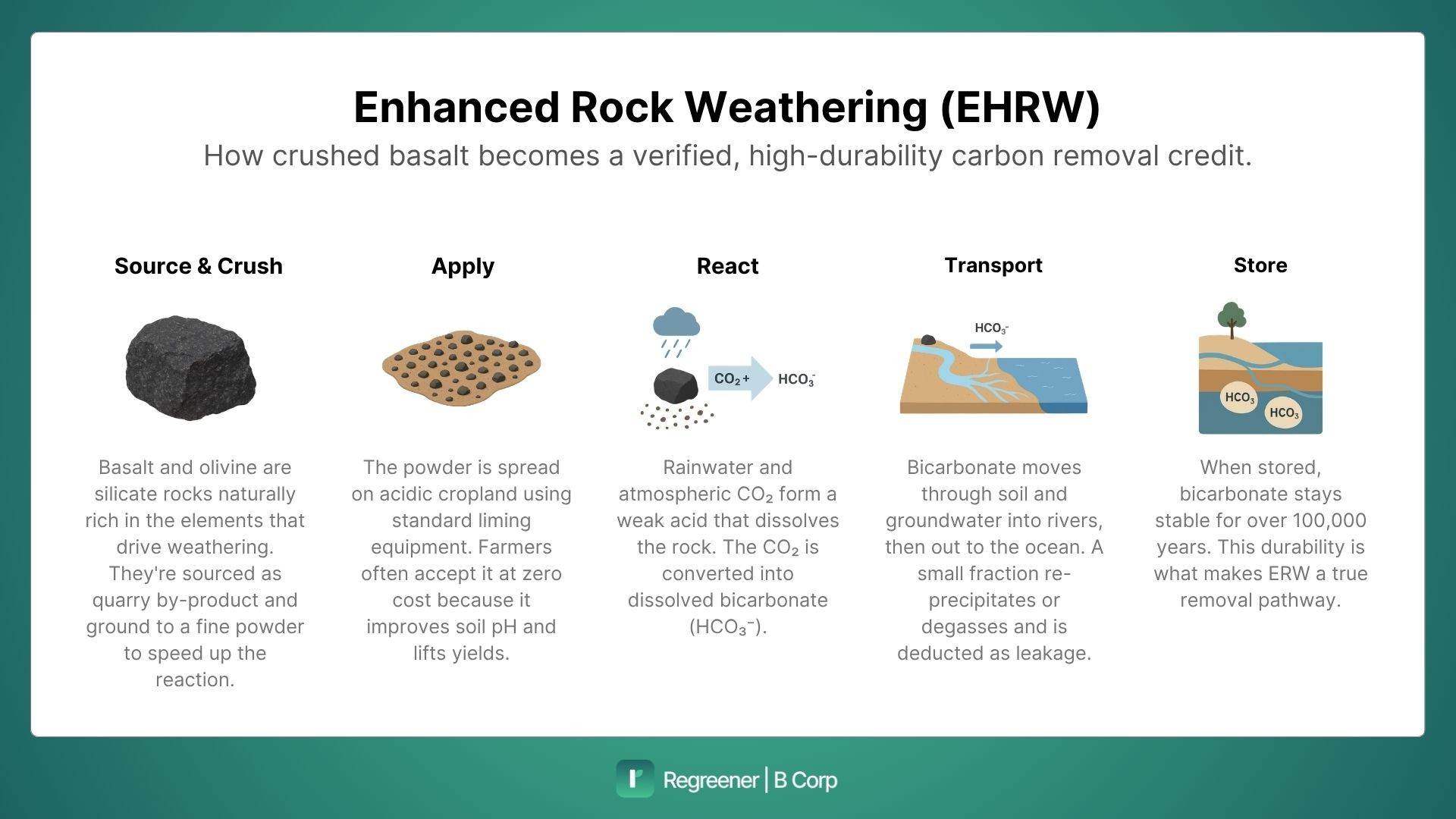
Enhanced Rock Weathering (ERW) is a carbon removal technology that mimics and accelerates Earth’s natural geological process of weathering. When rain, slightly acidic from atmospheric CO2, falls on silicate rocks like basalt or olivine, it triggers a chemical reaction. This reaction breaks down the rocks, drawing CO2 from the air and converting it into stable carbonate minerals. These minerals either remain in the soil, enriching it with essential nutrients, or are washed into rivers and oceans, where they contribute to long-term carbon storage. This process is visualised in the inforgraphic above by NEG8Carbon.
enhanced rock weathering process explained

The process begins with crushing silicate rocks into fine powder, which increases their surface area and speeds up the weathering reaction. This powder is then spread across farmland, grasslands, or coastal environments. As the rocks dissolve, they not only capture CO2 but also release nutrients such as calcium, magnesium, and potassium into the soil. These nutrients improve soil fertility, boost crop yields, and enhance water retention, making ERW a multifunctional climate solution.

"💡 Expert Tip: Start by allocating a smaller percentage of your offset need to ERW projects and form a strategy to increase the percentage year on year. This way, you have a clear driver to prioritise reduction."

Boris Bekkering, Commercial Director

Why ERW Carbon Credits Offer Permanent, Scalable Carbon Removal

One of the most compelling aspects of ERW is its permanence. Unlike some carbon removal methods that store CO2 temporarily in biomass or soils, ERW locks carbon away in mineral form for tens of thousands of years. This makes it a highly reliable solution for long-term carbon sequestration.

Scalability is another major advantage. ERW can be deployed on a global scale, with the potential to remove billions of tons of CO2 annually. It leverages existing agricultural and mining infrastructure, reducing the need for new, energy-intensive systems. Farmers can integrate ERW into their regular practices, applying rock dust alongside fertilizers or soil amendments, which minimizes disruption and maximizes adoption.

Additionally, ERW offers significant co-benefits beyond carbon removal. By improving soil health, it can reduce the need for synthetic fertilizers, lower farming costs, and increase food security. In coastal areas, ERW can help combat ocean acidification by increasing the alkalinity of seawater, which benefits marine ecosystems.

Research and pilot projects around the world are demonstrating ERW’s effectiveness. For example, studies have shown that applying basalt to agricultural fields can remove up to 4–10 tons of CO2 per hectare per year, depending on climate, soil type, and rock composition. In tropical regions with high rainfall and warm temperatures, the weathering process is even faster, making ERW particularly effective in these environments.

As a nature-based solution, ERW aligns with global efforts to restore ecosystems and promote sustainable agriculture. It is gaining traction among policymakers, scientists, and businesses as a practical and scalable tool in the fight against climate change. With ongoing advancements in monitoring, reporting, and verification (MRV) technologies, ERW is becoming an increasingly trusted and viable option for corporations, governments, and individuals looking to offset their carbon footprints permanently.

"💡 Expert Opinion: In 2026, enhanced rock weathering is the only carbon removal technology that permanently stores CO2 as stable minerals in soil and ocean."

Boris Bekkering, Commercial Director

ERW Carbon Credit Quality: What to Look For

Not all ERW credits are equal, and the gap between a high-integrity credit and a poorly measured one can be substantial. Before comparing projects, here are the five things that separate reliable ERW credits from the rest.

MRV method. Measurement, Reporting and Verification is the single most important quality signal in ERW. The best projects combine direct field measurement - soil sampling, geochemical tracing of trace elements like magnesium and nickel, and water monitoring - with conservative modelling to fill gaps. Avoid projects that rely primarily on theoretical models without robust empirical data to back them up. Ask providers directly: what percentage of your removal claims are based on measured field data versus modelled estimates?

Rock type. Different silicate rocks weather at very different rates. Wollastonite is fast-weathering and highly reactive, with 50% of its carbon capture potential achieved within the first year of application. Basalt is slower but abundant and well-studied. Olivine is fast-weathering but carries more uncertainty around trace metal release. The rock type affects both the speed of carbon removal and the confidence with which it can be measured - so it's worth understanding what feedstock a project uses and why.
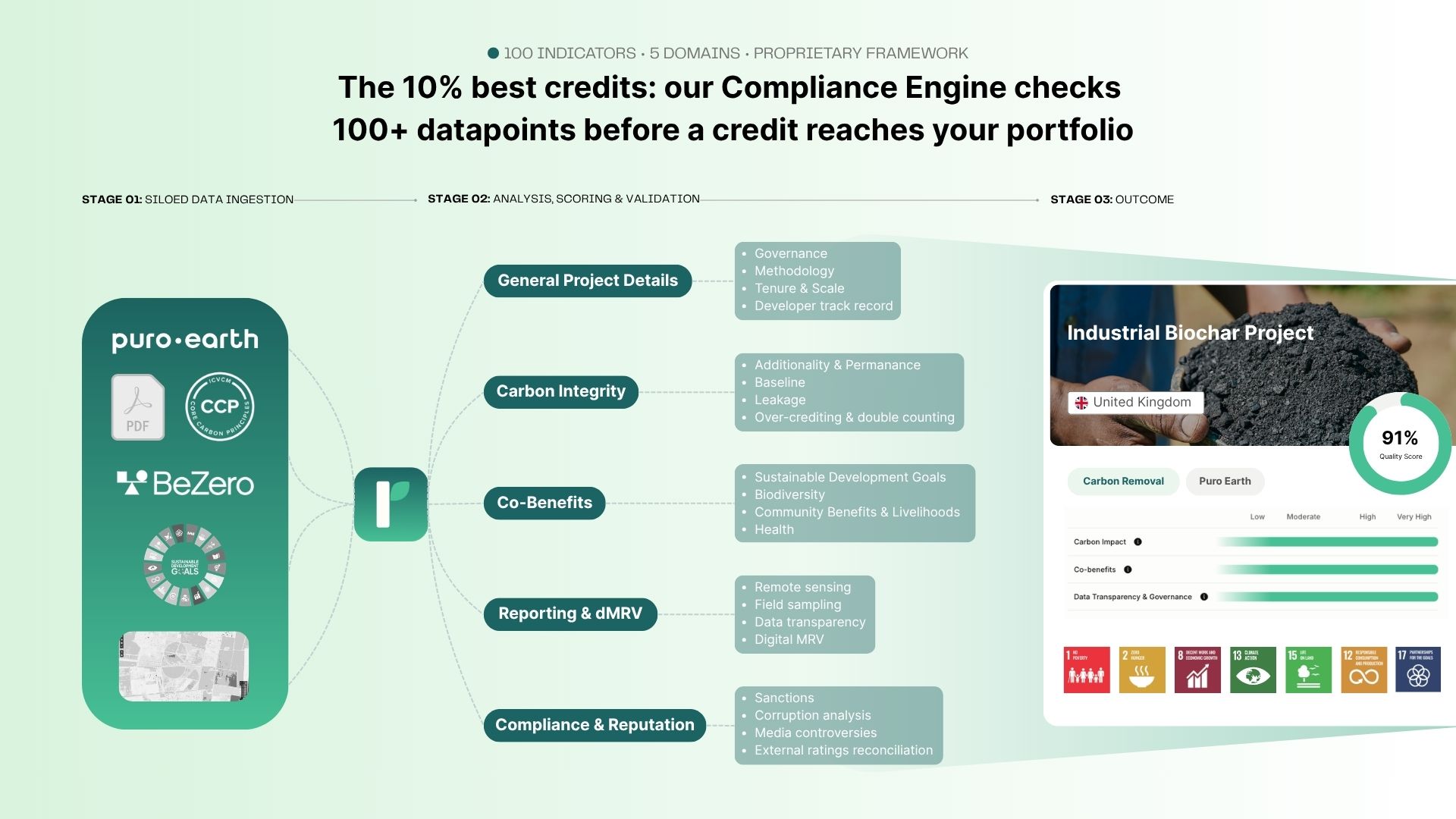
Life-cycle analysis (LCA). Crushing, transporting, and spreading rock powder all generate emissions. A credible ERW project publishes a full LCA showing exactly what is deducted from gross removal to arrive at the net credit figure. Projects with high carbon efficiency - typically 85-95% after deductions - source rock locally, use existing industrial by-products where possible, and optimise transport logistics. If a provider cannot show you a published LCA, treat the credit figures with caution.

Conservative crediting. The most trustworthy ERW developers apply uncertainty buffers - deliberately issuing fewer credits than their central estimate suggests, to account for natural variability in weathering rates, soil conditions, and ocean carbon fate. This is not a weakness; it is a mark of scientific integrity. Registries like Puro.earth and Isometric require conservative accounting as a condition of verification. If a project's claimed removal rates look high relative to peers without a clear scientific explanation, that is a red flag.

Third-party verification. Independent verification by a recognised standard is the baseline requirement for any ERW credit worth buying. In 2026, Puro.earth and Isometric are the two most rigorous registries for ERW, each with published methodologies that have been developed with scientific input and are openly available. Gold Standard verification adds credibility for projects with a broader sustainable development co-benefits profile. Credits without any third-party verification - however compelling the project story - carry a level of integrity risk that is difficult to justify for corporate buyers facing CSRD reporting requirements or external assurance.

The 5 Best ERW Carbon Credits of 2026

  1. InPlanet: Agricultural ERW With Local Impact

Overview

InPlanet applies finely crushed basalt rock powder to agricultural soils across Brazil, accelerating the natural weathering process that permanently sequesters carbon as stable bicarbonate - stored in the ocean for over 10,000 years. Founded in 2022, the company operates across Brazil and Germany, with more than 70% of its team based in Brazil. In December 2024, InPlanet delivered the world's first independently verified ERW carbon removal credits, verified under Isometric's Enhanced Weathering Protocol and awarded a post-issuance 'A' rating by BeZero Carbon.

  • Type: Agricultural Enhanced Rock Weathering (ERW), tropical deployment

  • Location: São Paulo State, Brazil (primary operations), with presence in Germany

  • Annual Impact: 28,500+ tonnes contracted for delivery to Microsoft between 2026 and 2028; targeting gigaton-scale removal long-term

  • Funded by/bought by: Microsoft, Adyen, AXA Switzerland

  • Status: Operational

Key Benefits

  • Climate: Delivers the world's first independently verified ERW credits, with CO₂ permanently stored as stable minerals for 10,000+ years.

  • Agriculture: Treated fields show measurable improvements in soil fertility, reduced fertilizer use, and lower dependence on agricultural limestone - directly benefiting Brazilian farmers.

  • Science: Anonymized project data is shared publicly through Cascade Climate's ERW Data Quarry, advancing industry-wide scientific transparency.

  • SDGs: Aligns with SDG 2 (Zero Hunger), SDG 13 (Climate Action), and SDG 15 (Life on Land).

Why It Stands Out

InPlanet holds a landmark distinction in the ERW market: it issued the world's first independently verified ERW carbon removal credits in December 2024 - a milestone for the entire CDR industry. Its deployment in Brazil is strategically significant. Tropical conditions, with high temperatures and heavy rainfall, accelerate silicate weathering substantially compared to temperate regions, making Brazil one of the most efficient locations on earth for ERW. The company's published life-cycle analysis demonstrates exceptional sustainability performance in this context, with minimal negative impacts and high CDR potential per hectare. With Microsoft, Adyen, and AXA Switzerland as named buyers, and credits rated 'A' by BeZero Carbon, InPlanet combines scientific firsts with genuine commercial traction - making it one of the most credible ERW providers available to corporate buyers in 2026.

  1. Terradot (former Eion): Community-Driven Agricultural ERW
Overview

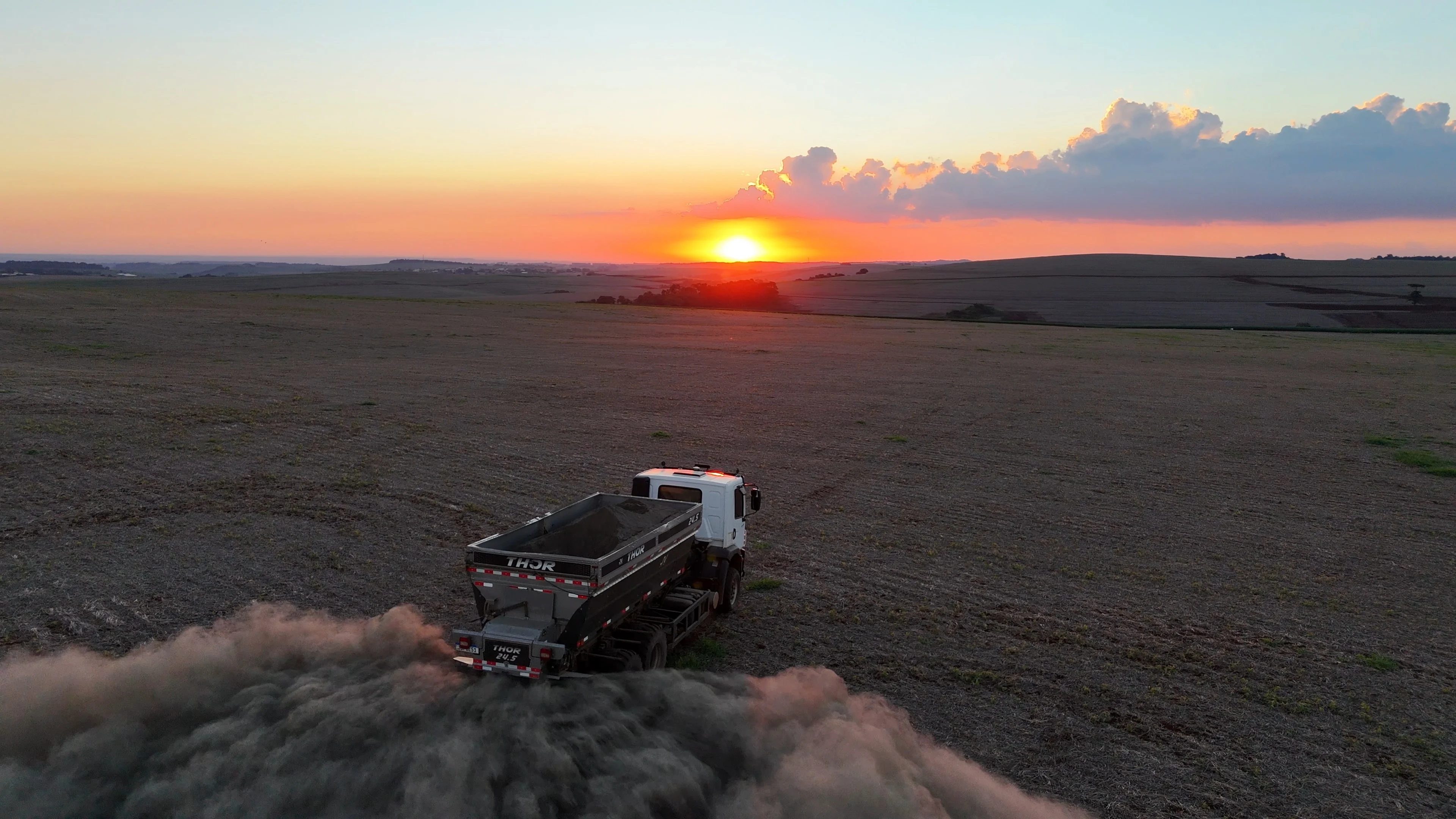
Eion deploys olivine, a fast-weathering silicate mineral, on farmland across the Mid-Atlantic US, Kenya, and beyond. Using a patented "soil fingerprinting" method, Eion directly measures carbon removal by tracking trace elements like magnesium and nickel in the soil. This approach ensures accurate and scalable MRV (Measurement, Reporting, and Verification). Eion partners with agricultural cooperatives, including Growmark, to integrate ERW into existing farming practices, making it accessible to smallholder farmers. The company has secured major offtake agreements with Microsoft, Google, Shopify, and Frontier, positioning it as a leader in the agricultural ERW space. In February 2026, Terradot acquired Eion to build the most notable global ERW player.

  • Type: Agricultural Enhanced Rock Weathering (ERW)

  • Location: Mid-Atlantic US, Kenya, and expanding to the Midwest and South

  • Annual Impact: Contracts to remove 78,000+ tons of CO2 by 2030, with a farmer network covering nearly 400,000 acres

  • Funded/bought by: Kleiner Perkins, Google

  • Status: Operational

Key Benefits

  • Climate: Provides permanent, verifiable CO2 removal while improving soil health.

  • Agriculture: Replaces synthetic lime with olivine, reducing costs for farmers and boosting crop yields.

  • Community: Creates additional income streams for farmers through carbon credit sales and supports rural economies.

  • SDGs: Aligns with SDG 2 (Zero Hunger), SDG 13 (Climate Action), and SDG 15 (Life on Land).

Why It Stands Out

Eion stands out for its innovative MRV technology, which integrates seamlessly with existing soil testing practices used by farmers. This makes it one of the most scalable and farmer-friendly ERW solutions available. The company’s partnerships with tech giants and agricultural cooperatives demonstrate its ability to bridge the gap between climate science and real-world deployment. By focusing on acidic soils in warm, wet climates—where weathering rates are highest—Eion maximizes both carbon removal efficiency and co-benefits for food security. Its recent $33 million offtake deal with Frontier underscores the market’s confidence in its approach

  1. Carbfix: Geological Storage in Iceland
Overview

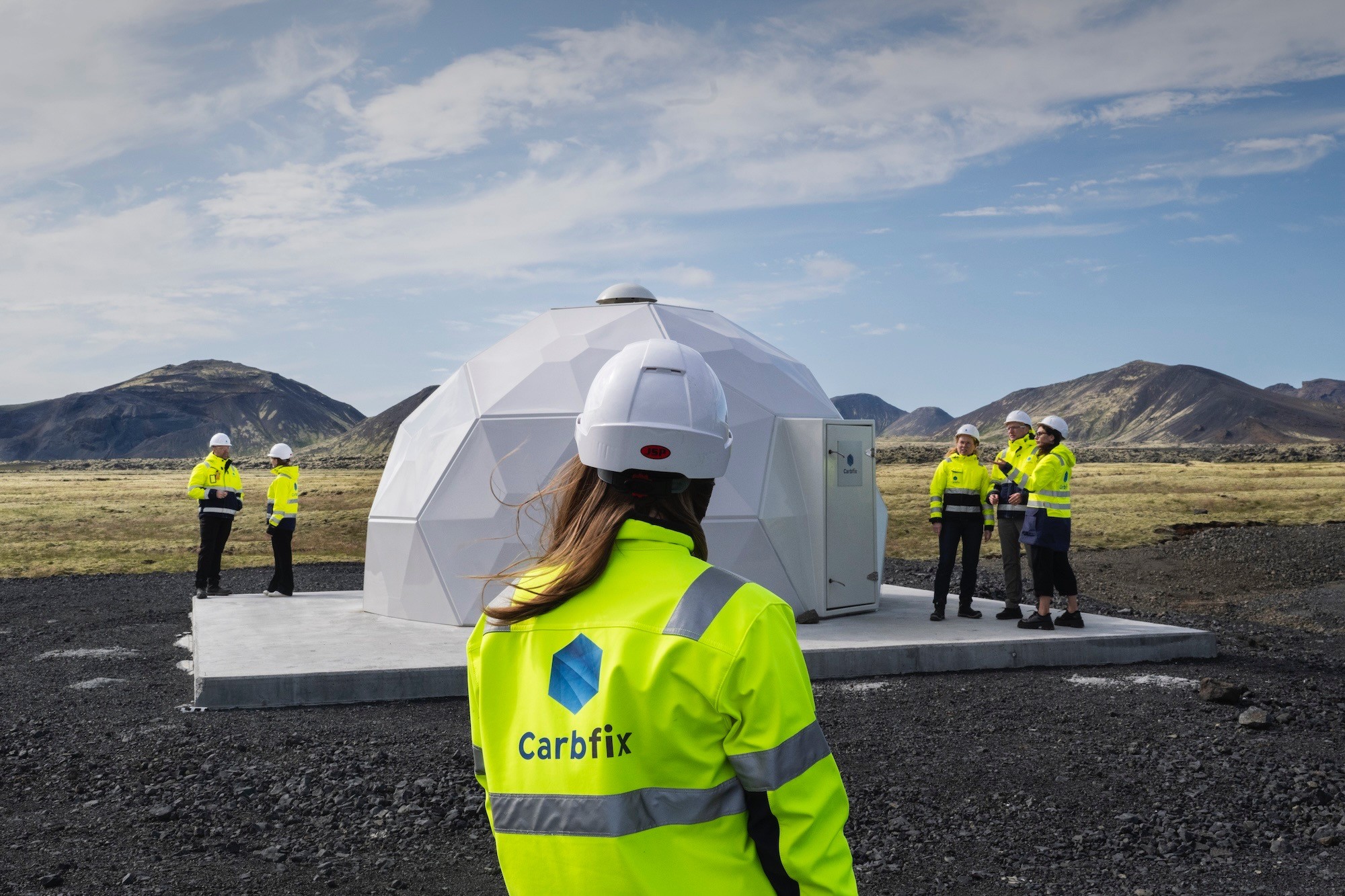
Carbfix captures CO2 from industrial sources and direct air capture (DAC) systems, dissolves it in water, and injects it into basaltic rock formations in Iceland. Within two years, over 95% of the injected CO2 mineralizes into solid carbonate, ensuring permanent storage. Carbfix operates at the Hellisheiði Geothermal Power Plant, where it has reduced CO2 emissions by 30% since 2014. The project is now scaling up through the EU-funded Silverstone initiative, which aims to achieve near-zero emissions at the plant by 2026. Carbfix also collaborates with Climeworks to combine DAC and mineralization, creating a closed-loop carbon removal system.

  • Type: In-Situ Mineral Carbonation (ERW + DAC integration)

  • Location: Hellisheiði and Nesjavellir Geothermal Power Plants, Iceland

  • Annual Impact: Over 100,000 tons of CO2 mineralized annually, with plans to scale to millions of tons

  • Funded/bought by: ON Power, Microsoft, Stripe

  • Status: Operational

Key Benefits

  • Climate: Offers the fastest and most permanent CO2 storage solution, with mineralization completed in under two years.

  • Energy: Enables carbon-negative geothermal energy production.

  • Innovation: Proves the feasibility of integrating ERW with DAC for hybrid carbon removal.

  • SDGs: Aligns with SDG 7 (Affordable and Clean Energy) and SDG 13 (Climate Action).

Why It Stands Out

Carbfix is the world’s first operational CO2 mineral storage project, demonstrating that large-scale, permanent carbon removal is achievable today. Its partnership with Climeworks at the Orca DAC plant showcases how ERW can complement other carbon removal technologies to create synergistic solutions. The project’s success has inspired similar initiatives worldwide, including a new feasibility study for basalt storage in the Pacific Northwest. By turning CO2 into stone, Carbfix eliminates the risk of leakage and sets a benchmark for durability in carbon removal

  1. UNDO: Blockchain-Verified ERW at Scale
Overview

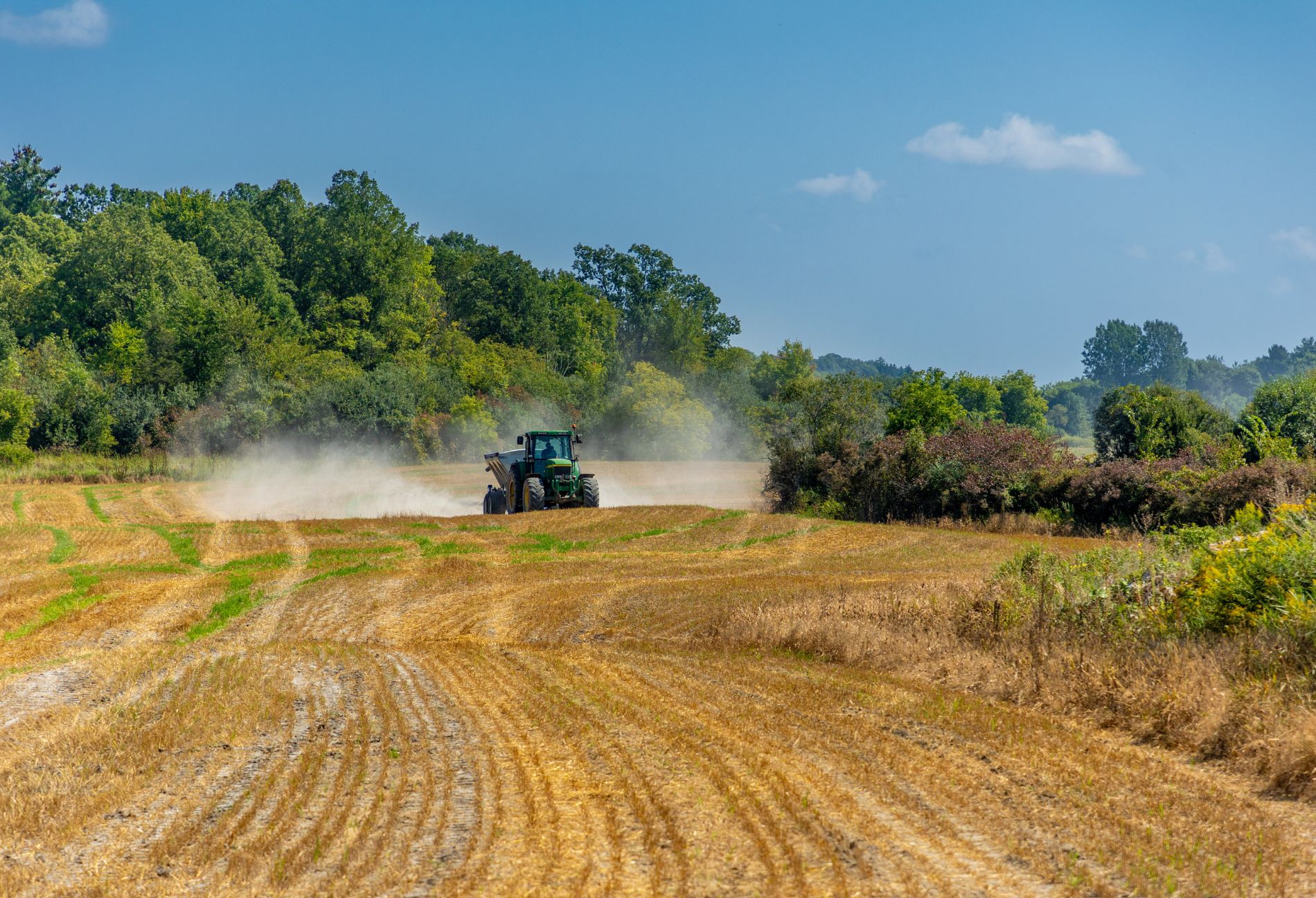
UNDO spreads crushed basalt, wollastonite and other silicate rocks on agricultural land across Canada. The project uses blockchain technology to track carbon removal and ensure transparency, making it one of the most trusted ERW providers in the voluntary carbon market. UNDO’s end-to-end platform—from sourcing rock to monitoring weathering—enables rapid deployment and rigorous verification. In 2025, UNDO became one of four global winners of the $100 million XPRIZE Carbon Removal competition, funded by the Musk Foundation. The company has already enriched over 54,000 acres of farmland, permanently removing roughly 69,000 tons of CO2.

  • Type: Agricultural Enhanced Rock Weathering (ERW)

  • Location: UK, US, Australia, with expansion into Brazil

  • Annual Impact: Targets removal of 1 million tons of CO₂ by beginning 2026, with a long-term goal of 4 billion tons annually

  • Funded/bought by: Microsoft, Barclays

  • Status: Operational

Key Benefits

  • Climate: Provides durable, high-integrity carbon credits verified by Puro.earth.

  • Soil Health: Enhances soil fertility, reduces fertilizer use, and improves water retention.

  • Farmers: Offers farmers a new revenue stream through carbon credit sales.

  • SDGs: Aligns with SDG 2 (Zero Hunger), SDG 13 (Climate Action), and SDG 15 (Life on Land).

Why It Stands Out

UNDO is a pioneer in combining ERW with blockchain-based MRV, ensuring full traceability and trust in its carbon credits. Its partnership with Microsoft and McLaren Racing highlights its appeal to corporations seeking high-quality removal credits. By sourcing rock from local quarries and focusing on marginal lands, UNDO minimizes environmental impact while maximizing scalability. The project’s recent collaboration with Verde AgriTech in Brazil further demonstrates its ability to adapt to diverse agricultural contexts and feedstocksZeroEx: Precision ERW with Mining By-Products

  1. ZeroEx: Precision Enhanced Rock Weathering with Mining By-Products
Overview

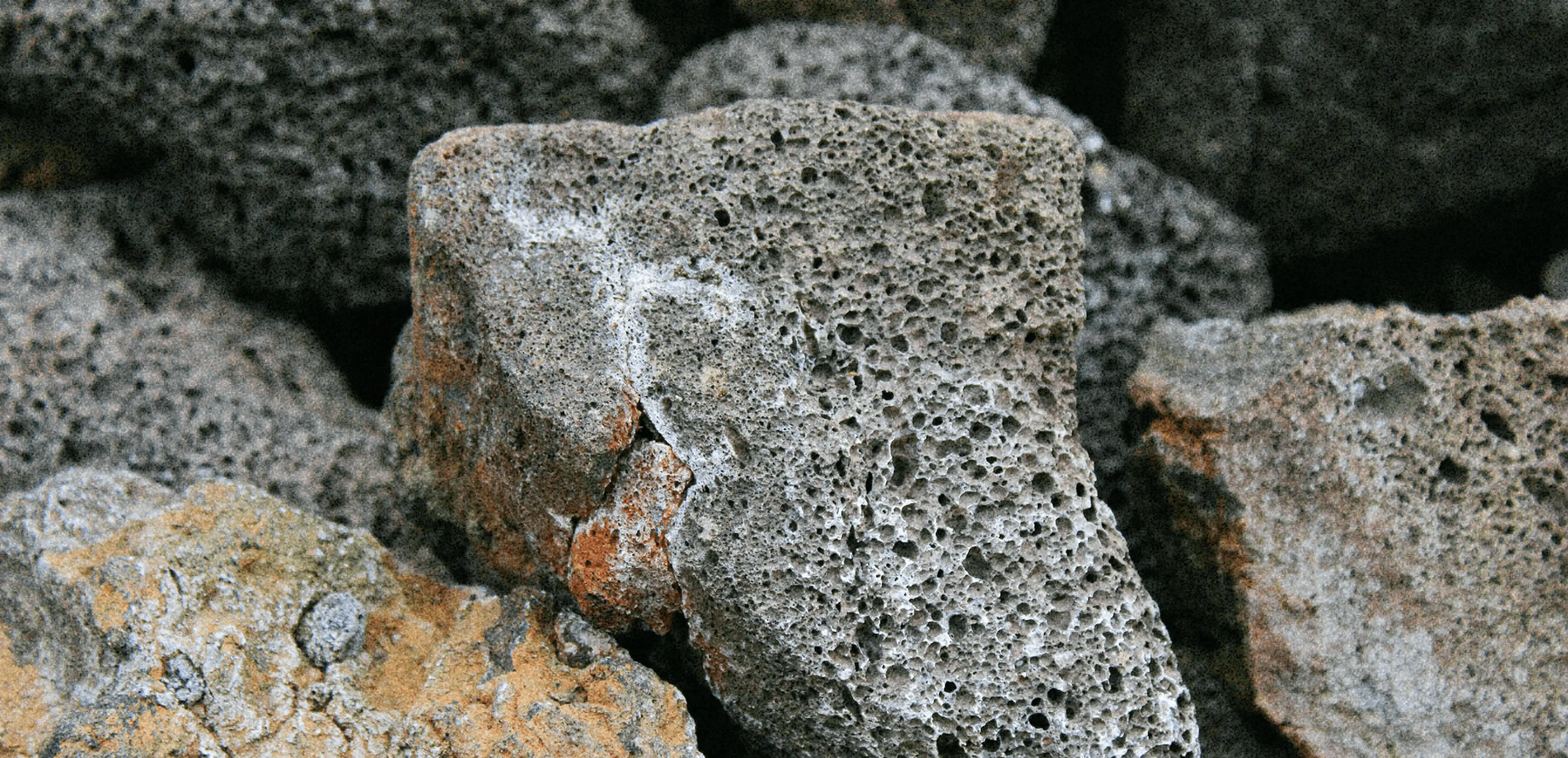
ZeroEx accelerates the weathering of basalt and other silicate rocks by applying finely crushed rock powder to agricultural fields in Germany, Brazil, and beyond. The company uses self-integrating accumulators (SIAs) to measure carbon removal with unprecedented precision, ensuring that every ton of CO2 sequestered is accurately quantified. ZeroEx sources rock powder from mining by-products, reducing costs and environmental footprint. Its Project Earthstone in Brazil, a collaboration with Anglo American, aims to remove up to 15 million tons of CO2 while improving soil health and crop productivity.

  • Type: Agricultural Enhanced Rock Weathering (ERW)

  • Location: Germany, Brazil, and expanding to North America

  • Annual Impact: Expected to deliver 800–1,000 verified carbon removal credits in 2025, with potential for gigaton-scale

  • Funded/bought by: several Regreener clients

  • Status: Operational

Key Benefits

  • Climate: Uses mining waste to create a circular economy for carbon removal.

  • Agriculture: Substitutes emissions-intensive agricultural lime, reducing farmers’ costs and improving yields.

  • Innovation: SIAs provide the most accurate and cost-effective MRV method for ERW.

  • SDGs: Aligns with SDG 9 (Industry, Innovation, and Infrastructure), SDG 12 (Responsible Consumption), and SDG 13 (Climate Action).

Why It Stands Out

ZeroEx is revolutionizing ERW with its cutting-edge MRV technology, which directly measures weathering products in the field. By focusing on local deployments—with rock sourced within 30 km of farms—the project minimizes transport emissions and supports regional economies. Its partnership with Isometric and Anglo American positions ZeroEx at the forefront of high-integrity carbon credit generation. The company’s ability to transform mining by-products into valuable feedstocks for carbon removal makes it a model for sustainable industrial collaboration. We are happy to have the ZeroEx ERW project as part of our project portfolio 2026.

Project

Verification Standard

Scalability & Deployment

Co-Benefits

Transparency & Data Availability

  1. InPlanet (Brazil)

Isometric

28,500+ tons contracted

Soil regeneration, farmer income

Data shared publicly through Data Quarry

  1. Eion (USA, Kenya)

Carbon Business Council

50,000+ hectares with smallholders

Soil regeneration, farmer income

Satellite MRV, annual impact reports

  1. Carbfix (Iceland)

Gold Standard, Climeworks

Integrated with DAC, 100,000+ tons/year

Geological storage, energy synergy

Peer-reviewed papers, live dashboards

  1. UNDO (UK, Global)

Puro.earth

1M+ tons contracted, 20+ countries

Soil health, water retention

Blockchain-tracked credits, farm-level data

  1. ZeroEx (Europe, Brazil)

Isometric, Puro.earth

30,000+ hectares, focus on marginal lands

Biodiversity, carbon farming

Self-integrating accumulators (SIAs), real-time data dashboards

Not sure which ERW project fits your budget and goals? Our team sources credits from verified ERW suppliers and can help you compare options.

a plane flying in the sky with the word go written in it

Explore our Guide: the best Carbon Credit Projects of 2026

Learn about the latest best practices, high-quality projects and strategic options

Other ERW Providers Worth Watching

Vesta (US) and Lithos Carbon (US) are two further ERW developers worth keeping on your radar in 2026. Vesta is pioneering a fundamentally different approach to ERW — coastal rather than agricultural. By integrating olivine sand into shoreline protection projects, it harnesses wave energy to accelerate weathering and store CO₂ as bicarbonate in seawater, while simultaneously combating ocean acidification. Vesta became the first company to receive a US federal permit for a standalone ocean-based carbon removal pilot, completing its North Carolina deployment in 2024 under independent monitoring by Hourglass Climate. Its Series A was led by the Grantham Trust, with Stripe as an early credit pre-purchaser. That said, Vesta is firmly pre-commercial — no verified credits are available to buyers today, and first meaningful credit volumes are not expected before the early 2030s. It belongs on a watchlist, not a procurement shortlist.

Lithos Carbon focuses on agricultural ERW across the US, applying basalt to farmland and using frequent soil sampling rather than modelling as its primary MRV approach. That verification rigour helped attract a 11,400-tonne carbon removal deal with Microsoft, positioning Lithos as one of the more credible US-based agricultural ERW options for buyers seeking verified credits from a temperate-region operator.

How to Incorporate ERW Into Your Company's Offsetting Strategy

ERW credits are not a standalone solution — they work best as part of a broader offsetting portfolio that reflects both your emissions profile and your long-term climate commitments. For most companies, the right approach is to use ERW credits to cover residual emissions that are genuinely hard to abate, rather than as a substitute for internal reduction efforts. Pair them with nature-based credits for near-term volume and cost efficiency, and increase your share of ERW over time as verification standards mature and prices stabilise. A practical starting point is allocating 20-30% of your offset budget to high-durability removals like ERW, with a plan to grow that share in line with SBTi's net-zero framework, which increasingly requires durable removals for residual emissions claims beyond 2030.

When selecting specific ERW credits, prioritise permanence by choosing projects with verified geological or mineral storage - basalt mineralization, wollastonite application, or coastal bicarbonate formation. Consider co-benefits that align with your sustainability goals, whether that is soil health, ocean restoration, or farmer income.

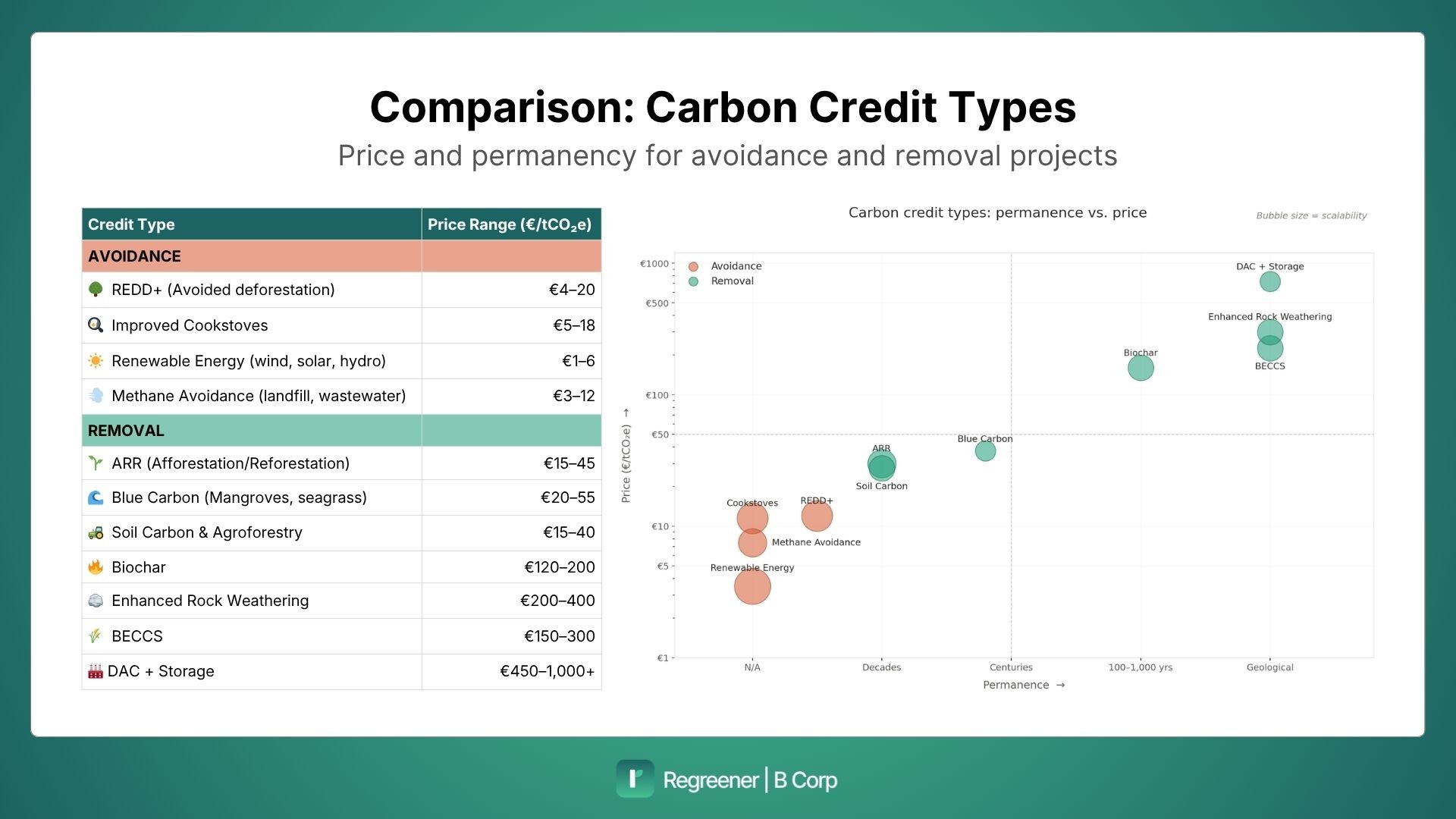
Early-stage or pilot projects with model-based MRV typically trade at €50-€120 per ton. Projects with independent third-party verification (Puro.earth, Isometric) and robust field measurement generally sit in the €200-€400 range. Premium credits — particularly those with long-term offtake demand from tech buyers like Microsoft and Google — can reach €300-€500 per ton. Of the five projects reviewed here, UNDO and Eion sit in the mid-to-upper tier given their verification depth and corporate buyer track record; Carbfix commands the highest prices due to its geological permanence and DAC integration. For most corporate buyers seeking CSRD-defensible removals, the €200-€400 range offers the best balance of quality and cost.

Want to know which credits fit your company's climate strategy?

Book a free consultation today

Regulatory durability is increasingly a deciding factor. Under the EU's Corporate Sustainability Reporting Directive (CSRD), companies must disclose and justify their residual emissions claims with growing precision, and external auditors are already scrutinising whether carbon neutral claims are backed by high-quality, durable removals or by cheaper avoidance credits that may not survive future standards. ERW credits verified under Puro.earth or Isometric are classified as high-durability removals and are well-positioned to meet that bar. If your sustainability report is subject to limited or reasonable assurance, ERW credits give you significantly more defensible ground than nature-based avoidance credits alone.How Much Do ERW Carbon Credits Cost in 2026?

ERW Carbon Credits: What to Watch Out For

Enhanced rock weathering is one of the most promising carbon removal methods available — but it's also one of the hardest to measure accurately. Before buying, here's what separates high-integrity ERW credits from questionable ones.

Measurement uncertainty. Carbon removal from ERW happens gradually, through soil chemistry and river runoff. Unlike a solar panel displacing grid electricity, there's no meter. Reputable projects use direct field measurement — soil sampling, geochemical tracing, and water monitoring — rather than model-based estimates alone. Ask providers whether their MRV relies primarily on empirical data or computational models. The best projects, like Eion and UNDO, publish their methodologies openly.

Leakage and transport emissions. Crushing and transporting rock powder generates CO2. If those emissions aren't properly deducted from the gross removal figure, the net credit is overstated. Look for a published life-cycle analysis (LCA) and ask what percentage of gross removal is returned as process emissions. A credible project typically shows 85-95% carbon efficiency after deductions.

Conservative crediting. The most trustworthy ERW providers apply uncertainty buffers — deliberately crediting fewer tons than their models suggest, to account for variability. If a provider's claimed removal rates seem suspiciously high relative to peers, that's a red flag. Verification by Puro.earth or Isometric requires conservative accounting by design.

Bottom line: ERW credits are only as good as the MRV behind them. Insist on third-party verification, published methodology, and a clear LCA before committing.
The Future of ERW: Trends to Watch in 2026–2030

The ERW market is set to grow rapidly, driven by policy support (e.g., EU’s CRCF, US funding) and technological advances like AI-driven MRV and automated deployment. Demand for scalable, permanent carbon removal will rise as corporations seek high-integrity credits.

By 2030, ERW could remove billions of tons of CO2 annually, with innovations like hybrid ERW-DAC systems and expanded applications in agriculture and coastal environments. Early adopters will benefit from securing credits from leading projects as the market matures.

Next steps, How To Buy ERW Carbon Credits

Procuring ERW credits can be done through Regreener. Regreener sources high quality credits by subjecting projects to a stringent rating framework.

Enhanced Rock Weathering is more than just a carbon removal technology—it’s a scalable, permanent, and multifunctional solution for addressing climate change while delivering tangible co-benefits for soil, water, and communities. The five projects highlighted—InPlanet, Eion, Carbfix, UNDO, and ZeroEx—represent the cutting edge of ERW in 2026, each offering unique strengths in verification, scalability, and impact.

For businesses, investing in ERW credits means supporting long-term carbon removal while aligning with broader sustainability goals, from regenerative agriculture to ocean health. As the market evolves, ERW is poised to play a critical role in global decarbonization efforts, backed by advancing technology, supportive policies, and growing corporate demand.

Procuring ERW credits can be done through Regreener. Regreener sources high quality credits by subjecting projects to a stringent rating framework. ERW projects can be a great option to support climate innovation and direct mitigation efforts. Regreener would advise to work with a balanced portfolio of offsets. If you'd like to learn more about setting up an effective carbon offsetting strategy, we would be happy to have a chat. Regreener has helped 200+ companies navigate the carbon market, including ERW procurement for clients with Oxford-aligned removal strategies.


Most carbon credits come with caveats. ERW credits don't. When silicate rock dissolves in your soil, the CO2 it captures is locked away as stable minerals for tens of thousands of years - with no reversal risk, no tree to cut down, no landfill to leak. That's why corporate buyers are shifting budgets toward ERW. In 2026, five projects are setting the standard.

Direct answer: the 5 best Enhanced Rock Weathering carbon credit projects of 2026 are:

  1. InPlanet

  2. Terradot (former Eion)

  3. Carbfix

  4. UNDO

  5. ZeroEx

Each offers permanent carbon removal verified by independent third parties, with strong agricultural or ecological co-benefits. Prices range from approximately €200 to €500 per ton depending on project, volume, and contract structure.

Want to know which credits fit your company's climate strategy?

Book a free consultation today

What Is Enhanced Rock Weathering (ERW)?

Enhanced Rock Weathering (ERW) is a carbon removal technology that mimics and accelerates Earth’s natural geological process of weathering. When rain, slightly acidic from atmospheric CO2, falls on silicate rocks like basalt or olivine, it triggers a chemical reaction. This reaction breaks down the rocks, drawing CO2 from the air and converting it into stable carbonate minerals. These minerals either remain in the soil, enriching it with essential nutrients, or are washed into rivers and oceans, where they contribute to long-term carbon storage. This process is visualised in the inforgraphic above by NEG8Carbon.

enhanced rock weathering process explained

The process begins with crushing silicate rocks into fine powder, which increases their surface area and speeds up the weathering reaction. This powder is then spread across farmland, grasslands, or coastal environments. As the rocks dissolve, they not only capture CO2 but also release nutrients such as calcium, magnesium, and potassium into the soil. These nutrients improve soil fertility, boost crop yields, and enhance water retention, making ERW a multifunctional climate solution.

"💡 Expert Tip: Start by allocating a smaller percentage of your offset need to ERW projects and form a strategy to increase the percentage year on year. This way, you have a clear driver to prioritise reduction."

Boris Bekkering, Commercial Director

Why ERW Carbon Credits Offer Permanent, Scalable Carbon Removal

One of the most compelling aspects of ERW is its permanence. Unlike some carbon removal methods that store CO2 temporarily in biomass or soils, ERW locks carbon away in mineral form for tens of thousands of years. This makes it a highly reliable solution for long-term carbon sequestration.

Scalability is another major advantage. ERW can be deployed on a global scale, with the potential to remove billions of tons of CO2 annually. It leverages existing agricultural and mining infrastructure, reducing the need for new, energy-intensive systems. Farmers can integrate ERW into their regular practices, applying rock dust alongside fertilizers or soil amendments, which minimizes disruption and maximizes adoption.

Additionally, ERW offers significant co-benefits beyond carbon removal. By improving soil health, it can reduce the need for synthetic fertilizers, lower farming costs, and increase food security. In coastal areas, ERW can help combat ocean acidification by increasing the alkalinity of seawater, which benefits marine ecosystems.

Research and pilot projects around the world are demonstrating ERW’s effectiveness. For example, studies have shown that applying basalt to agricultural fields can remove up to 4–10 tons of CO2 per hectare per year, depending on climate, soil type, and rock composition. In tropical regions with high rainfall and warm temperatures, the weathering process is even faster, making ERW particularly effective in these environments.

As a nature-based solution, ERW aligns with global efforts to restore ecosystems and promote sustainable agriculture. It is gaining traction among policymakers, scientists, and businesses as a practical and scalable tool in the fight against climate change. With ongoing advancements in monitoring, reporting, and verification (MRV) technologies, ERW is becoming an increasingly trusted and viable option for corporations, governments, and individuals looking to offset their carbon footprints permanently.

"💡 Expert Opinion: In 2026, enhanced rock weathering is the only carbon removal technology that permanently stores CO2 as stable minerals in soil and ocean."

Boris Bekkering, Commercial Director

ERW Carbon Credit Quality: What to Look For

Not all ERW credits are equal, and the gap between a high-integrity credit and a poorly measured one can be substantial. Before comparing projects, here are the five things that separate reliable ERW credits from the rest.

MRV method. Measurement, Reporting and Verification is the single most important quality signal in ERW. The best projects combine direct field measurement - soil sampling, geochemical tracing of trace elements like magnesium and nickel, and water monitoring - with conservative modelling to fill gaps. Avoid projects that rely primarily on theoretical models without robust empirical data to back them up. Ask providers directly: what percentage of your removal claims are based on measured field data versus modelled estimates?

Rock type. Different silicate rocks weather at very different rates. Wollastonite is fast-weathering and highly reactive, with 50% of its carbon capture potential achieved within the first year of application. Basalt is slower but abundant and well-studied. Olivine is fast-weathering but carries more uncertainty around trace metal release. The rock type affects both the speed of carbon removal and the confidence with which it can be measured - so it's worth understanding what feedstock a project uses and why.

Life-cycle analysis (LCA). Crushing, transporting, and spreading rock powder all generate emissions. A credible ERW project publishes a full LCA showing exactly what is deducted from gross removal to arrive at the net credit figure. Projects with high carbon efficiency - typically 85-95% after deductions - source rock locally, use existing industrial by-products where possible, and optimise transport logistics. If a provider cannot show you a published LCA, treat the credit figures with caution.

Conservative crediting. The most trustworthy ERW developers apply uncertainty buffers - deliberately issuing fewer credits than their central estimate suggests, to account for natural variability in weathering rates, soil conditions, and ocean carbon fate. This is not a weakness; it is a mark of scientific integrity. Registries like Puro.earth and Isometric require conservative accounting as a condition of verification. If a project's claimed removal rates look high relative to peers without a clear scientific explanation, that is a red flag.

Third-party verification. Independent verification by a recognised standard is the baseline requirement for any ERW credit worth buying. In 2026, Puro.earth and Isometric are the two most rigorous registries for ERW, each with published methodologies that have been developed with scientific input and are openly available. Gold Standard verification adds credibility for projects with a broader sustainable development co-benefits profile. Credits without any third-party verification - however compelling the project story - carry a level of integrity risk that is difficult to justify for corporate buyers facing CSRD reporting requirements or external assurance.

The 5 Best ERW Carbon Credits of 2026

  1. InPlanet: Agricultural ERW With Local Impact

Overview

InPlanet applies finely crushed basalt rock powder to agricultural soils across Brazil, accelerating the natural weathering process that permanently sequesters carbon as stable bicarbonate - stored in the ocean for over 10,000 years. Founded in 2022, the company operates across Brazil and Germany, with more than 70% of its team based in Brazil. In December 2024, InPlanet delivered the world's first independently verified ERW carbon removal credits, verified under Isometric's Enhanced Weathering Protocol and awarded a post-issuance 'A' rating by BeZero Carbon.

  • Type: Agricultural Enhanced Rock Weathering (ERW), tropical deployment

  • Location: São Paulo State, Brazil (primary operations), with presence in Germany

  • Annual Impact: 28,500+ tonnes contracted for delivery to Microsoft between 2026 and 2028; targeting gigaton-scale removal long-term

  • Funded by/bought by: Microsoft, Adyen, AXA Switzerland

  • Status: Operational

Key Benefits

  • Climate: Delivers the world's first independently verified ERW credits, with CO₂ permanently stored as stable minerals for 10,000+ years.

  • Agriculture: Treated fields show measurable improvements in soil fertility, reduced fertilizer use, and lower dependence on agricultural limestone - directly benefiting Brazilian farmers.

  • Science: Anonymized project data is shared publicly through Cascade Climate's ERW Data Quarry, advancing industry-wide scientific transparency.

  • SDGs: Aligns with SDG 2 (Zero Hunger), SDG 13 (Climate Action), and SDG 15 (Life on Land).

Why It Stands Out

InPlanet holds a landmark distinction in the ERW market: it issued the world's first independently verified ERW carbon removal credits in December 2024 - a milestone for the entire CDR industry. Its deployment in Brazil is strategically significant. Tropical conditions, with high temperatures and heavy rainfall, accelerate silicate weathering substantially compared to temperate regions, making Brazil one of the most efficient locations on earth for ERW. The company's published life-cycle analysis demonstrates exceptional sustainability performance in this context, with minimal negative impacts and high CDR potential per hectare. With Microsoft, Adyen, and AXA Switzerland as named buyers, and credits rated 'A' by BeZero Carbon, InPlanet combines scientific firsts with genuine commercial traction - making it one of the most credible ERW providers available to corporate buyers in 2026.

  1. Terradot (former Eion): Community-Driven Agricultural ERW

Overview

Eion deploys olivine, a fast-weathering silicate mineral, on farmland across the Mid-Atlantic US, Kenya, and beyond. Using a patented "soil fingerprinting" method, Eion directly measures carbon removal by tracking trace elements like magnesium and nickel in the soil. This approach ensures accurate and scalable MRV (Measurement, Reporting, and Verification). Eion partners with agricultural cooperatives, including Growmark, to integrate ERW into existing farming practices, making it accessible to smallholder farmers. The company has secured major offtake agreements with Microsoft, Google, Shopify, and Frontier, positioning it as a leader in the agricultural ERW space. In February 2026, Terradot acquired Eion to build the most notable global ERW player.

  • Type: Agricultural Enhanced Rock Weathering (ERW)

  • Location: Mid-Atlantic US, Kenya, and expanding to the Midwest and South

  • Annual Impact: Contracts to remove 78,000+ tons of CO2 by 2030, with a farmer network covering nearly 400,000 acres

  • Funded/bought by: Kleiner Perkins, Google

  • Status: Operational

Key Benefits

  • Climate: Provides permanent, verifiable CO2 removal while improving soil health.

  • Agriculture: Replaces synthetic lime with olivine, reducing costs for farmers and boosting crop yields.

  • Community: Creates additional income streams for farmers through carbon credit sales and supports rural economies.

  • SDGs: Aligns with SDG 2 (Zero Hunger), SDG 13 (Climate Action), and SDG 15 (Life on Land).

Why It Stands Out

Eion stands out for its innovative MRV technology, which integrates seamlessly with existing soil testing practices used by farmers. This makes it one of the most scalable and farmer-friendly ERW solutions available. The company’s partnerships with tech giants and agricultural cooperatives demonstrate its ability to bridge the gap between climate science and real-world deployment. By focusing on acidic soils in warm, wet climates—where weathering rates are highest—Eion maximizes both carbon removal efficiency and co-benefits for food security. Its recent $33 million offtake deal with Frontier underscores the market’s confidence in its approach

  1. Carbfix: Geological Storage in Iceland

Overview

Carbfix captures CO2 from industrial sources and direct air capture (DAC) systems, dissolves it in water, and injects it into basaltic rock formations in Iceland. Within two years, over 95% of the injected CO2 mineralizes into solid carbonate, ensuring permanent storage. Carbfix operates at the Hellisheiði Geothermal Power Plant, where it has reduced CO2 emissions by 30% since 2014. The project is now scaling up through the EU-funded Silverstone initiative, which aims to achieve near-zero emissions at the plant by 2026. Carbfix also collaborates with Climeworks to combine DAC and mineralization, creating a closed-loop carbon removal system.

  • Type: In-Situ Mineral Carbonation (ERW + DAC integration)

  • Location: Hellisheiði and Nesjavellir Geothermal Power Plants, Iceland

  • Annual Impact: Over 100,000 tons of CO2 mineralized annually, with plans to scale to millions of tons

  • Funded/bought by: ON Power, Microsoft, Stripe

  • Status: Operational

Key Benefits

  • Climate: Offers the fastest and most permanent CO2 storage solution, with mineralization completed in under two years.

  • Energy: Enables carbon-negative geothermal energy production.

  • Innovation: Proves the feasibility of integrating ERW with DAC for hybrid carbon removal.

  • SDGs: Aligns with SDG 7 (Affordable and Clean Energy) and SDG 13 (Climate Action).

Why It Stands Out

Carbfix is the world’s first operational CO2 mineral storage project, demonstrating that large-scale, permanent carbon removal is achievable today. Its partnership with Climeworks at the Orca DAC plant showcases how ERW can complement other carbon removal technologies to create synergistic solutions. The project’s success has inspired similar initiatives worldwide, including a new feasibility study for basalt storage in the Pacific Northwest. By turning CO2 into stone, Carbfix eliminates the risk of leakage and sets a benchmark for durability in carbon removal

  1. UNDO: Blockchain-Verified ERW at Scale

Overview

UNDO spreads crushed basalt, wollastonite and other silicate rocks on agricultural land across Canada. The project uses blockchain technology to track carbon removal and ensure transparency, making it one of the most trusted ERW providers in the voluntary carbon market. UNDO’s end-to-end platform—from sourcing rock to monitoring weathering—enables rapid deployment and rigorous verification. In 2025, UNDO became one of four global winners of the $100 million XPRIZE Carbon Removal competition, funded by the Musk Foundation. The company has already enriched over 54,000 acres of farmland, permanently removing roughly 69,000 tons of CO2.

  • Type: Agricultural Enhanced Rock Weathering (ERW)

  • Location: UK, US, Australia, with expansion into Brazil

  • Annual Impact: Targets removal of 1 million tons of CO₂ by beginning 2026, with a long-term goal of 4 billion tons annually

  • Funded/bought by: Microsoft, Barclays

  • Status: Operational

Key Benefits

  • Climate: Provides durable, high-integrity carbon credits verified by Puro.earth.

  • Soil Health: Enhances soil fertility, reduces fertilizer use, and improves water retention.

  • Farmers: Offers farmers a new revenue stream through carbon credit sales.

  • SDGs: Aligns with SDG 2 (Zero Hunger), SDG 13 (Climate Action), and SDG 15 (Life on Land).

Why It Stands Out

UNDO is a pioneer in combining ERW with blockchain-based MRV, ensuring full traceability and trust in its carbon credits. Its partnership with Microsoft and McLaren Racing highlights its appeal to corporations seeking high-quality removal credits. By sourcing rock from local quarries and focusing on marginal lands, UNDO minimizes environmental impact while maximizing scalability. The project’s recent collaboration with Verde AgriTech in Brazil further demonstrates its ability to adapt to diverse agricultural contexts and feedstocksZeroEx: Precision ERW with Mining By-Products

  1. ZeroEx: Precision Enhanced Rock Weathering with Mining By-Products

Overview

ZeroEx accelerates the weathering of basalt and other silicate rocks by applying finely crushed rock powder to agricultural fields in Germany, Brazil, and beyond. The company uses self-integrating accumulators (SIAs) to measure carbon removal with unprecedented precision, ensuring that every ton of CO2 sequestered is accurately quantified. ZeroEx sources rock powder from mining by-products, reducing costs and environmental footprint. Its Project Earthstone in Brazil, a collaboration with Anglo American, aims to remove up to 15 million tons of CO2 while improving soil health and crop productivity.

  • Type: Agricultural Enhanced Rock Weathering (ERW)

  • Location: Germany, Brazil, and expanding to North America

  • Annual Impact: Expected to deliver 800–1,000 verified carbon removal credits in 2025, with potential for gigaton-scale

  • Funded/bought by: several Regreener clients

  • Status: Operational

Key Benefits

  • Climate: Uses mining waste to create a circular economy for carbon removal.

  • Agriculture: Substitutes emissions-intensive agricultural lime, reducing farmers’ costs and improving yields.

  • Innovation: SIAs provide the most accurate and cost-effective MRV method for ERW.

  • SDGs: Aligns with SDG 9 (Industry, Innovation, and Infrastructure), SDG 12 (Responsible Consumption), and SDG 13 (Climate Action).

Why It Stands Out

ZeroEx is revolutionizing ERW with its cutting-edge MRV technology, which directly measures weathering products in the field. By focusing on local deployments—with rock sourced within 30 km of farms—the project minimizes transport emissions and supports regional economies. Its partnership with Isometric and Anglo American positions ZeroEx at the forefront of high-integrity carbon credit generation. The company’s ability to transform mining by-products into valuable feedstocks for carbon removal makes it a model for sustainable industrial collaboration. We are happy to have the ZeroEx ERW project as part of our project portfolio 2026.

Project

Verification Standard

Scalability & Deployment

Co-Benefits

Transparency & Data Availability

  1. InPlanet (Brazil)

Isometric

28,500+ tons contracted

Soil regeneration, farmer income

Data shared publicly through Data Quarry

  1. Eion (USA, Kenya)

Carbon Business Council

50,000+ hectares with smallholders

Soil regeneration, farmer income

Satellite MRV, annual impact reports

  1. Carbfix (Iceland)

Gold Standard, Climeworks

Integrated with DAC, 100,000+ tons/year

Geological storage, energy synergy

Peer-reviewed papers, live dashboards

  1. UNDO (UK, Global)

Puro.earth

1M+ tons contracted, 20+ countries

Soil health, water retention

Blockchain-tracked credits, farm-level data

  1. ZeroEx (Europe, Brazil)

Isometric, Puro.earth

30,000+ hectares, focus on marginal lands

Biodiversity, carbon farming

Self-integrating accumulators (SIAs), real-time data dashboards

Not sure which ERW project fits your budget and goals? Our team sources credits from verified ERW suppliers and can help you compare options.

a plane flying in the sky with the word go written in it

Explore our Guide: the best Carbon Credit Projects of 2026

Learn about the latest best practices, high-quality projects and strategic options

Other ERW Providers Worth Watching

Vesta (US) and Lithos Carbon (US) are two further ERW developers worth keeping on your radar in 2026. Vesta is pioneering a fundamentally different approach to ERW — coastal rather than agricultural. By integrating olivine sand into shoreline protection projects, it harnesses wave energy to accelerate weathering and store CO₂ as bicarbonate in seawater, while simultaneously combating ocean acidification. Vesta became the first company to receive a US federal permit for a standalone ocean-based carbon removal pilot, completing its North Carolina deployment in 2024 under independent monitoring by Hourglass Climate. Its Series A was led by the Grantham Trust, with Stripe as an early credit pre-purchaser. That said, Vesta is firmly pre-commercial — no verified credits are available to buyers today, and first meaningful credit volumes are not expected before the early 2030s. It belongs on a watchlist, not a procurement shortlist.

Lithos Carbon focuses on agricultural ERW across the US, applying basalt to farmland and using frequent soil sampling rather than modelling as its primary MRV approach. That verification rigour helped attract a 11,400-tonne carbon removal deal with Microsoft, positioning Lithos as one of the more credible US-based agricultural ERW options for buyers seeking verified credits from a temperate-region operator.

How to Incorporate ERW Into Your Company's Offsetting Strategy

ERW credits are not a standalone solution — they work best as part of a broader offsetting portfolio that reflects both your emissions profile and your long-term climate commitments. For most companies, the right approach is to use ERW credits to cover residual emissions that are genuinely hard to abate, rather than as a substitute for internal reduction efforts. Pair them with nature-based credits for near-term volume and cost efficiency, and increase your share of ERW over time as verification standards mature and prices stabilise. A practical starting point is allocating 20-30% of your offset budget to high-durability removals like ERW, with a plan to grow that share in line with SBTi's net-zero framework, which increasingly requires durable removals for residual emissions claims beyond 2030.

When selecting specific ERW credits, prioritise permanence by choosing projects with verified geological or mineral storage - basalt mineralization, wollastonite application, or coastal bicarbonate formation. Consider co-benefits that align with your sustainability goals, whether that is soil health, ocean restoration, or farmer income.

Early-stage or pilot projects with model-based MRV typically trade at €50-€120 per ton. Projects with independent third-party verification (Puro.earth, Isometric) and robust field measurement generally sit in the €200-€400 range. Premium credits — particularly those with long-term offtake demand from tech buyers like Microsoft and Google — can reach €300-€500 per ton. Of the five projects reviewed here, UNDO and Eion sit in the mid-to-upper tier given their verification depth and corporate buyer track record; Carbfix commands the highest prices due to its geological permanence and DAC integration. For most corporate buyers seeking CSRD-defensible removals, the €200-€400 range offers the best balance of quality and cost.

Want to know which credits fit your company's climate strategy?

Book a free consultation today

Regulatory durability is increasingly a deciding factor. Under the EU's Corporate Sustainability Reporting Directive (CSRD), companies must disclose and justify their residual emissions claims with growing precision, and external auditors are already scrutinising whether carbon neutral claims are backed by high-quality, durable removals or by cheaper avoidance credits that may not survive future standards. ERW credits verified under Puro.earth or Isometric are classified as high-durability removals and are well-positioned to meet that bar. If your sustainability report is subject to limited or reasonable assurance, ERW credits give you significantly more defensible ground than nature-based avoidance credits alone.How Much Do ERW Carbon Credits Cost in 2026?

ERW Carbon Credits: What to Watch Out For

Enhanced rock weathering is one of the most promising carbon removal methods available — but it's also one of the hardest to measure accurately. Before buying, here's what separates high-integrity ERW credits from questionable ones.

Measurement uncertainty. Carbon removal from ERW happens gradually, through soil chemistry and river runoff. Unlike a solar panel displacing grid electricity, there's no meter. Reputable projects use direct field measurement — soil sampling, geochemical tracing, and water monitoring — rather than model-based estimates alone. Ask providers whether their MRV relies primarily on empirical data or computational models. The best projects, like Eion and UNDO, publish their methodologies openly.

Leakage and transport emissions. Crushing and transporting rock powder generates CO2. If those emissions aren't properly deducted from the gross removal figure, the net credit is overstated. Look for a published life-cycle analysis (LCA) and ask what percentage of gross removal is returned as process emissions. A credible project typically shows 85-95% carbon efficiency after deductions.

Conservative crediting. The most trustworthy ERW providers apply uncertainty buffers — deliberately crediting fewer tons than their models suggest, to account for variability. If a provider's claimed removal rates seem suspiciously high relative to peers, that's a red flag. Verification by Puro.earth or Isometric requires conservative accounting by design.

Bottom line: ERW credits are only as good as the MRV behind them. Insist on third-party verification, published methodology, and a clear LCA before committing.

The Future of ERW: Trends to Watch in 2026–2030

The ERW market is set to grow rapidly, driven by policy support (e.g., EU’s CRCF, US funding) and technological advances like AI-driven MRV and automated deployment. Demand for scalable, permanent carbon removal will rise as corporations seek high-integrity credits.

By 2030, ERW could remove billions of tons of CO2 annually, with innovations like hybrid ERW-DAC systems and expanded applications in agriculture and coastal environments. Early adopters will benefit from securing credits from leading projects as the market matures.

Next steps, How To Buy ERW Carbon Credits

Procuring ERW credits can be done through Regreener. Regreener sources high quality credits by subjecting projects to a stringent rating framework.

Enhanced Rock Weathering is more than just a carbon removal technology—it’s a scalable, permanent, and multifunctional solution for addressing climate change while delivering tangible co-benefits for soil, water, and communities. The five projects highlighted—InPlanet, Eion, Carbfix, UNDO, and ZeroEx—represent the cutting edge of ERW in 2026, each offering unique strengths in verification, scalability, and impact.

For businesses, investing in ERW credits means supporting long-term carbon removal while aligning with broader sustainability goals, from regenerative agriculture to ocean health. As the market evolves, ERW is poised to play a critical role in global decarbonization efforts, backed by advancing technology, supportive policies, and growing corporate demand.

Procuring ERW credits can be done through Regreener. Regreener sources high quality credits by subjecting projects to a stringent rating framework. ERW projects can be a great option to support climate innovation and direct mitigation efforts. Regreener would advise to work with a balanced portfolio of offsets. If you'd like to learn more about setting up an effective carbon offsetting strategy, we would be happy to have a chat. Regreener has helped 200+ companies navigate the carbon market, including ERW procurement for clients with Oxford-aligned removal strategies.

Most carbon credits come with caveats. ERW credits don't. When silicate rock dissolves in your soil, the CO2 it captures is locked away as stable minerals for tens of thousands of years - with no reversal risk, no tree to cut down, no landfill to leak. That's why corporate buyers are shifting budgets toward ERW. In 2026, five projects are setting the standard.

Direct answer: the 5 best Enhanced Rock Weathering carbon credit projects of 2026 are:

  1. InPlanet

  2. Terradot (former Eion)

  3. Carbfix

  4. UNDO

  5. ZeroEx

Each offers permanent carbon removal verified by independent third parties, with strong agricultural or ecological co-benefits. Prices range from approximately €200 to €500 per ton depending on project, volume, and contract structure.

Want to know which credits fit your company's climate strategy?

Book a free consultation today

What Is Enhanced Rock Weathering (ERW)?

Enhanced Rock Weathering (ERW) is a carbon removal technology that mimics and accelerates Earth’s natural geological process of weathering. When rain, slightly acidic from atmospheric CO2, falls on silicate rocks like basalt or olivine, it triggers a chemical reaction. This reaction breaks down the rocks, drawing CO2 from the air and converting it into stable carbonate minerals. These minerals either remain in the soil, enriching it with essential nutrients, or are washed into rivers and oceans, where they contribute to long-term carbon storage. This process is visualised in the inforgraphic above by NEG8Carbon.

enhanced rock weathering process explained

The process begins with crushing silicate rocks into fine powder, which increases their surface area and speeds up the weathering reaction. This powder is then spread across farmland, grasslands, or coastal environments. As the rocks dissolve, they not only capture CO2 but also release nutrients such as calcium, magnesium, and potassium into the soil. These nutrients improve soil fertility, boost crop yields, and enhance water retention, making ERW a multifunctional climate solution.

"💡 Expert Tip: Start by allocating a smaller percentage of your offset need to ERW projects and form a strategy to increase the percentage year on year. This way, you have a clear driver to prioritise reduction."

Boris Bekkering, Commercial Director

Why ERW Carbon Credits Offer Permanent, Scalable Carbon Removal

One of the most compelling aspects of ERW is its permanence. Unlike some carbon removal methods that store CO2 temporarily in biomass or soils, ERW locks carbon away in mineral form for tens of thousands of years. This makes it a highly reliable solution for long-term carbon sequestration.

Scalability is another major advantage. ERW can be deployed on a global scale, with the potential to remove billions of tons of CO2 annually. It leverages existing agricultural and mining infrastructure, reducing the need for new, energy-intensive systems. Farmers can integrate ERW into their regular practices, applying rock dust alongside fertilizers or soil amendments, which minimizes disruption and maximizes adoption.

Additionally, ERW offers significant co-benefits beyond carbon removal. By improving soil health, it can reduce the need for synthetic fertilizers, lower farming costs, and increase food security. In coastal areas, ERW can help combat ocean acidification by increasing the alkalinity of seawater, which benefits marine ecosystems.

Research and pilot projects around the world are demonstrating ERW’s effectiveness. For example, studies have shown that applying basalt to agricultural fields can remove up to 4–10 tons of CO2 per hectare per year, depending on climate, soil type, and rock composition. In tropical regions with high rainfall and warm temperatures, the weathering process is even faster, making ERW particularly effective in these environments.

As a nature-based solution, ERW aligns with global efforts to restore ecosystems and promote sustainable agriculture. It is gaining traction among policymakers, scientists, and businesses as a practical and scalable tool in the fight against climate change. With ongoing advancements in monitoring, reporting, and verification (MRV) technologies, ERW is becoming an increasingly trusted and viable option for corporations, governments, and individuals looking to offset their carbon footprints permanently.

"💡 Expert Opinion: In 2026, enhanced rock weathering is the only carbon removal technology that permanently stores CO2 as stable minerals in soil and ocean."

Boris Bekkering, Commercial Director

ERW Carbon Credit Quality: What to Look For

Not all ERW credits are equal, and the gap between a high-integrity credit and a poorly measured one can be substantial. Before comparing projects, here are the five things that separate reliable ERW credits from the rest.

MRV method. Measurement, Reporting and Verification is the single most important quality signal in ERW. The best projects combine direct field measurement - soil sampling, geochemical tracing of trace elements like magnesium and nickel, and water monitoring - with conservative modelling to fill gaps. Avoid projects that rely primarily on theoretical models without robust empirical data to back them up. Ask providers directly: what percentage of your removal claims are based on measured field data versus modelled estimates?

Rock type. Different silicate rocks weather at very different rates. Wollastonite is fast-weathering and highly reactive, with 50% of its carbon capture potential achieved within the first year of application. Basalt is slower but abundant and well-studied. Olivine is fast-weathering but carries more uncertainty around trace metal release. The rock type affects both the speed of carbon removal and the confidence with which it can be measured - so it's worth understanding what feedstock a project uses and why.

Life-cycle analysis (LCA). Crushing, transporting, and spreading rock powder all generate emissions. A credible ERW project publishes a full LCA showing exactly what is deducted from gross removal to arrive at the net credit figure. Projects with high carbon efficiency - typically 85-95% after deductions - source rock locally, use existing industrial by-products where possible, and optimise transport logistics. If a provider cannot show you a published LCA, treat the credit figures with caution.

Conservative crediting. The most trustworthy ERW developers apply uncertainty buffers - deliberately issuing fewer credits than their central estimate suggests, to account for natural variability in weathering rates, soil conditions, and ocean carbon fate. This is not a weakness; it is a mark of scientific integrity. Registries like Puro.earth and Isometric require conservative accounting as a condition of verification. If a project's claimed removal rates look high relative to peers without a clear scientific explanation, that is a red flag.

Third-party verification. Independent verification by a recognised standard is the baseline requirement for any ERW credit worth buying. In 2026, Puro.earth and Isometric are the two most rigorous registries for ERW, each with published methodologies that have been developed with scientific input and are openly available. Gold Standard verification adds credibility for projects with a broader sustainable development co-benefits profile. Credits without any third-party verification - however compelling the project story - carry a level of integrity risk that is difficult to justify for corporate buyers facing CSRD reporting requirements or external assurance.

The 5 Best ERW Carbon Credits of 2026

  1. InPlanet: Agricultural ERW With Local Impact

Overview

InPlanet applies finely crushed basalt rock powder to agricultural soils across Brazil, accelerating the natural weathering process that permanently sequesters carbon as stable bicarbonate - stored in the ocean for over 10,000 years. Founded in 2022, the company operates across Brazil and Germany, with more than 70% of its team based in Brazil. In December 2024, InPlanet delivered the world's first independently verified ERW carbon removal credits, verified under Isometric's Enhanced Weathering Protocol and awarded a post-issuance 'A' rating by BeZero Carbon.

  • Type: Agricultural Enhanced Rock Weathering (ERW), tropical deployment

  • Location: São Paulo State, Brazil (primary operations), with presence in Germany

  • Annual Impact: 28,500+ tonnes contracted for delivery to Microsoft between 2026 and 2028; targeting gigaton-scale removal long-term

  • Funded by/bought by: Microsoft, Adyen, AXA Switzerland

  • Status: Operational

Key Benefits

  • Climate: Delivers the world's first independently verified ERW credits, with CO₂ permanently stored as stable minerals for 10,000+ years.

  • Agriculture: Treated fields show measurable improvements in soil fertility, reduced fertilizer use, and lower dependence on agricultural limestone - directly benefiting Brazilian farmers.

  • Science: Anonymized project data is shared publicly through Cascade Climate's ERW Data Quarry, advancing industry-wide scientific transparency.

  • SDGs: Aligns with SDG 2 (Zero Hunger), SDG 13 (Climate Action), and SDG 15 (Life on Land).

Why It Stands Out

InPlanet holds a landmark distinction in the ERW market: it issued the world's first independently verified ERW carbon removal credits in December 2024 - a milestone for the entire CDR industry. Its deployment in Brazil is strategically significant. Tropical conditions, with high temperatures and heavy rainfall, accelerate silicate weathering substantially compared to temperate regions, making Brazil one of the most efficient locations on earth for ERW. The company's published life-cycle analysis demonstrates exceptional sustainability performance in this context, with minimal negative impacts and high CDR potential per hectare. With Microsoft, Adyen, and AXA Switzerland as named buyers, and credits rated 'A' by BeZero Carbon, InPlanet combines scientific firsts with genuine commercial traction - making it one of the most credible ERW providers available to corporate buyers in 2026.

  1. Terradot (former Eion): Community-Driven Agricultural ERW

Overview

Eion deploys olivine, a fast-weathering silicate mineral, on farmland across the Mid-Atlantic US, Kenya, and beyond. Using a patented "soil fingerprinting" method, Eion directly measures carbon removal by tracking trace elements like magnesium and nickel in the soil. This approach ensures accurate and scalable MRV (Measurement, Reporting, and Verification). Eion partners with agricultural cooperatives, including Growmark, to integrate ERW into existing farming practices, making it accessible to smallholder farmers. The company has secured major offtake agreements with Microsoft, Google, Shopify, and Frontier, positioning it as a leader in the agricultural ERW space. In February 2026, Terradot acquired Eion to build the most notable global ERW player.

  • Type: Agricultural Enhanced Rock Weathering (ERW)

  • Location: Mid-Atlantic US, Kenya, and expanding to the Midwest and South

  • Annual Impact: Contracts to remove 78,000+ tons of CO2 by 2030, with a farmer network covering nearly 400,000 acres

  • Funded/bought by: Kleiner Perkins, Google

  • Status: Operational

Key Benefits

  • Climate: Provides permanent, verifiable CO2 removal while improving soil health.

  • Agriculture: Replaces synthetic lime with olivine, reducing costs for farmers and boosting crop yields.

  • Community: Creates additional income streams for farmers through carbon credit sales and supports rural economies.

  • SDGs: Aligns with SDG 2 (Zero Hunger), SDG 13 (Climate Action), and SDG 15 (Life on Land).

Why It Stands Out

Eion stands out for its innovative MRV technology, which integrates seamlessly with existing soil testing practices used by farmers. This makes it one of the most scalable and farmer-friendly ERW solutions available. The company’s partnerships with tech giants and agricultural cooperatives demonstrate its ability to bridge the gap between climate science and real-world deployment. By focusing on acidic soils in warm, wet climates—where weathering rates are highest—Eion maximizes both carbon removal efficiency and co-benefits for food security. Its recent $33 million offtake deal with Frontier underscores the market’s confidence in its approach

  1. Carbfix: Geological Storage in Iceland

Overview

Carbfix captures CO2 from industrial sources and direct air capture (DAC) systems, dissolves it in water, and injects it into basaltic rock formations in Iceland. Within two years, over 95% of the injected CO2 mineralizes into solid carbonate, ensuring permanent storage. Carbfix operates at the Hellisheiði Geothermal Power Plant, where it has reduced CO2 emissions by 30% since 2014. The project is now scaling up through the EU-funded Silverstone initiative, which aims to achieve near-zero emissions at the plant by 2026. Carbfix also collaborates with Climeworks to combine DAC and mineralization, creating a closed-loop carbon removal system.

  • Type: In-Situ Mineral Carbonation (ERW + DAC integration)

  • Location: Hellisheiði and Nesjavellir Geothermal Power Plants, Iceland

  • Annual Impact: Over 100,000 tons of CO2 mineralized annually, with plans to scale to millions of tons

  • Funded/bought by: ON Power, Microsoft, Stripe

  • Status: Operational

Key Benefits

  • Climate: Offers the fastest and most permanent CO2 storage solution, with mineralization completed in under two years.

  • Energy: Enables carbon-negative geothermal energy production.

  • Innovation: Proves the feasibility of integrating ERW with DAC for hybrid carbon removal.

  • SDGs: Aligns with SDG 7 (Affordable and Clean Energy) and SDG 13 (Climate Action).

Why It Stands Out

Carbfix is the world’s first operational CO2 mineral storage project, demonstrating that large-scale, permanent carbon removal is achievable today. Its partnership with Climeworks at the Orca DAC plant showcases how ERW can complement other carbon removal technologies to create synergistic solutions. The project’s success has inspired similar initiatives worldwide, including a new feasibility study for basalt storage in the Pacific Northwest. By turning CO2 into stone, Carbfix eliminates the risk of leakage and sets a benchmark for durability in carbon removal

  1. UNDO: Blockchain-Verified ERW at Scale

Overview

UNDO spreads crushed basalt, wollastonite and other silicate rocks on agricultural land across Canada. The project uses blockchain technology to track carbon removal and ensure transparency, making it one of the most trusted ERW providers in the voluntary carbon market. UNDO’s end-to-end platform—from sourcing rock to monitoring weathering—enables rapid deployment and rigorous verification. In 2025, UNDO became one of four global winners of the $100 million XPRIZE Carbon Removal competition, funded by the Musk Foundation. The company has already enriched over 54,000 acres of farmland, permanently removing roughly 69,000 tons of CO2.

  • Type: Agricultural Enhanced Rock Weathering (ERW)

  • Location: UK, US, Australia, with expansion into Brazil

  • Annual Impact: Targets removal of 1 million tons of CO₂ by beginning 2026, with a long-term goal of 4 billion tons annually

  • Funded/bought by: Microsoft, Barclays

  • Status: Operational

Key Benefits

  • Climate: Provides durable, high-integrity carbon credits verified by Puro.earth.

  • Soil Health: Enhances soil fertility, reduces fertilizer use, and improves water retention.

  • Farmers: Offers farmers a new revenue stream through carbon credit sales.

  • SDGs: Aligns with SDG 2 (Zero Hunger), SDG 13 (Climate Action), and SDG 15 (Life on Land).

Why It Stands Out

UNDO is a pioneer in combining ERW with blockchain-based MRV, ensuring full traceability and trust in its carbon credits. Its partnership with Microsoft and McLaren Racing highlights its appeal to corporations seeking high-quality removal credits. By sourcing rock from local quarries and focusing on marginal lands, UNDO minimizes environmental impact while maximizing scalability. The project’s recent collaboration with Verde AgriTech in Brazil further demonstrates its ability to adapt to diverse agricultural contexts and feedstocksZeroEx: Precision ERW with Mining By-Products

  1. ZeroEx: Precision Enhanced Rock Weathering with Mining By-Products

Overview

ZeroEx accelerates the weathering of basalt and other silicate rocks by applying finely crushed rock powder to agricultural fields in Germany, Brazil, and beyond. The company uses self-integrating accumulators (SIAs) to measure carbon removal with unprecedented precision, ensuring that every ton of CO2 sequestered is accurately quantified. ZeroEx sources rock powder from mining by-products, reducing costs and environmental footprint. Its Project Earthstone in Brazil, a collaboration with Anglo American, aims to remove up to 15 million tons of CO2 while improving soil health and crop productivity.

  • Type: Agricultural Enhanced Rock Weathering (ERW)

  • Location: Germany, Brazil, and expanding to North America

  • Annual Impact: Expected to deliver 800–1,000 verified carbon removal credits in 2025, with potential for gigaton-scale

  • Funded/bought by: several Regreener clients

  • Status: Operational

Key Benefits

  • Climate: Uses mining waste to create a circular economy for carbon removal.

  • Agriculture: Substitutes emissions-intensive agricultural lime, reducing farmers’ costs and improving yields.

  • Innovation: SIAs provide the most accurate and cost-effective MRV method for ERW.

  • SDGs: Aligns with SDG 9 (Industry, Innovation, and Infrastructure), SDG 12 (Responsible Consumption), and SDG 13 (Climate Action).

Why It Stands Out

ZeroEx is revolutionizing ERW with its cutting-edge MRV technology, which directly measures weathering products in the field. By focusing on local deployments—with rock sourced within 30 km of farms—the project minimizes transport emissions and supports regional economies. Its partnership with Isometric and Anglo American positions ZeroEx at the forefront of high-integrity carbon credit generation. The company’s ability to transform mining by-products into valuable feedstocks for carbon removal makes it a model for sustainable industrial collaboration. We are happy to have the ZeroEx ERW project as part of our project portfolio 2026.

Project

Verification Standard

Scalability & Deployment

Co-Benefits

Transparency & Data Availability

  1. InPlanet (Brazil)

Isometric

28,500+ tons contracted

Soil regeneration, farmer income

Data shared publicly through Data Quarry

  1. Eion (USA, Kenya)

Carbon Business Council

50,000+ hectares with smallholders

Soil regeneration, farmer income

Satellite MRV, annual impact reports

  1. Carbfix (Iceland)

Gold Standard, Climeworks

Integrated with DAC, 100,000+ tons/year

Geological storage, energy synergy

Peer-reviewed papers, live dashboards

  1. UNDO (UK, Global)

Puro.earth

1M+ tons contracted, 20+ countries

Soil health, water retention

Blockchain-tracked credits, farm-level data

  1. ZeroEx (Europe, Brazil)

Isometric, Puro.earth

30,000+ hectares, focus on marginal lands

Biodiversity, carbon farming

Self-integrating accumulators (SIAs), real-time data dashboards

Not sure which ERW project fits your budget and goals? Our team sources credits from verified ERW suppliers and can help you compare options.

a plane flying in the sky with the word go written in it

Explore our Guide: the best Carbon Credit Projects of 2026

Learn about the latest best practices, high-quality projects and strategic options

Other ERW Providers Worth Watching

Vesta (US) and Lithos Carbon (US) are two further ERW developers worth keeping on your radar in 2026. Vesta is pioneering a fundamentally different approach to ERW — coastal rather than agricultural. By integrating olivine sand into shoreline protection projects, it harnesses wave energy to accelerate weathering and store CO₂ as bicarbonate in seawater, while simultaneously combating ocean acidification. Vesta became the first company to receive a US federal permit for a standalone ocean-based carbon removal pilot, completing its North Carolina deployment in 2024 under independent monitoring by Hourglass Climate. Its Series A was led by the Grantham Trust, with Stripe as an early credit pre-purchaser. That said, Vesta is firmly pre-commercial — no verified credits are available to buyers today, and first meaningful credit volumes are not expected before the early 2030s. It belongs on a watchlist, not a procurement shortlist.

Lithos Carbon focuses on agricultural ERW across the US, applying basalt to farmland and using frequent soil sampling rather than modelling as its primary MRV approach. That verification rigour helped attract a 11,400-tonne carbon removal deal with Microsoft, positioning Lithos as one of the more credible US-based agricultural ERW options for buyers seeking verified credits from a temperate-region operator.

How to Incorporate ERW Into Your Company's Offsetting Strategy

ERW credits are not a standalone solution — they work best as part of a broader offsetting portfolio that reflects both your emissions profile and your long-term climate commitments. For most companies, the right approach is to use ERW credits to cover residual emissions that are genuinely hard to abate, rather than as a substitute for internal reduction efforts. Pair them with nature-based credits for near-term volume and cost efficiency, and increase your share of ERW over time as verification standards mature and prices stabilise. A practical starting point is allocating 20-30% of your offset budget to high-durability removals like ERW, with a plan to grow that share in line with SBTi's net-zero framework, which increasingly requires durable removals for residual emissions claims beyond 2030.

When selecting specific ERW credits, prioritise permanence by choosing projects with verified geological or mineral storage - basalt mineralization, wollastonite application, or coastal bicarbonate formation. Consider co-benefits that align with your sustainability goals, whether that is soil health, ocean restoration, or farmer income.

Early-stage or pilot projects with model-based MRV typically trade at €50-€120 per ton. Projects with independent third-party verification (Puro.earth, Isometric) and robust field measurement generally sit in the €200-€400 range. Premium credits — particularly those with long-term offtake demand from tech buyers like Microsoft and Google — can reach €300-€500 per ton. Of the five projects reviewed here, UNDO and Eion sit in the mid-to-upper tier given their verification depth and corporate buyer track record; Carbfix commands the highest prices due to its geological permanence and DAC integration. For most corporate buyers seeking CSRD-defensible removals, the €200-€400 range offers the best balance of quality and cost.

Want to know which credits fit your company's climate strategy?

Book a free consultation today

Regulatory durability is increasingly a deciding factor. Under the EU's Corporate Sustainability Reporting Directive (CSRD), companies must disclose and justify their residual emissions claims with growing precision, and external auditors are already scrutinising whether carbon neutral claims are backed by high-quality, durable removals or by cheaper avoidance credits that may not survive future standards. ERW credits verified under Puro.earth or Isometric are classified as high-durability removals and are well-positioned to meet that bar. If your sustainability report is subject to limited or reasonable assurance, ERW credits give you significantly more defensible ground than nature-based avoidance credits alone.How Much Do ERW Carbon Credits Cost in 2026?

ERW Carbon Credits: What to Watch Out For

Enhanced rock weathering is one of the most promising carbon removal methods available — but it's also one of the hardest to measure accurately. Before buying, here's what separates high-integrity ERW credits from questionable ones.

Measurement uncertainty. Carbon removal from ERW happens gradually, through soil chemistry and river runoff. Unlike a solar panel displacing grid electricity, there's no meter. Reputable projects use direct field measurement — soil sampling, geochemical tracing, and water monitoring — rather than model-based estimates alone. Ask providers whether their MRV relies primarily on empirical data or computational models. The best projects, like Eion and UNDO, publish their methodologies openly.

Leakage and transport emissions. Crushing and transporting rock powder generates CO2. If those emissions aren't properly deducted from the gross removal figure, the net credit is overstated. Look for a published life-cycle analysis (LCA) and ask what percentage of gross removal is returned as process emissions. A credible project typically shows 85-95% carbon efficiency after deductions.

Conservative crediting. The most trustworthy ERW providers apply uncertainty buffers — deliberately crediting fewer tons than their models suggest, to account for variability. If a provider's claimed removal rates seem suspiciously high relative to peers, that's a red flag. Verification by Puro.earth or Isometric requires conservative accounting by design.

Bottom line: ERW credits are only as good as the MRV behind them. Insist on third-party verification, published methodology, and a clear LCA before committing.

The Future of ERW: Trends to Watch in 2026–2030

The ERW market is set to grow rapidly, driven by policy support (e.g., EU’s CRCF, US funding) and technological advances like AI-driven MRV and automated deployment. Demand for scalable, permanent carbon removal will rise as corporations seek high-integrity credits.

By 2030, ERW could remove billions of tons of CO2 annually, with innovations like hybrid ERW-DAC systems and expanded applications in agriculture and coastal environments. Early adopters will benefit from securing credits from leading projects as the market matures.

Next steps, How To Buy ERW Carbon Credits

Procuring ERW credits can be done through Regreener. Regreener sources high quality credits by subjecting projects to a stringent rating framework.

Enhanced Rock Weathering is more than just a carbon removal technology—it’s a scalable, permanent, and multifunctional solution for addressing climate change while delivering tangible co-benefits for soil, water, and communities. The five projects highlighted—InPlanet, Eion, Carbfix, UNDO, and ZeroEx—represent the cutting edge of ERW in 2026, each offering unique strengths in verification, scalability, and impact.

For businesses, investing in ERW credits means supporting long-term carbon removal while aligning with broader sustainability goals, from regenerative agriculture to ocean health. As the market evolves, ERW is poised to play a critical role in global decarbonization efforts, backed by advancing technology, supportive policies, and growing corporate demand.

Procuring ERW credits can be done through Regreener. Regreener sources high quality credits by subjecting projects to a stringent rating framework. ERW projects can be a great option to support climate innovation and direct mitigation efforts. Regreener would advise to work with a balanced portfolio of offsets. If you'd like to learn more about setting up an effective carbon offsetting strategy, we would be happy to have a chat. Regreener has helped 200+ companies navigate the carbon market, including ERW procurement for clients with Oxford-aligned removal strategies.

About the Author

Boris Bekkering of Regreener
Boris Bekkering

Boris is Commercial Director at Regreener and joined the company in 2022. He holds a masters degree in Environment & Resource Management and has prior professional experience in energy transition focused venture capital. Boris is passionate about helping companies navigate carbon markets and enjoys supporting businesses in aligning sustainability targets. He believes ambitious targets combined with transparent communication can propel companies to sustainable and commercial progress. In his spare time, Boris enjoys his many hobbies that are all happening on the water or in nature.

TABLE OF CONTENTS

Share Article

FAQs

What is a carbon credit?

A carbon credit is a tradable certificate that represents the removal or reduction of one metric ton of carbon dioxide (CO2) or its equivalent in other greenhouse gases from the atmosphere. Companies, governments, and individuals can buy carbon credits to offset their own emissions, supporting projects like reforestation or the production of biochar.

Do carbon credits actually work?

They can, but only if used responsibly. High-quality, verified carbon credits support real, measurable climate projects. But they’re most effective when paired with serious internal reduction efforts, not used as a substitute for them.

How do I know if a carbon credit is high-quality?

Look for certifications from trusted standards like Verra, Gold Standard, or Plan Vivo. High-quality credits are measurable, permanent, additional (wouldn’t happen without funding), and independently verified.

Are carbon credits the same as carbon offsets?

Nearly. The terms are often used interchangeably. Carbon credits refer to the tradable units, while offsets describe the action of compensating emissions using those credits.

Why do carbon credit prices vary so much?

Prices depend on the project type, location, verification standard, and demand in the market.

Greenwashing-proof carbon removal

Get a free consultation with Regreener's carbon removal experts