
Introduction
Germany is the most active carbon credit market in continental Europe in 2026. With the EU's Carbon Removal Certification Framework now in force and the first full CSRD reporting cycle underway, corporate buyers want German projects with a verifiable registry ID, an independent quality rating, and a real issuance track record. Below are the five German carbon credit projects we recommend to clients in 2026, scored using Regreener's quality framework and cross-checked against BeZero, Sylvera, Puro.earth and Isometric where ratings exist.
What is a carbon credit?
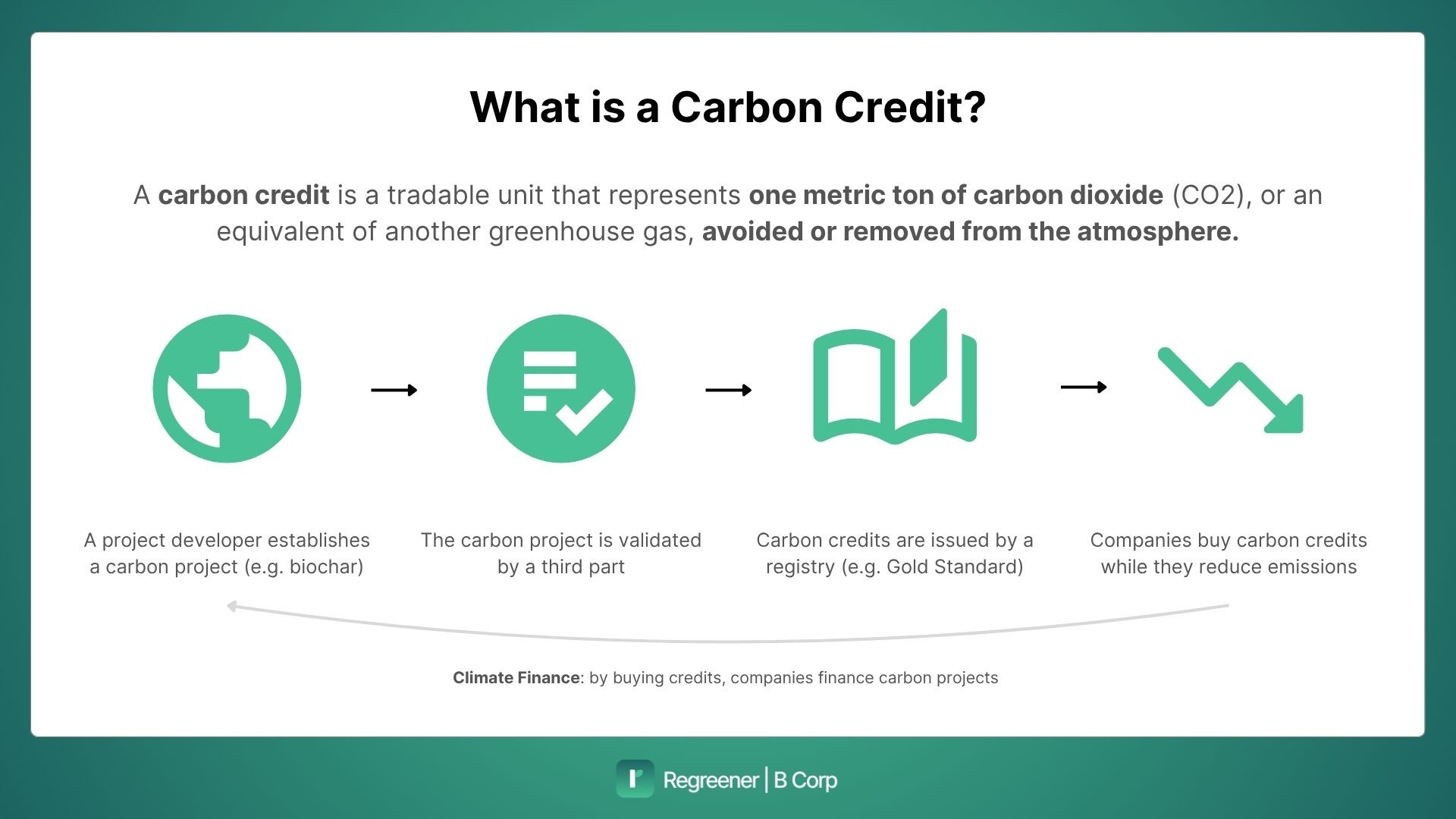
A carbon credit represents one metric tonne of carbon dioxide equivalent that has been removed from the atmosphere or prevented from being emitted. For a full explainer including methodologies, registries and the difference between credits and offsets, see Regreener's carbon credits FAQ.
Why focus on German carbon credit projects?
Germany stands out for three reasons in 2026:
Innovation: Germany hosts cutting-edge technologies in carbon farming, nature-based restoration, enhanced rock weathering, biochar pyrolysis and CO2 mineralisation.
Regulation and trust: German projects operate inside one of the strictest legal and audit environments in Europe. German courts have already ruled against generic "klimaneutral" claims, which means German-origin credits are typically held to a higher evidentiary bar than projects from less regulated jurisdictions.
Co-benefits: Many German projects deliver additional environmental, social and economic benefits, from peatland biodiversity to district heating and circular construction materials.
By supporting German carbon credit projects, DACH buyers gain audit-defensible, locally verifiable credits with site-visit potential and CSRD-grade documentation.The 5 Best German Carbon Credit Projects of 2026
How we selected the 5 best German carbon credit projects
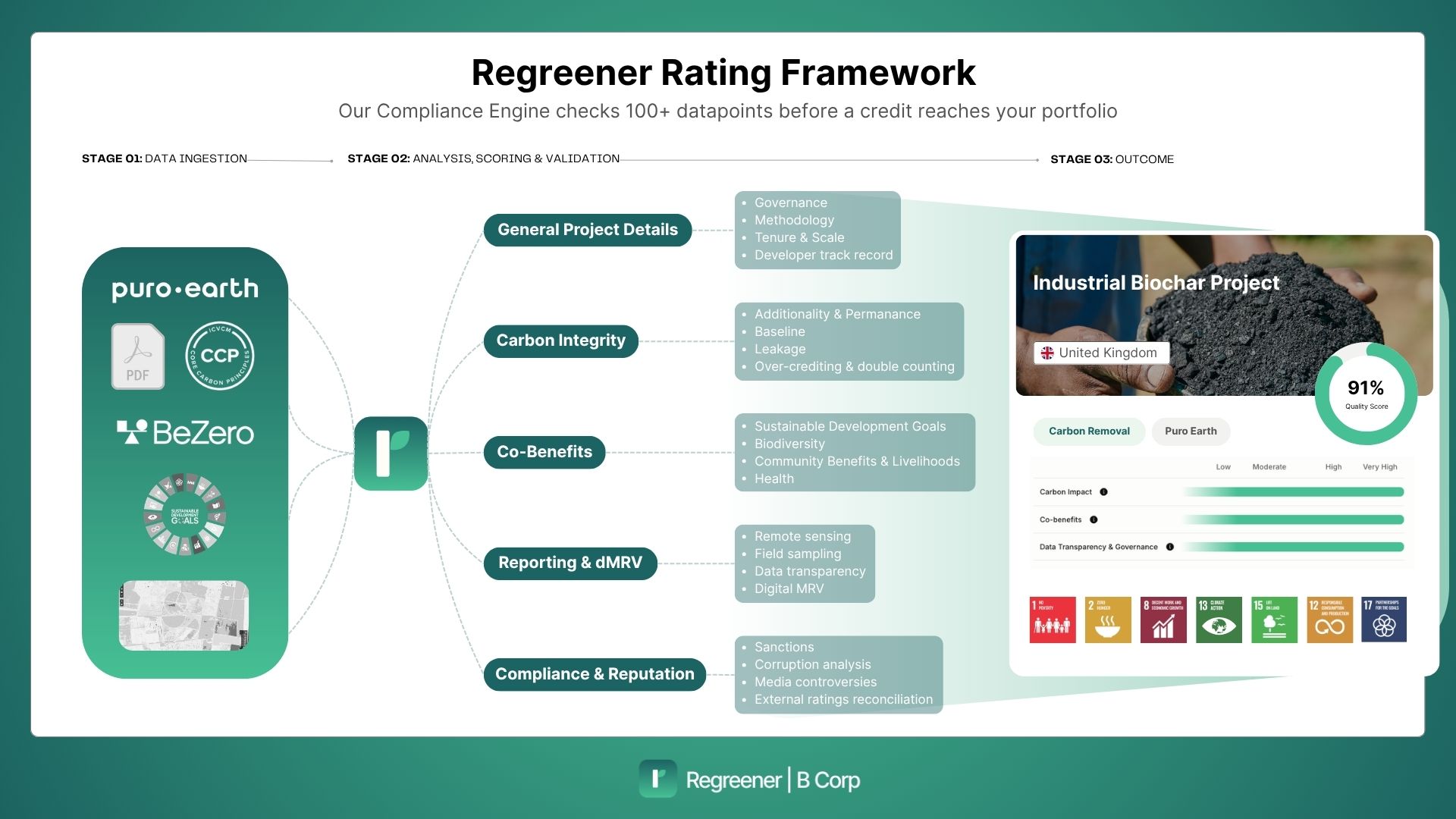
We applied Regreener's quality framework, which scores projects across five weighted domains: project governance, carbon impact, co-benefits, MRV and reporting, and compliance and reputation. For German projects in 2026, we prioritised four signals:
A verifiable registry listing (Verra, Puro.earth, Isometric, Gold Standard, or a recognised regional standard).
An independent quality rating from BeZero, Sylvera, Calyx Global or equivalent, where available.
At least one publicly disclosed corporate buyer or institutional backer.
Alignment with the EU Carbon Removal Certification Framework adopted in February 2026, where applicable.
Projects that scored well on three or more of these signals made the shortlist. Reforestation-only and subscription-based contribution models without registry-grade credits were excluded, regardless of co-benefit strength.
Klim Soil+ – Regenerative Agriculture for Carbon Sequestration
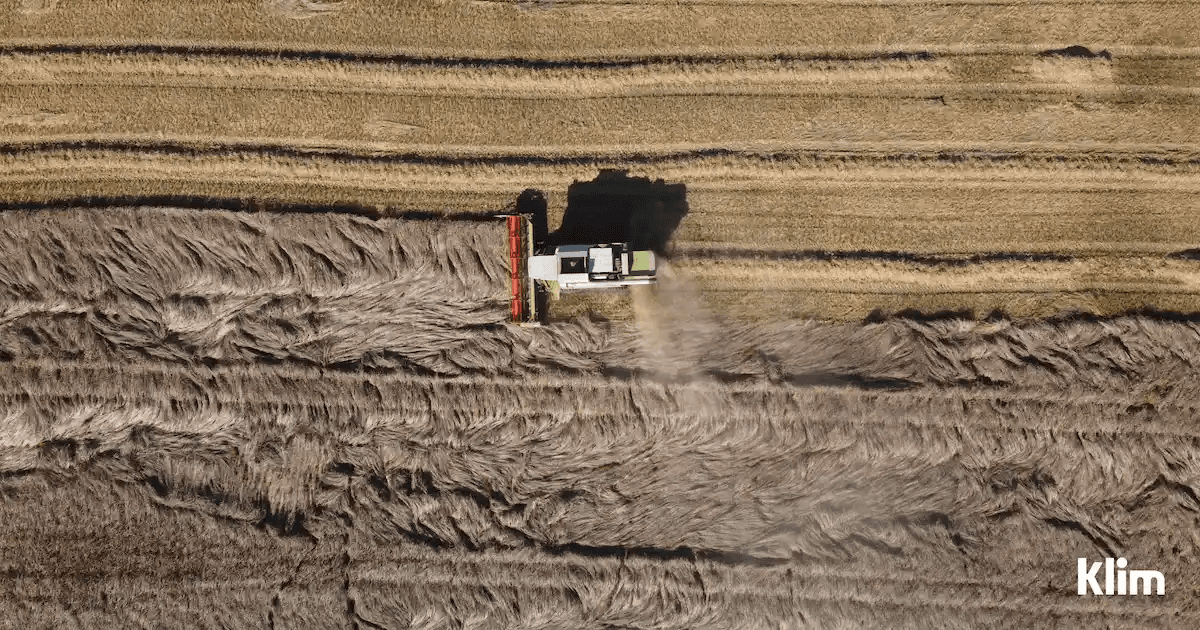
Klim Soil+ partners with over 4,000 German farmers to transition from conventional to regenerative agriculture, building soil organic carbon and reducing on-farm emissions. Klim issues two product lines: regional soil carbon credits validated under ISO 14064-2 with annual TÜV Rheinland verification (currently priced around €50 per tonne), and a Verra VM0042 project (registry number 3645) which is listed as "in development" on the Verra registry and is on track for issuance under the CCP-approved v2.2 methodology. Buyers should treat Klim's regional soil carbon credits as reduction and short-term removal credits rather than permanent removals, in line with the underlying soil carbon methodology.
Location: Nationwide across Germany, with a focus on arable land.
Annual Impact: Over 4,000 farmers enrolled in the Klim regenerative agriculture programme as of 2025, issuing reduction and removal credits annually for verified practice changes (cover cropping, reduced tillage, diversified rotations, residue management).
Key Benefits
Climate: Builds soil organic carbon and reduces synthetic fertiliser, fuel and tillage emissions on enrolled farms.
Community: Klim farmers receive a meaningful share of credit revenue, supporting transition costs and farm-level economic resilience.
Biodiversity: Cover crops, reduced tillage and diversified rotations improve soil microbial life, water retention and erosion control.
SDGs: Aligns with SDG 2 (Zero Hunger), SDG 13 (Climate Action) and SDG 15 (Life on Land).
Why it stands out
Klim is Europe's largest regional soil carbon programme by farmer enrolment and offers DACH-headquartered buyers a domestic, audit-defensible procurement route with annual TÜV Rheinland verification, site visits and local storytelling. Klim has commercial relationships with corporates including Nestlé and ADM, primarily linked to its regional and insetting programmes, with the Verra VM0042 project positioned as the next step toward CCP-labelled, international-registry credits.
MoorFutures – Large-Scale Peatland Rewetting
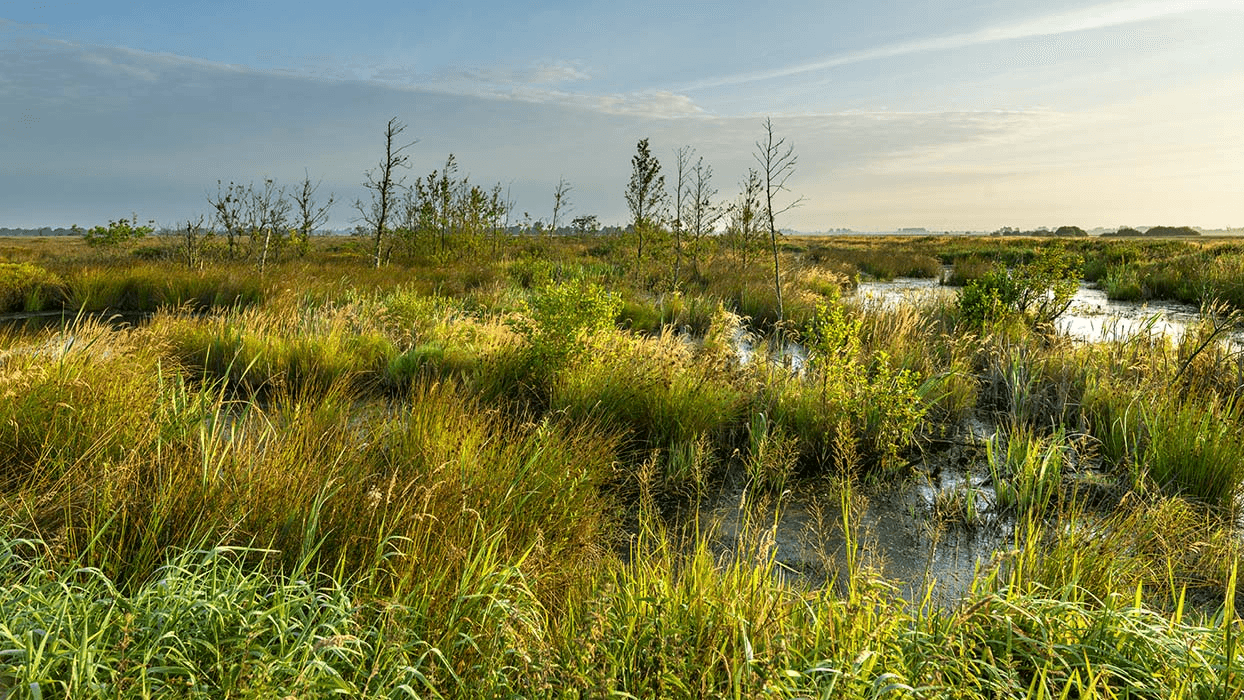
MoorFutures is Germany's regional peatland-rewetting carbon credit standard, launched in 2011 in Mecklenburg-Vorpommern and now also active in Brandenburg, Schleswig-Holstein and Hesse. It was the world's first carbon credit scheme dedicated to peatland rewetting and uses a vegetation-based GEST methodology (greenhouse gas emission site types) to quantify emission reductions. Landowners enter 50+ year contracts to guarantee permanence, and certificates are sold ex-ante to fund the initial restoration work. Project-specific certificate prices have historically ranged from €30 to over €120 per tonne, with a recent Schleswig-Holstein project listed at around €123. Documented corporate buyers include McDonald's, Commerzbank and Engbers, with companies accounting for roughly 70 percent of credits sold. MoorFutures is a standalone regional standard, distinct from Verra, Gold Standard or Puro.earth, and operates under the legal and scientific frameworks of the participating German states.
Location: Mecklenburg-Vorpommern, Brandenburg, Schleswig-Holstein and Hesse.
Annual Impact: Multiple operational sites totalling approximately 140 hectares as of the most recent public reporting, with several project vintages already sold out. Wider context: roughly 1.8 million hectares of German peatlands remain degraded and currently contribute around 5 percent of Germany's annual greenhouse gas emissions, which is the restoration opportunity MoorFutures and successor programmes are addressing.
Key Benefits
Climate: Rewetting stops peat oxidation, turning drained peatlands from carbon sources back into sinks.
Community: Supports landowners in transitioning to paludiculture (wetland farming) such as reed and Sphagnum cultivation.
Biodiversity: Restores habitats for rare wetland species and improves water retention, reducing flood risk in surrounding catchments.
SDGs: Aligns with SDG 6 (Clean Water and Sanitation), SDG 13 (Climate Action) and SDG 15 (Life on Land).
Why it stands out
MoorFutures is the longest-running peatland carbon credit standard in the world and one of the few schemes where corporate buyers can point to a documented buyer list including McDonald's and Commerzbank as third-party validation of integrity. The 50+ year landowner contracts and government-affiliated administration give it a stronger permanence posture than most voluntary nature-based credits available in Germany today.
ZeroEx – Enhanced Rock Weathering for Permanent Carbon Removal
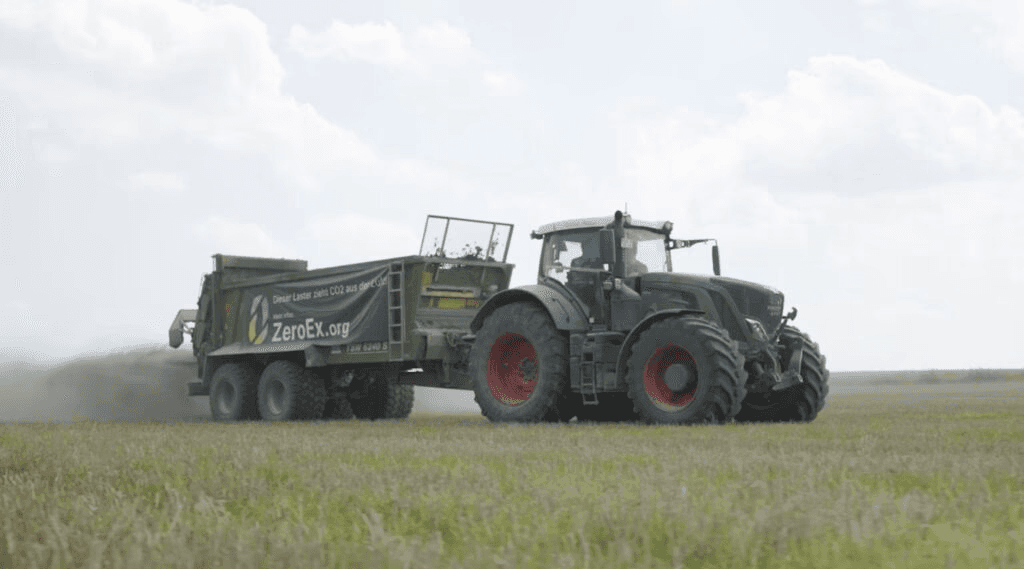
ZeroEx accelerates natural weathering by spreading basalt rock powder on agricultural land, locking carbon away as stable bicarbonate ions and mineral carbonates for over 10,000 years. The project is validated under the Isometric Enhanced Weathering Protocol (supplier reference ZX-24 Vulkaneifel) and has also been assessed under Puro.earth's ERW methodology. By the end of 2024, ZeroEx had applied 12,472 tonnes of basalt rock powder across 2,193 hectares of farmland in the Eifel region of western Germany, making it the largest enhanced rock weathering deployment in Germany.
Location: Eifel region, western Germany, with average transport distance under 30 km from quarry to field.
Annual Impact: Targeted annual removal capacity at full scale is approximately 72,000 tonnes of CO2, with first commercial credit issuance expected during 2026.
Key Benefits
Climate: Geological-timescale storage (10,000+ years) places ZeroEx in the highest permanence tier alongside DAC and mineralisation.
Community: Improves soil pH and crop productivity for participating farmers and substitutes for emissions-intensive agricultural lime.
Biodiversity: Uses basalt by-products from existing local quarrying operations, with minimal heavy-metal load and no land-use change.
SDGs: Aligns with SDG 9 (Industry, Innovation and Infrastructure), SDG 13 (Climate Action) and SDG 15 (Life on Land).
Why it stands out
ZeroEx is named by Isometric as one of three lead suppliers (alongside InPlanet in Brazil and Alt Carbon in India) working on the protocol's first commercial ERW issuances. Its short, regional supply chain and locally sourced basalt feedstock make it one of the strongest European ERW projects for buyers seeking domestic-origin permanent removal credits with full MRV traceability.
Neustark - Permanent CO2 Mineralisation in Demolition Concrete
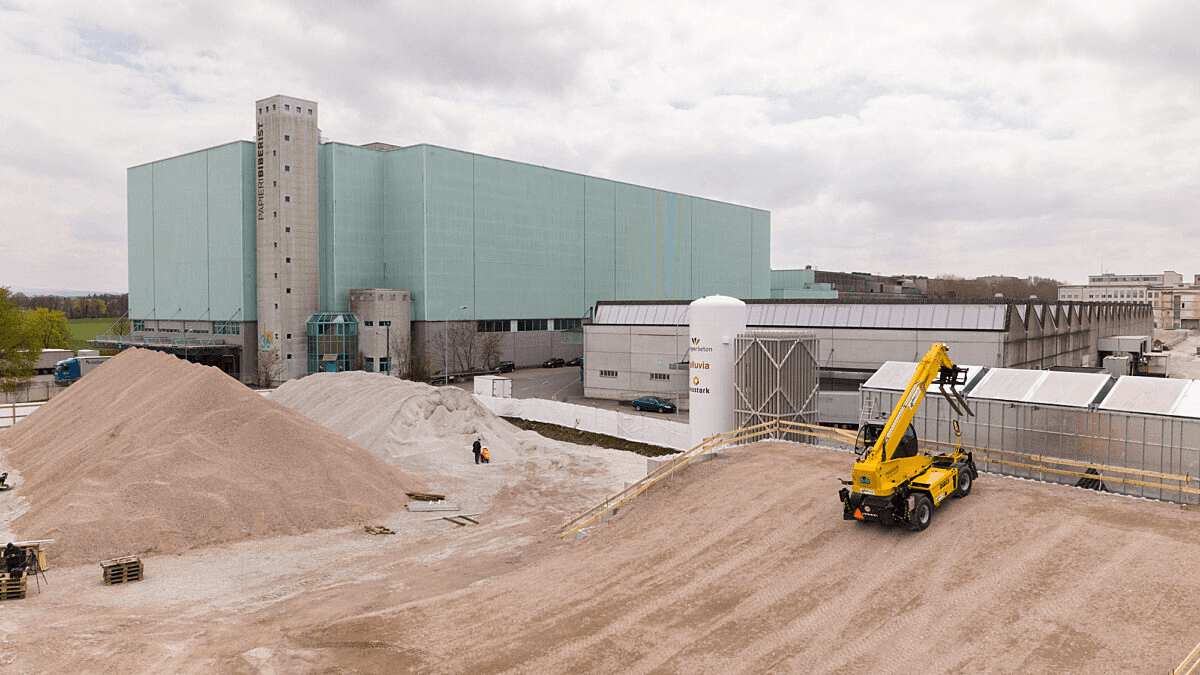
Neustark captures biogenic CO2 from biogas plants and injects it into recycled demolition concrete, where it mineralises into stable carbonates and is stored permanently. The technology operates at biogas sources and concrete recycling sites in close proximity, with operational plants already running in Germany (including a flagship Berlin site) alongside sites in Switzerland, Austria and Liechtenstein. Neustark co-developed the world's first tech-based carbon removal methodology with Gold Standard, and from 2025 also certifies credits under Puro.earth's Carbonated Materials methodology, with first CORCs expected from 2026. Independent third-party validation is performed annually on each site.
Location: Berlin and multiple other operational sites across Germany, part of a wider European network of 19+ active plants and 40+ in construction.
Annual Impact: Roughly 10 kg of CO2 stored per tonne of demolition concrete; the Berlin site alone has capacity for over 1,000 tonnes of CO2 storage per year, with the combined European network targeting 5,000+ tonnes annually and scaling toward hundreds of thousands of tonnes by 2030.
Key Benefits
Climate: Permanent CO2 storage in mineralised form, with retention after 1,000 years effectively at 100 percent. One of the highest-permanence credit categories available.
Community: Integrates into existing biogas and demolition-recycling supply chains in Germany, supporting circular construction materials and local recyclers.
Biodiversity: Avoids reliance on land-based carbon storage, freeing land for biodiversity and food production.
SDGs: Aligns with SDG 9 (Industry, Innovation and Infrastructure), SDG 11 (Sustainable Cities and Communities), SDG 12 (Responsible Consumption and Production) and SDG 13 (Climate Action).
Why it stands out
Neustark is the only operational, registry-backed permanent mineralisation project on this shortlist with documented buyers including Microsoft and UBS, plus offtake commitments from Google, Meta and Salesforce. For DACH corporate buyers building a CSRD-defensible portfolio in 2026, it offers domestic provenance, geological-timescale permanence, and explicit alignment with the EU Carbon Removal Certification Framework's expected coverage of carbonated materials.
Novocarbo – Industrial Biochar for Carbon Removal
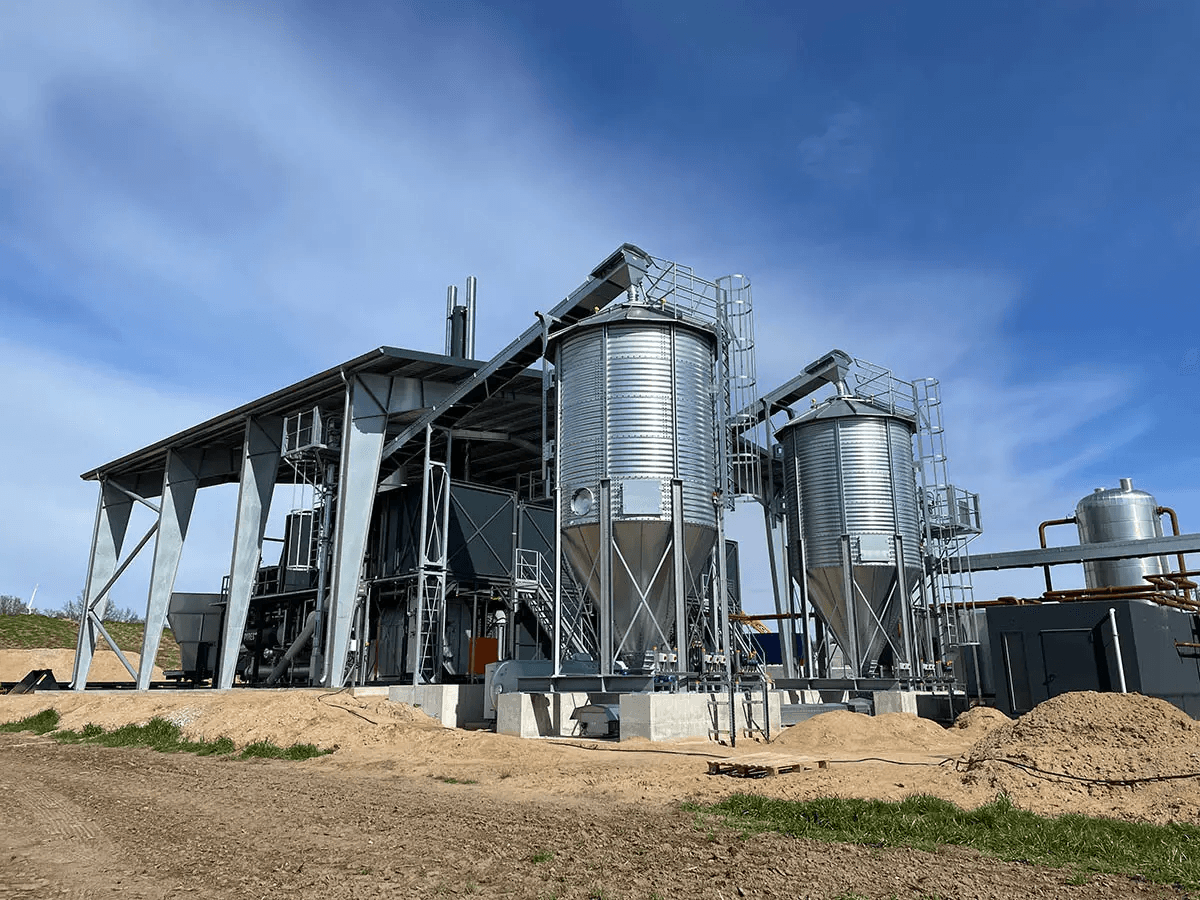
Novocarbo operates a growing network of Carbon Removal Parks across Germany using PYREG pyrolysis technology, converting forest residues, woodchip production waste and green waste biomass into EBC-certified biochar while supplying renewable heat to local district heating networks. Biochar credits are verified under the Puro.earth Standard and issued as CORCs with a minimum 100-year durability commitment. Novocarbo's flagship site in Grevesmühlen generates approximately 6,600 MWh of renewable heat annually (enough to warm around 1,800 households).
Location: Multiple operational sites across Germany, with pan-European expansion in progress.
Annual Impact: Each Carbon Removal Park removes approximately 3,200+ tonnes of CO2 annually, with operational scaling planned toward 1 million tonnes of cumulative removal by 2030. Each tonne of biochar sequesters 2.5 to 2.9 tonnes of CO2.
Key Benefits
Climate: Permanent carbon storage via biochar with a minimum 100-year durability commitment under the Puro Standard.
Community: Generates renewable district heating from pyrolysis waste heat, with public application partners including Hansa Asphalt (biochar-enhanced road construction pilots in Germany), the City of Stockholm Street Department and Skanska.
Biodiversity: Improves soil fertility, water retention and nutrient cycling in agricultural and urban applications.
SDGs: Aligns with SDG 7 (Affordable and Clean Energy), SDG 13 (Climate Action) and SDG 15 (Life on Land).
Why it stands out
Novocarbo secured €25 million in growth funding from SWEN Capital Partners in 2024, one of the largest single CDR investments in Europe that year, and its Puro.earth listings (including Novocarbo Rhine, project P643002406801000343) have passed third-party facility and output audits with CORCs already issued. For buyers building a German biochar position with verifiable Puro Registry traceability and CRCF-alignment optionality, Novocarbo is the benchmark project in its category.
Comparative analysis
Project Name | Type | Registry / Standard | Permanence | Indicative price | Documented buyers / backers |
|---|---|---|---|---|---|
Klim Soil+ | Regenerative Agriculture | ISO 14064-2 + TÜV Rheinland (regional); Verra VM0042 #3645 (in development) | Reduction and short-term removal | ~€80/t | Nestlé, ADM |
MoorFutures | Peatland Rewetting | MoorFutures regional standard | 50+ year landowner contracts | €50-€123/t | McDonald's, Commerzbank, Engbers |
ZeroEx | Enhanced Rock Weathering | Isometric (ZX-24 Vulkaneifel); Puro.earth ERW assessed | 10,000+ years | €350-€450/t | Working with Isometric on first commercial issuance |
Neustark | CO2 Mineralisation in Concrete | Gold Standard + Puro.earth Carbonated Materials | 1,000+ years (effectively permanent) | €250-€400/t | Microsoft, UBS, Google, Meta, Salesforce |
Novocarbo | Biochar | Puro.earth (incl. Novocarbo Rhine P643002406801000343); EBC-certified | 100+ years | €200-€350/t | SWEN Capital Partners (€25M growth funding), Hansa Asphalt, Skanska, City of Stockholm |
Will German carbon credit projects qualify under the EU CRCF?
The EU Carbon Removal Certification Framework (CRCF) was adopted in February 2026 and is the world's first government-issued certification label for voluntary carbon removal. The first CRCF wave is expected to cover Direct Air Capture and Storage (DACCS), Bioenergy with Carbon Capture and Storage (BioCCS) and Biochar Carbon Removal (BCR), with carbonated materials and enhanced weathering protocols expected in subsequent waves.
Among the five projects on this shortlist:
Novocarbo is the strongest CRCF candidate in the first wave, since its Puro.earth biochar methodology closely mirrors the CRCF technical requirements for BCR.
Neustark is well-positioned for the carbonated materials wave, with both Gold Standard and Puro.earth methodologies already in place.
ZeroEx is aligned with the Isometric Enhanced Weathering Protocol, which is expected to be covered in a later CRCF certification wave.
MoorFutures and Klim Soil+ are less likely to qualify in the first wave, since CRCF currently focuses on engineered or industrial-scale removals rather than regional peatland or soil carbon programmes. Buyers should treat these as complementary nature-based credits inside a broader portfolio.
For a deeper view of how CRCF, ICVCM and CSRD interact, see Regreener's 2026 guide to buying carbon credits.
Pricing for German carbon credits in 2026
German-origin carbon credits in our catalogue cover a wide price range depending on methodology, permanence and registry.
Regenerative agriculture (Klim): approximately €50 per tonne, sold as regional ISO 14064-2 credits with annual TÜV Rheinland verification.
Peatland rewetting (MoorFutures): €30 to €123 per tonne, with project-level pricing reflecting site costs and co-benefit profile.
Biochar (Novocarbo and other German suppliers): typically €150 to €250 per tonne, with the Puro CORCCHAR price index trading in the €125 to €145 range in late 2025.
CO2 mineralisation (Neustark): indicatively €200 to €350 per tonne for early CORC vintages.
Enhanced rock weathering (ZeroEx): projected €200 to €400 per tonne for first commercial vintages, reflecting the methodology's premium permanence positioning.
For tailored pricing across your portfolio mix, see Regreener's pricing page or book a portfolio review.
How to procure German carbon credits
Three procurement routes are typically used by B2B buyers:
Direct purchase via Regreener: Regreener is B Corp certified and applies a 100+ datapoint quality framework to every project before client recommendation. We handle procurement, retirement and CSRD-ready reporting end-to-end.
Expert portfolio review: For buyers building a German-origin shortlist around CSRD reporting and CRCF alignment, book a free portfolio review and our team will model a project mix around your sector, vintage requirements and budget.
Retirement in your name: Whichever route you use, ensure credits are retired transparently in your company name on the appropriate registry to prevent double-counting and to satisfy auditor documentation under ESRS E1.
Tip: Diversify across at least two methodologies. A typical 2026 German portfolio combines a permanent removal anchor (Novocarbo, Neustark or ZeroEx) with a nature-based co-benefit position (MoorFutures or Klim) at a lower price point.
Risks and considerations
Price volatility: Carbon credit prices vary with methodology, vintage and demand. German removals trade at a premium to global avoidance credits, and CCP-labelled credits now command a 15 to 25 percent premium.
Reversal risk: Nature-based projects face reversal risk from extreme weather, fire and policy shifts. Robust monitoring, buffer pools and 50+ year contracts (as in MoorFutures) help mitigate these risks. Permanent removal categories (biochar, ERW, mineralisation) carry materially lower reversal risk.
Greenwashing exposure: German courts have already ruled against generic "klimaneutral" claims. CSRD ESRS E1 disclosure rules and the EU Green Claims Directive mean every credit in your portfolio must be documented to a high evidentiary standard.
Ethical positioning: Carbon credits should complement direct emissions reductions, not replace them. The SBTi mitigation hierarchy still applies to every German-origin credit.
Next steps for German carbon credit buyers
If you are building a German carbon credit position in 2026, three actions move you forward this quarter:
Define your portfolio mix. Anchor the durable layer with at least one of Novocarbo (biochar), Neustark (mineralisation) or ZeroEx (ERW), and pair it with a nature-based co-benefit position from MoorFutures or Klim at a lower price point. A typical 2026 German portfolio allocates 30 to 50 percent of volume to permanent removals.
Lock in CRCF-aligned supply early. First-wave CRCF certification for biochar is expected from late 2026, and supply from Puro.earth-certified German projects is already tightening. Forward contracts and offtake agreements protect both price and availability.
Get CSRD-ready documentation. Every credit you procure needs registry retirement certificates, project MRV reports and methodology references mapped to ESRS E1. Regreener handles this end-to-end, so the audit pack is ready when your assurance provider asks.