
have us call you right now.

5 Top Sylvera-Rated Carbon Credit Projects to Buy in 2026

5 Top Sylvera-Rated Carbon Credit Projects to Buy in 2026

Last updated:

Apr 29, 2025

Apr 29, 2025

6 minute read

6 minute read

Sylvera rates carbon credits on a AAA–D scale, and in 2026 the gap between top-rated and low-rated credits is wider than ever. Investment-grade (BBB+) credits now trade at an average of $20.10 per tonne — over 3x the $5.69 market-wide average, according to Sylvera's Q1 2026 data. For corporate buyers operating under CSRD, ESRS E1, and the EU Green Claims Directive, Sylvera ratings have become the de facto due diligence layer for carbon procurement.

This guide shortlists five of the highest Sylvera-rated carbon credit projects available to buyers in 2026 — across peatland REDD+, improved forest management, blue carbon, REDD+, and renewables. For each, we cover the Sylvera rating, project type, price range, and what makes it credible. Where useful, we flag where Regreener's 100+ data point quality framework goes a step beyond Sylvera's pillars.

Direct Answer: The 5 highest Sylvera-rated carbon credit projects to buy in 2026 are:

  1. Katingan Peatland Restoration (Indonesia) — Peatland REDD+, Sylvera AA, ~$15–$25/t

  2. Exomad Green Concepción (Bolivia) — IFM, Sylvera AA (Feb 2025), ~$80–$120/t

  3. Kulera Landscape REDD+ (Malawi) — REDD+, Sylvera-rated, ~$10–$20/t

  4. Delta Blue Carbon (Pakistan) — Mangrove restoration, Sylvera AA, ~$25–$50/t

  5. Improved Cookstoves East Africa (multi-country) — Cookstoves, Sylvera A–AA range, ~$8–$15/t

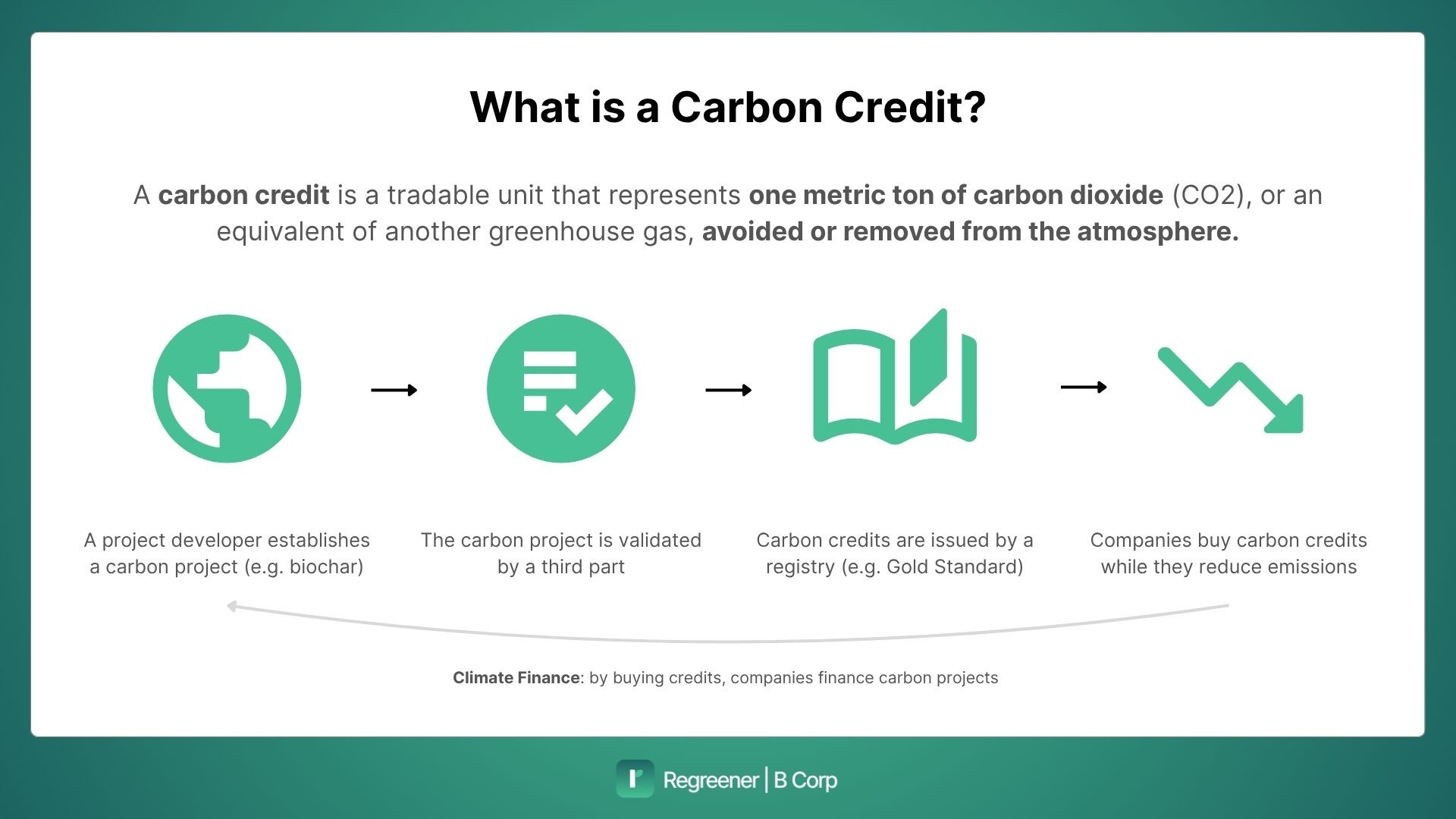
What Is a Carbon Credit?

A carbon credit represents one metric ton of carbon dioxide (or its equivalent) that has been either removed from the atmosphere or avoided through verified projects. These projects range from reforestation and renewable energy to methane capture and community-based conservation. Each credit is uniquely identified, tracked, and retired to ensure it is only used once, providing a measurable way for organizations to compensate for their unavoidable emissions.

Carbon credits play a vital role in bridging the gap between current emissions and long-term net-zero targets. They are particularly valuable for hard-to-abate sectors like aviation, shipping, and heavy industry, where direct reductions may take decades to achieve. By purchasing high-quality credits, companies can take immediate climate action while continuing to decarbonize their operations.
Understanding the Sylvera AAA–D rating scale

Sylvera is an independent carbon credit rating agency, often compared to Moody's or S&P for credit ratings — but for the voluntary carbon market. Unlike registries (Verra, Gold Standard, Plan Vivo), which certify that a project meets a methodology, Sylvera evaluates how likely a project is to actually deliver on its claims.

Its rating scale runs from AAA (highest) down through AA, A, BBB, BB, B, CCC, CC, C, and D (lowest). Few projects achieve AAA. Most high-integrity projects sit in the AA to BBB range, with BBB+ widely treated as the "investment-grade" threshold by corporate buyers in 2026.
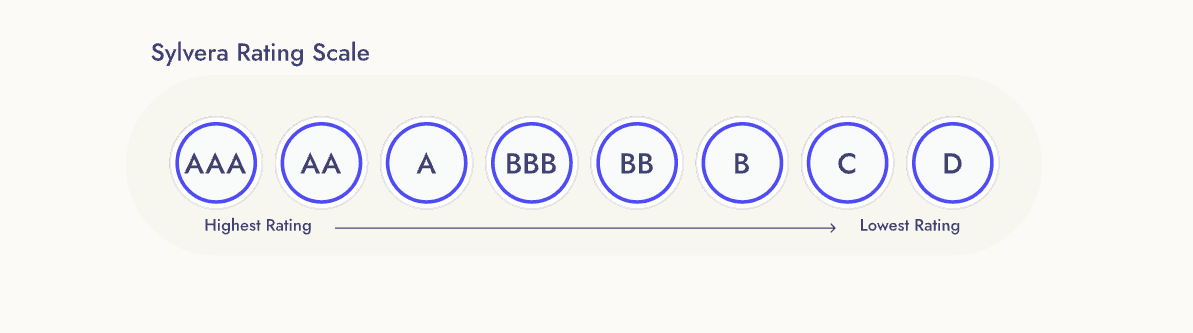
The sylvera rating scale

"Sylvera's rating scale runs from AAA (highest) to D (lowest), with BBB+ widely treated as the investment-grade threshold for corporate carbon procurement in 2026."

The four Sylvera pillars

Every Sylvera rating is built from project-type-specific frameworks (a REDD+ project is scored differently to a biochar project), but the underlying pillars are consistent:

  • Carbon Score — Does the project deliver the tonnes it claims? Sylvera uses remote sensing, LiDAR, biomass measurements, and on-the-ground field data to verify reported reductions or removals against independent baselines.

  • Additionality — Would these reductions have happened anyway? This pillar tests whether carbon revenue is actually required to make the project happen — a key safeguard against credits that finance business-as-usual.

  • Permanence — How long will the carbon stay out of the atmosphere? Nature-based projects (forests, peatlands) face reversal risks from fire, pests, and policy change; tech-based removals (biochar, DAC) score higher on durability.

  • Co-benefits — Biodiversity, community welfare, and SDG outcomes. Co-benefits are assessed separately from the main rating but increasingly drive price premiums in 2026.

Want to know which credits fit your company's climate strategy?

Book a free consultation today

The headline rating is a combination of Carbon, Additionality, and Permanence. A weak score in any one pillar caps the overall rating — a project can't trade strong additionality for poor permanence and still land in AA territory. For a deeper walkthrough of how Sylvera builds its frameworks, see Sylvera's published ratings methodology.

"Sylvera's AAA–D rating is one input. We layer it with our own 200+ data point quality framework, which scores projects across Carbon Integrity, Measurement & Verification, Beyond Carbon, Developer & Governance, and Market & Regulatory Integrity. A Sylvera AA project that flunks our governance domain doesn't make our shortlist."

Bernard de Wit, Founder - Regreener

The 5 Highest-Rated Sylvera Carbon Credits of 2026

Below are five Sylvera-rated carbon credit projects worth shortlisting for 2026 procurement. Each is selected for a combination of rating strength, project-type integrity, and buyer-relevant co-benefits.

1. Katingan Peatland Restoration (Indonesia)
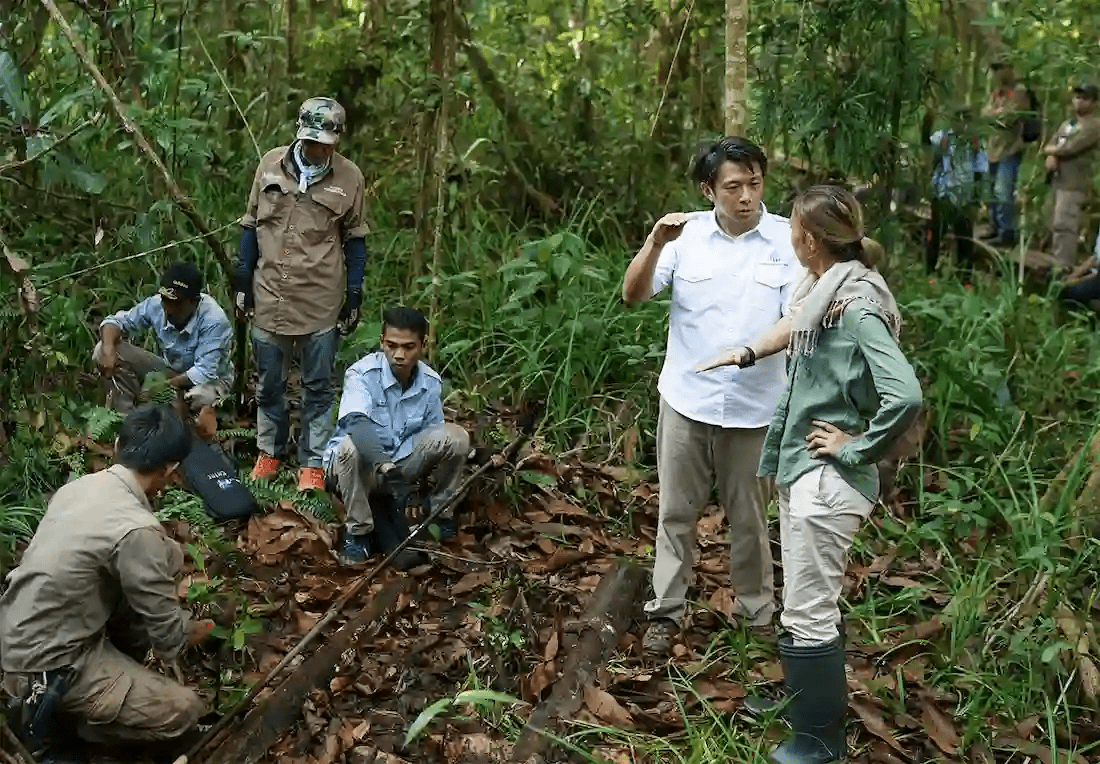
Katingan Peatland Restoration (Indonesia)

The Katingan Peatland Restoration and Conservation Project (VCS 1477) protects 150,000 hectares of peat swamp forest in Central Kalimantan — an area roughly the size of Greater London. Established in 2010, the project was designed to prevent conversion of the land to acacia pulp and paper plantations and to protect against illegal deforestation and fire. Peatlands store carbon at densities up to 10x higher than tropical rainforest, making restoration and conservation among the most carbon-dense activities in the voluntary market.

Sylvera rating breakdown: AA overall. Strong Carbon Score (verified against independent biomass data), strong Additionality (the project area was zoned for industrial plantation conversion without carbon revenue), and AA-level Permanence supported by robust fire and reversal mitigation. Co-benefits include habitat protection for the endangered Bornean orangutan.

Key features:

  • Prevents the release of over 7 million tonnes of CO₂e annually at peak vintage

  • Certified under Verra's VCS and CCB Standards

  • One of the largest peatland restoration projects globally

2. Exomad Green Concepción (Bolivia)
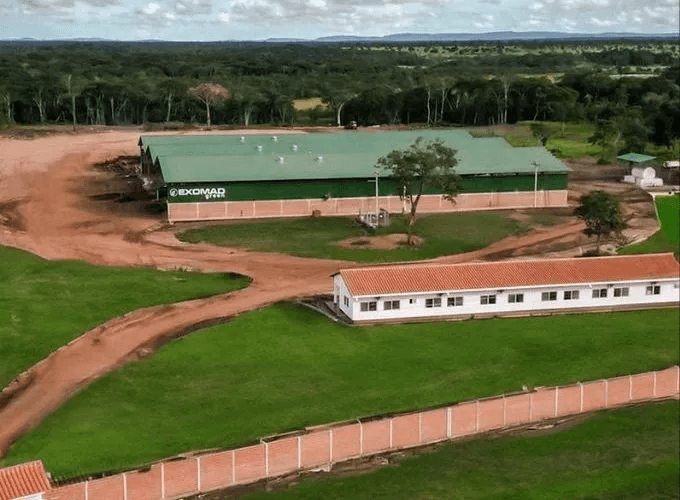
Exomad Green Concepción IFM project in Bolivia, AA Sylvera-rated

Exomad Green Concepción is an Improved Forest Management (IFM) project in Bolivia that received its AA Sylvera rating in February 2025, making it one of the most-discussed IFM ratings of the past 18 months. The project covers sustainable timber operations with strict harvest controls, designed to keep more carbon stored in standing biomass than business-as-usual logging would allow.

Sylvera rating breakdown: AA overall. The project scored well on Carbon (strong measurement infrastructure and clear harvest accounting), Additionality (carbon revenue underwrites the lower-yield harvest model), and Permanence (long-term concession agreements reduce reversal risk).

"Regreener has used Sylvera ratings as part of carbon procurement diligence for B2B clients including BDO, Shift4Good, and dozens of other European corporates - layering them with our own 100+ data point framework before any credit goes into a client portfolio."

Bernard de Wit, Founder - Regreener

Key features:

  • Active IFM operation, not just paper protection

  • Strong community engagement and indigenous benefit-sharing

  • Certified under Verra's VCS and CCB

3. Kulera Landscape REDD+ Program (Malawi)
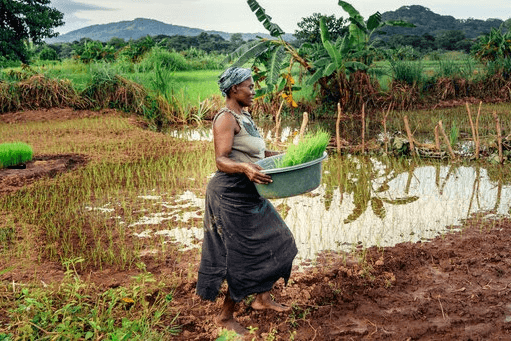
Kulera Landscape REDD+ Program (Malawi)

The Kulera Landscape REDD+ Program protects over 180,000 hectares of forest in Malawi, preventing deforestation while supporting community-led conservation. The project is notable for its gender-equity focus, with women playing a central role in forest governance and benefit allocation — a structural feature increasingly valued by ESG-aligned buyers.

Sylvera rating breakdown: A to AA range across recent assessments, with Sylvera highlighting a transparent benefit-sharing model and clear monitoring infrastructure. As with all REDD+ projects, additionality assessment depends on contextual deforestation pressure — Sylvera's published commentary should be reviewed before committing tonnage.

Key features:

  • Aligns with multiple UN SDGs, including poverty alleviation (SDG 1) and gender equality (SDG 5)

  • Strong female participation in project governance

  • Certified under Verra's VCS and CCB Standards

4. Delta Blue Carbon (Pakistan)
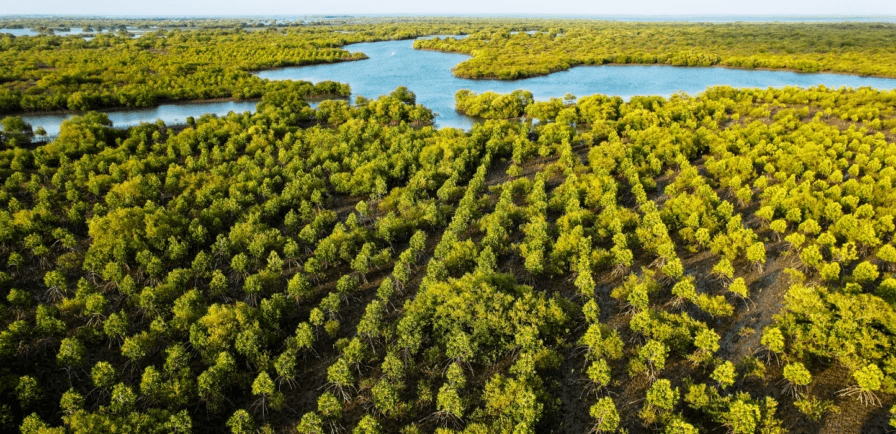
Delta blue carbon credit project

Delta Blue Carbon (VCS 2250) is the world's largest blue carbon project, spanning 350,000 hectares across the Indus Delta on Pakistan's south-east Sindh coast. Launched in 2015 as a public-private partnership between Indus Delta Capital and the Government of Sindh, it protects 102,000 hectares of existing mangroves and restores another 225,000 hectares of degraded coastal land. Over its 60-year lifetime, the project is expected to deliver approximately 142 million tCO₂e of mitigation. Mangroves sequester carbon at rates up to 5x higher than tropical upland forests, making this one of the most carbon-dense nature-based projects in the voluntary market.

Sylvera rating breakdown: AA (most recent assessment). Strong Carbon Score driven by mangrove biomass density and rigorous MRV using the VM0033 methodology. Strong Additionality (degraded mangrove lands with no business-as-usual restoration pathway). Co-benefits are exceptional — the project has created over 21,000 jobs across 60 villages, protects habitat for 11 IUCN Red List species (including the Indus River dolphin and fishing cat), and is recognised as a flagship example of community-based blue carbon at scale.

Key features:

  • World's largest blue carbon project (350,000 ha)

  • Mangrove Stewardship Agreements with 60 local fishing villages

  • Certified under Verra's VCS and CCB Standards

  • Anchor offtake commitments from corporate buyers including Trafigura

5. Improved Cookstoves, East Africa (multi-country cohort)
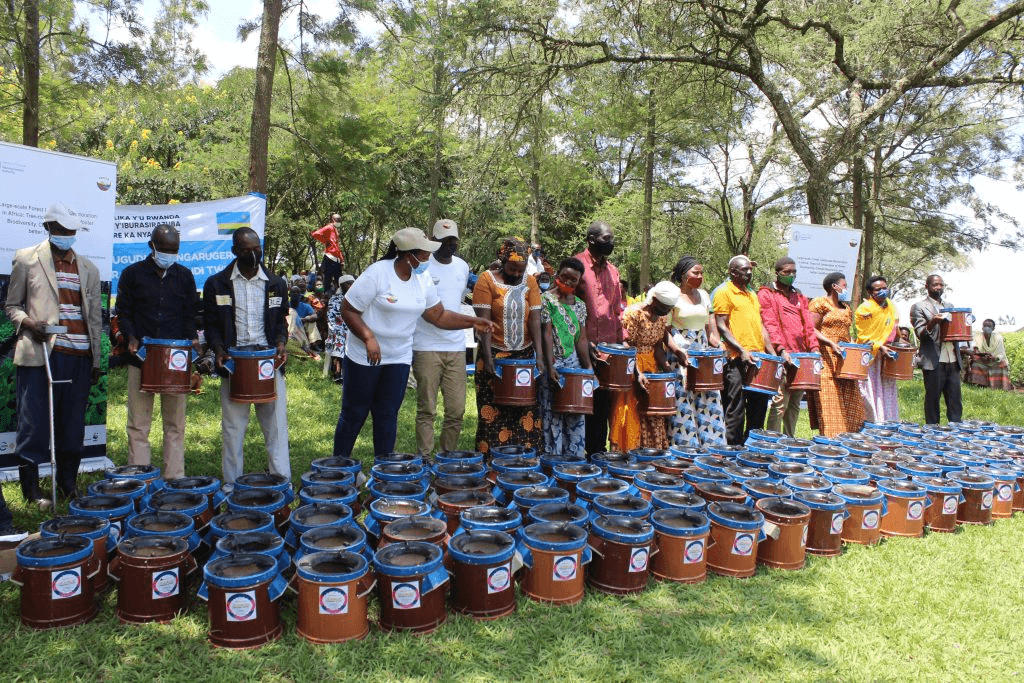
Improved Cookstoves, East Africa carbon credits

Improved cookstove projects across East Africa — including flagship initiatives from BURN Manufacturing, Hestian (Malawi), and EcoSafi — have emerged as one of the most credible Sylvera-rated project clusters for buyers in 2026. The category sits at the intersection of climate mitigation (reduced wood fuel demand and combustion emissions), public health (lower indoor air pollution), and gender equity (women save hours per day previously spent collecting fuel). Sylvera issued the first-ever Article 6 carbon project rating to a cookstove project (in Ghana) in 2024, signalling growing confidence in the category — and the BURN-led 1.2 million stove rollout in East Africa, with digital MRV via IoT sensors, has set a new transparency benchmark for the sector.

Sylvera rating breakdown: A to AA range across the strongest projects in the cohort. Sylvera applies particularly rigorous scrutiny to cookstove additionality and usage assumptions, with the highest ratings reserved for projects using conservative baselines, durable hardware, and verified usage data (digital MRV, household surveys, or IoT monitoring). According to Sylvera, AAA-rated cookstove projects command roughly 25% price premiums over BBB-rated equivalents — a meaningful spread for buyers building cookstove-heavy portfolios.

Key features:

  • Strong CORSIA Phase 1 eligibility for top projects (Hestian Malawi was the first African cookstove project certified for CORSIA)

  • Digital MRV adoption rising sharply — IoT sensors and real-time usage data

  • High co-benefit density: health, gender, time savings, deforestation reduction

  • Certified under Verra and Gold Standard

Comparative analysis


#

Project

Country

Type

Sylvera Rating

Price (2026)

1

Katingan Peatland Restoration

Indonesia

Peatland REDD+

AA

€15–€25/t

2

Exomad Green Concepción

Bolivia

IFM

AA (Feb 2025)

€80–€120/t

3

Kulera Landscape REDD+

Malawi

REDD+

A–AA*

€10–€20/t

4

Delta Blue Carbon

Pakistan

Mangrove restoration

AA*

€25–€50/t

5

Improved Cookstoves East Africa

Multi-country

Cookstoves

A–AA range*

€8–€15/t

*Ratings reflect most recent published Sylvera assessments and can be updated as new evidence emerges. Regreener verifies current ratings and availability at the point of procurement.

What buyers paid for Sylvera-rated credits in 2026

Pricing data from Sylvera's Q1 2026 carbon data snapshot makes the quality premium impossible to ignore. While the market-wide weighted average price sits at $5.69 per credit, investment-grade BBB+ credits command an average of €20.10 — and the gap continues to widen.

For Afforestation, Reforestation and Revegetation (ARR) projects specifically, BBB+ rated credits averaged over €26 per tonne in late 2025, compared to around €14 for lower-rated equivalents. AAA-rated ARR projects now trade above $35 per tonne. The pattern is consistent across project types: quality is no longer rhetorical, it is priced in. For the underlying data, see Sylvera's State of Carbon Credits 2025 report.

For corporate buyers under CSRD and Green Claims Directive scrutiny, the reputational risk of low-rated credits typically outweighs the upfront cost saving. A retired AAA credit that survives audit is worth more than three retired D-rated credits that don't.

💬 Bernard de Wit, Regreener co-founder: "A Sylvera AA is a strong signal — but it's still a snapshot. We've turned down Sylvera AA projects on governance grounds and recommended A-rated projects with stronger community-level evidence. The rating is the start of due diligence, not the end of it."

Need Sylvera-rated credits, fast?

Book a free consultation today

How to Purchase These Credits

The procurement workflow for Sylvera-rated credits is straightforward, but each step has hidden traps that can cost six figures if mishandled.

1. Define your portfolio strategy. Decide your tonnage, rating floor (most credible buyers in 2026 use BBB+ as a minimum), project-type mix (nature-based vs. durable removals), and compliance requirements (CORSIA, CCP, EU CRCF). Anchor everything to a science-based target so the procurement defends itself in an audit.

2. Shortlist against Sylvera ratings. Use Sylvera's published ratings to filter projects to your floor. For projects without a Sylvera rating, ask the seller for the underlying registry documentation and a second-rater opinion (BeZero, Calyx Global) before serious diligence.

3. Layer secondary diligence. Sylvera tells you the project will likely deliver. You also need to verify developer financial health, legal carbon rights, jurisdictional Article 6 risk, and downstream claim defensibility — none of which appears in a Sylvera rating. Working with a specialist carbon procurement partner reduces this step from months to weeks.

4. Execute and retire. Lock pricing through forward contracts where supply is tightening (top-rated REDD+ and IFM are in their third consecutive year of structural deficit), retire credits in the correct registry account, and document the rationale for each retirement. Tools like VCMI's Claims Code can support credible downstream claims.
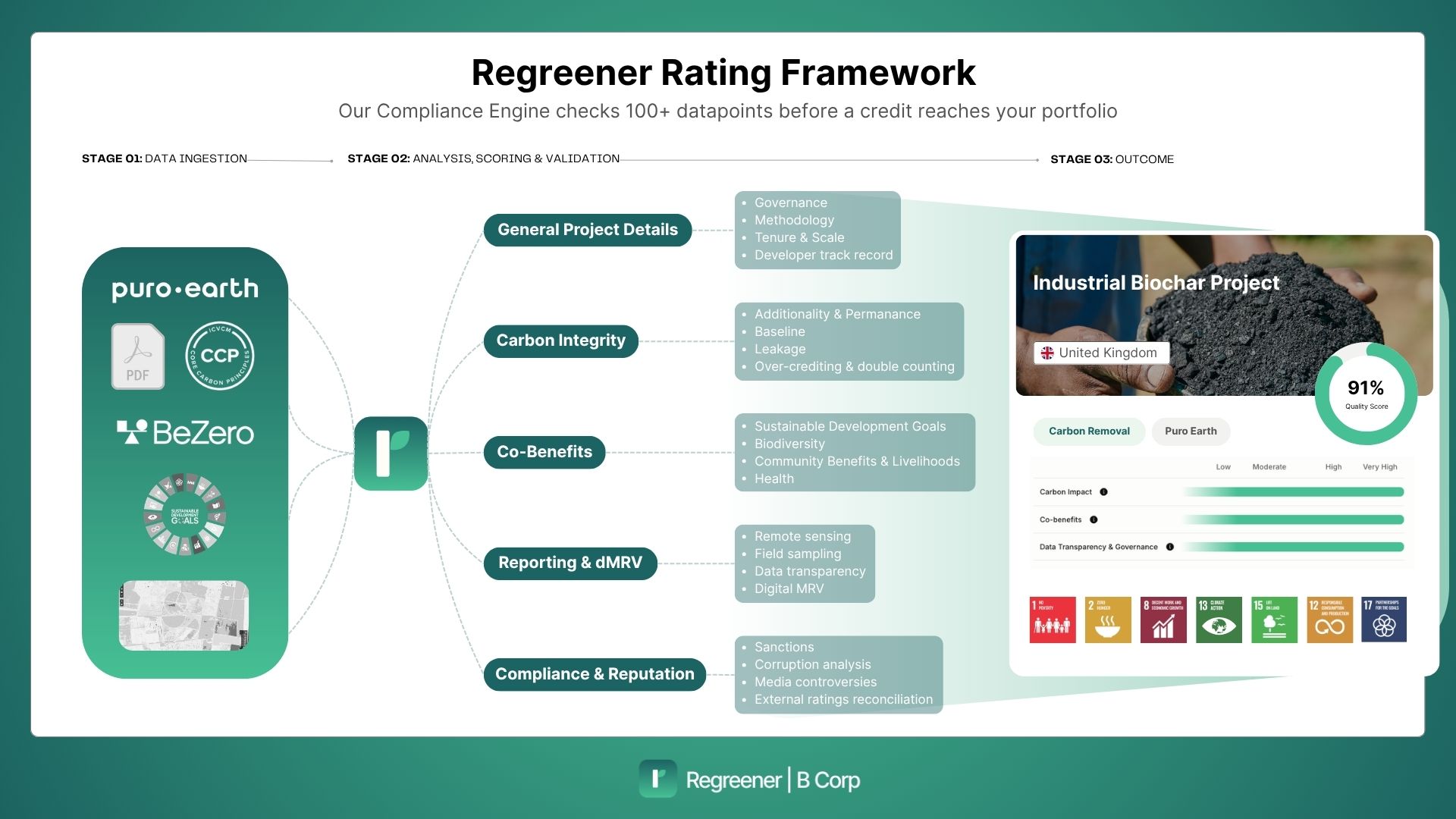
a visualiation of the rating framework for carbon credits by Regreener

The Future of Carbon Credit Ratings

The carbon credit market is evolving rapidly, with advancements in technology and regulation set to redefine transparency and integrity. Sylvera is at the forefront of this shift, continually refining its methodology to address emerging challenges like double-counting and baseline inflation.

Emerging Trends

  • AI and real-time monitoring: These technologies will enhance the accuracy and transparency of carbon credit verification, making it easier for buyers to assess project quality.

  • Expanded Sylvera coverage: Sylvera is expected to include smaller, community-led projects and emerging technologies like ocean alkalinity enhancement in its ratings.

Regulatory Updates

Regulatory frameworks, such as the EU’s Carbon Removal Certification Framework (CRCF), will raise the bar for credit quality. Staying informed about these changes is critical for buyers who want to future-proof their investments.

Regreener’s Role

At Regreener, we’re committed to staying ahead of these trends, ensuring our clients always have access to the highest-integrity credits. By combining Sylvera’s data with our deep market expertise, we help buyers navigate change with confidence.

Build a Sylvera-rated portfolio with Regreener

The five projects above represent a credible starting point for a 2026 Sylvera-rated portfolio — but the right shortlist for your company depends on your tonnage, sector, compliance exposure, and co-benefit priorities.

Regreener has been advising European B2B clients on high-integrity carbon procurement since 2020. We combine Sylvera's independent ratings with our own 100+ data point framework to surface the top 10% of available credits — and screen out the developer, governance, and regulatory risks that ratings alone don't cover.

Want to know which credits fit your company's climate strategy?

Book a free consultation today

Sylvera rates carbon credits on a AAA–D scale, and in 2026 the gap between top-rated and low-rated credits is wider than ever. Investment-grade (BBB+) credits now trade at an average of $20.10 per tonne — over 3x the $5.69 market-wide average, according to Sylvera's Q1 2026 data. For corporate buyers operating under CSRD, ESRS E1, and the EU Green Claims Directive, Sylvera ratings have become the de facto due diligence layer for carbon procurement.

This guide shortlists five of the highest Sylvera-rated carbon credit projects available to buyers in 2026 — across peatland REDD+, improved forest management, blue carbon, REDD+, and renewables. For each, we cover the Sylvera rating, project type, price range, and what makes it credible. Where useful, we flag where Regreener's 100+ data point quality framework goes a step beyond Sylvera's pillars.

Direct Answer: The 5 highest Sylvera-rated carbon credit projects to buy in 2026 are:

  1. Katingan Peatland Restoration (Indonesia) — Peatland REDD+, Sylvera AA, ~$15–$25/t

  2. Exomad Green Concepción (Bolivia) — IFM, Sylvera AA (Feb 2025), ~$80–$120/t

  3. Kulera Landscape REDD+ (Malawi) — REDD+, Sylvera-rated, ~$10–$20/t

  4. Delta Blue Carbon (Pakistan) — Mangrove restoration, Sylvera AA, ~$25–$50/t

  5. Improved Cookstoves East Africa (multi-country) — Cookstoves, Sylvera A–AA range, ~$8–$15/t

What Is a Carbon Credit?

A carbon credit represents one metric ton of carbon dioxide (or its equivalent) that has been either removed from the atmosphere or avoided through verified projects. These projects range from reforestation and renewable energy to methane capture and community-based conservation. Each credit is uniquely identified, tracked, and retired to ensure it is only used once, providing a measurable way for organizations to compensate for their unavoidable emissions.

Carbon credits play a vital role in bridging the gap between current emissions and long-term net-zero targets. They are particularly valuable for hard-to-abate sectors like aviation, shipping, and heavy industry, where direct reductions may take decades to achieve. By purchasing high-quality credits, companies can take immediate climate action while continuing to decarbonize their operations.

Understanding the Sylvera AAA–D rating scale

Sylvera is an independent carbon credit rating agency, often compared to Moody's or S&P for credit ratings — but for the voluntary carbon market. Unlike registries (Verra, Gold Standard, Plan Vivo), which certify that a project meets a methodology, Sylvera evaluates how likely a project is to actually deliver on its claims.

Its rating scale runs from AAA (highest) down through AA, A, BBB, BB, B, CCC, CC, C, and D (lowest). Few projects achieve AAA. Most high-integrity projects sit in the AA to BBB range, with BBB+ widely treated as the "investment-grade" threshold by corporate buyers in 2026.

The sylvera rating scale

"Sylvera's rating scale runs from AAA (highest) to D (lowest), with BBB+ widely treated as the investment-grade threshold for corporate carbon procurement in 2026."

The four Sylvera pillars

Every Sylvera rating is built from project-type-specific frameworks (a REDD+ project is scored differently to a biochar project), but the underlying pillars are consistent:

  • Carbon Score — Does the project deliver the tonnes it claims? Sylvera uses remote sensing, LiDAR, biomass measurements, and on-the-ground field data to verify reported reductions or removals against independent baselines.

  • Additionality — Would these reductions have happened anyway? This pillar tests whether carbon revenue is actually required to make the project happen — a key safeguard against credits that finance business-as-usual.

  • Permanence — How long will the carbon stay out of the atmosphere? Nature-based projects (forests, peatlands) face reversal risks from fire, pests, and policy change; tech-based removals (biochar, DAC) score higher on durability.

  • Co-benefits — Biodiversity, community welfare, and SDG outcomes. Co-benefits are assessed separately from the main rating but increasingly drive price premiums in 2026.

Want to know which credits fit your company's climate strategy?

Book a free consultation today

The headline rating is a combination of Carbon, Additionality, and Permanence. A weak score in any one pillar caps the overall rating — a project can't trade strong additionality for poor permanence and still land in AA territory. For a deeper walkthrough of how Sylvera builds its frameworks, see Sylvera's published ratings methodology.

"Sylvera's AAA–D rating is one input. We layer it with our own 200+ data point quality framework, which scores projects across Carbon Integrity, Measurement & Verification, Beyond Carbon, Developer & Governance, and Market & Regulatory Integrity. A Sylvera AA project that flunks our governance domain doesn't make our shortlist."

Bernard de Wit, Founder - Regreener

The 5 Highest-Rated Sylvera Carbon Credits of 2026

Below are five Sylvera-rated carbon credit projects worth shortlisting for 2026 procurement. Each is selected for a combination of rating strength, project-type integrity, and buyer-relevant co-benefits.

1. Katingan Peatland Restoration (Indonesia)

Katingan Peatland Restoration (Indonesia)

The Katingan Peatland Restoration and Conservation Project (VCS 1477) protects 150,000 hectares of peat swamp forest in Central Kalimantan — an area roughly the size of Greater London. Established in 2010, the project was designed to prevent conversion of the land to acacia pulp and paper plantations and to protect against illegal deforestation and fire. Peatlands store carbon at densities up to 10x higher than tropical rainforest, making restoration and conservation among the most carbon-dense activities in the voluntary market.

Sylvera rating breakdown: AA overall. Strong Carbon Score (verified against independent biomass data), strong Additionality (the project area was zoned for industrial plantation conversion without carbon revenue), and AA-level Permanence supported by robust fire and reversal mitigation. Co-benefits include habitat protection for the endangered Bornean orangutan.

Key features:

  • Prevents the release of over 7 million tonnes of CO₂e annually at peak vintage

  • Certified under Verra's VCS and CCB Standards

  • One of the largest peatland restoration projects globally

2. Exomad Green Concepción (Bolivia)

Exomad Green Concepción IFM project in Bolivia, AA Sylvera-rated

Exomad Green Concepción is an Improved Forest Management (IFM) project in Bolivia that received its AA Sylvera rating in February 2025, making it one of the most-discussed IFM ratings of the past 18 months. The project covers sustainable timber operations with strict harvest controls, designed to keep more carbon stored in standing biomass than business-as-usual logging would allow.

Sylvera rating breakdown: AA overall. The project scored well on Carbon (strong measurement infrastructure and clear harvest accounting), Additionality (carbon revenue underwrites the lower-yield harvest model), and Permanence (long-term concession agreements reduce reversal risk).

"Regreener has used Sylvera ratings as part of carbon procurement diligence for B2B clients including BDO, Shift4Good, and dozens of other European corporates - layering them with our own 100+ data point framework before any credit goes into a client portfolio."

Bernard de Wit, Founder - Regreener

Key features:

  • Active IFM operation, not just paper protection

  • Strong community engagement and indigenous benefit-sharing

  • Certified under Verra's VCS and CCB

3. Kulera Landscape REDD+ Program (Malawi)

Kulera Landscape REDD+ Program (Malawi)

The Kulera Landscape REDD+ Program protects over 180,000 hectares of forest in Malawi, preventing deforestation while supporting community-led conservation. The project is notable for its gender-equity focus, with women playing a central role in forest governance and benefit allocation — a structural feature increasingly valued by ESG-aligned buyers.

Sylvera rating breakdown: A to AA range across recent assessments, with Sylvera highlighting a transparent benefit-sharing model and clear monitoring infrastructure. As with all REDD+ projects, additionality assessment depends on contextual deforestation pressure — Sylvera's published commentary should be reviewed before committing tonnage.

Key features:

  • Aligns with multiple UN SDGs, including poverty alleviation (SDG 1) and gender equality (SDG 5)

  • Strong female participation in project governance

  • Certified under Verra's VCS and CCB Standards

4. Delta Blue Carbon (Pakistan)

Delta blue carbon credit project

Delta Blue Carbon (VCS 2250) is the world's largest blue carbon project, spanning 350,000 hectares across the Indus Delta on Pakistan's south-east Sindh coast. Launched in 2015 as a public-private partnership between Indus Delta Capital and the Government of Sindh, it protects 102,000 hectares of existing mangroves and restores another 225,000 hectares of degraded coastal land. Over its 60-year lifetime, the project is expected to deliver approximately 142 million tCO₂e of mitigation. Mangroves sequester carbon at rates up to 5x higher than tropical upland forests, making this one of the most carbon-dense nature-based projects in the voluntary market.

Sylvera rating breakdown: AA (most recent assessment). Strong Carbon Score driven by mangrove biomass density and rigorous MRV using the VM0033 methodology. Strong Additionality (degraded mangrove lands with no business-as-usual restoration pathway). Co-benefits are exceptional — the project has created over 21,000 jobs across 60 villages, protects habitat for 11 IUCN Red List species (including the Indus River dolphin and fishing cat), and is recognised as a flagship example of community-based blue carbon at scale.

Key features:

  • World's largest blue carbon project (350,000 ha)

  • Mangrove Stewardship Agreements with 60 local fishing villages

  • Certified under Verra's VCS and CCB Standards

  • Anchor offtake commitments from corporate buyers including Trafigura

5. Improved Cookstoves, East Africa (multi-country cohort)

Improved Cookstoves, East Africa carbon credits

Improved cookstove projects across East Africa — including flagship initiatives from BURN Manufacturing, Hestian (Malawi), and EcoSafi — have emerged as one of the most credible Sylvera-rated project clusters for buyers in 2026. The category sits at the intersection of climate mitigation (reduced wood fuel demand and combustion emissions), public health (lower indoor air pollution), and gender equity (women save hours per day previously spent collecting fuel). Sylvera issued the first-ever Article 6 carbon project rating to a cookstove project (in Ghana) in 2024, signalling growing confidence in the category — and the BURN-led 1.2 million stove rollout in East Africa, with digital MRV via IoT sensors, has set a new transparency benchmark for the sector.

Sylvera rating breakdown: A to AA range across the strongest projects in the cohort. Sylvera applies particularly rigorous scrutiny to cookstove additionality and usage assumptions, with the highest ratings reserved for projects using conservative baselines, durable hardware, and verified usage data (digital MRV, household surveys, or IoT monitoring). According to Sylvera, AAA-rated cookstove projects command roughly 25% price premiums over BBB-rated equivalents — a meaningful spread for buyers building cookstove-heavy portfolios.

Key features:

  • Strong CORSIA Phase 1 eligibility for top projects (Hestian Malawi was the first African cookstove project certified for CORSIA)

  • Digital MRV adoption rising sharply — IoT sensors and real-time usage data

  • High co-benefit density: health, gender, time savings, deforestation reduction

  • Certified under Verra and Gold Standard

Comparative analysis


#

Project

Country

Type

Sylvera Rating

Price (2026)

1

Katingan Peatland Restoration

Indonesia

Peatland REDD+

AA

€15–€25/t

2

Exomad Green Concepción

Bolivia

IFM

AA (Feb 2025)

€80–€120/t

3

Kulera Landscape REDD+

Malawi

REDD+

A–AA*

€10–€20/t

4

Delta Blue Carbon

Pakistan

Mangrove restoration

AA*

€25–€50/t

5

Improved Cookstoves East Africa

Multi-country

Cookstoves

A–AA range*

€8–€15/t

*Ratings reflect most recent published Sylvera assessments and can be updated as new evidence emerges. Regreener verifies current ratings and availability at the point of procurement.

What buyers paid for Sylvera-rated credits in 2026

Pricing data from Sylvera's Q1 2026 carbon data snapshot makes the quality premium impossible to ignore. While the market-wide weighted average price sits at $5.69 per credit, investment-grade BBB+ credits command an average of €20.10 — and the gap continues to widen.

For Afforestation, Reforestation and Revegetation (ARR) projects specifically, BBB+ rated credits averaged over €26 per tonne in late 2025, compared to around €14 for lower-rated equivalents. AAA-rated ARR projects now trade above $35 per tonne. The pattern is consistent across project types: quality is no longer rhetorical, it is priced in. For the underlying data, see Sylvera's State of Carbon Credits 2025 report.

For corporate buyers under CSRD and Green Claims Directive scrutiny, the reputational risk of low-rated credits typically outweighs the upfront cost saving. A retired AAA credit that survives audit is worth more than three retired D-rated credits that don't.

💬 Bernard de Wit, Regreener co-founder: "A Sylvera AA is a strong signal — but it's still a snapshot. We've turned down Sylvera AA projects on governance grounds and recommended A-rated projects with stronger community-level evidence. The rating is the start of due diligence, not the end of it."

Need Sylvera-rated credits, fast?

Book a free consultation today

How to Purchase These Credits

The procurement workflow for Sylvera-rated credits is straightforward, but each step has hidden traps that can cost six figures if mishandled.

1. Define your portfolio strategy. Decide your tonnage, rating floor (most credible buyers in 2026 use BBB+ as a minimum), project-type mix (nature-based vs. durable removals), and compliance requirements (CORSIA, CCP, EU CRCF). Anchor everything to a science-based target so the procurement defends itself in an audit.

2. Shortlist against Sylvera ratings. Use Sylvera's published ratings to filter projects to your floor. For projects without a Sylvera rating, ask the seller for the underlying registry documentation and a second-rater opinion (BeZero, Calyx Global) before serious diligence.

3. Layer secondary diligence. Sylvera tells you the project will likely deliver. You also need to verify developer financial health, legal carbon rights, jurisdictional Article 6 risk, and downstream claim defensibility — none of which appears in a Sylvera rating. Working with a specialist carbon procurement partner reduces this step from months to weeks.

4. Execute and retire. Lock pricing through forward contracts where supply is tightening (top-rated REDD+ and IFM are in their third consecutive year of structural deficit), retire credits in the correct registry account, and document the rationale for each retirement. Tools like VCMI's Claims Code can support credible downstream claims.

a visualiation of the rating framework for carbon credits by Regreener

The Future of Carbon Credit Ratings

The carbon credit market is evolving rapidly, with advancements in technology and regulation set to redefine transparency and integrity. Sylvera is at the forefront of this shift, continually refining its methodology to address emerging challenges like double-counting and baseline inflation.

Emerging Trends

  • AI and real-time monitoring: These technologies will enhance the accuracy and transparency of carbon credit verification, making it easier for buyers to assess project quality.

  • Expanded Sylvera coverage: Sylvera is expected to include smaller, community-led projects and emerging technologies like ocean alkalinity enhancement in its ratings.

Regulatory Updates

Regulatory frameworks, such as the EU’s Carbon Removal Certification Framework (CRCF), will raise the bar for credit quality. Staying informed about these changes is critical for buyers who want to future-proof their investments.

Regreener’s Role

At Regreener, we’re committed to staying ahead of these trends, ensuring our clients always have access to the highest-integrity credits. By combining Sylvera’s data with our deep market expertise, we help buyers navigate change with confidence.

Build a Sylvera-rated portfolio with Regreener

The five projects above represent a credible starting point for a 2026 Sylvera-rated portfolio — but the right shortlist for your company depends on your tonnage, sector, compliance exposure, and co-benefit priorities.

Regreener has been advising European B2B clients on high-integrity carbon procurement since 2020. We combine Sylvera's independent ratings with our own 100+ data point framework to surface the top 10% of available credits — and screen out the developer, governance, and regulatory risks that ratings alone don't cover.

Want to know which credits fit your company's climate strategy?

Book a free consultation today

Sylvera rates carbon credits on a AAA–D scale, and in 2026 the gap between top-rated and low-rated credits is wider than ever. Investment-grade (BBB+) credits now trade at an average of $20.10 per tonne — over 3x the $5.69 market-wide average, according to Sylvera's Q1 2026 data. For corporate buyers operating under CSRD, ESRS E1, and the EU Green Claims Directive, Sylvera ratings have become the de facto due diligence layer for carbon procurement.

This guide shortlists five of the highest Sylvera-rated carbon credit projects available to buyers in 2026 — across peatland REDD+, improved forest management, blue carbon, REDD+, and renewables. For each, we cover the Sylvera rating, project type, price range, and what makes it credible. Where useful, we flag where Regreener's 100+ data point quality framework goes a step beyond Sylvera's pillars.

Direct Answer: The 5 highest Sylvera-rated carbon credit projects to buy in 2026 are:

  1. Katingan Peatland Restoration (Indonesia) — Peatland REDD+, Sylvera AA, ~$15–$25/t

  2. Exomad Green Concepción (Bolivia) — IFM, Sylvera AA (Feb 2025), ~$80–$120/t

  3. Kulera Landscape REDD+ (Malawi) — REDD+, Sylvera-rated, ~$10–$20/t

  4. Delta Blue Carbon (Pakistan) — Mangrove restoration, Sylvera AA, ~$25–$50/t

  5. Improved Cookstoves East Africa (multi-country) — Cookstoves, Sylvera A–AA range, ~$8–$15/t

What Is a Carbon Credit?

A carbon credit represents one metric ton of carbon dioxide (or its equivalent) that has been either removed from the atmosphere or avoided through verified projects. These projects range from reforestation and renewable energy to methane capture and community-based conservation. Each credit is uniquely identified, tracked, and retired to ensure it is only used once, providing a measurable way for organizations to compensate for their unavoidable emissions.

Carbon credits play a vital role in bridging the gap between current emissions and long-term net-zero targets. They are particularly valuable for hard-to-abate sectors like aviation, shipping, and heavy industry, where direct reductions may take decades to achieve. By purchasing high-quality credits, companies can take immediate climate action while continuing to decarbonize their operations.

Understanding the Sylvera AAA–D rating scale

Sylvera is an independent carbon credit rating agency, often compared to Moody's or S&P for credit ratings — but for the voluntary carbon market. Unlike registries (Verra, Gold Standard, Plan Vivo), which certify that a project meets a methodology, Sylvera evaluates how likely a project is to actually deliver on its claims.

Its rating scale runs from AAA (highest) down through AA, A, BBB, BB, B, CCC, CC, C, and D (lowest). Few projects achieve AAA. Most high-integrity projects sit in the AA to BBB range, with BBB+ widely treated as the "investment-grade" threshold by corporate buyers in 2026.

The sylvera rating scale

"Sylvera's rating scale runs from AAA (highest) to D (lowest), with BBB+ widely treated as the investment-grade threshold for corporate carbon procurement in 2026."

The four Sylvera pillars

Every Sylvera rating is built from project-type-specific frameworks (a REDD+ project is scored differently to a biochar project), but the underlying pillars are consistent:

  • Carbon Score — Does the project deliver the tonnes it claims? Sylvera uses remote sensing, LiDAR, biomass measurements, and on-the-ground field data to verify reported reductions or removals against independent baselines.

  • Additionality — Would these reductions have happened anyway? This pillar tests whether carbon revenue is actually required to make the project happen — a key safeguard against credits that finance business-as-usual.

  • Permanence — How long will the carbon stay out of the atmosphere? Nature-based projects (forests, peatlands) face reversal risks from fire, pests, and policy change; tech-based removals (biochar, DAC) score higher on durability.

  • Co-benefits — Biodiversity, community welfare, and SDG outcomes. Co-benefits are assessed separately from the main rating but increasingly drive price premiums in 2026.

Want to know which credits fit your company's climate strategy?

Book a free consultation today

The headline rating is a combination of Carbon, Additionality, and Permanence. A weak score in any one pillar caps the overall rating — a project can't trade strong additionality for poor permanence and still land in AA territory. For a deeper walkthrough of how Sylvera builds its frameworks, see Sylvera's published ratings methodology.

"Sylvera's AAA–D rating is one input. We layer it with our own 200+ data point quality framework, which scores projects across Carbon Integrity, Measurement & Verification, Beyond Carbon, Developer & Governance, and Market & Regulatory Integrity. A Sylvera AA project that flunks our governance domain doesn't make our shortlist."

Bernard de Wit, Founder - Regreener

The 5 Highest-Rated Sylvera Carbon Credits of 2026

Below are five Sylvera-rated carbon credit projects worth shortlisting for 2026 procurement. Each is selected for a combination of rating strength, project-type integrity, and buyer-relevant co-benefits.

1. Katingan Peatland Restoration (Indonesia)

Katingan Peatland Restoration (Indonesia)

The Katingan Peatland Restoration and Conservation Project (VCS 1477) protects 150,000 hectares of peat swamp forest in Central Kalimantan — an area roughly the size of Greater London. Established in 2010, the project was designed to prevent conversion of the land to acacia pulp and paper plantations and to protect against illegal deforestation and fire. Peatlands store carbon at densities up to 10x higher than tropical rainforest, making restoration and conservation among the most carbon-dense activities in the voluntary market.

Sylvera rating breakdown: AA overall. Strong Carbon Score (verified against independent biomass data), strong Additionality (the project area was zoned for industrial plantation conversion without carbon revenue), and AA-level Permanence supported by robust fire and reversal mitigation. Co-benefits include habitat protection for the endangered Bornean orangutan.

Key features:

  • Prevents the release of over 7 million tonnes of CO₂e annually at peak vintage

  • Certified under Verra's VCS and CCB Standards

  • One of the largest peatland restoration projects globally

2. Exomad Green Concepción (Bolivia)

Exomad Green Concepción IFM project in Bolivia, AA Sylvera-rated

Exomad Green Concepción is an Improved Forest Management (IFM) project in Bolivia that received its AA Sylvera rating in February 2025, making it one of the most-discussed IFM ratings of the past 18 months. The project covers sustainable timber operations with strict harvest controls, designed to keep more carbon stored in standing biomass than business-as-usual logging would allow.

Sylvera rating breakdown: AA overall. The project scored well on Carbon (strong measurement infrastructure and clear harvest accounting), Additionality (carbon revenue underwrites the lower-yield harvest model), and Permanence (long-term concession agreements reduce reversal risk).

"Regreener has used Sylvera ratings as part of carbon procurement diligence for B2B clients including BDO, Shift4Good, and dozens of other European corporates - layering them with our own 100+ data point framework before any credit goes into a client portfolio."

Bernard de Wit, Founder - Regreener

Key features:

  • Active IFM operation, not just paper protection

  • Strong community engagement and indigenous benefit-sharing

  • Certified under Verra's VCS and CCB

3. Kulera Landscape REDD+ Program (Malawi)

Kulera Landscape REDD+ Program (Malawi)

The Kulera Landscape REDD+ Program protects over 180,000 hectares of forest in Malawi, preventing deforestation while supporting community-led conservation. The project is notable for its gender-equity focus, with women playing a central role in forest governance and benefit allocation — a structural feature increasingly valued by ESG-aligned buyers.

Sylvera rating breakdown: A to AA range across recent assessments, with Sylvera highlighting a transparent benefit-sharing model and clear monitoring infrastructure. As with all REDD+ projects, additionality assessment depends on contextual deforestation pressure — Sylvera's published commentary should be reviewed before committing tonnage.

Key features:

  • Aligns with multiple UN SDGs, including poverty alleviation (SDG 1) and gender equality (SDG 5)

  • Strong female participation in project governance

  • Certified under Verra's VCS and CCB Standards

4. Delta Blue Carbon (Pakistan)

Delta blue carbon credit project

Delta Blue Carbon (VCS 2250) is the world's largest blue carbon project, spanning 350,000 hectares across the Indus Delta on Pakistan's south-east Sindh coast. Launched in 2015 as a public-private partnership between Indus Delta Capital and the Government of Sindh, it protects 102,000 hectares of existing mangroves and restores another 225,000 hectares of degraded coastal land. Over its 60-year lifetime, the project is expected to deliver approximately 142 million tCO₂e of mitigation. Mangroves sequester carbon at rates up to 5x higher than tropical upland forests, making this one of the most carbon-dense nature-based projects in the voluntary market.

Sylvera rating breakdown: AA (most recent assessment). Strong Carbon Score driven by mangrove biomass density and rigorous MRV using the VM0033 methodology. Strong Additionality (degraded mangrove lands with no business-as-usual restoration pathway). Co-benefits are exceptional — the project has created over 21,000 jobs across 60 villages, protects habitat for 11 IUCN Red List species (including the Indus River dolphin and fishing cat), and is recognised as a flagship example of community-based blue carbon at scale.

Key features:

  • World's largest blue carbon project (350,000 ha)

  • Mangrove Stewardship Agreements with 60 local fishing villages

  • Certified under Verra's VCS and CCB Standards

  • Anchor offtake commitments from corporate buyers including Trafigura

5. Improved Cookstoves, East Africa (multi-country cohort)

Improved Cookstoves, East Africa carbon credits

Improved cookstove projects across East Africa — including flagship initiatives from BURN Manufacturing, Hestian (Malawi), and EcoSafi — have emerged as one of the most credible Sylvera-rated project clusters for buyers in 2026. The category sits at the intersection of climate mitigation (reduced wood fuel demand and combustion emissions), public health (lower indoor air pollution), and gender equity (women save hours per day previously spent collecting fuel). Sylvera issued the first-ever Article 6 carbon project rating to a cookstove project (in Ghana) in 2024, signalling growing confidence in the category — and the BURN-led 1.2 million stove rollout in East Africa, with digital MRV via IoT sensors, has set a new transparency benchmark for the sector.

Sylvera rating breakdown: A to AA range across the strongest projects in the cohort. Sylvera applies particularly rigorous scrutiny to cookstove additionality and usage assumptions, with the highest ratings reserved for projects using conservative baselines, durable hardware, and verified usage data (digital MRV, household surveys, or IoT monitoring). According to Sylvera, AAA-rated cookstove projects command roughly 25% price premiums over BBB-rated equivalents — a meaningful spread for buyers building cookstove-heavy portfolios.

Key features:

  • Strong CORSIA Phase 1 eligibility for top projects (Hestian Malawi was the first African cookstove project certified for CORSIA)

  • Digital MRV adoption rising sharply — IoT sensors and real-time usage data

  • High co-benefit density: health, gender, time savings, deforestation reduction

  • Certified under Verra and Gold Standard

Comparative analysis


#

Project

Country

Type

Sylvera Rating

Price (2026)

1

Katingan Peatland Restoration

Indonesia

Peatland REDD+

AA

€15–€25/t

2

Exomad Green Concepción

Bolivia

IFM

AA (Feb 2025)

€80–€120/t

3

Kulera Landscape REDD+

Malawi

REDD+

A–AA*

€10–€20/t

4

Delta Blue Carbon

Pakistan

Mangrove restoration

AA*

€25–€50/t

5

Improved Cookstoves East Africa

Multi-country

Cookstoves

A–AA range*

€8–€15/t

*Ratings reflect most recent published Sylvera assessments and can be updated as new evidence emerges. Regreener verifies current ratings and availability at the point of procurement.

What buyers paid for Sylvera-rated credits in 2026

Pricing data from Sylvera's Q1 2026 carbon data snapshot makes the quality premium impossible to ignore. While the market-wide weighted average price sits at $5.69 per credit, investment-grade BBB+ credits command an average of €20.10 — and the gap continues to widen.

For Afforestation, Reforestation and Revegetation (ARR) projects specifically, BBB+ rated credits averaged over €26 per tonne in late 2025, compared to around €14 for lower-rated equivalents. AAA-rated ARR projects now trade above $35 per tonne. The pattern is consistent across project types: quality is no longer rhetorical, it is priced in. For the underlying data, see Sylvera's State of Carbon Credits 2025 report.

For corporate buyers under CSRD and Green Claims Directive scrutiny, the reputational risk of low-rated credits typically outweighs the upfront cost saving. A retired AAA credit that survives audit is worth more than three retired D-rated credits that don't.

💬 Bernard de Wit, Regreener co-founder: "A Sylvera AA is a strong signal — but it's still a snapshot. We've turned down Sylvera AA projects on governance grounds and recommended A-rated projects with stronger community-level evidence. The rating is the start of due diligence, not the end of it."

Need Sylvera-rated credits, fast?

Book a free consultation today

How to Purchase These Credits

The procurement workflow for Sylvera-rated credits is straightforward, but each step has hidden traps that can cost six figures if mishandled.

1. Define your portfolio strategy. Decide your tonnage, rating floor (most credible buyers in 2026 use BBB+ as a minimum), project-type mix (nature-based vs. durable removals), and compliance requirements (CORSIA, CCP, EU CRCF). Anchor everything to a science-based target so the procurement defends itself in an audit.

2. Shortlist against Sylvera ratings. Use Sylvera's published ratings to filter projects to your floor. For projects without a Sylvera rating, ask the seller for the underlying registry documentation and a second-rater opinion (BeZero, Calyx Global) before serious diligence.

3. Layer secondary diligence. Sylvera tells you the project will likely deliver. You also need to verify developer financial health, legal carbon rights, jurisdictional Article 6 risk, and downstream claim defensibility — none of which appears in a Sylvera rating. Working with a specialist carbon procurement partner reduces this step from months to weeks.

4. Execute and retire. Lock pricing through forward contracts where supply is tightening (top-rated REDD+ and IFM are in their third consecutive year of structural deficit), retire credits in the correct registry account, and document the rationale for each retirement. Tools like VCMI's Claims Code can support credible downstream claims.

a visualiation of the rating framework for carbon credits by Regreener

The Future of Carbon Credit Ratings

The carbon credit market is evolving rapidly, with advancements in technology and regulation set to redefine transparency and integrity. Sylvera is at the forefront of this shift, continually refining its methodology to address emerging challenges like double-counting and baseline inflation.

Emerging Trends

  • AI and real-time monitoring: These technologies will enhance the accuracy and transparency of carbon credit verification, making it easier for buyers to assess project quality.

  • Expanded Sylvera coverage: Sylvera is expected to include smaller, community-led projects and emerging technologies like ocean alkalinity enhancement in its ratings.

Regulatory Updates

Regulatory frameworks, such as the EU’s Carbon Removal Certification Framework (CRCF), will raise the bar for credit quality. Staying informed about these changes is critical for buyers who want to future-proof their investments.

Regreener’s Role

At Regreener, we’re committed to staying ahead of these trends, ensuring our clients always have access to the highest-integrity credits. By combining Sylvera’s data with our deep market expertise, we help buyers navigate change with confidence.

Build a Sylvera-rated portfolio with Regreener

The five projects above represent a credible starting point for a 2026 Sylvera-rated portfolio — but the right shortlist for your company depends on your tonnage, sector, compliance exposure, and co-benefit priorities.

Regreener has been advising European B2B clients on high-integrity carbon procurement since 2020. We combine Sylvera's independent ratings with our own 100+ data point framework to surface the top 10% of available credits — and screen out the developer, governance, and regulatory risks that ratings alone don't cover.

Want to know which credits fit your company's climate strategy?

Book a free consultation today

About the Author

bernard de wit of regreener
Bernard de Wit

Bernard is the Founder of Regreener, starting in 2020 after studying Law in Leiden (the Netherlands) and Oxford (United Kingdom). Passionate about climate action and carbon credit markets, he helps companies take trustworthy, impactful climate action by sharing insights and best practices. Since 2020, he has assessed hundreds carbon projects against Regreener's 100+ datapoint quality framework. He writes regularly on voluntary carbon market integrity, Article 6 mechanisms, and the SBTi Net-Zero Standard v2.0. When he’s not writing or advising businesses on their sustainability goals, you might find Bernard on the tennis court or catching up with friends.

TABLE OF CONTENTS

Share Article

Share Article

FAQs

Is a Sylvera rating proof of CSRD or Green Claims Directive compliance?

No. A high Sylvera rating is evidence of project quality — not proof of regulatory compliance or claim legitimacy. The EU Green Claims Directive requires companies to demonstrate significant emission reductions before making climate-neutral claims supported by credits, and a portfolio of AAA-rated credits won't substitute for actual decarbonisation. Sylvera ratings strengthen the credibility of a credit-based claim; they don't replace the underlying reduction obligation.

How is Sylvera different from BeZero and Calyx Global?

All three are independent carbon credit rating agencies. Sylvera uses an AAA–D letter scale across four pillars (Carbon, Additionality, Permanence, Co-benefits) and is known for its remote sensing and biomass measurement infrastructure. BeZero uses a similar AAA–D scale but weights additionality differently. Calyx Global uses a 1–10 GHG score plus a separate SDG impact score. Buyers commonly cross-check ratings across at least two agencies before committing capital.

Does Sylvera rate every carbon credit project?

No. Sylvera has rated 300+ projects across 19 registries as of 2026, with deep coverage across REDD+, ARR, IFM, peatland, blue carbon, biochar, cookstoves, and DAC. It does not rate every voluntary carbon market project, and most renewable energy (e.g. wind, solar) CDM projects are not within its core rating scope.

Are AAA Sylvera carbon credits worth the price premium?

According to Sylvera's State of Carbon Credits 2025, BBB+ rated credits trade at an average of around €18.50/tCO₂e versus €5.30 across all credits, and AAA-rated ARR projects can command over €32/tCO₂e. The premium is real — but so is the risk-adjusted return. For buyers exposed to CSRD, ESRS E1, and Green Claims Directive scrutiny, the reputational risk of low-rated credits typically outweighs the upfront cost saving.


Greenwashing-proof carbon removal

Get a free consultation with Regreener's carbon removal experts