laat ons je terugbellen.

The 5 Best US Carbon Credit Projects of 2026

The 5 Best US Carbon Credit Projects of 2026

Laatst bijgewerkt:

29 april, 2025

29 april, 2025

6 min read minuten leestijd

6 min read minuten leestijd

If you are evaluating US carbon credit projects, one thing is clear: a registry ID is the baseline, not the finish line. The American voluntary carbon market has over 2,300 active projects — but most do not survive a proper quality screen. Independent verification, active issuance track record, and at least one quality signal separate a credible procurement decision from a liability.

Direct Answer: The 5 best carbon credit projects in the United States of 2026 are: CarbonCure CO2 Utilisation in Concrete (VCS 4018, permanent CO2 mineralisation in concrete, nationwide), Graphyte's Loblolly Project (Isometric, BeZero AA-rated biomass carbon removal and storage, Pine Bluff, Arkansas), Anew Tomah Highlands Forestry (ACR 617, improved forest management, Acadian Forest, Maine), AgriCapture Soil Enrichment (CAR 1513, regenerative agriculture soil carbon, Mid-South, BeZero A-rated), and the Northern Great Plains Regenerative Grazing Project (VCS 1960, regenerative ranching soil carbon, Montana). Each project is independently verified, actively issuing credits, and available for corporate procurement today.

The five projects below span four distinct mechanisms — engineered CO2 mineralisation, biomass carbon removal and storage, regenerative crop farming, and grazing-based soil carbon — giving buyers the tools to build a portfolio rather than a single bet.

"In the US voluntary carbon market, a verified registry ID, active credit issuance, and at least one independent quality signal are the minimum entry criteria for any project a corporate buyer can credibly defend."

Boris Bekkering — Commercial Director, Regreener

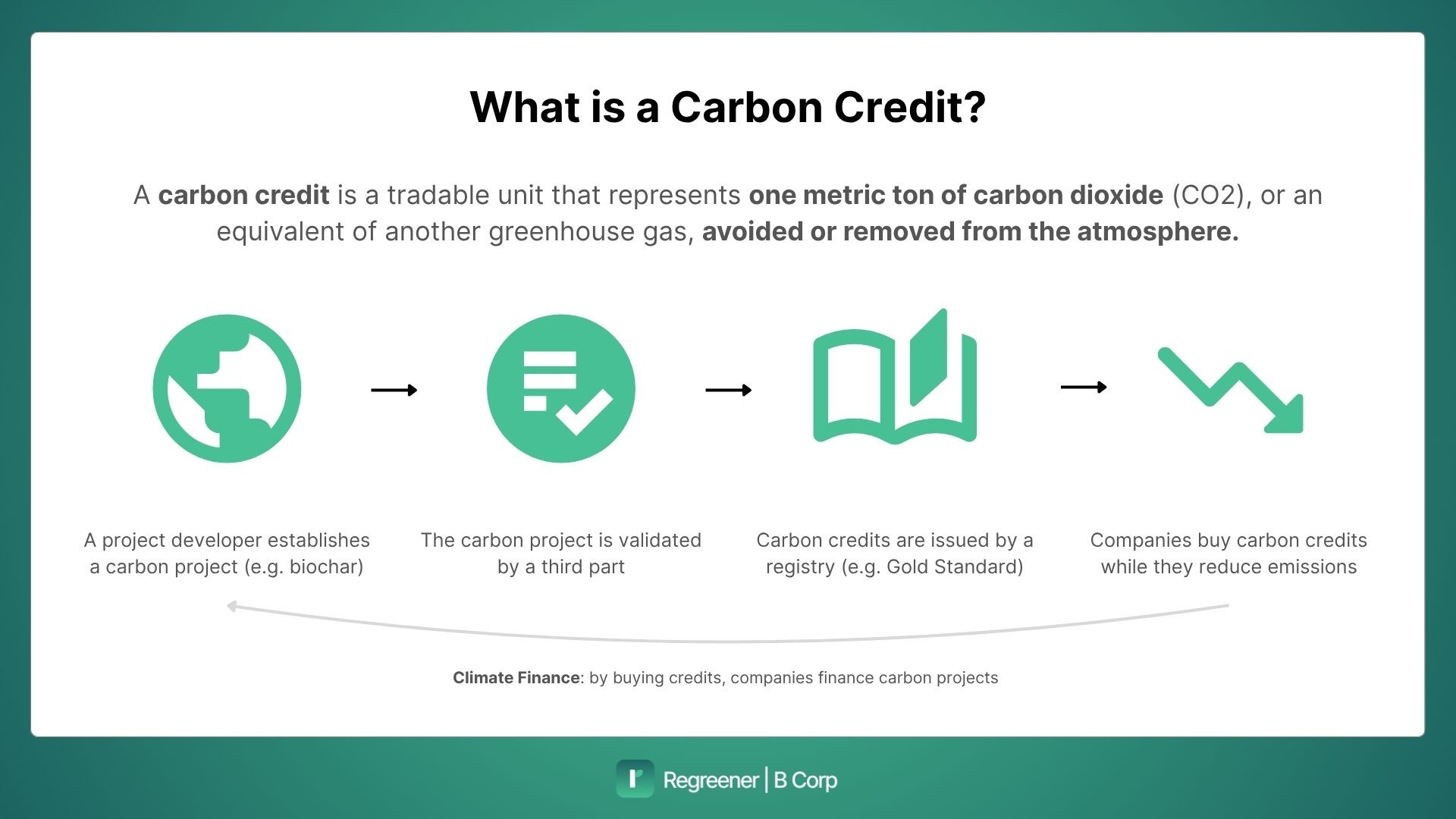
What Is a Carbon Credit?

A carbon credit represents the verified removal or avoidance of one metric tonne of CO₂ equivalent. Credits are serialised, tracked in a public registry, and retired in the buyer's name to prevent double-counting. Corporate buyers use credits to compensate for unavoidable residual emissions after direct reductions — and under frameworks like SBTi, VCMI, and Oxford Principles, the project type, registry, and vintage all matter for the claim you can make.
Why US Carbon Credit Projects?

The United States is the world's most active voluntary carbon market. With over 2,300 registered projects, four major crediting registries — Verra (VCS), American Carbon Registry (ACR), Climate Action Reserve (CAR), and Isometric — and a Department of Energy investing billions in next-generation carbon removal, the US offers a depth and diversity of project types that no other single country can match.

Three factors make US projects stand out in 2026.

Registry maturity and transparency. US registries publish full project documentation, credit issuance records, and third-party verification reports publicly. Every project in this article has a live, searchable registry page — not a promise or a pipeline.

Methodology integrity. The ICVCM's Core Carbon Principles (CCP) label has approved methodologies across US forest management, agriculture, and industrial removal. US-registered projects can now carry the market's most widely recognised quality signal.

Technology leadership. The US leads globally in commercial-scale engineered carbon removal — from DAC to CO2 mineralisation in construction materials. VCS 4018 represents the world's first Verra-verified methodology for CO2 utilisation in concrete, a breakthrough that opens the construction sector to permanent, traceable removal credits.
een vliegtuig dat in de lucht vliegt met het woord 'go' erin geschreven

Explore our Guide: the best Carbon Credit Projects of 2026

Learn about the latest best practices, the best projects and strategic choices

The 5 Best Carbon Credit Projects in the United States

1. CarbonCure CO2 Utilisation in Concrete — Engineered Removal, Nationwide
Registry: Verra VCS | Project ID: VCS 4018 | Methodology: VM0043 | Type: CO2 Utilisation in Concrete Production | Location: United States (multiple concrete plants)

Overview

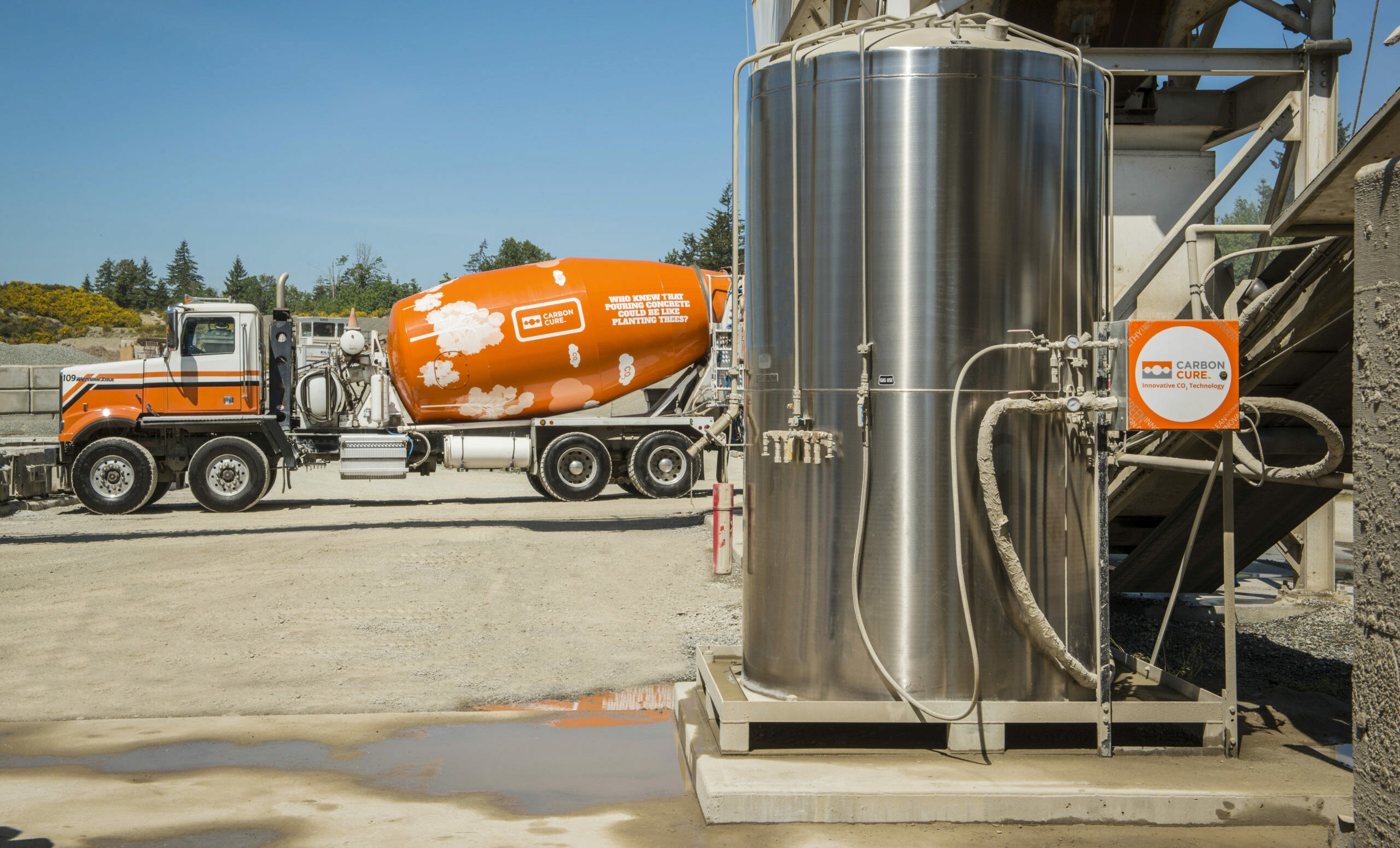
CarbonCure's technology permanently removes CO2 from the atmosphere by injecting it into concrete during the mixing process. The CO2 chemically reacts with calcium ions and mineralises into a stable carbonate — becoming part of the concrete itself, where it remains locked for the lifetime of the structure. There is no monitoring risk, no reversal, and no biological dependency. The carbon becomes stone.

CarbonCure co-developed the VM0043 methodology with Verra — the first and only globally approved standard for CO2 utilisation in concrete production. Credits issued under VCS 4018 capture two distinct GHG benefits: the CO2 permanently mineralised in concrete, and additional emissions avoided through the strength enhancement effect of mineralised CO2, which allows a modest reduction in the amount of cement used per batch — the most carbon-intensive ingredient in concrete.

CarbonCure's traceable MRV platform tracks every molecule of CO2 from point of capture through injection and into the cured concrete product, enabling precise, audit-ready reporting across all credit issuances. Known buyers of CarbonCure credits include Microsoft, Stripe, Shopify, and Klarna — some of the world's most scrutinised corporate climate programmes.

Key Benefits

  • Climate: Permanent CO2 storage with zero biological reversal risk; mineralisation durability measured in decades to centuries, matching the lifespan of built infrastructure

  • Innovation: World's first Verra-verified methodology for concrete-based carbon removal; creates a scalable, replicable removal mechanism across one of the world's largest construction material supply chains

  • Community: Deployed across US concrete plants, supporting low-carbon construction without changing the structural performance or cost of concrete for builders and contractors

  • SDGs: SDG 9 (Industry, Innovation and Infrastructure), SDG 11 (Sustainable Cities and Communities), SDG 13 (Climate Action)

Why It Stands Out

Concrete accounts for approximately 8% of global CO2 emissions. VCS 4018 is the only Verra-certified pathway to convert that sector's supply chain into a permanent carbon sink — at the point of production, not as an afterthought. For buyers in real estate, construction, infrastructure, or manufacturing who want to demonstrate sector-aligned climate action with permanent removal credentials, this is a unique and highly defensible credit. At Regreener, we view VCS 4018 as one of the most innovative removal credits available to US corporate buyers in 2026.

Independent quality signal: Verra VCS VM0043 verified; full proprietary MRV traceability per credit Known buyers: Microsoft, Stripe, Shopify, Klarna Indicative price: USD 50–120 per tonne

2. Graphyte Loblolly Project — Biomass Carbon Removal and Storage, Arkansas

Registry: Isometric | Type: Biomass Carbon Removal and Storage (BiCRS) | Location: Pine Bluff, Arkansas, United States

Overview

Graphyte's Loblolly Project is the world's first BiCRS facility to receive a BeZero Carbon AA rating — placing it in the top 2% of all 491 projects on BeZero's platform and making it the highest-rated biomass-based carbon removal project globally. It operates through Graphyte's proprietary Carbon Casting process: agricultural and timber residues — primarily rice hulls and sawmill waste from local Arkansas supply chains — are dried below a critical moisture threshold that prevents decomposition, compressed into dense carbon blocks, encased in an impermeable polymer barrier, and stored in purpose-built underground chambers on a reclaimed gravel mining site. The carbon is durably locked away for 1,000+ years, with no biological reversal risk.

Credits are certified by Isometric — the most scientifically rigorous carbon removal registry globally, and the first to receive simultaneous ICROA, CORSIA, and ICVCM endorsement. The project has been issuing credits since 2024 and currently operates at 15,000 tCO₂e/year of removal capacity, with Graphyte targeting 50,000 tCO₂e/year and four additional facilities by 2026. Backed by Breakthrough Energy Ventures (Bill Gates), Carbon Direct Capital, and Prelude Ventures, Graphyte has a credible and well-capitalised scale-up path.

Key Benefits

  • Climate: 1,000+ year carbon storage durability with zero biological reversal risk; Carbon Casting prevents decomposition at both microbial and structural levels, verified through extensive peer-reviewed scientific testing and Isometric's independent third-party auditing process

  • Innovation: First BiCRS method to achieve a BeZero AA rating; uses off-the-shelf commercial equipment and existing agricultural and timber waste supply chains, making it deployable at scale without technology breakthroughs or major new infrastructure

  • Community: Sited on a reclaimed gravel pit in Pine Bluff, Arkansas — restoring degraded industrial land into a long-term carbon storage site; active local workforce development partnerships, educational programmes with K-12 schools and universities, and a stewardship arrangement with a local land trust

  • SDGs: SDG 9 (Industry, Innovation and Infrastructure), SDG 13 (Climate Action), SDG 11 (Sustainable Cities and Communities), SDG 15 (Life on Land)

Why It Stands Out

A BeZero AA rating is exceptional by any standard — and for a BiCRS project, it is unprecedented. The rating reflects top-tier scores across additionality, carbon accounting, and permanence: the three dimensions that matter most to procurement teams defending a purchase under scrutiny. Carbon Casting does not compete with forests or cropland for land use, does not rely on ecosystem health, and does not carry wildfire, drought, or land-management reversal risk. The biomass feedstock — local rice hulls and sawmill residues — would otherwise decompose and release CO₂ anyway, making the additionality case unusually clean. For buyers who want the permanence credentials of engineered removal at a lower price point than DAC, Graphyte's Loblolly Project is the most credible BiCRS option available in the US market today.

Independent quality signal: BeZero Carbon AA rating — top 2% of all rated projects globally; first BiCRS method to achieve this rating; Isometric-certified (ICROA, CORSIA, ICVCM endorsed) Known buyers: Frontier (Stripe, Google, Shopify, McKinsey, Meta advance market commitment) Indicative price: USD 100–200 per tonne

3. Anew Tomah Highlands Forestry — Improved Forest Management, Acadian Forest, Maine
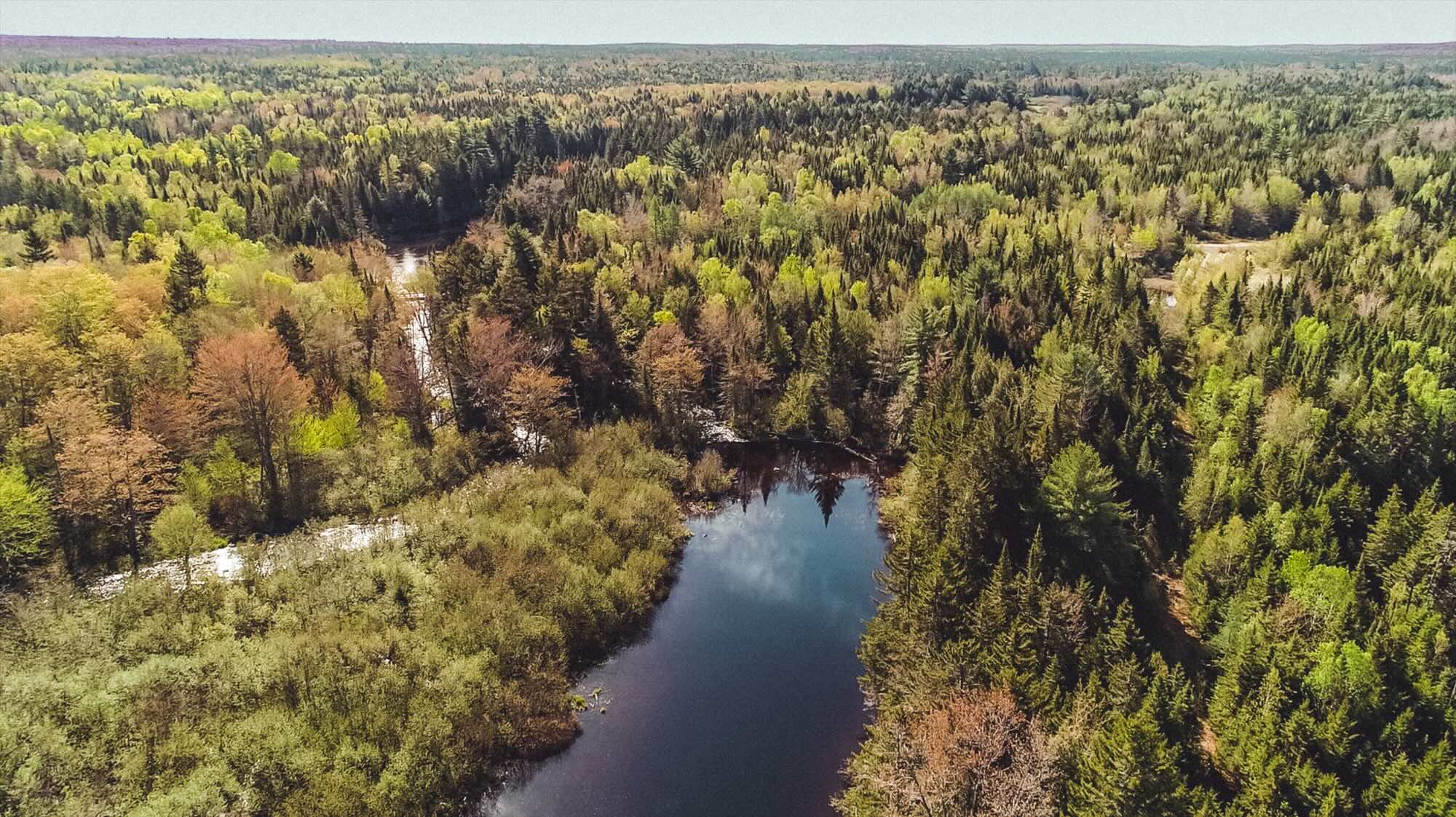
Registry: American Carbon Registry | Project ID: ACR 617 | Methodology: ACR IFM v2.1 (CCP-eligible programme) | Type: Improved Forest Management | Location: Maine, United States

Overview

Set across more than 36,000 acres of Acadian Forest in Maine, the Anew Tomah Highlands Forestry Project is one of the most established IFM projects in the northeastern US. Between 2020 and 2022 alone, the project verified 154,294 tonnes of CO₂e in reduced and removed emissions — a track record that demonstrates actual delivery, not projection.

The project is developed by Anew Climate, one of North America's leading forest carbon developers, whose proprietary Epoch platform applies dynamic, continuously updated forest monitoring using high-resolution remote sensing, satellite-based carbon tracking, and machine learning. Unlike static baseline assessments, Epoch recalibrates over time against real timber market conditions — directly addressing the additionality concerns that have drawn scrutiny to US IFM projects more broadly.

The Acadian Forest ecosystem of northern Maine is ecologically distinct: a transitional boreal-temperate zone that supports rare species assemblages found nowhere else in the continental US. Carbon finance from the Tomah Highlands project enables landowners to keep this forest intact against sustained conversion and harvesting pressure from the regional timber economy.

Key Benefits

  • Climate: 154,294 tCO₂e verified 2020–2022; ongoing issuance under ACR's IFM methodology with dynamic monitoring recalibrated against live market baselines

  • Biodiversity: Protects one of the most ecologically distinctive forest ecosystems in the northeastern US — Acadian boreal-temperate transition habitat supporting rare species and wildlife corridors into Canada

  • Community: Supports the Maine bioeconomy through carbon revenues that sustain long-term forest ownership, reducing pressure for land conversion in rural communities dependent on forest industries

  • SDGs: SDG 13 (Climate Action), SDG 15 (Life on Land), SDG 8 (Decent Work and Economic Growth)

Why It Stands Out

ACR's IFM v2.1 methodology — used in the Tomah Highlands project — is the first IFM approach to receive CCP designation from the ICVCM, making ACR 617 part of the first generation of US forest credits that carry a programme-level quality endorsement. Anew's Epoch platform adds a further transparency layer that most US IFM projects do not have. For buyers who want proven, historically issued US forest credits with a technology-forward monitoring backbone, Tomah Highlands is the benchmark in the northeast.

Independent quality signal: ACR IFM v2.1 (ICVCM CCP-eligible programme); Anew Epoch dynamic monitoring Known issuance: 154,294 tCO₂e verified, 2020–2022 Indicative price: USD 20–45 per tonne

4. AgriCapture Soil Enrichment — Regenerative Agriculture, Mid-South
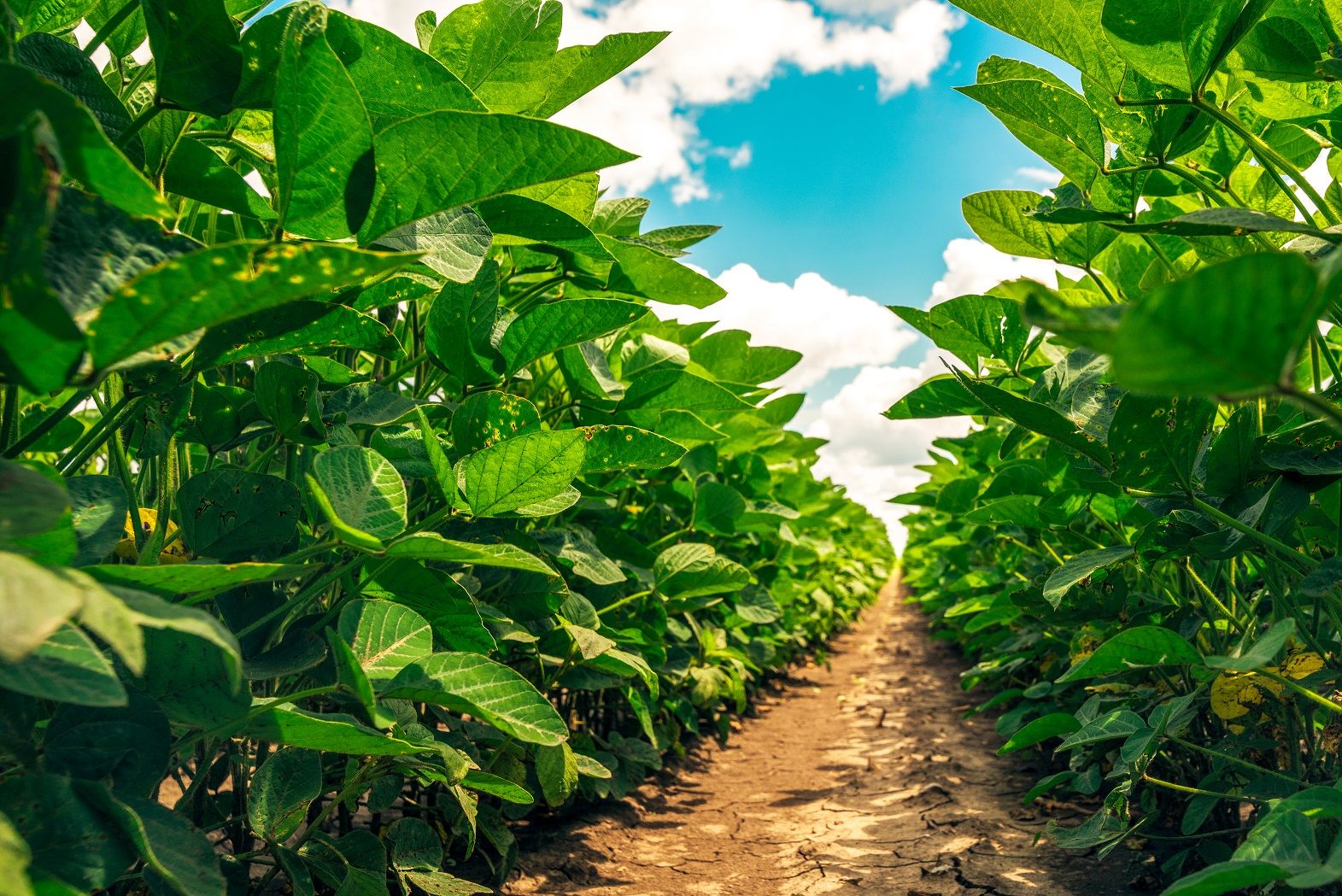
Registry: Climate Action Reserve | Project ID: CAR 1513 | Methodology: CAR Soil Enrichment Protocol v1.1 (CCP-approved, October 2025) | Type: Improved Agricultural Land Management | Location: Arkansas, Louisiana, Missouri, Mississippi, and five other Mid-South states

Overview

AgriCapture's Soil Enrichment Project is the largest regenerative row-crop agriculture carbon project in the southern United States, with over 130,000 acres enrolled across eight states. Farmers implement climate-friendly practices — cover crops, reduced and no-till cultivation, efficient fertiliser application, avoided field burning, and irrigation changes — that reduce on-farm GHG emissions and sequester carbon in agricultural soils. Credits are issued under CAR's Soil Enrichment Protocol, which received CCP-approved status from the ICVCM in October 2025.

In July 2025, AgriCapture CAR 1513 received a BeZero Carbon A rating — the highest rating of any US agriculture project and any rice methane project globally. The project has issued over 52,000 carbon credits to date, with farmers receiving direct payments within one year of completing each harvest season. Rice farms in the project also implement alternate wetting and drying (AWD) and furrow irrigation techniques that have collectively saved over 9 billion gallons of water — a co-benefit that goes well beyond the carbon numbers.

Key Benefits

  • Climate: Verified emissions reductions and soil carbon sequestration across 130,000+ row-crop acres in the Mid-South; CAR's Soil Enrichment Protocol requires conservative buffer pool contributions to cover reversal risk

  • Community: Farmers receive direct credit payments within one year of harvest — one of the fastest payment cycles in US agriculture carbon; no upfront costs for participating landowners and farmers

  • Biodiversity: Reduced tillage, cover cropping, and avoided burning improve soil biology, reduce erosion, and lower nitrous oxide and particulate pollution across one of America's most intensively farmed river basin landscapes

  • SDGs: SDG 2 (Zero Hunger), SDG 13 (Climate Action), SDG 6 (Clean Water and Sanitation), SDG 15 (Life on Land)

Why It Stands Out

BeZero's A rating puts CAR 1513 in the top 10% of all projects they rate globally — and explicitly at the top of US agriculture and global rice methane. The October 2025 CCP approval of the CAR Soil Enrichment Protocol provides a methodology-level quality anchor that previously did not exist for US agricultural credits. Together, these two signals make AgriCapture one of the few US agriculture projects a procurement team can present to an ESG auditor with genuine confidence. For buyers with agricultural supply chains, food and beverage sector exposure, or rural community impact priorities, this is the most credible US agriculture credit on the market.

Independent quality signal: BeZero Carbon A-rating (July 2025) — highest of any US agriculture project; CAR SEP v1.1 CCP-approved (ICVCM, October 2025) Credits issued: 52,000+ carbon credits sold to date Indicative price: USD 25–55 per tonne

5. Northern Great Plains Regenerative Grazing — Soil Carbon, Montana
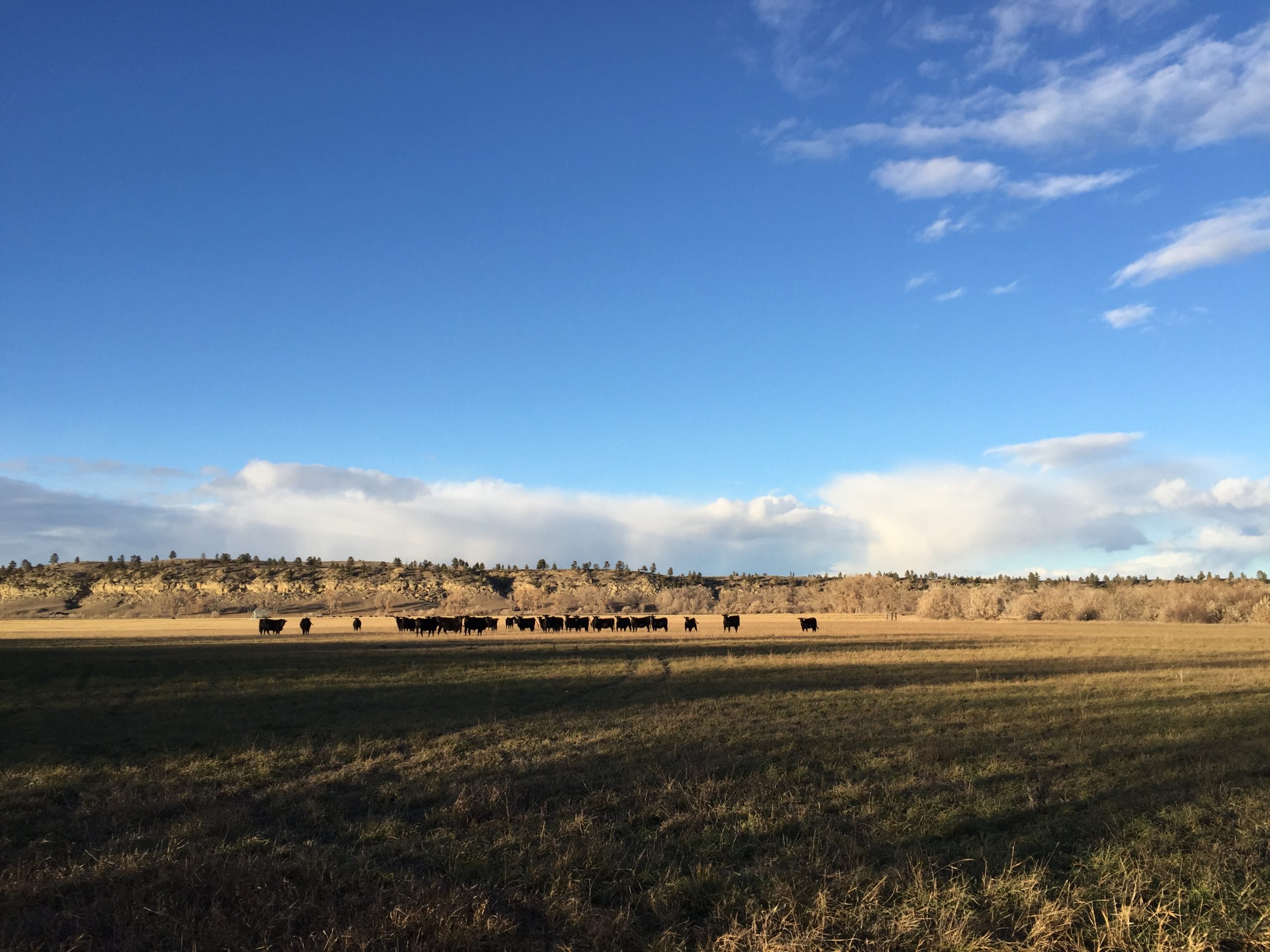
Registry: Verra VCS | Project ID: VCS 1960 | Methodology: VM0026 | Type: Improved Grazing Land Management | Location: Montana, United States (250,000+ acres)

Overview

The Northern Great Plains Regenerative Grazing Project, developed by Native, works with cattle ranchers across Montana to implement higher-intensity rotational grazing that restores grassland ecosystem function and measurably increases soil organic carbon. With over 250,000 acres enrolled in Phase 1, it is one of the largest registered grazing land carbon projects in the US, verified under Verra's VM0026 methodology.

The project's HelpBuild model provides upfront capital for fencing and water infrastructure — the physical investments that enable ranchers to divide pastures, rotate cattle more frequently, and extend rest and recovery periods between grazing. This directly addresses the core challenge of regenerative ranching economics: the lag between making management changes and seeing soil carbon — or ranch profitability — improve. By bridging that gap with carbon finance, the project makes rotational grazing viable for ranchers who could not otherwise afford the transition.

Local non-profit partner Western Sustainability Exchange monitors annual grazing plans and links participating ranchers to premium markets for sustainably raised beef — creating a dual revenue stream that reinforces the permanence of practice changes.

Key Benefits

  • Climate: Measurable soil organic carbon sequestration across 250,000+ acres of Montana rangeland, with annual monitoring and Verra-verified issuance; VM0026 applies conservative uncertainty discounts to all credited removals

  • Community: Carbon revenues fund upfront ranch infrastructure investments, creating immediate economic returns for cattle ranchers in an industry of tight margins; access to premium beef markets further strengthens long-term viability

  • Biodiversity: Rotational grazing restores native perennial grass cover, improves watershed function, and supports the Greater Yellowstone Ecosystem's broader wildlife and ecological connectivity across Montana's ranchlands

  • SDGs: SDG 13 (Climate Action), SDG 15 (Life on Land), SDG 2 (Zero Hunger), SDG 8 (Decent Work and Economic Growth)

Why It Stands Out

Grazing land soil carbon is one of the most under-represented mechanisms in US corporate credit portfolios — despite the fact that research indicates US grazing lands could draw down approximately 198 million additional tonnes of CO₂ per year under improved management. VCS 1960 is among the first large-scale Verra-verified US projects to operationalise that potential at scale. For buyers looking for domestic, nature-based soil carbon credits with a credible additionality story and genuine rural co-benefits, the Northern Great Plains project delivers where most competitors are still at the pilot stage.

Independent quality signal: Verra VCS verified; VM0026 methodology; Western Sustainability Exchange annual monitoring Scale: 250,000+ acres enrolled, Phase 1 (Montana) Indicative price: USD 20–40 per tonne

Project Comparison

Project

Registry / ID

Type

Price Range

Key Signal

CarbonCure CO2 in Concrete

Verra VCS 4018

Engineered removal

USD 50–120/t

VM0043, permanent mineralisation

Graphyte Loblolly Project

Isometric

BiCRS — biomass burial

USD 100-200/t

BeZero AA-rated, Isometric certified

Anew Tomah Highlands

ACR 617

IFM — Acadian Forest

USD 20–45/t

ACR IFM v2.1, Epoch monitoring

AgriCapture Soil Enrichment

CAR 1513

Regenerative agriculture

USD 25–55/t

BeZero A-rated, CCP-approved

N. Great Plains Grazing

Verra VCS 1960

Grazing soil carbon

USD 20–40/t

Verra VM0026, 250,000+ acres

Risks and Considerations

Permanence varies by mechanism

CarbonCure (VCS 4018) and Graphyte's Loblolly Project carry no biological reversal risk — CO₂ is either chemically bound in concrete or sealed in 1,000-year subsurface storage with no ecosystem dependency. Nature-based projects (Tomah Highlands, AgriCapture, Northern Great Plains) carry reversal risk from land-use change, extreme weather, or changed management practices. All four use registry-mandated buffer pools. A well-structured US portfolio combines both: nature-based credits for volume and co-benefits, engineered removal for permanence.

Quality signals are now the market floor

Credits without a CCP label, independent rating, or traceable registry ID face growing resistance from procurement and ESG teams. Every project in this article has at least one anchoring quality signal — CCP label (Loblolly), BeZero A rating (AgriCapture), ACR IFM v2.1 methodology (Tomah Highlands), Verra VM0026 (Northern Great Plains), and VM0043 with proprietary MRV (CarbonCure). Buying on price alone carries genuine greenwashing and reputational risk in 2026.

Credits complement — not replace — emissions reductions

Under SBTi, VCMI, and Oxford Principles, carbon credits are disclosed separately from operational reductions and used to neutralise genuinely irreducible residual emissions. These five US projects are procurement-grade tools for the last mile of a serious climate strategy — not a substitute for a decarbonisation roadmap.

Policy context matters for US projects

The US withdrawal from the Paris Climate Accord in early 2025 has introduced uncertainty into federal climate policy. It has not changed corporate demand from technology, finance, or agriculture supply chain buyers — but buyers should ensure procurement documentation does not rely on federal regulatory frameworks that may shift, and should prioritise projects verified under independent international standards.

Next Steps: Procuring US Carbon Credits

For organisations looking to source credits from the projects above, Regreener works directly with each project developer — removing intermediaries, verifying active issuance status, and providing full CSRD- and SBTi-aligned documentation.
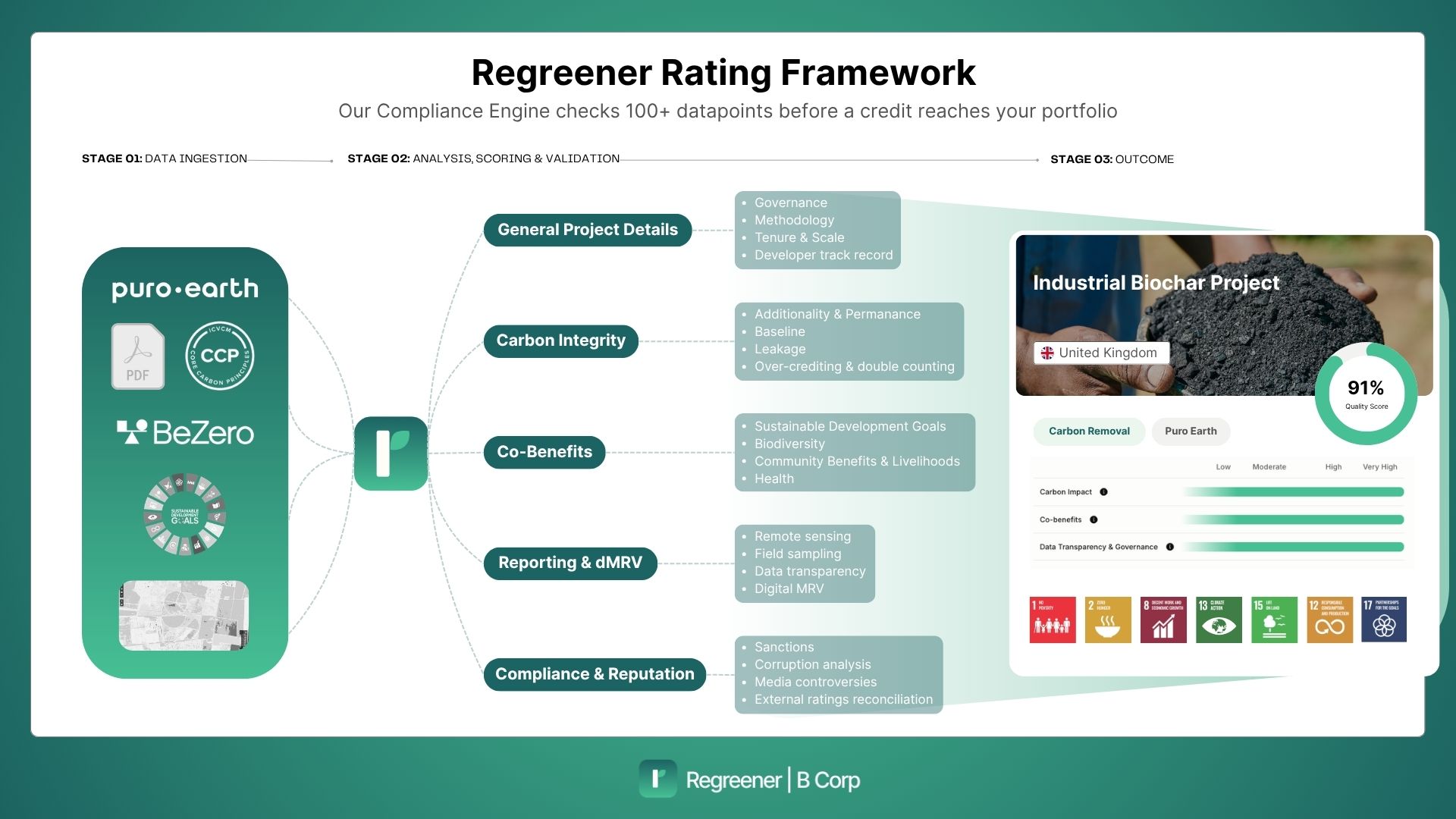
Define your portfolio mix first. Nature-based credits (Project Loblolly, Tomah Highlands, AgriCapture, Northern Great Plains) are cost-effective volume anchors with strong co-benefit stories. Engineered removal (CarbonCure VCS 4018) is higher-cost but carries permanent, traceable storage credentials suited to irreducible residual emissions and construction-sector buyers. A well-structured US portfolio uses at least two mechanisms.

Match credits to your reporting framework. Under SBTi Net-Zero Standard and VCMI Claims Code, the registry, methodology, vintage, and claim type all need to be documented. Regreener provides audit-ready documentation packages for all five projects.

Want to know which credits fit your company's climate strategy?

Book a free consultation Today

If you are evaluating US carbon credit projects, one thing is clear: a registry ID is the baseline, not the finish line. The American voluntary carbon market has over 2,300 active projects — but most do not survive a proper quality screen. Independent verification, active issuance track record, and at least one quality signal separate a credible procurement decision from a liability.

Direct Answer: The 5 best carbon credit projects in the United States of 2026 are: CarbonCure CO2 Utilisation in Concrete (VCS 4018, permanent CO2 mineralisation in concrete, nationwide), Graphyte's Loblolly Project (Isometric, BeZero AA-rated biomass carbon removal and storage, Pine Bluff, Arkansas), Anew Tomah Highlands Forestry (ACR 617, improved forest management, Acadian Forest, Maine), AgriCapture Soil Enrichment (CAR 1513, regenerative agriculture soil carbon, Mid-South, BeZero A-rated), and the Northern Great Plains Regenerative Grazing Project (VCS 1960, regenerative ranching soil carbon, Montana). Each project is independently verified, actively issuing credits, and available for corporate procurement today.

The five projects below span four distinct mechanisms — engineered CO2 mineralisation, biomass carbon removal and storage, regenerative crop farming, and grazing-based soil carbon — giving buyers the tools to build a portfolio rather than a single bet.

"In the US voluntary carbon market, a verified registry ID, active credit issuance, and at least one independent quality signal are the minimum entry criteria for any project a corporate buyer can credibly defend."

Boris Bekkering — Commercial Director, Regreener

What Is a Carbon Credit?

A carbon credit represents the verified removal or avoidance of one metric tonne of CO₂ equivalent. Credits are serialised, tracked in a public registry, and retired in the buyer's name to prevent double-counting. Corporate buyers use credits to compensate for unavoidable residual emissions after direct reductions — and under frameworks like SBTi, VCMI, and Oxford Principles, the project type, registry, and vintage all matter for the claim you can make.

Why US Carbon Credit Projects?

The United States is the world's most active voluntary carbon market. With over 2,300 registered projects, four major crediting registries — Verra (VCS), American Carbon Registry (ACR), Climate Action Reserve (CAR), and Isometric — and a Department of Energy investing billions in next-generation carbon removal, the US offers a depth and diversity of project types that no other single country can match.

Three factors make US projects stand out in 2026.

Registry maturity and transparency. US registries publish full project documentation, credit issuance records, and third-party verification reports publicly. Every project in this article has a live, searchable registry page — not a promise or a pipeline.

Methodology integrity. The ICVCM's Core Carbon Principles (CCP) label has approved methodologies across US forest management, agriculture, and industrial removal. US-registered projects can now carry the market's most widely recognised quality signal.

Technology leadership. The US leads globally in commercial-scale engineered carbon removal — from DAC to CO2 mineralisation in construction materials. VCS 4018 represents the world's first Verra-verified methodology for CO2 utilisation in concrete, a breakthrough that opens the construction sector to permanent, traceable removal credits.

een vliegtuig dat door de lucht vliegt met het woord 'go' erin geschreven

Explore our Guide: the best Carbon Credit Projects of 2026

Learn about the latest best practices, the best projects and strategic choices

The 5 Best Carbon Credit Projects in the United States

1. CarbonCure CO2 Utilisation in Concrete — Engineered Removal, Nationwide

Registry: Verra VCS | Project ID: VCS 4018 | Methodology: VM0043 | Type: CO2 Utilisation in Concrete Production | Location: United States (multiple concrete plants)

Overview

CarbonCure's technology permanently removes CO2 from the atmosphere by injecting it into concrete during the mixing process. The CO2 chemically reacts with calcium ions and mineralises into a stable carbonate — becoming part of the concrete itself, where it remains locked for the lifetime of the structure. There is no monitoring risk, no reversal, and no biological dependency. The carbon becomes stone.

CarbonCure co-developed the VM0043 methodology with Verra — the first and only globally approved standard for CO2 utilisation in concrete production. Credits issued under VCS 4018 capture two distinct GHG benefits: the CO2 permanently mineralised in concrete, and additional emissions avoided through the strength enhancement effect of mineralised CO2, which allows a modest reduction in the amount of cement used per batch — the most carbon-intensive ingredient in concrete.

CarbonCure's traceable MRV platform tracks every molecule of CO2 from point of capture through injection and into the cured concrete product, enabling precise, audit-ready reporting across all credit issuances. Known buyers of CarbonCure credits include Microsoft, Stripe, Shopify, and Klarna — some of the world's most scrutinised corporate climate programmes.

Key Benefits

  • Climate: Permanent CO2 storage with zero biological reversal risk; mineralisation durability measured in decades to centuries, matching the lifespan of built infrastructure

  • Innovation: World's first Verra-verified methodology for concrete-based carbon removal; creates a scalable, replicable removal mechanism across one of the world's largest construction material supply chains

  • Community: Deployed across US concrete plants, supporting low-carbon construction without changing the structural performance or cost of concrete for builders and contractors

  • SDGs: SDG 9 (Industry, Innovation and Infrastructure), SDG 11 (Sustainable Cities and Communities), SDG 13 (Climate Action)

Why It Stands Out

Concrete accounts for approximately 8% of global CO2 emissions. VCS 4018 is the only Verra-certified pathway to convert that sector's supply chain into a permanent carbon sink — at the point of production, not as an afterthought. For buyers in real estate, construction, infrastructure, or manufacturing who want to demonstrate sector-aligned climate action with permanent removal credentials, this is a unique and highly defensible credit. At Regreener, we view VCS 4018 as one of the most innovative removal credits available to US corporate buyers in 2026.

Independent quality signal: Verra VCS VM0043 verified; full proprietary MRV traceability per credit Known buyers: Microsoft, Stripe, Shopify, Klarna Indicative price: USD 50–120 per tonne

2. Graphyte Loblolly Project — Biomass Carbon Removal and Storage, Arkansas

Registry: Isometric | Type: Biomass Carbon Removal and Storage (BiCRS) | Location: Pine Bluff, Arkansas, United States

Overview

Graphyte's Loblolly Project is the world's first BiCRS facility to receive a BeZero Carbon AA rating — placing it in the top 2% of all 491 projects on BeZero's platform and making it the highest-rated biomass-based carbon removal project globally. It operates through Graphyte's proprietary Carbon Casting process: agricultural and timber residues — primarily rice hulls and sawmill waste from local Arkansas supply chains — are dried below a critical moisture threshold that prevents decomposition, compressed into dense carbon blocks, encased in an impermeable polymer barrier, and stored in purpose-built underground chambers on a reclaimed gravel mining site. The carbon is durably locked away for 1,000+ years, with no biological reversal risk.

Credits are certified by Isometric — the most scientifically rigorous carbon removal registry globally, and the first to receive simultaneous ICROA, CORSIA, and ICVCM endorsement. The project has been issuing credits since 2024 and currently operates at 15,000 tCO₂e/year of removal capacity, with Graphyte targeting 50,000 tCO₂e/year and four additional facilities by 2026. Backed by Breakthrough Energy Ventures (Bill Gates), Carbon Direct Capital, and Prelude Ventures, Graphyte has a credible and well-capitalised scale-up path.

Key Benefits

  • Climate: 1,000+ year carbon storage durability with zero biological reversal risk; Carbon Casting prevents decomposition at both microbial and structural levels, verified through extensive peer-reviewed scientific testing and Isometric's independent third-party auditing process

  • Innovation: First BiCRS method to achieve a BeZero AA rating; uses off-the-shelf commercial equipment and existing agricultural and timber waste supply chains, making it deployable at scale without technology breakthroughs or major new infrastructure

  • Community: Sited on a reclaimed gravel pit in Pine Bluff, Arkansas — restoring degraded industrial land into a long-term carbon storage site; active local workforce development partnerships, educational programmes with K-12 schools and universities, and a stewardship arrangement with a local land trust

  • SDGs: SDG 9 (Industry, Innovation and Infrastructure), SDG 13 (Climate Action), SDG 11 (Sustainable Cities and Communities), SDG 15 (Life on Land)

Why It Stands Out

A BeZero AA rating is exceptional by any standard — and for a BiCRS project, it is unprecedented. The rating reflects top-tier scores across additionality, carbon accounting, and permanence: the three dimensions that matter most to procurement teams defending a purchase under scrutiny. Carbon Casting does not compete with forests or cropland for land use, does not rely on ecosystem health, and does not carry wildfire, drought, or land-management reversal risk. The biomass feedstock — local rice hulls and sawmill residues — would otherwise decompose and release CO₂ anyway, making the additionality case unusually clean. For buyers who want the permanence credentials of engineered removal at a lower price point than DAC, Graphyte's Loblolly Project is the most credible BiCRS option available in the US market today.

Independent quality signal: BeZero Carbon AA rating — top 2% of all rated projects globally; first BiCRS method to achieve this rating; Isometric-certified (ICROA, CORSIA, ICVCM endorsed) Known buyers: Frontier (Stripe, Google, Shopify, McKinsey, Meta advance market commitment) Indicative price: USD 100–200 per tonne

3. Anew Tomah Highlands Forestry — Improved Forest Management, Acadian Forest, Maine

Registry: American Carbon Registry | Project ID: ACR 617 | Methodology: ACR IFM v2.1 (CCP-eligible programme) | Type: Improved Forest Management | Location: Maine, United States

Overview

Set across more than 36,000 acres of Acadian Forest in Maine, the Anew Tomah Highlands Forestry Project is one of the most established IFM projects in the northeastern US. Between 2020 and 2022 alone, the project verified 154,294 tonnes of CO₂e in reduced and removed emissions — a track record that demonstrates actual delivery, not projection.

The project is developed by Anew Climate, one of North America's leading forest carbon developers, whose proprietary Epoch platform applies dynamic, continuously updated forest monitoring using high-resolution remote sensing, satellite-based carbon tracking, and machine learning. Unlike static baseline assessments, Epoch recalibrates over time against real timber market conditions — directly addressing the additionality concerns that have drawn scrutiny to US IFM projects more broadly.

The Acadian Forest ecosystem of northern Maine is ecologically distinct: a transitional boreal-temperate zone that supports rare species assemblages found nowhere else in the continental US. Carbon finance from the Tomah Highlands project enables landowners to keep this forest intact against sustained conversion and harvesting pressure from the regional timber economy.

Key Benefits

  • Climate: 154,294 tCO₂e verified 2020–2022; ongoing issuance under ACR's IFM methodology with dynamic monitoring recalibrated against live market baselines

  • Biodiversity: Protects one of the most ecologically distinctive forest ecosystems in the northeastern US — Acadian boreal-temperate transition habitat supporting rare species and wildlife corridors into Canada

  • Community: Supports the Maine bioeconomy through carbon revenues that sustain long-term forest ownership, reducing pressure for land conversion in rural communities dependent on forest industries

  • SDGs: SDG 13 (Climate Action), SDG 15 (Life on Land), SDG 8 (Decent Work and Economic Growth)

Why It Stands Out

ACR's IFM v2.1 methodology — used in the Tomah Highlands project — is the first IFM approach to receive CCP designation from the ICVCM, making ACR 617 part of the first generation of US forest credits that carry a programme-level quality endorsement. Anew's Epoch platform adds a further transparency layer that most US IFM projects do not have. For buyers who want proven, historically issued US forest credits with a technology-forward monitoring backbone, Tomah Highlands is the benchmark in the northeast.

Independent quality signal: ACR IFM v2.1 (ICVCM CCP-eligible programme); Anew Epoch dynamic monitoring Known issuance: 154,294 tCO₂e verified, 2020–2022 Indicative price: USD 20–45 per tonne

4. AgriCapture Soil Enrichment — Regenerative Agriculture, Mid-South

Registry: Climate Action Reserve | Project ID: CAR 1513 | Methodology: CAR Soil Enrichment Protocol v1.1 (CCP-approved, October 2025) | Type: Improved Agricultural Land Management | Location: Arkansas, Louisiana, Missouri, Mississippi, and five other Mid-South states

Overview

AgriCapture's Soil Enrichment Project is the largest regenerative row-crop agriculture carbon project in the southern United States, with over 130,000 acres enrolled across eight states. Farmers implement climate-friendly practices — cover crops, reduced and no-till cultivation, efficient fertiliser application, avoided field burning, and irrigation changes — that reduce on-farm GHG emissions and sequester carbon in agricultural soils. Credits are issued under CAR's Soil Enrichment Protocol, which received CCP-approved status from the ICVCM in October 2025.

In July 2025, AgriCapture CAR 1513 received a BeZero Carbon A rating — the highest rating of any US agriculture project and any rice methane project globally. The project has issued over 52,000 carbon credits to date, with farmers receiving direct payments within one year of completing each harvest season. Rice farms in the project also implement alternate wetting and drying (AWD) and furrow irrigation techniques that have collectively saved over 9 billion gallons of water — a co-benefit that goes well beyond the carbon numbers.

Key Benefits

  • Climate: Verified emissions reductions and soil carbon sequestration across 130,000+ row-crop acres in the Mid-South; CAR's Soil Enrichment Protocol requires conservative buffer pool contributions to cover reversal risk

  • Community: Farmers receive direct credit payments within one year of harvest — one of the fastest payment cycles in US agriculture carbon; no upfront costs for participating landowners and farmers

  • Biodiversity: Reduced tillage, cover cropping, and avoided burning improve soil biology, reduce erosion, and lower nitrous oxide and particulate pollution across one of America's most intensively farmed river basin landscapes

  • SDGs: SDG 2 (Zero Hunger), SDG 13 (Climate Action), SDG 6 (Clean Water and Sanitation), SDG 15 (Life on Land)

Why It Stands Out

BeZero's A rating puts CAR 1513 in the top 10% of all projects they rate globally — and explicitly at the top of US agriculture and global rice methane. The October 2025 CCP approval of the CAR Soil Enrichment Protocol provides a methodology-level quality anchor that previously did not exist for US agricultural credits. Together, these two signals make AgriCapture one of the few US agriculture projects a procurement team can present to an ESG auditor with genuine confidence. For buyers with agricultural supply chains, food and beverage sector exposure, or rural community impact priorities, this is the most credible US agriculture credit on the market.

Independent quality signal: BeZero Carbon A-rating (July 2025) — highest of any US agriculture project; CAR SEP v1.1 CCP-approved (ICVCM, October 2025) Credits issued: 52,000+ carbon credits sold to date Indicative price: USD 25–55 per tonne

5. Northern Great Plains Regenerative Grazing — Soil Carbon, Montana

Registry: Verra VCS | Project ID: VCS 1960 | Methodology: VM0026 | Type: Improved Grazing Land Management | Location: Montana, United States (250,000+ acres)

Overview

The Northern Great Plains Regenerative Grazing Project, developed by Native, works with cattle ranchers across Montana to implement higher-intensity rotational grazing that restores grassland ecosystem function and measurably increases soil organic carbon. With over 250,000 acres enrolled in Phase 1, it is one of the largest registered grazing land carbon projects in the US, verified under Verra's VM0026 methodology.

The project's HelpBuild model provides upfront capital for fencing and water infrastructure — the physical investments that enable ranchers to divide pastures, rotate cattle more frequently, and extend rest and recovery periods between grazing. This directly addresses the core challenge of regenerative ranching economics: the lag between making management changes and seeing soil carbon — or ranch profitability — improve. By bridging that gap with carbon finance, the project makes rotational grazing viable for ranchers who could not otherwise afford the transition.

Local non-profit partner Western Sustainability Exchange monitors annual grazing plans and links participating ranchers to premium markets for sustainably raised beef — creating a dual revenue stream that reinforces the permanence of practice changes.

Key Benefits

  • Climate: Measurable soil organic carbon sequestration across 250,000+ acres of Montana rangeland, with annual monitoring and Verra-verified issuance; VM0026 applies conservative uncertainty discounts to all credited removals

  • Community: Carbon revenues fund upfront ranch infrastructure investments, creating immediate economic returns for cattle ranchers in an industry of tight margins; access to premium beef markets further strengthens long-term viability

  • Biodiversity: Rotational grazing restores native perennial grass cover, improves watershed function, and supports the Greater Yellowstone Ecosystem's broader wildlife and ecological connectivity across Montana's ranchlands

  • SDGs: SDG 13 (Climate Action), SDG 15 (Life on Land), SDG 2 (Zero Hunger), SDG 8 (Decent Work and Economic Growth)

Why It Stands Out

Grazing land soil carbon is one of the most under-represented mechanisms in US corporate credit portfolios — despite the fact that research indicates US grazing lands could draw down approximately 198 million additional tonnes of CO₂ per year under improved management. VCS 1960 is among the first large-scale Verra-verified US projects to operationalise that potential at scale. For buyers looking for domestic, nature-based soil carbon credits with a credible additionality story and genuine rural co-benefits, the Northern Great Plains project delivers where most competitors are still at the pilot stage.

Independent quality signal: Verra VCS verified; VM0026 methodology; Western Sustainability Exchange annual monitoring Scale: 250,000+ acres enrolled, Phase 1 (Montana) Indicative price: USD 20–40 per tonne

Project Comparison

Project

Registry / ID

Type

Price Range

Key Signal

CarbonCure CO2 in Concrete

Verra VCS 4018

Engineered removal

USD 50–120/t

VM0043, permanent mineralisation

Graphyte Loblolly Project

Isometric

BiCRS — biomass burial

USD 100-200/t

BeZero AA-rated, Isometric certified

Anew Tomah Highlands

ACR 617

IFM — Acadian Forest

USD 20–45/t

ACR IFM v2.1, Epoch monitoring

AgriCapture Soil Enrichment

CAR 1513

Regenerative agriculture

USD 25–55/t

BeZero A-rated, CCP-approved

N. Great Plains Grazing

Verra VCS 1960

Grazing soil carbon

USD 20–40/t

Verra VM0026, 250,000+ acres

Risks and Considerations

Permanence varies by mechanism

CarbonCure (VCS 4018) and Graphyte's Loblolly Project carry no biological reversal risk — CO₂ is either chemically bound in concrete or sealed in 1,000-year subsurface storage with no ecosystem dependency. Nature-based projects (Tomah Highlands, AgriCapture, Northern Great Plains) carry reversal risk from land-use change, extreme weather, or changed management practices. All four use registry-mandated buffer pools. A well-structured US portfolio combines both: nature-based credits for volume and co-benefits, engineered removal for permanence.

Quality signals are now the market floor

Credits without a CCP label, independent rating, or traceable registry ID face growing resistance from procurement and ESG teams. Every project in this article has at least one anchoring quality signal — CCP label (Loblolly), BeZero A rating (AgriCapture), ACR IFM v2.1 methodology (Tomah Highlands), Verra VM0026 (Northern Great Plains), and VM0043 with proprietary MRV (CarbonCure). Buying on price alone carries genuine greenwashing and reputational risk in 2026.

Credits complement — not replace — emissions reductions

Under SBTi, VCMI, and Oxford Principles, carbon credits are disclosed separately from operational reductions and used to neutralise genuinely irreducible residual emissions. These five US projects are procurement-grade tools for the last mile of a serious climate strategy — not a substitute for a decarbonisation roadmap.

Policy context matters for US projects

The US withdrawal from the Paris Climate Accord in early 2025 has introduced uncertainty into federal climate policy. It has not changed corporate demand from technology, finance, or agriculture supply chain buyers — but buyers should ensure procurement documentation does not rely on federal regulatory frameworks that may shift, and should prioritise projects verified under independent international standards.

Next Steps: Procuring US Carbon Credits

For organisations looking to source credits from the projects above, Regreener works directly with each project developer — removing intermediaries, verifying active issuance status, and providing full CSRD- and SBTi-aligned documentation.

Define your portfolio mix first. Nature-based credits (Project Loblolly, Tomah Highlands, AgriCapture, Northern Great Plains) are cost-effective volume anchors with strong co-benefit stories. Engineered removal (CarbonCure VCS 4018) is higher-cost but carries permanent, traceable storage credentials suited to irreducible residual emissions and construction-sector buyers. A well-structured US portfolio uses at least two mechanisms.

Match credits to your reporting framework. Under SBTi Net-Zero Standard and VCMI Claims Code, the registry, methodology, vintage, and claim type all need to be documented. Regreener provides audit-ready documentation packages for all five projects.

Want to know which credits fit your company's climate strategy?

Book a free consultation Today

If you are evaluating US carbon credit projects, one thing is clear: a registry ID is the baseline, not the finish line. The American voluntary carbon market has over 2,300 active projects — but most do not survive a proper quality screen. Independent verification, active issuance track record, and at least one quality signal separate a credible procurement decision from a liability.

Direct Answer: The 5 best carbon credit projects in the United States of 2026 are: CarbonCure CO2 Utilisation in Concrete (VCS 4018, permanent CO2 mineralisation in concrete, nationwide), Graphyte's Loblolly Project (Isometric, BeZero AA-rated biomass carbon removal and storage, Pine Bluff, Arkansas), Anew Tomah Highlands Forestry (ACR 617, improved forest management, Acadian Forest, Maine), AgriCapture Soil Enrichment (CAR 1513, regenerative agriculture soil carbon, Mid-South, BeZero A-rated), and the Northern Great Plains Regenerative Grazing Project (VCS 1960, regenerative ranching soil carbon, Montana). Each project is independently verified, actively issuing credits, and available for corporate procurement today.

The five projects below span four distinct mechanisms — engineered CO2 mineralisation, biomass carbon removal and storage, regenerative crop farming, and grazing-based soil carbon — giving buyers the tools to build a portfolio rather than a single bet.

"In the US voluntary carbon market, a verified registry ID, active credit issuance, and at least one independent quality signal are the minimum entry criteria for any project a corporate buyer can credibly defend."

Boris Bekkering — Commercial Director, Regreener

What Is a Carbon Credit?

A carbon credit represents the verified removal or avoidance of one metric tonne of CO₂ equivalent. Credits are serialised, tracked in a public registry, and retired in the buyer's name to prevent double-counting. Corporate buyers use credits to compensate for unavoidable residual emissions after direct reductions — and under frameworks like SBTi, VCMI, and Oxford Principles, the project type, registry, and vintage all matter for the claim you can make.

Why US Carbon Credit Projects?

The United States is the world's most active voluntary carbon market. With over 2,300 registered projects, four major crediting registries — Verra (VCS), American Carbon Registry (ACR), Climate Action Reserve (CAR), and Isometric — and a Department of Energy investing billions in next-generation carbon removal, the US offers a depth and diversity of project types that no other single country can match.

Three factors make US projects stand out in 2026.

Registry maturity and transparency. US registries publish full project documentation, credit issuance records, and third-party verification reports publicly. Every project in this article has a live, searchable registry page — not a promise or a pipeline.

Methodology integrity. The ICVCM's Core Carbon Principles (CCP) label has approved methodologies across US forest management, agriculture, and industrial removal. US-registered projects can now carry the market's most widely recognised quality signal.

Technology leadership. The US leads globally in commercial-scale engineered carbon removal — from DAC to CO2 mineralisation in construction materials. VCS 4018 represents the world's first Verra-verified methodology for CO2 utilisation in concrete, a breakthrough that opens the construction sector to permanent, traceable removal credits.

een vliegtuig dat in de lucht vliegt met het woord 'go' erin geschreven

Explore our Guide: the best Carbon Credit Projects of 2026

Learn about the latest best practices, the best projects and strategic choices

The 5 Best Carbon Credit Projects in the United States

1. CarbonCure CO2 Utilisation in Concrete — Engineered Removal, Nationwide

Registry: Verra VCS | Project ID: VCS 4018 | Methodology: VM0043 | Type: CO2 Utilisation in Concrete Production | Location: United States (multiple concrete plants)

Overview

CarbonCure's technology permanently removes CO2 from the atmosphere by injecting it into concrete during the mixing process. The CO2 chemically reacts with calcium ions and mineralises into a stable carbonate — becoming part of the concrete itself, where it remains locked for the lifetime of the structure. There is no monitoring risk, no reversal, and no biological dependency. The carbon becomes stone.

CarbonCure co-developed the VM0043 methodology with Verra — the first and only globally approved standard for CO2 utilisation in concrete production. Credits issued under VCS 4018 capture two distinct GHG benefits: the CO2 permanently mineralised in concrete, and additional emissions avoided through the strength enhancement effect of mineralised CO2, which allows a modest reduction in the amount of cement used per batch — the most carbon-intensive ingredient in concrete.

CarbonCure's traceable MRV platform tracks every molecule of CO2 from point of capture through injection and into the cured concrete product, enabling precise, audit-ready reporting across all credit issuances. Known buyers of CarbonCure credits include Microsoft, Stripe, Shopify, and Klarna — some of the world's most scrutinised corporate climate programmes.

Key Benefits

  • Climate: Permanent CO2 storage with zero biological reversal risk; mineralisation durability measured in decades to centuries, matching the lifespan of built infrastructure

  • Innovation: World's first Verra-verified methodology for concrete-based carbon removal; creates a scalable, replicable removal mechanism across one of the world's largest construction material supply chains

  • Community: Deployed across US concrete plants, supporting low-carbon construction without changing the structural performance or cost of concrete for builders and contractors

  • SDGs: SDG 9 (Industry, Innovation and Infrastructure), SDG 11 (Sustainable Cities and Communities), SDG 13 (Climate Action)

Why It Stands Out

Concrete accounts for approximately 8% of global CO2 emissions. VCS 4018 is the only Verra-certified pathway to convert that sector's supply chain into a permanent carbon sink — at the point of production, not as an afterthought. For buyers in real estate, construction, infrastructure, or manufacturing who want to demonstrate sector-aligned climate action with permanent removal credentials, this is a unique and highly defensible credit. At Regreener, we view VCS 4018 as one of the most innovative removal credits available to US corporate buyers in 2026.

Independent quality signal: Verra VCS VM0043 verified; full proprietary MRV traceability per credit Known buyers: Microsoft, Stripe, Shopify, Klarna Indicative price: USD 50–120 per tonne

2. Graphyte Loblolly Project — Biomass Carbon Removal and Storage, Arkansas

Registry: Isometric | Type: Biomass Carbon Removal and Storage (BiCRS) | Location: Pine Bluff, Arkansas, United States

Overview

Graphyte's Loblolly Project is the world's first BiCRS facility to receive a BeZero Carbon AA rating — placing it in the top 2% of all 491 projects on BeZero's platform and making it the highest-rated biomass-based carbon removal project globally. It operates through Graphyte's proprietary Carbon Casting process: agricultural and timber residues — primarily rice hulls and sawmill waste from local Arkansas supply chains — are dried below a critical moisture threshold that prevents decomposition, compressed into dense carbon blocks, encased in an impermeable polymer barrier, and stored in purpose-built underground chambers on a reclaimed gravel mining site. The carbon is durably locked away for 1,000+ years, with no biological reversal risk.

Credits are certified by Isometric — the most scientifically rigorous carbon removal registry globally, and the first to receive simultaneous ICROA, CORSIA, and ICVCM endorsement. The project has been issuing credits since 2024 and currently operates at 15,000 tCO₂e/year of removal capacity, with Graphyte targeting 50,000 tCO₂e/year and four additional facilities by 2026. Backed by Breakthrough Energy Ventures (Bill Gates), Carbon Direct Capital, and Prelude Ventures, Graphyte has a credible and well-capitalised scale-up path.

Key Benefits

  • Climate: 1,000+ year carbon storage durability with zero biological reversal risk; Carbon Casting prevents decomposition at both microbial and structural levels, verified through extensive peer-reviewed scientific testing and Isometric's independent third-party auditing process

  • Innovation: First BiCRS method to achieve a BeZero AA rating; uses off-the-shelf commercial equipment and existing agricultural and timber waste supply chains, making it deployable at scale without technology breakthroughs or major new infrastructure

  • Community: Sited on a reclaimed gravel pit in Pine Bluff, Arkansas — restoring degraded industrial land into a long-term carbon storage site; active local workforce development partnerships, educational programmes with K-12 schools and universities, and a stewardship arrangement with a local land trust

  • SDGs: SDG 9 (Industry, Innovation and Infrastructure), SDG 13 (Climate Action), SDG 11 (Sustainable Cities and Communities), SDG 15 (Life on Land)

Why It Stands Out

A BeZero AA rating is exceptional by any standard — and for a BiCRS project, it is unprecedented. The rating reflects top-tier scores across additionality, carbon accounting, and permanence: the three dimensions that matter most to procurement teams defending a purchase under scrutiny. Carbon Casting does not compete with forests or cropland for land use, does not rely on ecosystem health, and does not carry wildfire, drought, or land-management reversal risk. The biomass feedstock — local rice hulls and sawmill residues — would otherwise decompose and release CO₂ anyway, making the additionality case unusually clean. For buyers who want the permanence credentials of engineered removal at a lower price point than DAC, Graphyte's Loblolly Project is the most credible BiCRS option available in the US market today.

Independent quality signal: BeZero Carbon AA rating — top 2% of all rated projects globally; first BiCRS method to achieve this rating; Isometric-certified (ICROA, CORSIA, ICVCM endorsed) Known buyers: Frontier (Stripe, Google, Shopify, McKinsey, Meta advance market commitment) Indicative price: USD 100–200 per tonne

3. Anew Tomah Highlands Forestry — Improved Forest Management, Acadian Forest, Maine

Registry: American Carbon Registry | Project ID: ACR 617 | Methodology: ACR IFM v2.1 (CCP-eligible programme) | Type: Improved Forest Management | Location: Maine, United States

Overview

Set across more than 36,000 acres of Acadian Forest in Maine, the Anew Tomah Highlands Forestry Project is one of the most established IFM projects in the northeastern US. Between 2020 and 2022 alone, the project verified 154,294 tonnes of CO₂e in reduced and removed emissions — a track record that demonstrates actual delivery, not projection.

The project is developed by Anew Climate, one of North America's leading forest carbon developers, whose proprietary Epoch platform applies dynamic, continuously updated forest monitoring using high-resolution remote sensing, satellite-based carbon tracking, and machine learning. Unlike static baseline assessments, Epoch recalibrates over time against real timber market conditions — directly addressing the additionality concerns that have drawn scrutiny to US IFM projects more broadly.

The Acadian Forest ecosystem of northern Maine is ecologically distinct: a transitional boreal-temperate zone that supports rare species assemblages found nowhere else in the continental US. Carbon finance from the Tomah Highlands project enables landowners to keep this forest intact against sustained conversion and harvesting pressure from the regional timber economy.

Key Benefits

  • Climate: 154,294 tCO₂e verified 2020–2022; ongoing issuance under ACR's IFM methodology with dynamic monitoring recalibrated against live market baselines

  • Biodiversity: Protects one of the most ecologically distinctive forest ecosystems in the northeastern US — Acadian boreal-temperate transition habitat supporting rare species and wildlife corridors into Canada

  • Community: Supports the Maine bioeconomy through carbon revenues that sustain long-term forest ownership, reducing pressure for land conversion in rural communities dependent on forest industries

  • SDGs: SDG 13 (Climate Action), SDG 15 (Life on Land), SDG 8 (Decent Work and Economic Growth)

Why It Stands Out

ACR's IFM v2.1 methodology — used in the Tomah Highlands project — is the first IFM approach to receive CCP designation from the ICVCM, making ACR 617 part of the first generation of US forest credits that carry a programme-level quality endorsement. Anew's Epoch platform adds a further transparency layer that most US IFM projects do not have. For buyers who want proven, historically issued US forest credits with a technology-forward monitoring backbone, Tomah Highlands is the benchmark in the northeast.

Independent quality signal: ACR IFM v2.1 (ICVCM CCP-eligible programme); Anew Epoch dynamic monitoring Known issuance: 154,294 tCO₂e verified, 2020–2022 Indicative price: USD 20–45 per tonne

4. AgriCapture Soil Enrichment — Regenerative Agriculture, Mid-South

Registry: Climate Action Reserve | Project ID: CAR 1513 | Methodology: CAR Soil Enrichment Protocol v1.1 (CCP-approved, October 2025) | Type: Improved Agricultural Land Management | Location: Arkansas, Louisiana, Missouri, Mississippi, and five other Mid-South states

Overview

AgriCapture's Soil Enrichment Project is the largest regenerative row-crop agriculture carbon project in the southern United States, with over 130,000 acres enrolled across eight states. Farmers implement climate-friendly practices — cover crops, reduced and no-till cultivation, efficient fertiliser application, avoided field burning, and irrigation changes — that reduce on-farm GHG emissions and sequester carbon in agricultural soils. Credits are issued under CAR's Soil Enrichment Protocol, which received CCP-approved status from the ICVCM in October 2025.

In July 2025, AgriCapture CAR 1513 received a BeZero Carbon A rating — the highest rating of any US agriculture project and any rice methane project globally. The project has issued over 52,000 carbon credits to date, with farmers receiving direct payments within one year of completing each harvest season. Rice farms in the project also implement alternate wetting and drying (AWD) and furrow irrigation techniques that have collectively saved over 9 billion gallons of water — a co-benefit that goes well beyond the carbon numbers.

Key Benefits

  • Climate: Verified emissions reductions and soil carbon sequestration across 130,000+ row-crop acres in the Mid-South; CAR's Soil Enrichment Protocol requires conservative buffer pool contributions to cover reversal risk

  • Community: Farmers receive direct credit payments within one year of harvest — one of the fastest payment cycles in US agriculture carbon; no upfront costs for participating landowners and farmers

  • Biodiversity: Reduced tillage, cover cropping, and avoided burning improve soil biology, reduce erosion, and lower nitrous oxide and particulate pollution across one of America's most intensively farmed river basin landscapes

  • SDGs: SDG 2 (Zero Hunger), SDG 13 (Climate Action), SDG 6 (Clean Water and Sanitation), SDG 15 (Life on Land)

Why It Stands Out

BeZero's A rating puts CAR 1513 in the top 10% of all projects they rate globally — and explicitly at the top of US agriculture and global rice methane. The October 2025 CCP approval of the CAR Soil Enrichment Protocol provides a methodology-level quality anchor that previously did not exist for US agricultural credits. Together, these two signals make AgriCapture one of the few US agriculture projects a procurement team can present to an ESG auditor with genuine confidence. For buyers with agricultural supply chains, food and beverage sector exposure, or rural community impact priorities, this is the most credible US agriculture credit on the market.

Independent quality signal: BeZero Carbon A-rating (July 2025) — highest of any US agriculture project; CAR SEP v1.1 CCP-approved (ICVCM, October 2025) Credits issued: 52,000+ carbon credits sold to date Indicative price: USD 25–55 per tonne

5. Northern Great Plains Regenerative Grazing — Soil Carbon, Montana

Registry: Verra VCS | Project ID: VCS 1960 | Methodology: VM0026 | Type: Improved Grazing Land Management | Location: Montana, United States (250,000+ acres)

Overview

The Northern Great Plains Regenerative Grazing Project, developed by Native, works with cattle ranchers across Montana to implement higher-intensity rotational grazing that restores grassland ecosystem function and measurably increases soil organic carbon. With over 250,000 acres enrolled in Phase 1, it is one of the largest registered grazing land carbon projects in the US, verified under Verra's VM0026 methodology.

The project's HelpBuild model provides upfront capital for fencing and water infrastructure — the physical investments that enable ranchers to divide pastures, rotate cattle more frequently, and extend rest and recovery periods between grazing. This directly addresses the core challenge of regenerative ranching economics: the lag between making management changes and seeing soil carbon — or ranch profitability — improve. By bridging that gap with carbon finance, the project makes rotational grazing viable for ranchers who could not otherwise afford the transition.

Local non-profit partner Western Sustainability Exchange monitors annual grazing plans and links participating ranchers to premium markets for sustainably raised beef — creating a dual revenue stream that reinforces the permanence of practice changes.

Key Benefits

  • Climate: Measurable soil organic carbon sequestration across 250,000+ acres of Montana rangeland, with annual monitoring and Verra-verified issuance; VM0026 applies conservative uncertainty discounts to all credited removals

  • Community: Carbon revenues fund upfront ranch infrastructure investments, creating immediate economic returns for cattle ranchers in an industry of tight margins; access to premium beef markets further strengthens long-term viability

  • Biodiversity: Rotational grazing restores native perennial grass cover, improves watershed function, and supports the Greater Yellowstone Ecosystem's broader wildlife and ecological connectivity across Montana's ranchlands

  • SDGs: SDG 13 (Climate Action), SDG 15 (Life on Land), SDG 2 (Zero Hunger), SDG 8 (Decent Work and Economic Growth)

Why It Stands Out

Grazing land soil carbon is one of the most under-represented mechanisms in US corporate credit portfolios — despite the fact that research indicates US grazing lands could draw down approximately 198 million additional tonnes of CO₂ per year under improved management. VCS 1960 is among the first large-scale Verra-verified US projects to operationalise that potential at scale. For buyers looking for domestic, nature-based soil carbon credits with a credible additionality story and genuine rural co-benefits, the Northern Great Plains project delivers where most competitors are still at the pilot stage.

Independent quality signal: Verra VCS verified; VM0026 methodology; Western Sustainability Exchange annual monitoring Scale: 250,000+ acres enrolled, Phase 1 (Montana) Indicative price: USD 20–40 per tonne

Project Comparison

Project

Registry / ID

Type

Price Range

Key Signal

CarbonCure CO2 in Concrete

Verra VCS 4018

Engineered removal

USD 50–120/t

VM0043, permanent mineralisation

Graphyte Loblolly Project

Isometric

BiCRS — biomass burial

USD 100-200/t

BeZero AA-rated, Isometric certified

Anew Tomah Highlands

ACR 617

IFM — Acadian Forest

USD 20–45/t

ACR IFM v2.1, Epoch monitoring

AgriCapture Soil Enrichment

CAR 1513

Regenerative agriculture

USD 25–55/t

BeZero A-rated, CCP-approved

N. Great Plains Grazing

Verra VCS 1960

Grazing soil carbon

USD 20–40/t

Verra VM0026, 250,000+ acres

Risks and Considerations

Permanence varies by mechanism

CarbonCure (VCS 4018) and Graphyte's Loblolly Project carry no biological reversal risk — CO₂ is either chemically bound in concrete or sealed in 1,000-year subsurface storage with no ecosystem dependency. Nature-based projects (Tomah Highlands, AgriCapture, Northern Great Plains) carry reversal risk from land-use change, extreme weather, or changed management practices. All four use registry-mandated buffer pools. A well-structured US portfolio combines both: nature-based credits for volume and co-benefits, engineered removal for permanence.

Quality signals are now the market floor

Credits without a CCP label, independent rating, or traceable registry ID face growing resistance from procurement and ESG teams. Every project in this article has at least one anchoring quality signal — CCP label (Loblolly), BeZero A rating (AgriCapture), ACR IFM v2.1 methodology (Tomah Highlands), Verra VM0026 (Northern Great Plains), and VM0043 with proprietary MRV (CarbonCure). Buying on price alone carries genuine greenwashing and reputational risk in 2026.

Credits complement — not replace — emissions reductions

Under SBTi, VCMI, and Oxford Principles, carbon credits are disclosed separately from operational reductions and used to neutralise genuinely irreducible residual emissions. These five US projects are procurement-grade tools for the last mile of a serious climate strategy — not a substitute for a decarbonisation roadmap.

Policy context matters for US projects

The US withdrawal from the Paris Climate Accord in early 2025 has introduced uncertainty into federal climate policy. It has not changed corporate demand from technology, finance, or agriculture supply chain buyers — but buyers should ensure procurement documentation does not rely on federal regulatory frameworks that may shift, and should prioritise projects verified under independent international standards.

Next Steps: Procuring US Carbon Credits

For organisations looking to source credits from the projects above, Regreener works directly with each project developer — removing intermediaries, verifying active issuance status, and providing full CSRD- and SBTi-aligned documentation.

Define your portfolio mix first. Nature-based credits (Project Loblolly, Tomah Highlands, AgriCapture, Northern Great Plains) are cost-effective volume anchors with strong co-benefit stories. Engineered removal (CarbonCure VCS 4018) is higher-cost but carries permanent, traceable storage credentials suited to irreducible residual emissions and construction-sector buyers. A well-structured US portfolio uses at least two mechanisms.

Match credits to your reporting framework. Under SBTi Net-Zero Standard and VCMI Claims Code, the registry, methodology, vintage, and claim type all need to be documented. Regreener provides audit-ready documentation packages for all five projects.

Want to know which credits fit your company's climate strategy?

Book a free consultation Today

Over de Auteur:

Boris Bekkering van Regreener
Boris Bekkering

Boris is Commercieel Directeur bij Regreener en sloot zich aan bij het bedrijf in 2022. Hij heeft een masterdiploma in Milieu- & Resource Management en heeft eerdere professionele ervaring in venture capital gericht op energietransitie. Boris is gepassioneerd over het helpen van bedrijven bij het navigeren door koolstofmarkten en geniet ervan om ondernemingen te ondersteunen bij het afstemmen van duurzaamheidsdoelen. Hij gelooft dat ambitieuze doelen, gecombineerd met transparante communicatie, bedrijven kunnen sturen naar duurzame en commerciële vooruitgang. In zijn vrije tijd geniet Boris van zijn vele hobby’s, die allemaal plaatsvinden op het water of in de natuur.

INHOUDSOPGAVE

Artikel Delen

Veelgestelde vragen

Wat is een Carbon Credit (CO2-certificaat)?

Een Carbon Credit is een verhandelbaar certificaat dat de verwijdering of vermindering van één ton koolstofdioxide (CO2) of het equivalent daarvan in andere broeikasgassen uit de atmosfeer vertegenwoordigt. Bedrijven, overheden en individuen kunnen CO2-credits kopen om hun eigen uitstoot te compenseren, waarbij ze projecten zoals herbebossing of de productie van biochar steunen.

Werken carbon credits eigenlijk wel?

Dat kunnen ze zeker, maar alleen als ze verantwoordelijk worden ingezet. Hoogwaardige, geverifieerde carbon credits ondersteunen echte, meetbare klimaatprojecten. Maar ze zijn het meest effectief als ze worden gecombineerd met serieuze interne reductie-inspanningen en niet als vervanging voor reductie worden gebruikt.

Hoe weet ik of een carbon credit van hoge kwaliteit is?

Kijk of het project gecertificeerd is door erkende standaarden zoals Verra, Gold Standard of de Plan Vivo.
Hoogwaardige credits zijn meetbaar, permanent, aanvullend (zouden niet zonder financiering plaatsvinden) en onafhankelijk geverifieerd.

Zijn carbon credits hetzelfde als co2 compensatie?

Bijna. De termen worden vaak door elkaar gebruikt. Carbon credits verwijzen naar de verhandelbare eenheden, terwijl compensatie de actie beschrijft van het compenseren van emissies met behulp van de credits.

Waarom variëren de prijzen van CO2-kredieten zo sterk?

Prijzen hangen af van het projecttype, de locatie, de verificatiestandaard en de vraag in de markt.

Greenwashing-proof klimaatactie

Sluit je aan bij 200+ bedrijven die impact maken met Regreener