
have us call you right now.

Ultimate Guide: Reduce and Offset Your Event's Emissions

Ultimate Guide: Reduce and Offset Your Event's Emissions

Last updated:

Apr 29, 2025

Apr 29, 2025

4 minute read

4 minute read

Every event produces carbon emissions. A three-day conference can generate 0.5 to 1.5 tonnes of CO₂ per attendee — with air travel alone often accounting for 70 to 90% of the total footprint. Whether you're organising a trade show, corporate summit, or festival, the emissions add up fast.

To credibly offset event emissions, you need a structured approach: reduce everything you can, then compensate the remainder with verified carbon credits. This isn't optional goodwill — for many European companies, it's becoming a reporting requirement under the CSRD. More importantly, it's how responsible organisers demonstrate real climate leadership.

At Regreener, we help event organisers across Europe navigate exactly this process. Here's how to do it right.

Where Do Event Emissions Come From?

To reduce effectively, you need to know where the biggest sources are. For most events, four areas dominate: attendee air travel (by far the largest contributor), venue energy consumption, catering, and waste. With that understanding, you can focus on the two pillars of a credible climate strategy: reduction and compensation.

Reduce Emissions Where Possible

Offsetting without reducing first isn't a climate strategy — it's damage control. The most credible approach starts with ambitious reduction.

Optimise Travel and Transport

Air travel is the single largest emission source for virtually every event. Choose a venue with strong public transport links and structure your programme to minimise travel distances. Offer a hybrid format so attendees can participate remotely — hybrid conferences have the potential to cut climate impact by two-thirds while keeping over 50% of participants in person. Facilitate group transport or shuttle services and actively promote rail travel as an alternative for short-haul routes. Even small shifts — from flights to trains for routes under 700 km — have an outsized effect.

Select a Sustainable Venue

Prioritise venues with sustainability certifications (LEED, ISO 20121), renewable energy contracts, and energy-efficient infrastructure. A venue running on renewable electricity has a fraction of the footprint of one powered by fossil fuels. LED lighting, natural ventilation, and efficient AV equipment make a measurable difference. Consider outdoor venues where natural daylight handles much of the lighting.

Rethink Catering

Food production is a significant source of greenhouse gas emissions globally, and at large events, it scales quickly. Prioritise plant-forward menus with locally sourced, seasonal ingredients — beef generates up to seven times more CO₂ than poultry, and a fully plant-based menu cuts catering emissions dramatically. Reduce food waste through realistic portioning, work with caterers who use sustainable packaging and waste processing, and donate or compost leftovers.

Minimise Waste

The average conference generates roughly 1.89 kg of waste per attendee per day. Eliminate single-use plastics, use reusable materials, and set up clear waste separation stations. Go digital wherever possible — badges, programmes, and brochures don't need to be printed. The best-performing events achieve waste diversion rates above 90% through well-planned recycling and composting strategies.

Offset Residual Emissions With High-Quality Carbon Credits

No matter how ambitious your reductions, every physical event has unavoidable residual emissions. Attendees flying in from afar, energy consumption you can't eliminate, food that needs to be produced — a footprint always remains. This is precisely where carbon credits play their role.

One carbon credit represents the reduction or removal of one tonne of CO₂ equivalent. By purchasing credits linked to verified climate projects, you finance emission reductions elsewhere that would not happen without that investment.

a plane flying in the sky with the word go written in it

Explore our Guide: the best Carbon Credit Projects of 2026

Learn about the latest best practices, the best projects and strategic choices

Quality Matters — Dramatically

The quality of carbon credits varies enormously — and that quality determines whether your compensation delivers real impact or merely represents paper value. Evaluate these criteria:

Verification by recognised standards — projects certified under Verra (VCS), Gold Standard, or Plan Vivo provide significantly more assurance of real emission reductions than uncertified initiatives.

Additionality — the project must demonstrably reduce emissions that would not have been reduced without the carbon finance. This is the foundation of a credible carbon credit.

Permanence — how durable is the carbon storage? Reforestation projects have different risk profiles than biochar (stable for hundreds of years) or direct air capture (permanent geological storage). A diversified portfolio spreads this risk.

Co-benefits — the strongest projects deliver social and ecological benefits alongside climate impact, such as biodiversity restoration, clean water access, and local livelihoods. These contributions to the UN Sustainable Development Goals strengthen the story you can tell attendees and stakeholders.

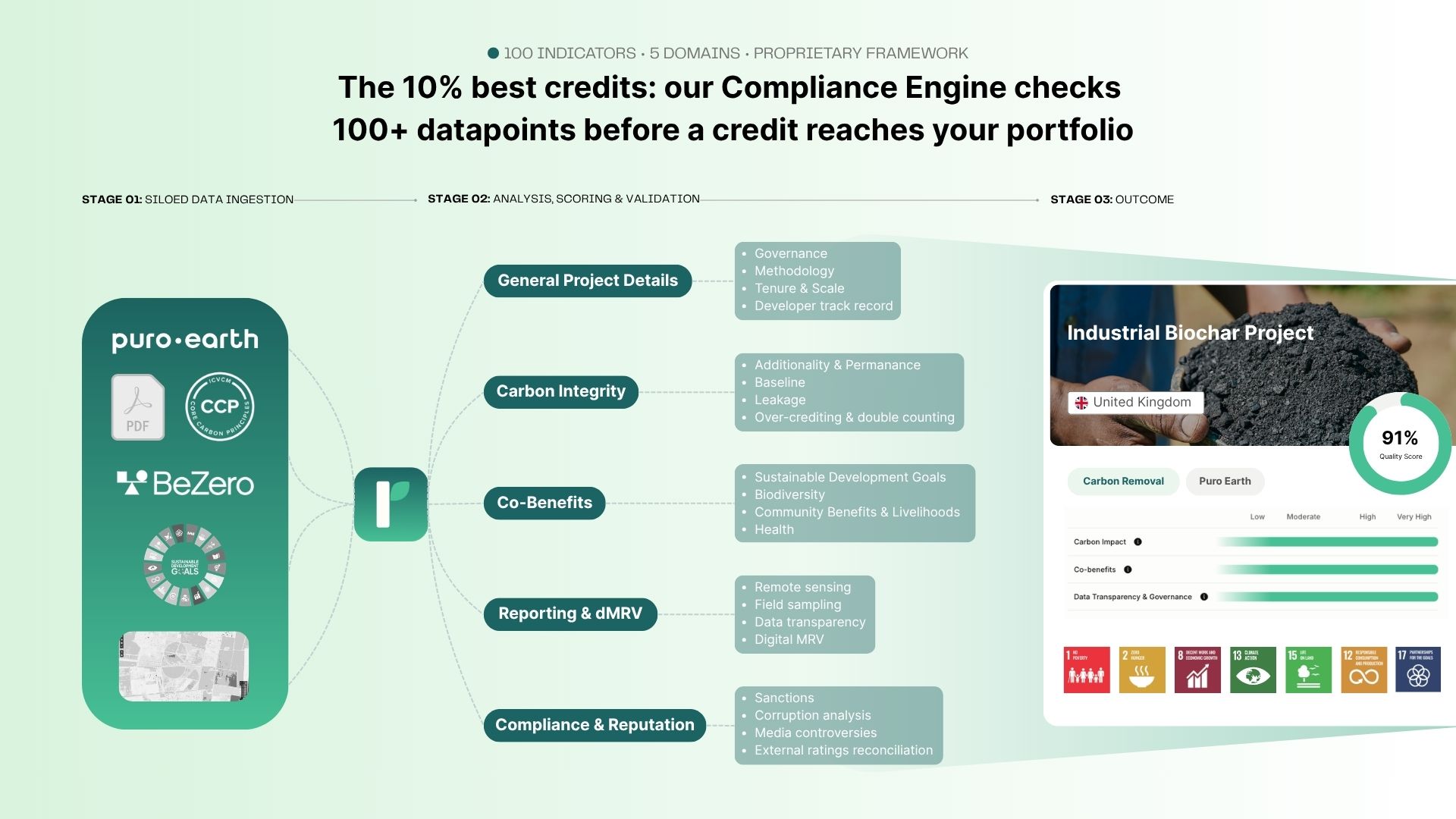
At Regreener, we assess every project across 200+ data points spanning five domains: project details, carbon impact, co-benefits, reporting and dMRV, and compliance. This rigorous framework ensures you invest in credits that deliver verified, lasting impact — not paper promises.
How to Integrate Offsets Into Your Event

There are several practical models, each with its own advantages:

  1. Build it into the ticket price — the most direct approach. Compensation costs are included in the registration fee, making the event carbon neutral by default.

  2. Opt-in at registration — offer attendees the choice to voluntarily offset their travel emissions during sign-up. This lowers the barrier and increases engagement.

  3. Climate sponsor — partner with a sponsor as the event's "climate partner." This gives the sponsoring company a concrete ESG message and covers the compensation costs.

Whatever model you choose, ensure the full residual footprint is covered. Partial compensation undermines the credibility of your climate approach.

Communicate With Transparency

A carbon-neutral event only has credibility if you're open about your approach. Share your footprint report, explain the reduction measures you've taken, and specify which projects you've supported — including the standard, project type, and location.

Transparency protects against greenwashing claims and strengthens your reputation with attendees, sponsors, and stakeholders. With the CSRD now requiring increasing numbers of European companies to disclose their climate impact, a well-documented event compensation strategy directly supports corporate reporting obligations.

Ready to Tackle Your Event's Emissions?

Reducing and offsetting doesn't have to be complicated — but it does need to be done right. At Regreener, we help you build a project portfolio tailored to your event, budget, and ambitions. Every project is assessed across 200+ quality indicators, so you can communicate with confidence to attendees and stakeholders.

Talk to one of our experts and discover how to make your event carbon neutral

Book a free consultation Today

Every event produces carbon emissions. A three-day conference can generate 0.5 to 1.5 tonnes of CO₂ per attendee — with air travel alone often accounting for 70 to 90% of the total footprint. Whether you're organising a trade show, corporate summit, or festival, the emissions add up fast.

To credibly offset event emissions, you need a structured approach: reduce everything you can, then compensate the remainder with verified carbon credits. This isn't optional goodwill — for many European companies, it's becoming a reporting requirement under the CSRD. More importantly, it's how responsible organisers demonstrate real climate leadership.

At Regreener, we help event organisers across Europe navigate exactly this process. Here's how to do it right.

Where Do Event Emissions Come From?

To reduce effectively, you need to know where the biggest sources are. For most events, four areas dominate: attendee air travel (by far the largest contributor), venue energy consumption, catering, and waste. With that understanding, you can focus on the two pillars of a credible climate strategy: reduction and compensation.

Reduce Emissions Where Possible

Offsetting without reducing first isn't a climate strategy — it's damage control. The most credible approach starts with ambitious reduction.

Optimise Travel and Transport

Air travel is the single largest emission source for virtually every event. Choose a venue with strong public transport links and structure your programme to minimise travel distances. Offer a hybrid format so attendees can participate remotely — hybrid conferences have the potential to cut climate impact by two-thirds while keeping over 50% of participants in person. Facilitate group transport or shuttle services and actively promote rail travel as an alternative for short-haul routes. Even small shifts — from flights to trains for routes under 700 km — have an outsized effect.

Select a Sustainable Venue

Prioritise venues with sustainability certifications (LEED, ISO 20121), renewable energy contracts, and energy-efficient infrastructure. A venue running on renewable electricity has a fraction of the footprint of one powered by fossil fuels. LED lighting, natural ventilation, and efficient AV equipment make a measurable difference. Consider outdoor venues where natural daylight handles much of the lighting.

Rethink Catering

Food production is a significant source of greenhouse gas emissions globally, and at large events, it scales quickly. Prioritise plant-forward menus with locally sourced, seasonal ingredients — beef generates up to seven times more CO₂ than poultry, and a fully plant-based menu cuts catering emissions dramatically. Reduce food waste through realistic portioning, work with caterers who use sustainable packaging and waste processing, and donate or compost leftovers.

Minimise Waste

The average conference generates roughly 1.89 kg of waste per attendee per day. Eliminate single-use plastics, use reusable materials, and set up clear waste separation stations. Go digital wherever possible — badges, programmes, and brochures don't need to be printed. The best-performing events achieve waste diversion rates above 90% through well-planned recycling and composting strategies.

Offset Residual Emissions With High-Quality Carbon Credits

No matter how ambitious your reductions, every physical event has unavoidable residual emissions. Attendees flying in from afar, energy consumption you can't eliminate, food that needs to be produced — a footprint always remains. This is precisely where carbon credits play their role.

One carbon credit represents the reduction or removal of one tonne of CO₂ equivalent. By purchasing credits linked to verified climate projects, you finance emission reductions elsewhere that would not happen without that investment.

a plane flying in the sky with the word go written in it

Explore our Guide: the best Carbon Credit Projects of 2026

Learn about the latest best practices, the best projects and strategic choices

Quality Matters — Dramatically

The quality of carbon credits varies enormously — and that quality determines whether your compensation delivers real impact or merely represents paper value. Evaluate these criteria:

Verification by recognised standards — projects certified under Verra (VCS), Gold Standard, or Plan Vivo provide significantly more assurance of real emission reductions than uncertified initiatives.

Additionality — the project must demonstrably reduce emissions that would not have been reduced without the carbon finance. This is the foundation of a credible carbon credit.

Permanence — how durable is the carbon storage? Reforestation projects have different risk profiles than biochar (stable for hundreds of years) or direct air capture (permanent geological storage). A diversified portfolio spreads this risk.

Co-benefits — the strongest projects deliver social and ecological benefits alongside climate impact, such as biodiversity restoration, clean water access, and local livelihoods. These contributions to the UN Sustainable Development Goals strengthen the story you can tell attendees and stakeholders.

At Regreener, we assess every project across 200+ data points spanning five domains: project details, carbon impact, co-benefits, reporting and dMRV, and compliance. This rigorous framework ensures you invest in credits that deliver verified, lasting impact — not paper promises.

How to Integrate Offsets Into Your Event

There are several practical models, each with its own advantages:

  1. Build it into the ticket price — the most direct approach. Compensation costs are included in the registration fee, making the event carbon neutral by default.

  2. Opt-in at registration — offer attendees the choice to voluntarily offset their travel emissions during sign-up. This lowers the barrier and increases engagement.

  3. Climate sponsor — partner with a sponsor as the event's "climate partner." This gives the sponsoring company a concrete ESG message and covers the compensation costs.

Whatever model you choose, ensure the full residual footprint is covered. Partial compensation undermines the credibility of your climate approach.

Communicate With Transparency

A carbon-neutral event only has credibility if you're open about your approach. Share your footprint report, explain the reduction measures you've taken, and specify which projects you've supported — including the standard, project type, and location.

Transparency protects against greenwashing claims and strengthens your reputation with attendees, sponsors, and stakeholders. With the CSRD now requiring increasing numbers of European companies to disclose their climate impact, a well-documented event compensation strategy directly supports corporate reporting obligations.

Ready to Tackle Your Event's Emissions?

Reducing and offsetting doesn't have to be complicated — but it does need to be done right. At Regreener, we help you build a project portfolio tailored to your event, budget, and ambitions. Every project is assessed across 200+ quality indicators, so you can communicate with confidence to attendees and stakeholders.

Talk to one of our experts and discover how to make your event carbon neutral

Book a free consultation Today

Every event produces carbon emissions. A three-day conference can generate 0.5 to 1.5 tonnes of CO₂ per attendee — with air travel alone often accounting for 70 to 90% of the total footprint. Whether you're organising a trade show, corporate summit, or festival, the emissions add up fast.

To credibly offset event emissions, you need a structured approach: reduce everything you can, then compensate the remainder with verified carbon credits. This isn't optional goodwill — for many European companies, it's becoming a reporting requirement under the CSRD. More importantly, it's how responsible organisers demonstrate real climate leadership.

At Regreener, we help event organisers across Europe navigate exactly this process. Here's how to do it right.

Where Do Event Emissions Come From?

To reduce effectively, you need to know where the biggest sources are. For most events, four areas dominate: attendee air travel (by far the largest contributor), venue energy consumption, catering, and waste. With that understanding, you can focus on the two pillars of a credible climate strategy: reduction and compensation.

Reduce Emissions Where Possible

Offsetting without reducing first isn't a climate strategy — it's damage control. The most credible approach starts with ambitious reduction.

Optimise Travel and Transport

Air travel is the single largest emission source for virtually every event. Choose a venue with strong public transport links and structure your programme to minimise travel distances. Offer a hybrid format so attendees can participate remotely — hybrid conferences have the potential to cut climate impact by two-thirds while keeping over 50% of participants in person. Facilitate group transport or shuttle services and actively promote rail travel as an alternative for short-haul routes. Even small shifts — from flights to trains for routes under 700 km — have an outsized effect.

Select a Sustainable Venue

Prioritise venues with sustainability certifications (LEED, ISO 20121), renewable energy contracts, and energy-efficient infrastructure. A venue running on renewable electricity has a fraction of the footprint of one powered by fossil fuels. LED lighting, natural ventilation, and efficient AV equipment make a measurable difference. Consider outdoor venues where natural daylight handles much of the lighting.

Rethink Catering

Food production is a significant source of greenhouse gas emissions globally, and at large events, it scales quickly. Prioritise plant-forward menus with locally sourced, seasonal ingredients — beef generates up to seven times more CO₂ than poultry, and a fully plant-based menu cuts catering emissions dramatically. Reduce food waste through realistic portioning, work with caterers who use sustainable packaging and waste processing, and donate or compost leftovers.

Minimise Waste

The average conference generates roughly 1.89 kg of waste per attendee per day. Eliminate single-use plastics, use reusable materials, and set up clear waste separation stations. Go digital wherever possible — badges, programmes, and brochures don't need to be printed. The best-performing events achieve waste diversion rates above 90% through well-planned recycling and composting strategies.

Offset Residual Emissions With High-Quality Carbon Credits

No matter how ambitious your reductions, every physical event has unavoidable residual emissions. Attendees flying in from afar, energy consumption you can't eliminate, food that needs to be produced — a footprint always remains. This is precisely where carbon credits play their role.

One carbon credit represents the reduction or removal of one tonne of CO₂ equivalent. By purchasing credits linked to verified climate projects, you finance emission reductions elsewhere that would not happen without that investment.

a plane flying in the sky with the word go written in it

Explore our Guide: the best Carbon Credit Projects of 2026

Learn about the latest best practices, the best projects and strategic choices

Quality Matters — Dramatically

The quality of carbon credits varies enormously — and that quality determines whether your compensation delivers real impact or merely represents paper value. Evaluate these criteria:

Verification by recognised standards — projects certified under Verra (VCS), Gold Standard, or Plan Vivo provide significantly more assurance of real emission reductions than uncertified initiatives.

Additionality — the project must demonstrably reduce emissions that would not have been reduced without the carbon finance. This is the foundation of a credible carbon credit.

Permanence — how durable is the carbon storage? Reforestation projects have different risk profiles than biochar (stable for hundreds of years) or direct air capture (permanent geological storage). A diversified portfolio spreads this risk.

Co-benefits — the strongest projects deliver social and ecological benefits alongside climate impact, such as biodiversity restoration, clean water access, and local livelihoods. These contributions to the UN Sustainable Development Goals strengthen the story you can tell attendees and stakeholders.

At Regreener, we assess every project across 200+ data points spanning five domains: project details, carbon impact, co-benefits, reporting and dMRV, and compliance. This rigorous framework ensures you invest in credits that deliver verified, lasting impact — not paper promises.

How to Integrate Offsets Into Your Event

There are several practical models, each with its own advantages:

  1. Build it into the ticket price — the most direct approach. Compensation costs are included in the registration fee, making the event carbon neutral by default.

  2. Opt-in at registration — offer attendees the choice to voluntarily offset their travel emissions during sign-up. This lowers the barrier and increases engagement.

  3. Climate sponsor — partner with a sponsor as the event's "climate partner." This gives the sponsoring company a concrete ESG message and covers the compensation costs.

Whatever model you choose, ensure the full residual footprint is covered. Partial compensation undermines the credibility of your climate approach.

Communicate With Transparency

A carbon-neutral event only has credibility if you're open about your approach. Share your footprint report, explain the reduction measures you've taken, and specify which projects you've supported — including the standard, project type, and location.

Transparency protects against greenwashing claims and strengthens your reputation with attendees, sponsors, and stakeholders. With the CSRD now requiring increasing numbers of European companies to disclose their climate impact, a well-documented event compensation strategy directly supports corporate reporting obligations.

Ready to Tackle Your Event's Emissions?

Reducing and offsetting doesn't have to be complicated — but it does need to be done right. At Regreener, we help you build a project portfolio tailored to your event, budget, and ambitions. Every project is assessed across 200+ quality indicators, so you can communicate with confidence to attendees and stakeholders.

Talk to one of our experts and discover how to make your event carbon neutral

Book a free consultation Today

About the Author

bernard de wit of regreener
Bernard de Wit

Bernard is the Founder of Regreener, starting in 2020 after studying Law in Leiden (the Netherlands) and Oxford (United Kingdom). Passionate about climate action, sustainability, and carbon credit markets, he helps companies take trustworthy, impactful climate action by sharing insights and best practices. When he’s not writing or advising businesses on their sustainability goals, you might find Bernard on the tennis court or catching up with friends.

TABLE OF CONTENTS

Share Article

FAQs

How much CO₂ does a typical event produce?

It varies significantly by size and format. A three-day conference typically generates 0.5 to 1.5 tonnes of CO₂ per attendee, with air travel being the dominant contributor.

Is carbon offsetting for events greenwashing?

Not when done correctly. Offsetting is credible only when combined with genuine reduction efforts. The sequence is always: reduce, compensate. Choose verified, high-quality carbon credits from recognised standards.

How much do carbon credits for events cost?

Prices per tonne of CO₂ range from a few euros to over €100 depending on project type and quality. A specialised partner can build a portfolio that matches your budget and ambition level.

How do I choose the right carbon credit project?

Look for certification under recognised standards (Verra, Gold Standard), proven additionality, permanence, and co-benefits. An independent quality assessment — like Regreener provides — helps you compare projects objectively.

Can I call my event "carbon neutral"?

Best practice is to avoid this claim. Under the EU's ECGT directive (Empowering Consumers for the Green Transition), which takes effect on 27 September 2026, claims such as "carbon neutral" or "climate neutral" based on carbon offsetting are banned in consumer-facing communications. Instead of using neutrality labels, communicate transparently about your approach: which reduction measures you've taken, how much residual emissions were compensated, and which verified projects you've supported. This is both legally safer and more credible with stakeholders.

Greenwashing-proof carbon removal

Get a free consultation with Regreener's carbon removal experts