
Introduction
In 2026, only a fraction of the 2,800+ Gold Standard-certified projects on the registry deliver the combination of additionality, independent rating-agency validation, and SDG co-benefits that defensible corporate procurement now requires. From the 2026 vintage onwards, all Gold Standard credits are aligned with the aims of the Paris Agreement — but Paris alignment is the floor, not the ceiling.
The best Gold Standard carbon credit projects of 2026 are vetted on additionality, independent ratings from agencies like BeZero Carbon, Sylvera and Calyx Global, SDG co-benefits, and real-world procurement availability — not just registry status. Below, we shortlist five Gold Standard projects that pass all four filters, drawn from Regreener’s internal carbon credit quality framework.
Buy through Regreener
Want these Gold Standard projects in your portfolio?
Regreener can source the projects in this article, as well as other high-integrity projects. Tell us your volume and timing and you’ll get availability and indicative pricing within 1 working day.
No obligation · Reply within 1 working day

What is a Carbon Credit?
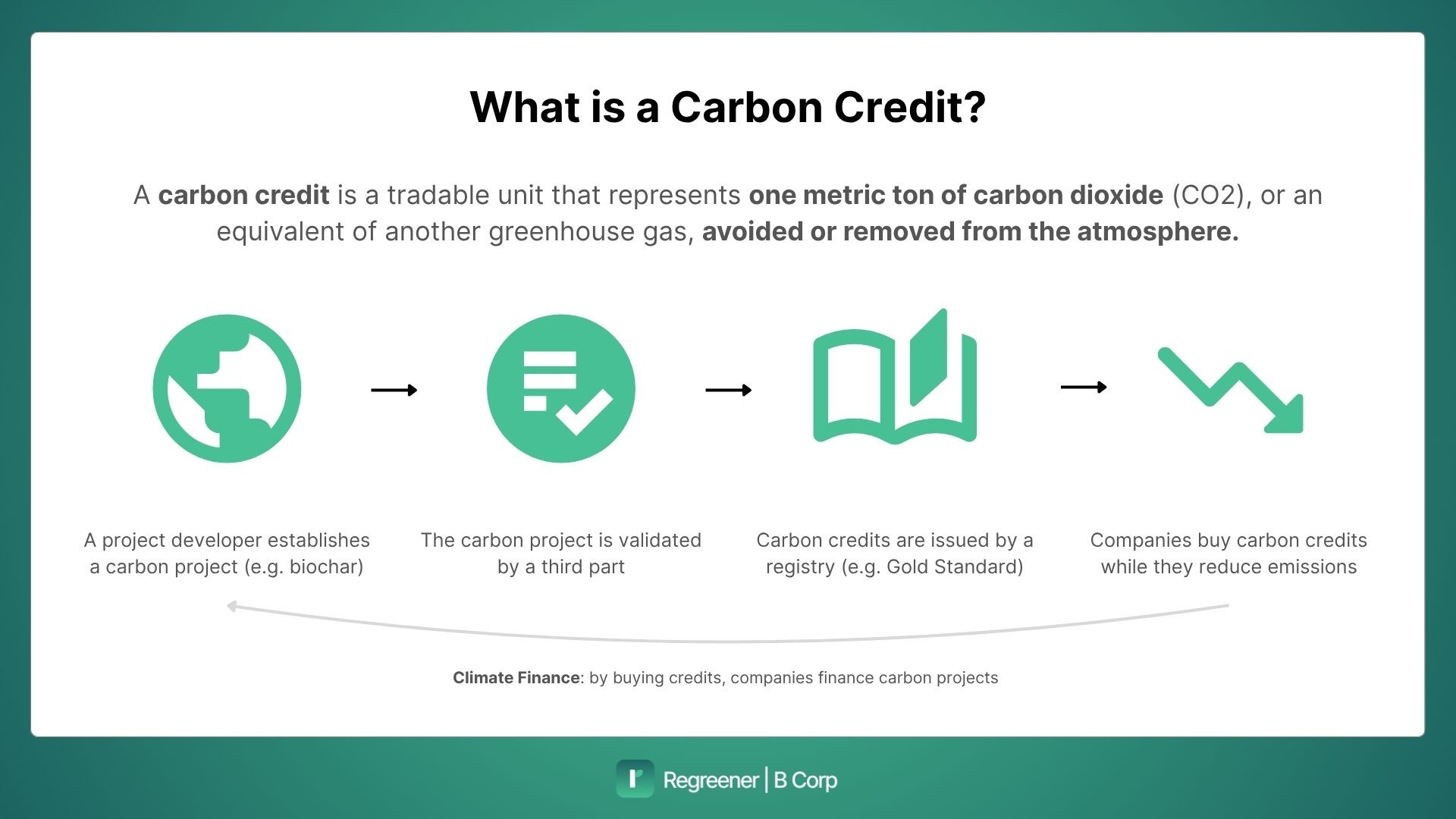
A carbon credit represents one metric ton of carbon dioxide (CO₂) or its equivalent in other greenhouse gases that has been either removed from the atmosphere or prevented from being emitted. These credits are generated by projects that reduce, avoid, or sequester emissions - such as reforestation, renewable energy, or clean cooking initiatives.
Companies, governments, and individuals can purchase carbon credits to offset their own emissions, helping them achieve net-zero or carbon-neutral goals. Each credit is verified by independent third parties to ensure its legitimacy, preventing double-counting and ensuring real climate impact.
Carbon credits play a crucial role in financing sustainable development, particularly in regions where traditional funding is scarce, while providing a measurable way to compensate for unavoidable emissions.
What Is Gold Standard?
Gold Standard is a non-profit certification body founded in 2003 by WWF, SouthSouthNorth, and Helio International to ensure the highest levels of integrity in carbon offset projects. It was created to address concerns about the credibility of early carbon markets, setting a new benchmark for transparency, additionality, and sustainable development impact.
Unlike other certification standards, Gold Standard requires projects to go beyond emissions reductions. They must also contribute to the United Nations Sustainable Development Goals (SDGs), such as improving health, gender equality, and economic opportunities for local communities.
Every Gold Standard-certified project undergoes third-party verification to confirm its environmental and social benefits, ensuring that buyers can trust the impact of their investment.
Expert insight: “Gold Standard certification is a strong starting filter — but in 2026 it is no longer sufficient on its own. Always cross-check the registry status against an independent rating (BeZero, Sylvera or Calyx) and verify vintage availability before committing to a procurement decision.”
Bernard de Wit, Founder - Regreener
Today, Gold Standard is recognized as the most credible certification for carbon credits, trusted by businesses, governments, and NGOs worldwide. Its strict requirements—including additionality, permanent emissions reductions, and community engagement—make it the preferred choice for organizations serious about real climate action without greenwashing.
What Makes a Carbon Credit High Quality?
A high-quality carbon credit is defined by rigorous standards, transparency, and real-world impact. First, it must demonstrate additionality, meaning the emissions reductions would not have occurred without the project’s intervention. This ensures that every credit represents a genuine climate benefit.
Second, the project should undergo third-party verification by reputable certifiers like Gold Standard or Verra, guaranteeing that the claimed reductions are accurately measured and permanently secured.
Third, high-integrity credits deliver beyond carbon benefits, such as improving public health, supporting biodiversity, or empowering local communities—aligning with the UN Sustainable Development Goals (SDGs).
Finally, transparency and traceability are critical: credits should be uniquely serialized, publicly registered, and retired to prevent double-counting. By prioritizing projects with these attributes, buyers can ensure their investments contribute to real, lasting, and ethical climate action.
How We Evaluated These Projects
These five projects were selected from Regreener’s internal portfolio analysis, applying our 100+ datapoint quality framework across five domains: Carbon Integrity, Measurement & Verification, Beyond Carbon, Developer & Governance, and Market & Regulatory Integrity.
Each project was cross-checked against independent ratings from BeZero Carbon, Sylvera and Calyx Global where available, and screened for alignment with the SBTi Net-Zero Standard v2.0 Beyond Value Chain Mitigation (BVCM) guidance.
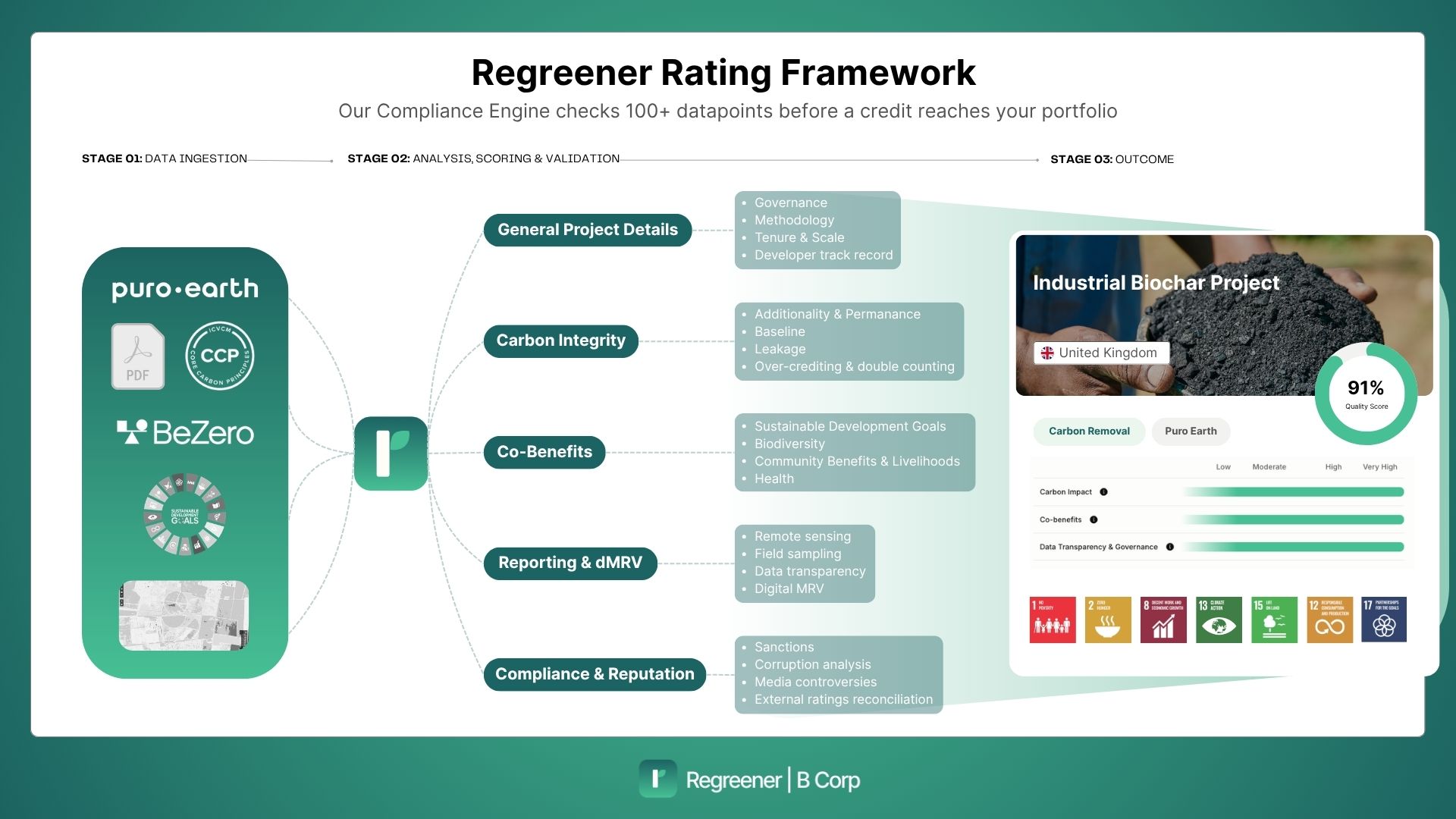
Three additional criteria were applied specifically for 2026:
Paris Agreement alignment — all selected projects produce 2026-vintage or later credits aligned with the Gold Standard for the Global Goals (GS4GG).
CCP eligibility — where applicable, we flag whether the project uses a methodology that has been approved under the ICVCM Core Carbon Principles.
Vintage availability — projects with insufficient near-term issuance volume were excluded, regardless of past performance.
Since 2020, Regreener has assessed hundreds of carbon projects across Verra (VCS), Gold Standard, Plan Vivo, Puro.earth and other registries for 200+ European B2B clients. The shortlist below reflects what we are actively offering clients in 2026 — not a static “best of” list.
The 5 Best Gold Standard Carbon Credit Projects of 2026
1. WithOneSeed Timor-Leste Community Forestry Program
Overview
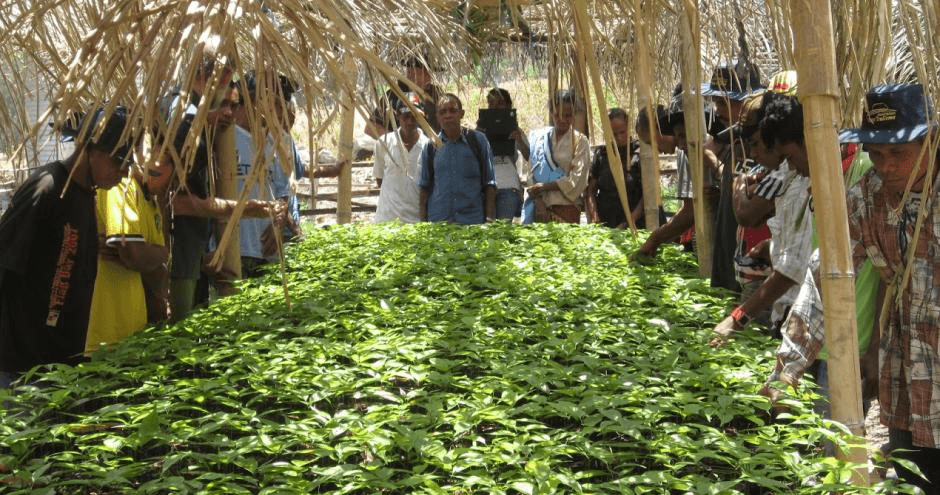
WithOneSeed (GS 4210) is one of the few Gold Standard community forestry programmes globally to receive a AA rating from BeZero Carbon. The programme pays smallholder farmers in Baguia, Timor-Leste, directly per surviving tree, restoring non-forest croplands and creating long-term carbon sequestration with full community ownership of the carbon revenue stream.
Gold Standard ID: GS 4210
Type: Afforestation/Reforestation (A/R)
Location: Baguia, Timor-Leste
Annual Issuance: ~5,000 credits
BeZero Rating: AA
CCP-eligible: No
WithOneSeed (GS 4210) is one of the few Gold Standard community forestry programmes to receive a AA rating from BeZero Carbon, paying smallholder farmers directly per tree.
Key Benefits
Climate: Sequesters CO₂ in long-lived indigenous tree species and improves soil fertility on degraded cropland.
Social: Provides direct carbon revenue to 1,000+ farming families through a per-tree payment model — a rare structure in the voluntary carbon market.
Biodiversity: Restores native species and enhances ecosystem resilience in a country with limited forest cover.
SDGs: 1 (No Poverty), 13 (Climate Action), 15 (Life on Land).
Why It Stands Out
WithOneSeed is the only Gold Standard community forestry programme operating at scale in Timor-Leste, and its per-tree direct payment model is more transparent than the revenue-sharing arrangements used by most A/R projects. The AA BeZero rating reflects strong evidence of additionality (no comparable forestry activity in the region without carbon finance) and low reversal risk thanks to community land tenure. For B2B buyers building defensible portfolios under CSRD disclosure requirements, it is one of the most well-documented community forestry options on the Gold Standard registry.
2. Humbo Ethiopia Assisted Natural Regeneration Project
Overview
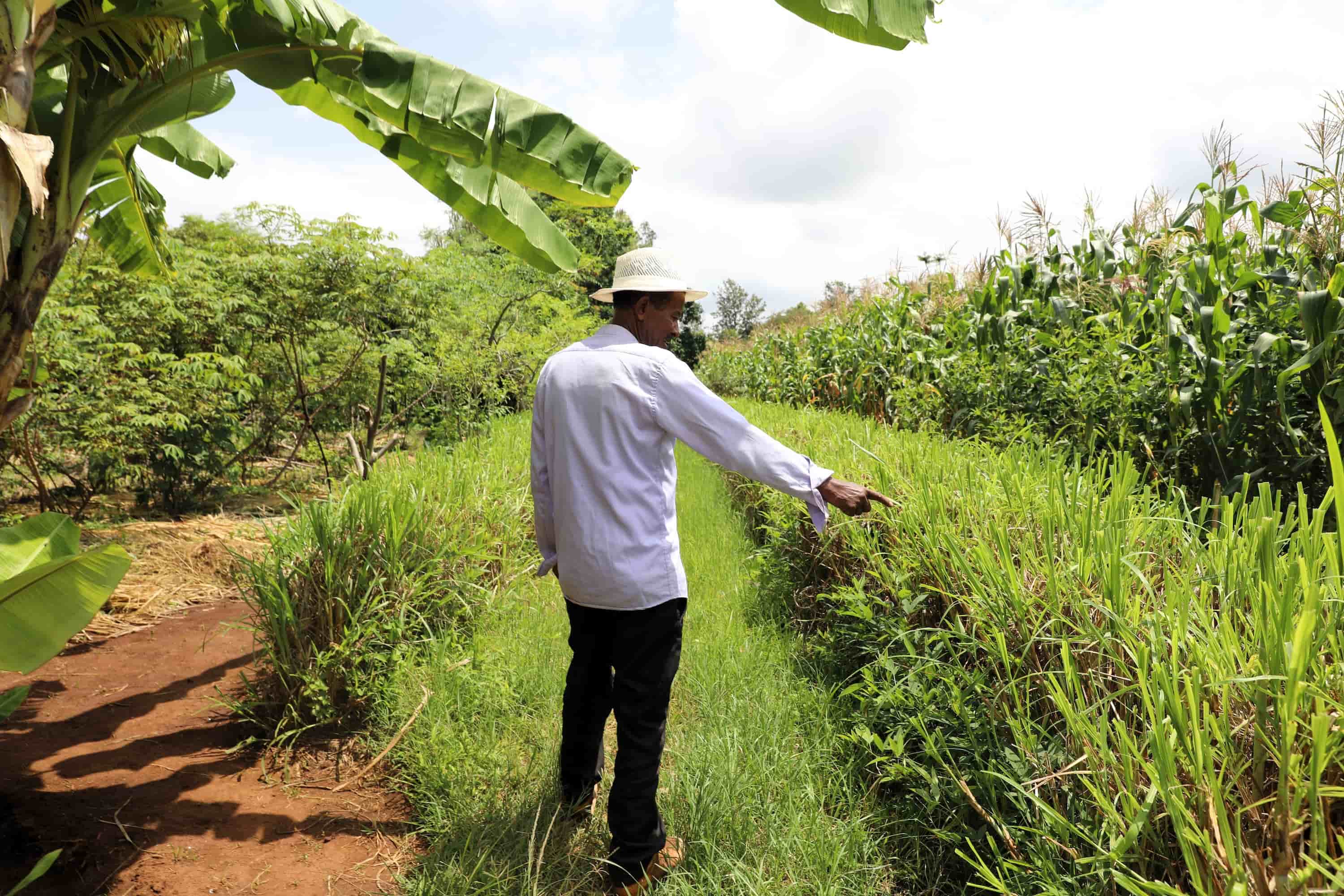
Humbo (GS 1922) is the first large-scale Farmer Managed Natural Regeneration (FMNR) project ever certified by Gold Standard. Implemented by World Vision Australia, the project restores 2,724 hectares of degraded land in Southwestern Ethiopia and granted legal land ownership to seven community cooperatives — a feature that is structurally rare in African reforestation projects.
Gold Standard ID: GS 1922
Type: Afforestation/Reforestation (A/R)
Location: Humbo, Southwestern Ethiopia
Annual Impact: 29,343 tCO₂ removed
BeZero Rating: AA
CCP-eligible: No
Humbo Ethiopia is the first large-scale Farmer Managed Natural Regeneration project ever certified by Gold Standard, restoring 2,724 hectares and granting legal land ownership to seven community cooperatives
Key Benefits
Climate: Sequesters CO₂ through indigenous tree regeneration rather than monoculture planting, supporting biodiversity recovery.
Community: Generates income for local farmers through carbon revenue, sustainable land use, and improved harvests.
Biodiversity: Improves water quality and restores habitat for native species.
SDGs: 3 (Health), 5 (Gender Equality), 13 (Climate Action), 15 (Life on Land).
Why It Stands Out
Humbo demonstrated that FMNR — letting existing root systems regrow rather than planting new seedlings — can be MRV-credible under Gold Standard’s GS4GG framework. Granting legal land ownership to community cooperatives gave local farmers a direct financial interest in long-term forest protection, materially reducing reversal risk compared with leased-land reforestation models. Its design has since been replicated across multiple African countries.
3. EcoMakala Virunga Reforestation Project
Overview
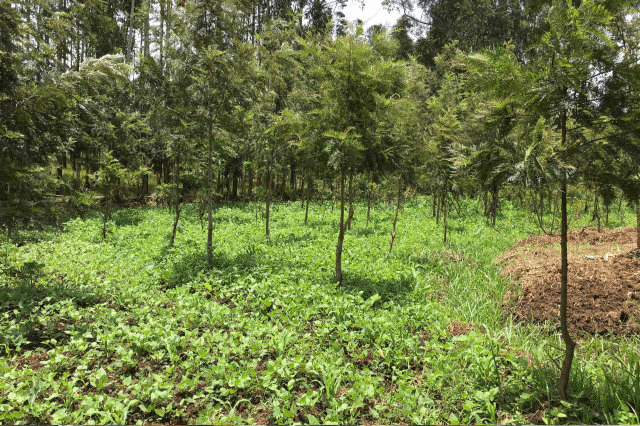
EcoMakala (GS 5618) operates in the biodiverse Virunga region of the Democratic Republic of the Congo, one of the highest-deforestation-risk landscapes in Africa. The project, originally implemented by CO2logic (now part of South Pole) in partnership with Virunga National Park, pairs native-species reforestation with sustainable charcoal supply chains for nearby populations to address the root drivers of deforestation.
Gold Standard ID: GS 5618
Type: Afforestation/Reforestation (A/R)
Location: North Kivu, Democratic Republic of the Congo
Annual Issuance: 79,000+ credits
BeZero Rating: A
CCP-eligible: No
Key Benefits
Climate: Reduces deforestation pressure on Virunga National Park and sequesters carbon in native tree species.
Social: Creates jobs in sustainable forestry and charcoal production for displaced and conflict-affected populations.
Biodiversity: Protects critical habitat for endangered mountain gorillas and other Virunga species.
SDGs: 7 (Clean Energy), 13 (Climate Action), 15 (Life on Land).
Why It Stands Out
EcoMakala is one of the few Gold Standard A/R projects operating in a UNESCO World Heritage biodiversity hotspot under active armed conflict pressure. The project’s partnership with Virunga National Park integrates carbon revenue with park ranger funding and community livelihood programmes — a model independent rating agencies generally view favourably for additionality. Buyers should note country-risk considerations specific to the DRC; see Regreener’s country risk assessment framework for context.
4. Kenya Biomass Gasification for Clean Cooking
Overview
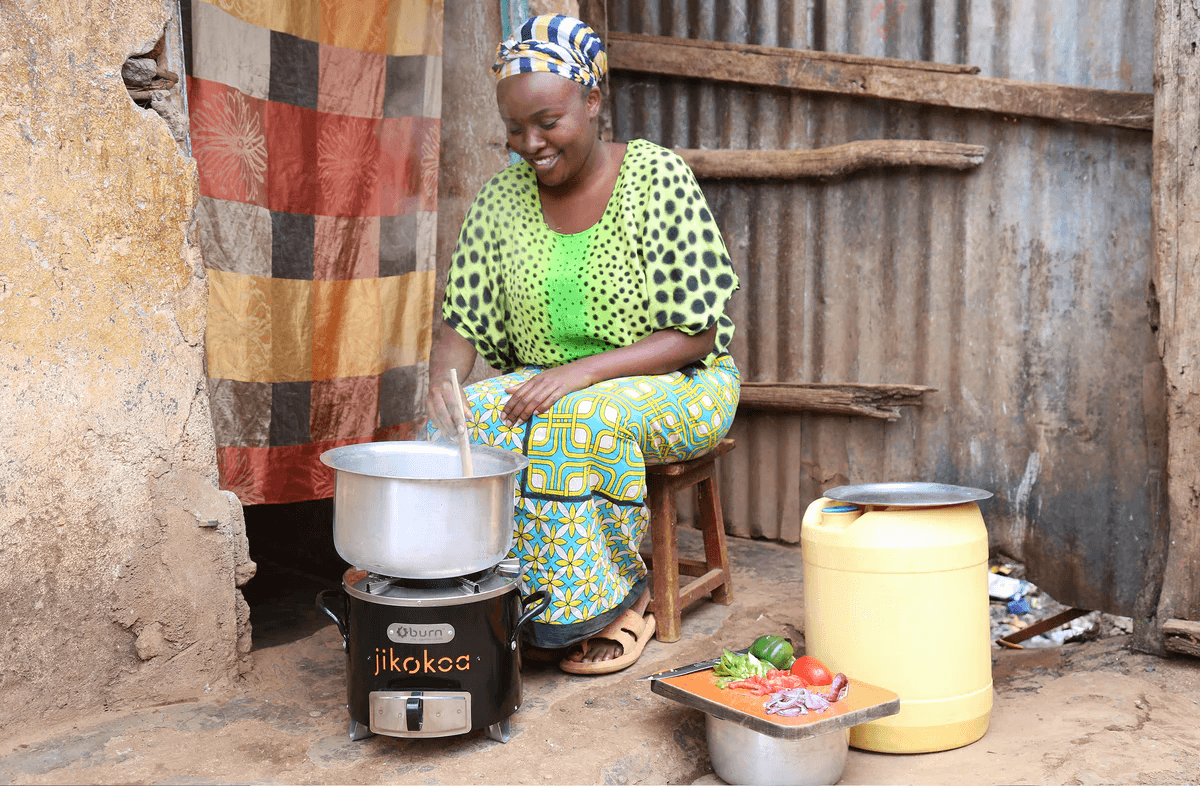
This project (GS 3373) replaces inefficient charcoal stoves with gasification cookstoves that burn renewable biomass pellets, simultaneously cutting CO₂ emissions, indoor air pollution, and pressure on Kenya’s forests. The Gold Standard cookstove methodology this project uses falls under the methodology category recently approved by the ICVCM under the Core Carbon Principles label, meaning newer crediting periods may qualify for CCP-labeled credits.
Gold Standard ID: GS 3373
Type: Energy Efficiency (Domestic Cookstoves)
Location: Kenya
Annual Issuance: ~9,000 credits
BeZero Rating: BBB
CCP-eligible: Methodology now CCP-approved — verify project-level eligibility
Key Benefits
Health: Cuts respiratory diseases by up to 60% in participating households by eliminating charcoal smoke.
Climate: Avoids 3+ tCO₂ per stove annually and reduces pressure on Kenyan forests for charcoal production.
Gender: Reduces firewood collection time, freeing hours per day for women and girls.
SDGs: 3 (Health), 5 (Gender Equality), 7 (Clean Energy), 13 (Climate Action).
Why It Stands Out
Cookstove credits have faced intense scrutiny from rating agencies over inflated baselines. The ICVCM’s recent CCP-approval of the Gold Standard cookstove methodology is a material quality signal — it means new credits issued under this methodology have passed an independent integrity review. This project’s gasification technology (burning pellets rather than wood) also delivers measurable emissions reductions per stove that are easier to verify than traditional improved cookstove models.
5. Beyond Biomass: UpEnergy Electric Cooking

Overview
UpEnergy (GS 4265) distributes electric cooking devices to Tanzanian households, replacing inefficient biomass and LPG stoves. The project is one of the largest electric cooking programmes in East Africa and is structured to support Tanzania’s national electrification targets while generating verifiable emission reductions.
Gold Standard ID: GS 4265
Type: Energy Efficiency (Domestic Cooking)
Location: Tanzania
Annual Issuance: ~30,000 credits
BeZero Rating: BBB
CCP-eligible: Methodology now CCP-approved — verify project-level eligibility
Key Benefits
Climate: Avoids 2+ tCO₂ per household yearly compared with biomass and LPG baselines.
Energy Access: Drives demand for grid connections, reinforcing Tanzania’s electrification investments.
Health: Eliminates smoke-related illness from indoor cooking emissions.
SDGs: 3 (Health), 7 (Clean Energy), 13 (Climate Action).
Why It Stands Out
Electric cooking projects represent a leapfrog from biomass straight to modern energy, skipping the LPG intermediate step. UpEnergy’s data-driven approach — tracking actual stove usage rather than relying on assumed cooking patterns — addresses one of the historic credibility weaknesses of cookstove credits. For buyers wanting cookstove exposure with stronger MRV, this project is one of the more defensible options on the Gold Standard registry in 2026.
How to Procure Gold Standard Credits in 2026
For organisations looking to invest in high-integrity Gold Standard carbon credits, there are three main procurement pathways in 2026:
Direct from project developers via the Gold Standard Impact Registry — most flexible for large volumes (1,000+ credits) and strategic offtake. Best when you have internal carbon procurement capacity and want direct project relationships.
Via reputable carbon credit providers or curated platforms — fastest for B2B buyers building a diversified portfolio across registries (Verra, Gold Standard, Plan Vivo, Puro.earth). Providers handle quality assessment, contract negotiation, retirement, and reporting.
Through specialist advisors like Regreener — recommended when you need bespoke portfolio construction aligned with your SBTi target, CSRD disclosure obligations, or sector-specific co-benefit priorities.
Once purchased, credits are retired in your organisation’s name on the Gold Standard Impact Registry, ensuring full traceability and preventing double-counting. The registry provides a public retirement certificate that satisfies most audit and reporting frameworks.
Practical tip: diversify your Gold Standard portfolio across at least two project types (e.g. one A/R + one cookstove) and two geographies to manage reversal and country risk. For larger procurement volumes (10,000+ credits/year), most buyers blend Gold Standard credits with CCP-labeled credits and carbon removal credits to balance avoidance vs. removal exposure under the Oxford Principles for Net Zero Aligned Carbon Offsetting.
Comparative Analysis
💡 Expert tip from Bernard de Wit, Co-founder at Regreener: “Gold Standard certification is a strong starting filter — but in 2026 it’s no longer sufficient on its own. Always cross-check the registry status against an independent rating (BeZero, Sylvera or Calyx), confirm the methodology version, and verify vintage availability before committing to a procurement decision. The difference between a BB-rated and an AA-rated Gold Standard credit can be 3–5x in defensible market value.”
Project | GS ID | Type | Annual Issuance | BeZero Rating | CCP-eligible Methodology | Lead Co-benefit | |
|---|---|---|---|---|---|---|---|
WithOneSeed Timor-Leste | A/R | ~5,000 | AA | No | Community forestry, direct farmer payment | ||
Humbo Ethiopia | A/R | 29,343 | A | No | Land tenure + FMNR reforestation | ||
EcoMakala Virunga (DRC) | A/R | 79,000+ | A | No | Mountain gorilla habitat protection | ||
Kenya Biomass Gasification | Cookstoves | ~9,000 | BBB | Yes (methodology) | Indoor air quality, gender | ||
UpEnergy Electric Cooking | Cooking | ~30,000 | BBB | Yes (methodology) | Electrification, health |
Buy through Regreener
Want these Gold Standard projects in your portfolio?
Regreener can source the projects in this article, as well as other high-integrity projects. Tell us your volume and timing and you’ll get availability and indicative pricing within 1 working day.
No obligation · Reply within 1 working day
Risks and Considerations
Gold Standard credits are among the most credible carbon credits available, but no certification fully eliminates market risk. Three risk categories deserve specific attention in 2026:
Price volatility
Gold Standard credit prices in 2026 range roughly from €5–€30/tonne for nature-based and cookstove credits, with significant variation by vintage, rating, and co-benefit profile. According to Sylvera’s 2026 market data, high-rated credits now command prices more than 300% above lower-rated equivalents within the same project category. Buyers procuring multi-year volumes should consider forward contracts or framework agreements rather than spot purchases to manage exposure.
Reversal risk
Nature-based projects — particularly the three A/R projects on this shortlist (Humbo, EcoMakala, WithOneSeed) — carry inherent reversal risk from wildfire, pests, drought, or land-use change. Gold Standard mitigates this through mandatory buffer pools that set aside a percentage of issued credits as insurance, alongside ongoing monitoring and third-party verification. EcoMakala in particular sits in a country (DRC) with elevated political and security risk; buyers exposed to this project should request the latest country risk assessment before committing.
Offset-only strategies are not credible
Under the SBTi Net-Zero Standard v2.0, carbon credits cannot substitute for internal emissions reductions — they are positioned as Beyond Value Chain Mitigation (BVCM) that supplements decarbonisation. Using Gold Standard credits to claim “carbon neutral” status without a credible internal reduction trajectory exposes companies to greenwashing claims under the EU Green Claims Directive and Dutch ACM enforcement. Combine credit purchases with measurable internal reduction targets to keep climate communications defensible.
Conclusion
The five projects above — WithOneSeed Timor-Leste, Humbo Ethiopia, EcoMakala Virunga, Kenya Biomass Gasification, and UpEnergy Tanzania — represent the best of Gold Standard in 2026 across A/R and cookstove categories. They combine Paris Agreement-aligned GS4GG certification, strong SDG co-benefits, and (where applicable) independent rating-agency validation that makes them defensible under CSRD and SBTi scrutiny.
Ready to take the next step? Whether you’re building a Gold Standard portfolio from scratch, comparing it against CCP-labeled options, or stress-testing your current procurement against 2026 quality benchmarks, expert guidance can save months of internal due diligence. Contact Regreener today to speak with our team and request a tailored shortlist.