have us call you right now.

The 5 Best Isometric Carbon Credit Projects of 2026

The 5 Best Isometric Carbon Credit Projects of 2026

Last updated:

Apr 29, 2025

Apr 29, 2025

6 min read minute read

6 min read minute read

Most carbon registries ask you to trust their process. Isometric publishes every data point, calculation, and emission factor behind every credit it has ever issued. That structural transparency is why the registry has become the benchmark for buyers who need defensible removal credits — and why the ICVCM, CORSIA, and ICROA have all formally accredited it.

We evaluated the Isometric portfolio using Regreener's 100+ datapoint quality framework. Here are the five projects worth buying in 2026 — and what makes each one stand out.

Direct answer: The 5 best Isometric carbon credit projects of 2026 are:

  1. Carboneers India (India, biochar, smallholder-led),

  2. ZeroEx Vulkaneifel (Germany, enhanced rock weathering),

  3. Charm Industrial (USA, biochar and bio-oil geologic storage),

  4. Graphyte Loblolly (USA, biomass carbon removal and storage), and

  5. InPlanet (Brazil, enhanced rock weathering).

All five are validated under the Isometric Standard and issue carbon removal credits representing verified, durable CO₂ removal. Carboneers and Charm Industrial are eligible for the ICVCM's Core Carbon Principles (CCP) label under Isometric's ICVCM-approved Biochar Protocol.

Want to know which credits fit your company's climate strategy?

Book a free consultation today

What Is Isometric — and How Does It Differ from Other Carbon Registries?

Founded in 2022 and headquartered in London and New York, Isometric was purpose-built for the carbon dioxide removal era. It is not an adaptation of an older standard -- it was designed from the ground up around three principles that set it apart from established registries like Verra, Gold Standard, and Puro.earth.

Removal only. Every credit on the Isometric registry represents CO₂ physically removed from the atmosphere. There are no avoided-emission credits, no avoidance-based forestry offsets, and no renewable energy certificates. For buyers building portfolios aligned with the Oxford Offsetting Principles or SBTi net-zero guidance, this is the relevant distinction.

Full data transparency. Isometric publishes every calculation, fuel receipt, emission factor, and verification document behind every credit it issues. Any buyer, auditor, or regulator can independently audit any credit on the registry at any time. This is structurally different from Verra or Gold Standard, where project documentation is available but the underlying quantification data is not always public.

Monthly credit issuance. Traditional registries verify projects annually, meaning a developer waits 12 months or longer between delivering removal and receiving revenue. Isometric's "Certify" platform enables monthly verification and credit issuance. Faster revenue cycles mean project developers can reinvest in scale sooner.

In December 2024, Isometric became the first carbon removal registry to receive simultaneous accreditation from all three major oversight bodies: the ICVCM (which issued its CCP label for Isometric's biochar protocol in August 2025), CORSIA (making Isometric credits usable for aviation offsetting), and ICROA. No other removal-focused registry holds all three approvals.


Isometric

Puro.earth

Verra (VCS)

Gold Standard

Founded

2022

2019

2005

2003

Credit type

Removal only

Removal only

Removal + avoidance

Removal + avoidance

Data transparency

Full public data

Partial

Partial

Partial

Credit issuance

Monthly

Annual

Annual

Annual

ICVCM CCP label

Approved (biochar)

In progress

Approved (selected)

Approved (selected)

CORSIA approved

Yes

No

Yes

Yes

Focus

All CDR pathways

Engineered removal

All project types

All project types

Registry

Isometric Registry

Puro Registry

Verra Registry

GS Impact Registry

Isometric is the only carbon removal registry to hold simultaneous accreditation from the ICVCM, CORSIA, and ICROA.

How Isometric Uses AI and Digital MRV to Verify Carbon Removal

Isometric describes itself as "AI-native certification for the industrial economy" — and that framing reflects a genuine architectural choice, not marketing language. Where traditional registries rely on manual document review and periodic field audits, Isometric has built its verification infrastructure around digital data pipelines, automated quality control, and machine-learning-assisted analysis.

The core of this is Isometric Certify, a dedicated verification platform through which project developers submit all monitoring data, calculations, and supporting evidence. Certify standardises data formats across project types, runs automated consistency checks, and flags anomalies before a human verifier opens the file — reducing the time from data submission to credit issuance from months to weeks. For reforestation credits, Isometric partners with Pachama, whose AI and LiDAR-driven models generate canopy height maps, assess leakage risk, and calculate continuously updated dynamic baselines rather than fixed historical ones.

For biochar and ERW projects, the platform ingests field sensor data, lab results, and chain-of-custody records, then generates a structured dataset for audit by an accredited Validation and Verification Body (VVB). Critically, Isometric appoints the VVB itself and pays a flat fee unrelated to the volume of credits issued — removing the structural incentive to over-credit that has undermined verification integrity at other standards.

The result is a verification model that is both faster and more auditable than anything traditional carbon markets have operated at scale. Every data point behind every credit is published on the public registry. Any buyer, auditor, or regulator can trace a credit back to its source data in minutes.

At Regreener, this level of data transparency is one of the criteria we apply when evaluating whether a project meets our quality threshold. Our quality framework goes beyond registry certification to assess governance, delivery track record, and co-benefit integrity — but for Isometric projects, the public data infrastructure makes that analysis significantly more grounded than for projects on less transparent registries.

How Buying Isometric Credits Contributes to Carbon Development

Purchasing Isometric credits is a different kind of procurement decision from buying established Verra or Plan Vivo credits. The projects on the Isometric registry are, in many cases, operating at the frontier of verified CDR -- methods that exist at commercial scale precisely because early buyers chose to finance them.

When you buy Isometric biochar or enhanced rock weathering credits, you are providing the offtake revenue that allows developers to invest in MRV infrastructure, expand production capacity, and demonstrate delivery track records to future buyers. Isometric's monthly issuance model amplifies this effect: developers receive payment within weeks of delivery, not at the end of an annual cycle, which accelerates reinvestment.

This matters for corporate buyers because the methods being developed today -- ERW, biomass burial, bio-oil injection -- are the high-permanence, compliance-grade removals that SBTi and VCMI will require at scale by 2030 and beyond. Buying now means lower prices, secured supply, and a documented contribution to building the removal infrastructure the market needs.

Buyers of Isometric credits are not just offsetting today's emissions -- they are financing the scale-up of the removal methods that corporate net-zero targets will depend on after 2030.

Boris Bekkering - Commercial Director Regreener

How Regreener Evaluates Isometric Projects

Not every validated Isometric project belongs in a client portfolio. Validation means a project meets the Isometric Standard -- it does not tell you whether the project has a delivery track record, what its co-benefit profile looks like, or how it compares to alternatives on cost and durability.

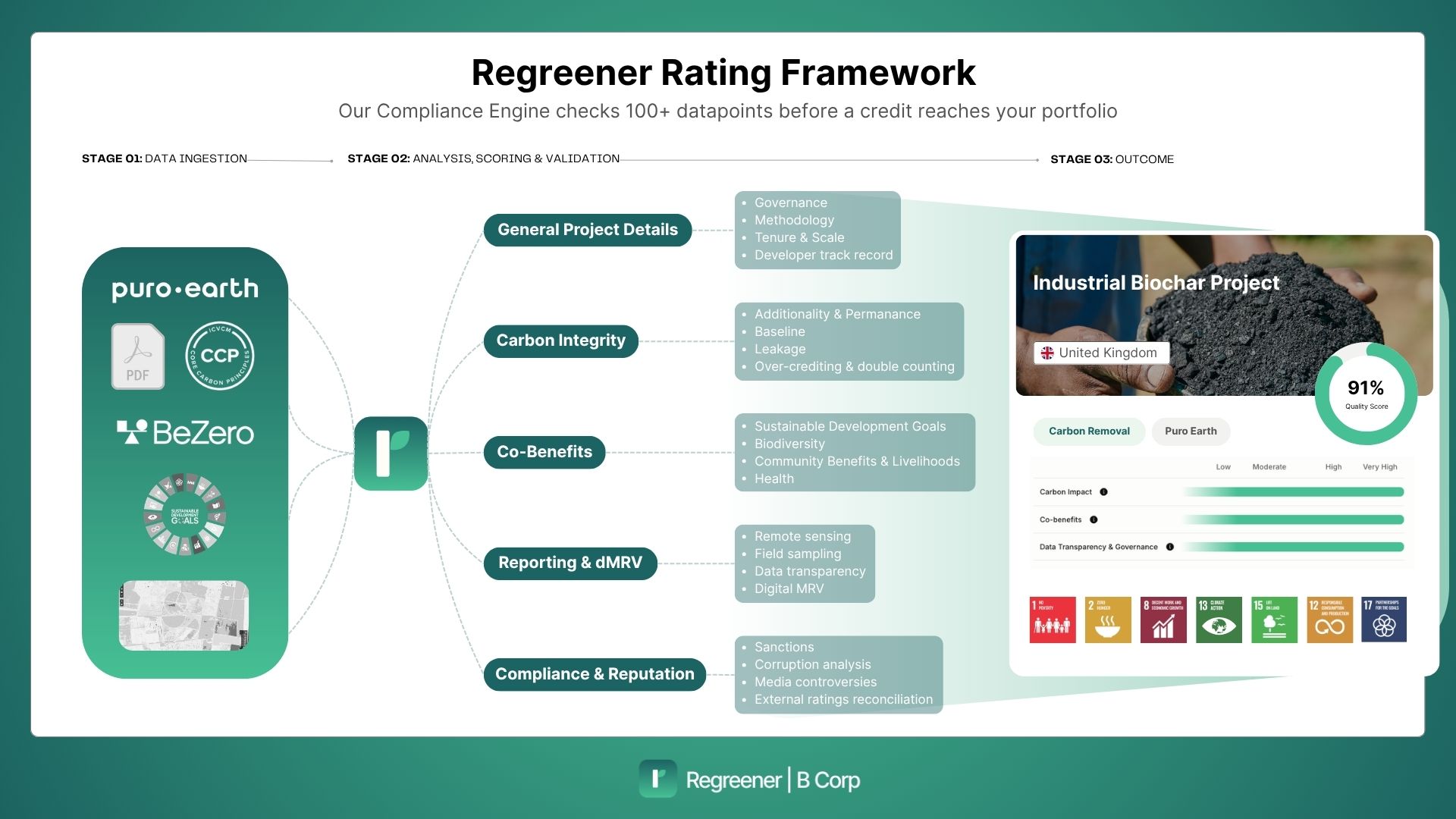
At Regreener, we evaluate Isometric projects using the same 100+ datapoint quality framework we apply to Verra, Gold Standard, and Puro.earth projects. This covers five domains: carbon integrity, additionality and permanence, governance and transparency, environmental co-benefits, and social impact. For Isometric projects specifically, we also assess ICVCM CCP label status, actual issuance history (validated vs. credits issued), and the delivery track record of the project developer.

As a B Corp-certified carbon credit provider working with 200+ European businesses, we only recommend projects we'd stake our reputation on.

a plane flying in the sky with the word go written in it

Explore our Guide: the best Carbon Credit Projects of 2026

Learn about the latest best practices, high-quality projects and strategic options

The 5 Best Isometric Carbon Credit Projects of 2026

1. Carboneers India (India, Biochar)
Project type: Biochar (flame curtain and high-tech pyrolysis) Location: Odisha, Assam and Nagaland, India Isometric status: Validated; one of Isometric's earliest biochar protocol partners CCP label: Eligible under Isometric's ICVCM-approved Biochar Protocol (approved August 2025)

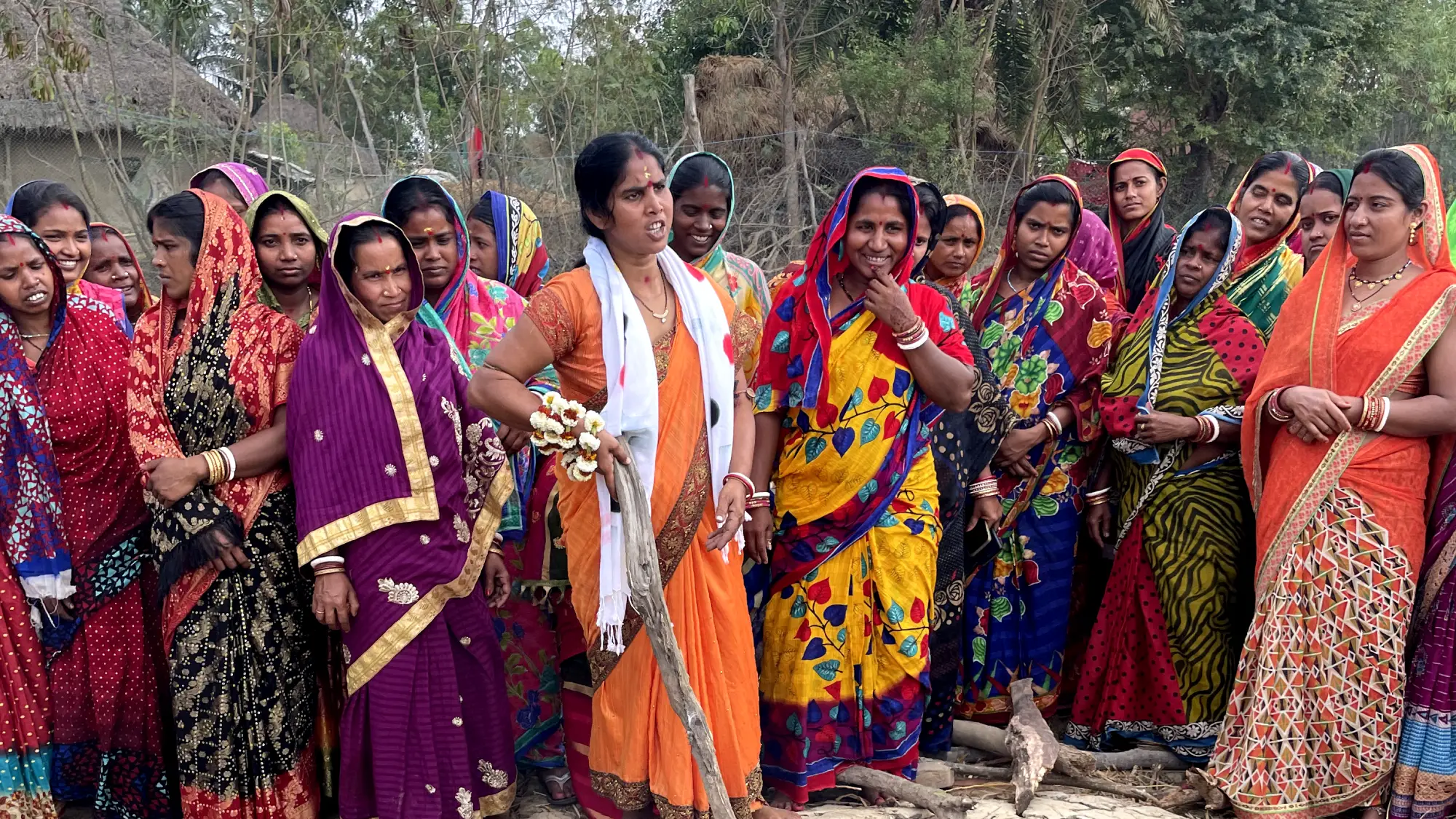
Carboneers works with 7,500 smallholder farming communities across India's Odisha, Assam and Nagaland regions. Farmers convert agricultural residues -- rice straw, corn stalks, cotton stalks, bamboo trimmings -- into biochar using flame curtain pyrolysis and advanced industrial techniques. The biochar is mixed with compost and manure and returned free of charge to the same farmer, improving water retention, nutrient cycling, and crop yields. Carbon credit revenue is shared back to the communities: 65% goes directly to farmers and supervisors, and women hold the majority of leadership and field roles.
Carboneers is one of the highest-impact biochar developers active on the Isometric registry and was among the first suppliers to sign up to Isometric's Biochar Production and Storage Protocol. The project is targeting 1 million tonnes of annual CO₂ removal by 2028, supported by offtake agreements with buyers including IMC Trading.

Key Benefits:

  • Climate: Durable biochar storage using Isometric's conservative H:C ratio methodology; CCP-eligible credits with 200-year permanence rating

  • Social: 65% of credit revenue goes to farmers and supervisors; 3,000+ jobs created, majority held by women

  • Biodiversity: Biochar application reduces dependence on synthetic fertilisers; prevents methane emissions from residue decomposition

  • SDGs: SDG 1 (No Poverty), SDG 2 (Zero Hunger), SDG 5 (Gender Equality), SDG 13 (Climate Action), SDG 15 (Life on Land)

Carboneers is the strongest combination of rigorous Isometric-standard biochar removal and measurable community development co-benefits available on the registry today.

2. ZeroEx Vulkaneifel (Germany, Enhanced Rock Weathering)
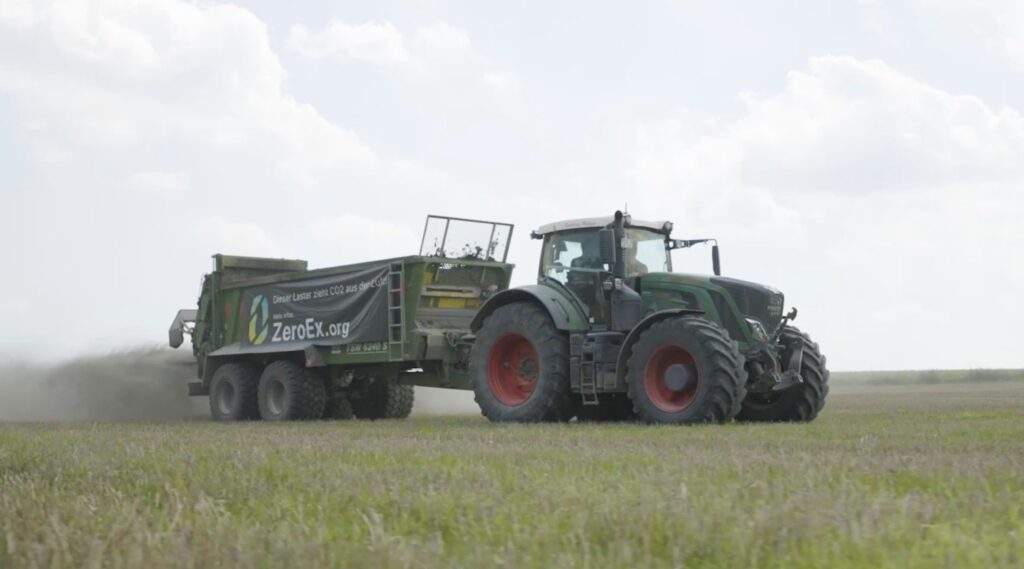
Project type: Enhanced rock weathering (basalt rock powder on agricultural land) Location: Eifel region, western Germany Isometric status: Validated (ZX-24 Vulkaneifel); also assessed by Puro.earth CCP label: ERW protocol pending ICVCM certification

A note on classification: ZeroEx is an enhanced rock weathering (ERW) project, not a biochar project. ERW accelerates a natural geochemical process that has regulated Earth's carbon cycle for hundreds of millions of years. ZeroEx grinds locally sourced basalt rock into fine powder and applies it to farmland. When rainwater containing dissolved CO₂ contacts the rock powder, a chemical reaction converts it into bicarbonate ions that are carried to the ocean and stored as stable minerals for over 10,000 years. This is the highest permanence of any CDR method available today.
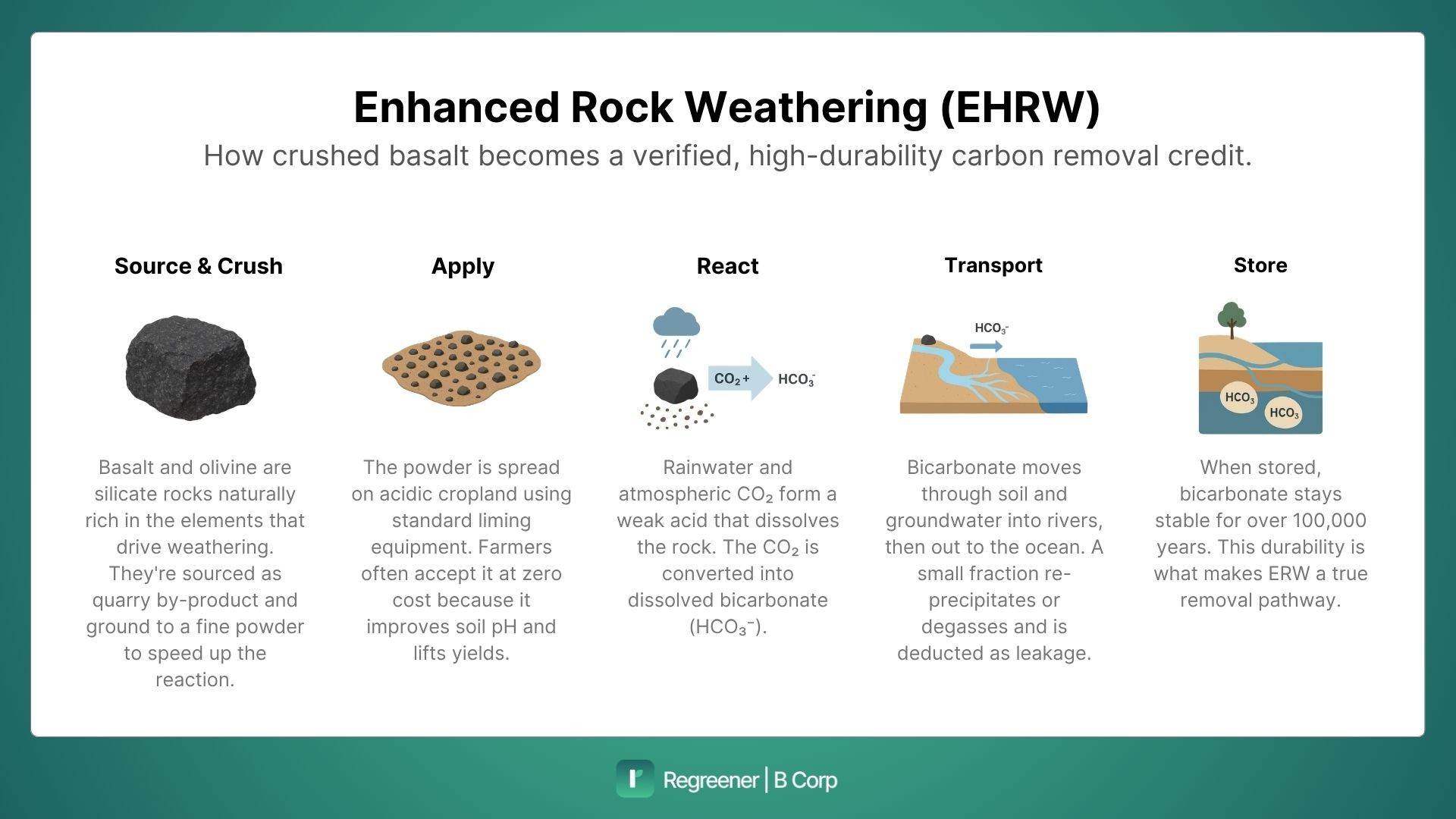
ZeroEx is the largest ERW project in Germany and one of the most advanced in Europe. The project is validated by Isometric under its Enhanced Weathering Protocol and has also been assessed against Puro.earth's ERW methodology. ZeroEx has partnered with Anglo American on Project Earthstone in Brazil, targeting 15 million tonnes of CDR using mining by-products. Its soil measurement approach -- using Sequestration Ion Accumulators (SIAs) -- has been approved by Isometric as a secondary measurement method, with potential for primary method status as validation data accumulates.

Key Benefits:

  • Climate: Up to 72,000 tCO₂ captured annually; 10,000+ year mineral storage -- the highest permanence of any project on this list

  • Social: Improves soil pH, crop productivity, and pest resistance for German farmers; fully regional supply chain

  • Biodiversity: Uses basaltic by-products from local quarrying; no deforestation or land-use change required

  • SDGs: SDG 9 (Industry, Innovation and Infrastructure), SDG 13 (Climate Action), SDG 15 (Life on Land)

3. Charm Industrial (USA, Biochar and Bio-Oil Geologic Storage)
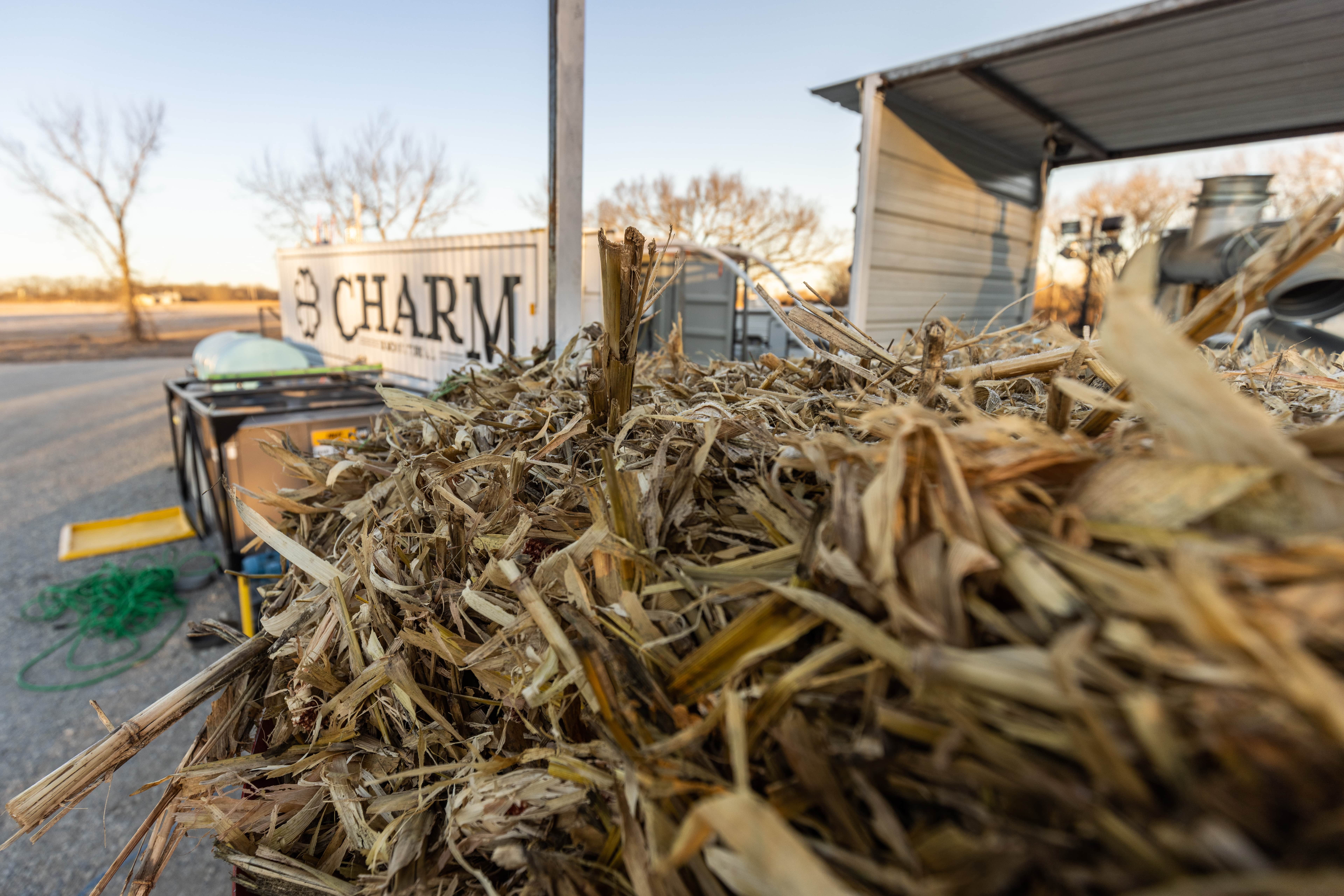
Project type: Biochar + underground bio-oil injection (fast pyrolysis) Location: Front Range, Colorado, USA Isometric status: Validated; first to receive CCP-labeled Isometric credits (August 2025) CCP label: ✓ First CCP-labeled industrial biochar credits globally

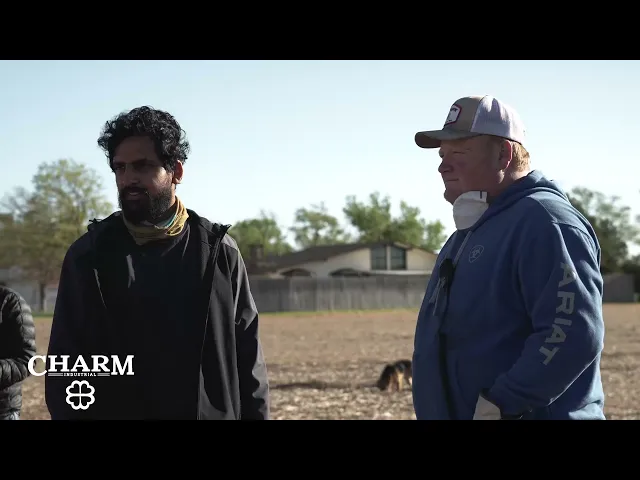
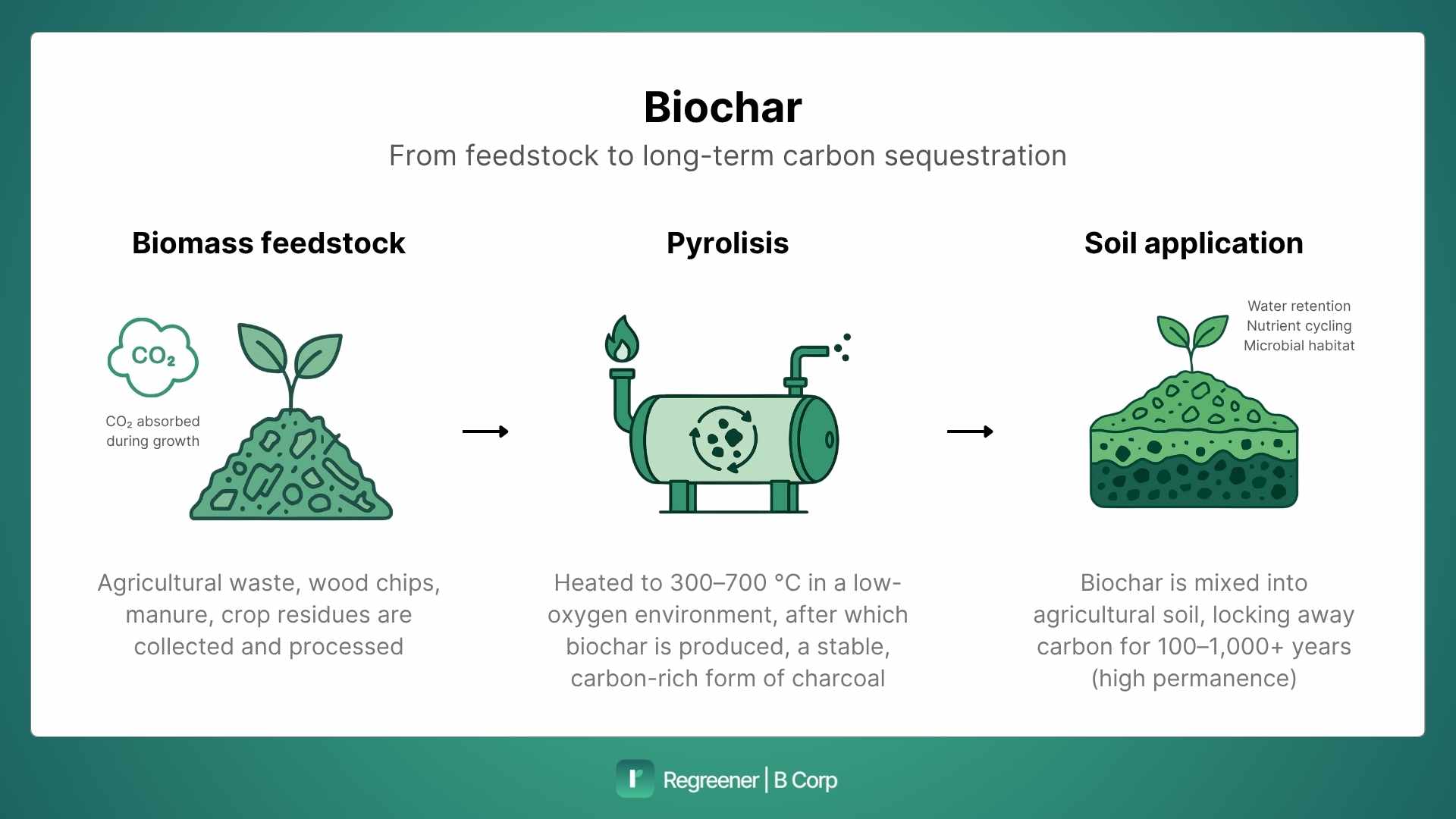
Charm Industrial runs what it calls the "Charm Duo": fast pyrolysis of biomass that simultaneously produces biochar and bio-oil. The biochar is applied to water-stressed soils on partner farms, where it improves water retention. The bio-oil -- a carbon-dense liquid -- is injected into EPA-permitted underground injection wells, where it solidifies and remains stored on geological timescales. Approximately 70% of the carbon from each biomass feedstock is permanently stored through this dual-pathway model.

The feedstock is wildfire fuel reduction thinnings: small-diameter logs with no commercial timber market, removed from Colorado's Front Range forests to reduce catastrophic wildfire risk. This makes Charm's credits additionally additive -- the removal is financed by carbon revenue that would not exist otherwise, while simultaneously reducing wildfire risk to nearby communities.

Charm Industrial is the first company in the world to receive CCP-labeled carbon removal credits. The label was issued by Isometric on 4 August 2025, the same day the ICVCM formally approved Isometric's Biochar Protocol. Buyers including Google and Microsoft have already contracted Charm credits.

Key Benefits:

  • Climate: ~70% of feedstock carbon permanently stored across biochar (200-year) and bio-oil (geological timescale) pathways; highest quality label available for biochar credits

  • Social: Creates 8--10 jobs per injection site; reduces wildfire risk for Front Range communities

  • Biodiversity: Feedstock removal reduces forest fuel loads; biochar improves soil water retention on drought-stressed farmland

  • SDGs: SDG 7 (Affordable and Clean Energy), SDG 13 (Climate Action), SDG 15 (Life on Land)

Charm Industrial holds the first CCP label ever issued for industrial biochar carbon removal credits -- a distinction that will carry increasing weight as compliance buyers enter the market.

4. Graphyte Loblolly (USA, Biomass Carbon Removal and Storage)
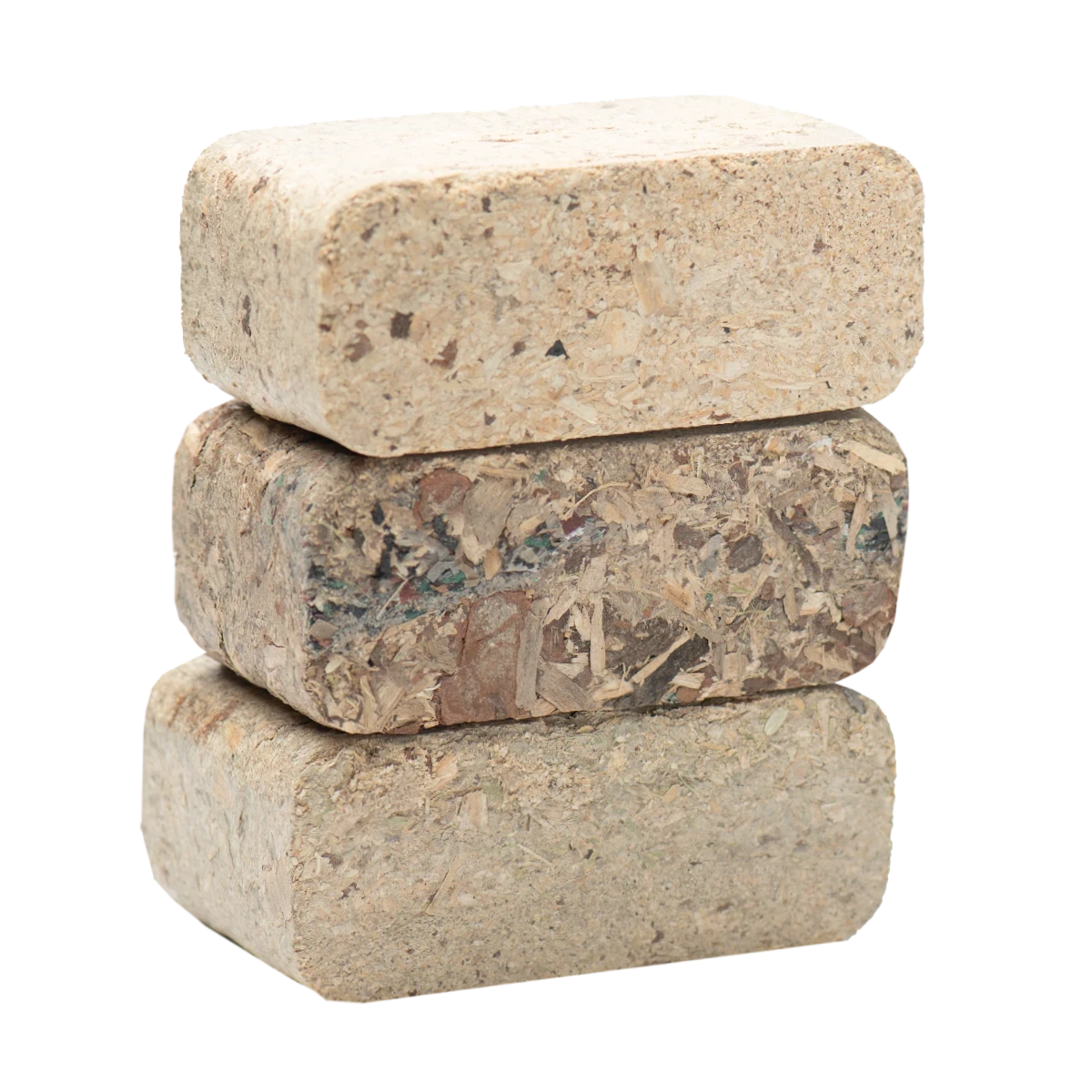
Project type: Biomass carbon removal and storage (BiCRS) -- compressed biomass burial Location: Arkansas, USA (sited on a former gravel mine) Isometric status: Validated (Loblolly Project); scaling to 45,000 tCO₂/year CCP label: Eligible under Isometric's BiCRS protocol

Graphyte takes a deliberately simple approach to carbon removal. Residual biomass -- primarily sawmill waste and rice hulls from Arkansas agriculture -- is dried, compressed into dense blocks and buried in engineered underground storage chambers on degraded land. Isolating lignin-rich biomass from oxygen and moisture prevents decomposition, keeping the captured carbon out of the atmosphere for 1,000+ years. No chemical transformation, no industrial process -- just durable physical storage of carbon that trees already removed from the air.

Graphyte's Loblolly Project is validated by Isometric under the BiCRS protocol and was selected for the CUR8/Isometric 2030 Portfolio, a jointly curated institutional portfolio of CDR credits launched in April 2026. The facility is expanding from 14,000 to 45,000 tCO₂ per year, with additional sites planned in British Columbia and Arizona. Graphyte has attracted offtake from some of the most diligent corporate buyers in the removal market.

Key Benefits:

  • Climate: 1,000+ year storage durability; 90%+ carbon efficiency; all quantification data publicly available on the Isometric registry

  • Social: Uses local agricultural and forestry waste streams; sited on degraded industrial land with no displacement of agricultural or natural ecosystems

  • Biodiversity: No land clearance; residual biomass that would otherwise decompose (releasing CO₂ and CH₄) is instead stored

  • SDGs: SDG 9 (Industry, Innovation and Infrastructure), SDG 13 (Climate Action)

5. InPlanet (Brazil, Enhanced Rock Weathering)
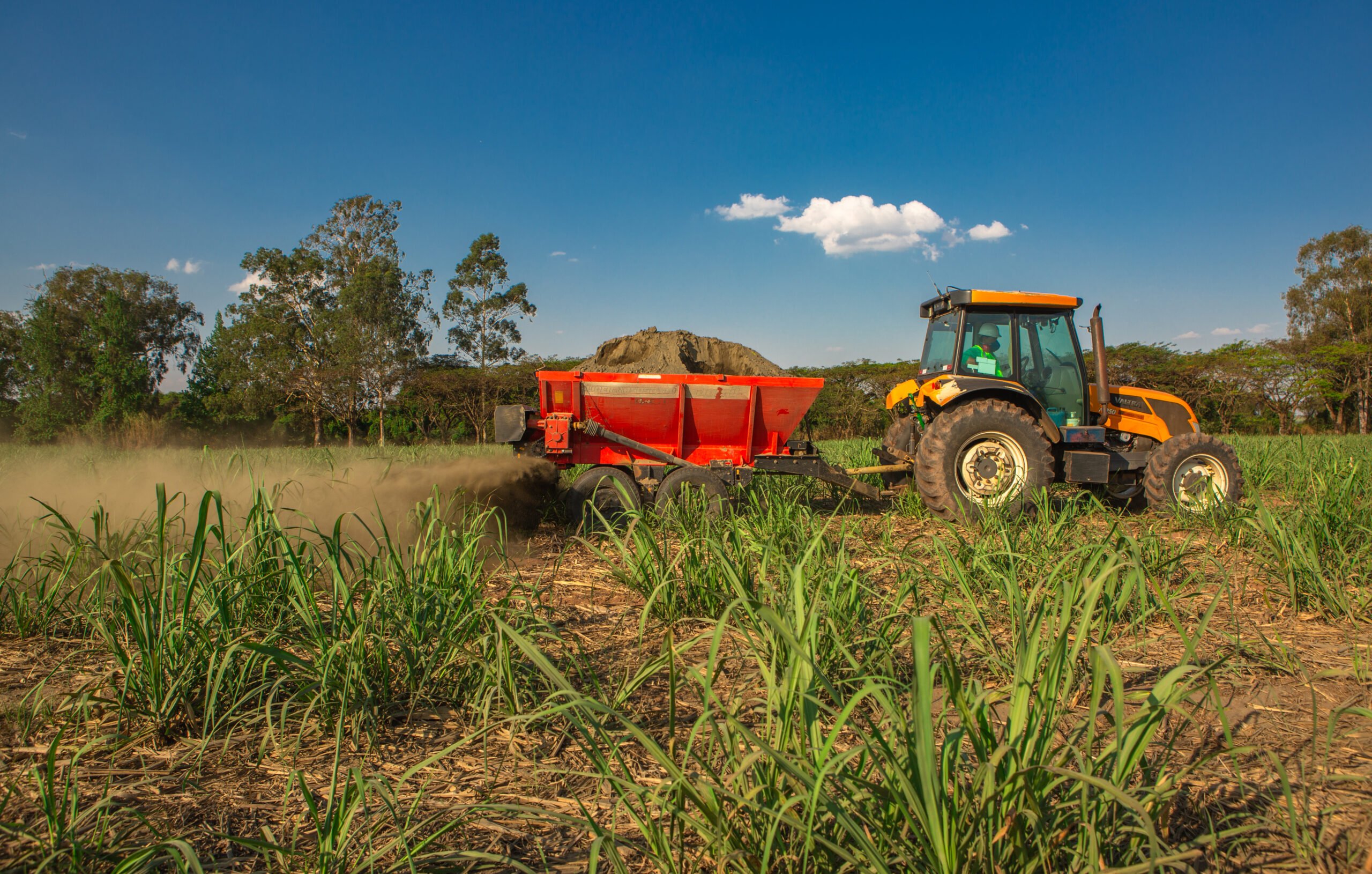
Project type: Enhanced rock weathering (silicate rock powder on tropical farmland) Location: Multiple sites, Brazil Isometric status: Validated; issued the world's first verified ERW credits (December 2024) CCP label: ERW protocol pending ICVCM certification

InPlanet made carbon market history in January 2025 when it became the first company to receive Isometric verification for enhanced rock weathering credits. Working with farmers across Brazil's tropical agricultural regions, InPlanet applies crushed silicate rock powder as a substitute for synthetic fertilisers and agricultural lime (aglime). The rock powder reacts with CO₂ dissolved in rainwater, converting it to stable bicarbonate ions that flow to the ocean and remain stored for thousands of years. The process simultaneously improves soil fertility, boosts crop yields, and reduces farmer dependence on synthetic inputs.

InPlanet uses a combination of soil sampling and Sequestration Ion Accumulators (SIAs) -- a novel continuous measurement device -- to quantify actual CDR at field scale. The world's first InPlanet ERW credits were sold to Adyen, the European payments processor, facilitated by ClimeFi. The project is currently active across multiple Brazilian sites, with verification conducted under Isometric's updated Enhanced Weathering Protocol (certified January 2025 following a 30-day public consultation).

Key Benefits:

  • Climate: Verified removal with 1,000+ year mineral storage; first field-scale ERW credits validated and issued under a rigorous third-party standard

  • Social: Substitutes costly synthetic inputs for smallholder and commercial farmers; improves soil health and food security in Brazil's agricultural heartland

  • Biodiversity: Restores degraded soils; reduces fertiliser runoff and associated water pollution

  • SDGs: SDG 2 (Zero Hunger), SDG 13 (Climate Action), SDG 15 (Life on Land)

Comparative Overview

Project

Type

Location

Durability

Best For

Carboneers India

Biochar

India

200+ years

Development co-benefits, Global South exposure

ZeroEx Vulkaneifel

ERW

Germany

10,000+ years

Highest permanence; EU supply chain

Charm Industrial

Biochar + bio-oil

USA

200yr + geological

Maximum quality signal; compliance-grade

Graphyte Loblolly

Biomass burial

USA

1,000+ years

Novel pathway; low-cost, scalable removal

InPlanet

ERW

Brazil

1,000+ years

First verified ERW; tropical agricultural co-benefits

What B2B Buyers Should Know About Isometric in 2026

Isometric is moving fast. In 2026, the registry is expected to issue approximately 500,000 credits under its biochar protocol alone, across 25 registered projects. The CCP label -- issued to Charm Industrial in August 2025 -- will begin appearing on credits from additional suppliers, including Carboneers and Pacific Biochar, as they complete their next verification cycles.

For buyers procuring under CSRD, VCMI, or SBTi guidance, two developments are worth tracking. First, the ICVCM's CCP label is increasingly referenced in reporting frameworks as a mark of preferred credit quality. Isometric's biochar protocol is one of only three biochar methodologies globally to hold the label. Second, the ERW protocol is currently in the ICVCM assessment pipeline: once approved, credits from ZeroEx and InPlanet will carry the same label, giving ultra-high-permanence ERW credits a quality signal that today's market still lacks.

Supply of high-quality Isometric credits is tightening. Multi-year offtake agreements from buyers including Microsoft, Google, Adyen, and IMC Trading are locking up significant portions of the registry's near-term issuance. Buyers who wait until 2027 to enter will face both higher prices and constrained availability in the methods that matter most for long-term portfolio integrity.

Next Steps: Buying Isometric Carbon Removal Credits

The five projects on this list cover the full spectrum of what Isometric-certified removal looks like in 2026. Carboneers and Charm Industrial represent biochar at its most credible — CCP-eligible, farmer-led or wildfire-reducing, with fully public verification data. ZeroEx and InPlanet bring ultra-high-permanence enhanced rock weathering to Europe and the tropics, for buyers whose reporting frameworks require geological-timescale storage. Graphyte offers a lower-cost biomass burial pathway for organisations building their first removal portfolio without committing to premium-priced methods.

Isometric credits are not sold directly from the registry. You buy them through certified resellers — which means your choice of partner matters as much as your choice of project.

Ready to take the next step? Whether you are buying removal credits for the first time or building a multi-method CDR portfolio aligned with CSRD and SBTi, our team can help.


Want to know which credits fit your company's climate strategy?

Book a free consultation today

Most carbon registries ask you to trust their process. Isometric publishes every data point, calculation, and emission factor behind every credit it has ever issued. That structural transparency is why the registry has become the benchmark for buyers who need defensible removal credits — and why the ICVCM, CORSIA, and ICROA have all formally accredited it.

We evaluated the Isometric portfolio using Regreener's 100+ datapoint quality framework. Here are the five projects worth buying in 2026 — and what makes each one stand out.

Direct answer: The 5 best Isometric carbon credit projects of 2026 are:

  1. Carboneers India (India, biochar, smallholder-led),

  2. ZeroEx Vulkaneifel (Germany, enhanced rock weathering),

  3. Charm Industrial (USA, biochar and bio-oil geologic storage),

  4. Graphyte Loblolly (USA, biomass carbon removal and storage), and

  5. InPlanet (Brazil, enhanced rock weathering).

All five are validated under the Isometric Standard and issue carbon removal credits representing verified, durable CO₂ removal. Carboneers and Charm Industrial are eligible for the ICVCM's Core Carbon Principles (CCP) label under Isometric's ICVCM-approved Biochar Protocol.

Want to know which credits fit your company's climate strategy?

Book a free consultation today

What Is Isometric — and How Does It Differ from Other Carbon Registries?

Founded in 2022 and headquartered in London and New York, Isometric was purpose-built for the carbon dioxide removal era. It is not an adaptation of an older standard -- it was designed from the ground up around three principles that set it apart from established registries like Verra, Gold Standard, and Puro.earth.

Removal only. Every credit on the Isometric registry represents CO₂ physically removed from the atmosphere. There are no avoided-emission credits, no avoidance-based forestry offsets, and no renewable energy certificates. For buyers building portfolios aligned with the Oxford Offsetting Principles or SBTi net-zero guidance, this is the relevant distinction.

Full data transparency. Isometric publishes every calculation, fuel receipt, emission factor, and verification document behind every credit it issues. Any buyer, auditor, or regulator can independently audit any credit on the registry at any time. This is structurally different from Verra or Gold Standard, where project documentation is available but the underlying quantification data is not always public.

Monthly credit issuance. Traditional registries verify projects annually, meaning a developer waits 12 months or longer between delivering removal and receiving revenue. Isometric's "Certify" platform enables monthly verification and credit issuance. Faster revenue cycles mean project developers can reinvest in scale sooner.

In December 2024, Isometric became the first carbon removal registry to receive simultaneous accreditation from all three major oversight bodies: the ICVCM (which issued its CCP label for Isometric's biochar protocol in August 2025), CORSIA (making Isometric credits usable for aviation offsetting), and ICROA. No other removal-focused registry holds all three approvals.


Isometric

Puro.earth

Verra (VCS)

Gold Standard

Founded

2022

2019

2005

2003

Credit type

Removal only

Removal only

Removal + avoidance

Removal + avoidance

Data transparency

Full public data

Partial

Partial

Partial

Credit issuance

Monthly

Annual

Annual

Annual

ICVCM CCP label

Approved (biochar)

In progress

Approved (selected)

Approved (selected)

CORSIA approved

Yes

No

Yes

Yes

Focus

All CDR pathways

Engineered removal

All project types

All project types

Registry

Isometric Registry

Puro Registry

Verra Registry

GS Impact Registry

Isometric is the only carbon removal registry to hold simultaneous accreditation from the ICVCM, CORSIA, and ICROA.

How Isometric Uses AI and Digital MRV to Verify Carbon Removal

Isometric describes itself as "AI-native certification for the industrial economy" — and that framing reflects a genuine architectural choice, not marketing language. Where traditional registries rely on manual document review and periodic field audits, Isometric has built its verification infrastructure around digital data pipelines, automated quality control, and machine-learning-assisted analysis.

The core of this is Isometric Certify, a dedicated verification platform through which project developers submit all monitoring data, calculations, and supporting evidence. Certify standardises data formats across project types, runs automated consistency checks, and flags anomalies before a human verifier opens the file — reducing the time from data submission to credit issuance from months to weeks. For reforestation credits, Isometric partners with Pachama, whose AI and LiDAR-driven models generate canopy height maps, assess leakage risk, and calculate continuously updated dynamic baselines rather than fixed historical ones.

For biochar and ERW projects, the platform ingests field sensor data, lab results, and chain-of-custody records, then generates a structured dataset for audit by an accredited Validation and Verification Body (VVB). Critically, Isometric appoints the VVB itself and pays a flat fee unrelated to the volume of credits issued — removing the structural incentive to over-credit that has undermined verification integrity at other standards.

The result is a verification model that is both faster and more auditable than anything traditional carbon markets have operated at scale. Every data point behind every credit is published on the public registry. Any buyer, auditor, or regulator can trace a credit back to its source data in minutes.

At Regreener, this level of data transparency is one of the criteria we apply when evaluating whether a project meets our quality threshold. Our quality framework goes beyond registry certification to assess governance, delivery track record, and co-benefit integrity — but for Isometric projects, the public data infrastructure makes that analysis significantly more grounded than for projects on less transparent registries.

How Buying Isometric Credits Contributes to Carbon Development

Purchasing Isometric credits is a different kind of procurement decision from buying established Verra or Plan Vivo credits. The projects on the Isometric registry are, in many cases, operating at the frontier of verified CDR -- methods that exist at commercial scale precisely because early buyers chose to finance them.

When you buy Isometric biochar or enhanced rock weathering credits, you are providing the offtake revenue that allows developers to invest in MRV infrastructure, expand production capacity, and demonstrate delivery track records to future buyers. Isometric's monthly issuance model amplifies this effect: developers receive payment within weeks of delivery, not at the end of an annual cycle, which accelerates reinvestment.

This matters for corporate buyers because the methods being developed today -- ERW, biomass burial, bio-oil injection -- are the high-permanence, compliance-grade removals that SBTi and VCMI will require at scale by 2030 and beyond. Buying now means lower prices, secured supply, and a documented contribution to building the removal infrastructure the market needs.

Buyers of Isometric credits are not just offsetting today's emissions -- they are financing the scale-up of the removal methods that corporate net-zero targets will depend on after 2030.

Boris Bekkering - Commercial Director Regreener

How Regreener Evaluates Isometric Projects

Not every validated Isometric project belongs in a client portfolio. Validation means a project meets the Isometric Standard -- it does not tell you whether the project has a delivery track record, what its co-benefit profile looks like, or how it compares to alternatives on cost and durability.

At Regreener, we evaluate Isometric projects using the same 100+ datapoint quality framework we apply to Verra, Gold Standard, and Puro.earth projects. This covers five domains: carbon integrity, additionality and permanence, governance and transparency, environmental co-benefits, and social impact. For Isometric projects specifically, we also assess ICVCM CCP label status, actual issuance history (validated vs. credits issued), and the delivery track record of the project developer.

As a B Corp-certified carbon credit provider working with 200+ European businesses, we only recommend projects we'd stake our reputation on.

a plane flying in the sky with the word go written in it

Explore our Guide: the best Carbon Credit Projects of 2026

Learn about the latest best practices, high-quality projects and strategic options

The 5 Best Isometric Carbon Credit Projects of 2026

1. Carboneers India (India, Biochar)

Project type: Biochar (flame curtain and high-tech pyrolysis) Location: Odisha, Assam and Nagaland, India Isometric status: Validated; one of Isometric's earliest biochar protocol partners CCP label: Eligible under Isometric's ICVCM-approved Biochar Protocol (approved August 2025)

Carboneers works with 7,500 smallholder farming communities across India's Odisha, Assam and Nagaland regions. Farmers convert agricultural residues -- rice straw, corn stalks, cotton stalks, bamboo trimmings -- into biochar using flame curtain pyrolysis and advanced industrial techniques. The biochar is mixed with compost and manure and returned free of charge to the same farmer, improving water retention, nutrient cycling, and crop yields. Carbon credit revenue is shared back to the communities: 65% goes directly to farmers and supervisors, and women hold the majority of leadership and field roles.

Carboneers is one of the highest-impact biochar developers active on the Isometric registry and was among the first suppliers to sign up to Isometric's Biochar Production and Storage Protocol. The project is targeting 1 million tonnes of annual CO₂ removal by 2028, supported by offtake agreements with buyers including IMC Trading.

Key Benefits:

  • Climate: Durable biochar storage using Isometric's conservative H:C ratio methodology; CCP-eligible credits with 200-year permanence rating

  • Social: 65% of credit revenue goes to farmers and supervisors; 3,000+ jobs created, majority held by women

  • Biodiversity: Biochar application reduces dependence on synthetic fertilisers; prevents methane emissions from residue decomposition

  • SDGs: SDG 1 (No Poverty), SDG 2 (Zero Hunger), SDG 5 (Gender Equality), SDG 13 (Climate Action), SDG 15 (Life on Land)

Carboneers is the strongest combination of rigorous Isometric-standard biochar removal and measurable community development co-benefits available on the registry today.

2. ZeroEx Vulkaneifel (Germany, Enhanced Rock Weathering)

Project type: Enhanced rock weathering (basalt rock powder on agricultural land) Location: Eifel region, western Germany Isometric status: Validated (ZX-24 Vulkaneifel); also assessed by Puro.earth CCP label: ERW protocol pending ICVCM certification

A note on classification: ZeroEx is an enhanced rock weathering (ERW) project, not a biochar project. ERW accelerates a natural geochemical process that has regulated Earth's carbon cycle for hundreds of millions of years. ZeroEx grinds locally sourced basalt rock into fine powder and applies it to farmland. When rainwater containing dissolved CO₂ contacts the rock powder, a chemical reaction converts it into bicarbonate ions that are carried to the ocean and stored as stable minerals for over 10,000 years. This is the highest permanence of any CDR method available today.

ZeroEx is the largest ERW project in Germany and one of the most advanced in Europe. The project is validated by Isometric under its Enhanced Weathering Protocol and has also been assessed against Puro.earth's ERW methodology. ZeroEx has partnered with Anglo American on Project Earthstone in Brazil, targeting 15 million tonnes of CDR using mining by-products. Its soil measurement approach -- using Sequestration Ion Accumulators (SIAs) -- has been approved by Isometric as a secondary measurement method, with potential for primary method status as validation data accumulates.

Key Benefits:

  • Climate: Up to 72,000 tCO₂ captured annually; 10,000+ year mineral storage -- the highest permanence of any project on this list

  • Social: Improves soil pH, crop productivity, and pest resistance for German farmers; fully regional supply chain

  • Biodiversity: Uses basaltic by-products from local quarrying; no deforestation or land-use change required

  • SDGs: SDG 9 (Industry, Innovation and Infrastructure), SDG 13 (Climate Action), SDG 15 (Life on Land)

3. Charm Industrial (USA, Biochar and Bio-Oil Geologic Storage)

Project type: Biochar + underground bio-oil injection (fast pyrolysis) Location: Front Range, Colorado, USA Isometric status: Validated; first to receive CCP-labeled Isometric credits (August 2025) CCP label: ✓ First CCP-labeled industrial biochar credits globally

Charm Industrial runs what it calls the "Charm Duo": fast pyrolysis of biomass that simultaneously produces biochar and bio-oil. The biochar is applied to water-stressed soils on partner farms, where it improves water retention. The bio-oil -- a carbon-dense liquid -- is injected into EPA-permitted underground injection wells, where it solidifies and remains stored on geological timescales. Approximately 70% of the carbon from each biomass feedstock is permanently stored through this dual-pathway model.

The feedstock is wildfire fuel reduction thinnings: small-diameter logs with no commercial timber market, removed from Colorado's Front Range forests to reduce catastrophic wildfire risk. This makes Charm's credits additionally additive -- the removal is financed by carbon revenue that would not exist otherwise, while simultaneously reducing wildfire risk to nearby communities.

Charm Industrial is the first company in the world to receive CCP-labeled carbon removal credits. The label was issued by Isometric on 4 August 2025, the same day the ICVCM formally approved Isometric's Biochar Protocol. Buyers including Google and Microsoft have already contracted Charm credits.

Key Benefits:

  • Climate: ~70% of feedstock carbon permanently stored across biochar (200-year) and bio-oil (geological timescale) pathways; highest quality label available for biochar credits

  • Social: Creates 8--10 jobs per injection site; reduces wildfire risk for Front Range communities

  • Biodiversity: Feedstock removal reduces forest fuel loads; biochar improves soil water retention on drought-stressed farmland

  • SDGs: SDG 7 (Affordable and Clean Energy), SDG 13 (Climate Action), SDG 15 (Life on Land)

Charm Industrial holds the first CCP label ever issued for industrial biochar carbon removal credits -- a distinction that will carry increasing weight as compliance buyers enter the market.

4. Graphyte Loblolly (USA, Biomass Carbon Removal and Storage)

Project type: Biomass carbon removal and storage (BiCRS) -- compressed biomass burial Location: Arkansas, USA (sited on a former gravel mine) Isometric status: Validated (Loblolly Project); scaling to 45,000 tCO₂/year CCP label: Eligible under Isometric's BiCRS protocol

Graphyte takes a deliberately simple approach to carbon removal. Residual biomass -- primarily sawmill waste and rice hulls from Arkansas agriculture -- is dried, compressed into dense blocks and buried in engineered underground storage chambers on degraded land. Isolating lignin-rich biomass from oxygen and moisture prevents decomposition, keeping the captured carbon out of the atmosphere for 1,000+ years. No chemical transformation, no industrial process -- just durable physical storage of carbon that trees already removed from the air.

Graphyte's Loblolly Project is validated by Isometric under the BiCRS protocol and was selected for the CUR8/Isometric 2030 Portfolio, a jointly curated institutional portfolio of CDR credits launched in April 2026. The facility is expanding from 14,000 to 45,000 tCO₂ per year, with additional sites planned in British Columbia and Arizona. Graphyte has attracted offtake from some of the most diligent corporate buyers in the removal market.

Key Benefits:

  • Climate: 1,000+ year storage durability; 90%+ carbon efficiency; all quantification data publicly available on the Isometric registry

  • Social: Uses local agricultural and forestry waste streams; sited on degraded industrial land with no displacement of agricultural or natural ecosystems

  • Biodiversity: No land clearance; residual biomass that would otherwise decompose (releasing CO₂ and CH₄) is instead stored

  • SDGs: SDG 9 (Industry, Innovation and Infrastructure), SDG 13 (Climate Action)

5. InPlanet (Brazil, Enhanced Rock Weathering)

Project type: Enhanced rock weathering (silicate rock powder on tropical farmland) Location: Multiple sites, Brazil Isometric status: Validated; issued the world's first verified ERW credits (December 2024) CCP label: ERW protocol pending ICVCM certification

InPlanet made carbon market history in January 2025 when it became the first company to receive Isometric verification for enhanced rock weathering credits. Working with farmers across Brazil's tropical agricultural regions, InPlanet applies crushed silicate rock powder as a substitute for synthetic fertilisers and agricultural lime (aglime). The rock powder reacts with CO₂ dissolved in rainwater, converting it to stable bicarbonate ions that flow to the ocean and remain stored for thousands of years. The process simultaneously improves soil fertility, boosts crop yields, and reduces farmer dependence on synthetic inputs.

InPlanet uses a combination of soil sampling and Sequestration Ion Accumulators (SIAs) -- a novel continuous measurement device -- to quantify actual CDR at field scale. The world's first InPlanet ERW credits were sold to Adyen, the European payments processor, facilitated by ClimeFi. The project is currently active across multiple Brazilian sites, with verification conducted under Isometric's updated Enhanced Weathering Protocol (certified January 2025 following a 30-day public consultation).

Key Benefits:

  • Climate: Verified removal with 1,000+ year mineral storage; first field-scale ERW credits validated and issued under a rigorous third-party standard

  • Social: Substitutes costly synthetic inputs for smallholder and commercial farmers; improves soil health and food security in Brazil's agricultural heartland

  • Biodiversity: Restores degraded soils; reduces fertiliser runoff and associated water pollution

  • SDGs: SDG 2 (Zero Hunger), SDG 13 (Climate Action), SDG 15 (Life on Land)

Comparative Overview

Project

Type

Location

Durability

Best For

Carboneers India

Biochar

India

200+ years

Development co-benefits, Global South exposure

ZeroEx Vulkaneifel

ERW

Germany

10,000+ years

Highest permanence; EU supply chain

Charm Industrial

Biochar + bio-oil

USA

200yr + geological

Maximum quality signal; compliance-grade

Graphyte Loblolly

Biomass burial

USA

1,000+ years

Novel pathway; low-cost, scalable removal

InPlanet

ERW

Brazil

1,000+ years

First verified ERW; tropical agricultural co-benefits

What B2B Buyers Should Know About Isometric in 2026

Isometric is moving fast. In 2026, the registry is expected to issue approximately 500,000 credits under its biochar protocol alone, across 25 registered projects. The CCP label -- issued to Charm Industrial in August 2025 -- will begin appearing on credits from additional suppliers, including Carboneers and Pacific Biochar, as they complete their next verification cycles.

For buyers procuring under CSRD, VCMI, or SBTi guidance, two developments are worth tracking. First, the ICVCM's CCP label is increasingly referenced in reporting frameworks as a mark of preferred credit quality. Isometric's biochar protocol is one of only three biochar methodologies globally to hold the label. Second, the ERW protocol is currently in the ICVCM assessment pipeline: once approved, credits from ZeroEx and InPlanet will carry the same label, giving ultra-high-permanence ERW credits a quality signal that today's market still lacks.

Supply of high-quality Isometric credits is tightening. Multi-year offtake agreements from buyers including Microsoft, Google, Adyen, and IMC Trading are locking up significant portions of the registry's near-term issuance. Buyers who wait until 2027 to enter will face both higher prices and constrained availability in the methods that matter most for long-term portfolio integrity.

Next Steps: Buying Isometric Carbon Removal Credits

The five projects on this list cover the full spectrum of what Isometric-certified removal looks like in 2026. Carboneers and Charm Industrial represent biochar at its most credible — CCP-eligible, farmer-led or wildfire-reducing, with fully public verification data. ZeroEx and InPlanet bring ultra-high-permanence enhanced rock weathering to Europe and the tropics, for buyers whose reporting frameworks require geological-timescale storage. Graphyte offers a lower-cost biomass burial pathway for organisations building their first removal portfolio without committing to premium-priced methods.

Isometric credits are not sold directly from the registry. You buy them through certified resellers — which means your choice of partner matters as much as your choice of project.

Ready to take the next step? Whether you are buying removal credits for the first time or building a multi-method CDR portfolio aligned with CSRD and SBTi, our team can help.

Want to know which credits fit your company's climate strategy?

Book a free consultation today

Most carbon registries ask you to trust their process. Isometric publishes every data point, calculation, and emission factor behind every credit it has ever issued. That structural transparency is why the registry has become the benchmark for buyers who need defensible removal credits — and why the ICVCM, CORSIA, and ICROA have all formally accredited it.

We evaluated the Isometric portfolio using Regreener's 100+ datapoint quality framework. Here are the five projects worth buying in 2026 — and what makes each one stand out.

Direct answer: The 5 best Isometric carbon credit projects of 2026 are:

  1. Carboneers India (India, biochar, smallholder-led),

  2. ZeroEx Vulkaneifel (Germany, enhanced rock weathering),

  3. Charm Industrial (USA, biochar and bio-oil geologic storage),

  4. Graphyte Loblolly (USA, biomass carbon removal and storage), and

  5. InPlanet (Brazil, enhanced rock weathering).

All five are validated under the Isometric Standard and issue carbon removal credits representing verified, durable CO₂ removal. Carboneers and Charm Industrial are eligible for the ICVCM's Core Carbon Principles (CCP) label under Isometric's ICVCM-approved Biochar Protocol.

Want to know which credits fit your company's climate strategy?

Book a free consultation today

What Is Isometric — and How Does It Differ from Other Carbon Registries?

Founded in 2022 and headquartered in London and New York, Isometric was purpose-built for the carbon dioxide removal era. It is not an adaptation of an older standard -- it was designed from the ground up around three principles that set it apart from established registries like Verra, Gold Standard, and Puro.earth.

Removal only. Every credit on the Isometric registry represents CO₂ physically removed from the atmosphere. There are no avoided-emission credits, no avoidance-based forestry offsets, and no renewable energy certificates. For buyers building portfolios aligned with the Oxford Offsetting Principles or SBTi net-zero guidance, this is the relevant distinction.

Full data transparency. Isometric publishes every calculation, fuel receipt, emission factor, and verification document behind every credit it issues. Any buyer, auditor, or regulator can independently audit any credit on the registry at any time. This is structurally different from Verra or Gold Standard, where project documentation is available but the underlying quantification data is not always public.

Monthly credit issuance. Traditional registries verify projects annually, meaning a developer waits 12 months or longer between delivering removal and receiving revenue. Isometric's "Certify" platform enables monthly verification and credit issuance. Faster revenue cycles mean project developers can reinvest in scale sooner.

In December 2024, Isometric became the first carbon removal registry to receive simultaneous accreditation from all three major oversight bodies: the ICVCM (which issued its CCP label for Isometric's biochar protocol in August 2025), CORSIA (making Isometric credits usable for aviation offsetting), and ICROA. No other removal-focused registry holds all three approvals.


Isometric

Puro.earth

Verra (VCS)

Gold Standard

Founded

2022

2019

2005

2003

Credit type

Removal only

Removal only

Removal + avoidance

Removal + avoidance

Data transparency

Full public data

Partial

Partial

Partial

Credit issuance

Monthly

Annual

Annual

Annual

ICVCM CCP label

Approved (biochar)

In progress

Approved (selected)

Approved (selected)

CORSIA approved

Yes

No

Yes

Yes

Focus

All CDR pathways

Engineered removal

All project types

All project types

Registry

Isometric Registry

Puro Registry

Verra Registry

GS Impact Registry

Isometric is the only carbon removal registry to hold simultaneous accreditation from the ICVCM, CORSIA, and ICROA.

How Isometric Uses AI and Digital MRV to Verify Carbon Removal

Isometric describes itself as "AI-native certification for the industrial economy" — and that framing reflects a genuine architectural choice, not marketing language. Where traditional registries rely on manual document review and periodic field audits, Isometric has built its verification infrastructure around digital data pipelines, automated quality control, and machine-learning-assisted analysis.

The core of this is Isometric Certify, a dedicated verification platform through which project developers submit all monitoring data, calculations, and supporting evidence. Certify standardises data formats across project types, runs automated consistency checks, and flags anomalies before a human verifier opens the file — reducing the time from data submission to credit issuance from months to weeks. For reforestation credits, Isometric partners with Pachama, whose AI and LiDAR-driven models generate canopy height maps, assess leakage risk, and calculate continuously updated dynamic baselines rather than fixed historical ones.

For biochar and ERW projects, the platform ingests field sensor data, lab results, and chain-of-custody records, then generates a structured dataset for audit by an accredited Validation and Verification Body (VVB). Critically, Isometric appoints the VVB itself and pays a flat fee unrelated to the volume of credits issued — removing the structural incentive to over-credit that has undermined verification integrity at other standards.

The result is a verification model that is both faster and more auditable than anything traditional carbon markets have operated at scale. Every data point behind every credit is published on the public registry. Any buyer, auditor, or regulator can trace a credit back to its source data in minutes.

At Regreener, this level of data transparency is one of the criteria we apply when evaluating whether a project meets our quality threshold. Our quality framework goes beyond registry certification to assess governance, delivery track record, and co-benefit integrity — but for Isometric projects, the public data infrastructure makes that analysis significantly more grounded than for projects on less transparent registries.

How Buying Isometric Credits Contributes to Carbon Development

Purchasing Isometric credits is a different kind of procurement decision from buying established Verra or Plan Vivo credits. The projects on the Isometric registry are, in many cases, operating at the frontier of verified CDR -- methods that exist at commercial scale precisely because early buyers chose to finance them.

When you buy Isometric biochar or enhanced rock weathering credits, you are providing the offtake revenue that allows developers to invest in MRV infrastructure, expand production capacity, and demonstrate delivery track records to future buyers. Isometric's monthly issuance model amplifies this effect: developers receive payment within weeks of delivery, not at the end of an annual cycle, which accelerates reinvestment.

This matters for corporate buyers because the methods being developed today -- ERW, biomass burial, bio-oil injection -- are the high-permanence, compliance-grade removals that SBTi and VCMI will require at scale by 2030 and beyond. Buying now means lower prices, secured supply, and a documented contribution to building the removal infrastructure the market needs.

Buyers of Isometric credits are not just offsetting today's emissions -- they are financing the scale-up of the removal methods that corporate net-zero targets will depend on after 2030.

Boris Bekkering - Commercial Director Regreener

How Regreener Evaluates Isometric Projects

Not every validated Isometric project belongs in a client portfolio. Validation means a project meets the Isometric Standard -- it does not tell you whether the project has a delivery track record, what its co-benefit profile looks like, or how it compares to alternatives on cost and durability.

At Regreener, we evaluate Isometric projects using the same 100+ datapoint quality framework we apply to Verra, Gold Standard, and Puro.earth projects. This covers five domains: carbon integrity, additionality and permanence, governance and transparency, environmental co-benefits, and social impact. For Isometric projects specifically, we also assess ICVCM CCP label status, actual issuance history (validated vs. credits issued), and the delivery track record of the project developer.

As a B Corp-certified carbon credit provider working with 200+ European businesses, we only recommend projects we'd stake our reputation on.

a plane flying in the sky with the word go written in it

Explore our Guide: the best Carbon Credit Projects of 2026

Learn about the latest best practices, high-quality projects and strategic options

The 5 Best Isometric Carbon Credit Projects of 2026

1. Carboneers India (India, Biochar)

Project type: Biochar (flame curtain and high-tech pyrolysis) Location: Odisha, Assam and Nagaland, India Isometric status: Validated; one of Isometric's earliest biochar protocol partners CCP label: Eligible under Isometric's ICVCM-approved Biochar Protocol (approved August 2025)

Carboneers works with 7,500 smallholder farming communities across India's Odisha, Assam and Nagaland regions. Farmers convert agricultural residues -- rice straw, corn stalks, cotton stalks, bamboo trimmings -- into biochar using flame curtain pyrolysis and advanced industrial techniques. The biochar is mixed with compost and manure and returned free of charge to the same farmer, improving water retention, nutrient cycling, and crop yields. Carbon credit revenue is shared back to the communities: 65% goes directly to farmers and supervisors, and women hold the majority of leadership and field roles.

Carboneers is one of the highest-impact biochar developers active on the Isometric registry and was among the first suppliers to sign up to Isometric's Biochar Production and Storage Protocol. The project is targeting 1 million tonnes of annual CO₂ removal by 2028, supported by offtake agreements with buyers including IMC Trading.

Key Benefits:

  • Climate: Durable biochar storage using Isometric's conservative H:C ratio methodology; CCP-eligible credits with 200-year permanence rating

  • Social: 65% of credit revenue goes to farmers and supervisors; 3,000+ jobs created, majority held by women

  • Biodiversity: Biochar application reduces dependence on synthetic fertilisers; prevents methane emissions from residue decomposition

  • SDGs: SDG 1 (No Poverty), SDG 2 (Zero Hunger), SDG 5 (Gender Equality), SDG 13 (Climate Action), SDG 15 (Life on Land)

Carboneers is the strongest combination of rigorous Isometric-standard biochar removal and measurable community development co-benefits available on the registry today.

2. ZeroEx Vulkaneifel (Germany, Enhanced Rock Weathering)

Project type: Enhanced rock weathering (basalt rock powder on agricultural land) Location: Eifel region, western Germany Isometric status: Validated (ZX-24 Vulkaneifel); also assessed by Puro.earth CCP label: ERW protocol pending ICVCM certification

A note on classification: ZeroEx is an enhanced rock weathering (ERW) project, not a biochar project. ERW accelerates a natural geochemical process that has regulated Earth's carbon cycle for hundreds of millions of years. ZeroEx grinds locally sourced basalt rock into fine powder and applies it to farmland. When rainwater containing dissolved CO₂ contacts the rock powder, a chemical reaction converts it into bicarbonate ions that are carried to the ocean and stored as stable minerals for over 10,000 years. This is the highest permanence of any CDR method available today.

ZeroEx is the largest ERW project in Germany and one of the most advanced in Europe. The project is validated by Isometric under its Enhanced Weathering Protocol and has also been assessed against Puro.earth's ERW methodology. ZeroEx has partnered with Anglo American on Project Earthstone in Brazil, targeting 15 million tonnes of CDR using mining by-products. Its soil measurement approach -- using Sequestration Ion Accumulators (SIAs) -- has been approved by Isometric as a secondary measurement method, with potential for primary method status as validation data accumulates.

Key Benefits:

  • Climate: Up to 72,000 tCO₂ captured annually; 10,000+ year mineral storage -- the highest permanence of any project on this list

  • Social: Improves soil pH, crop productivity, and pest resistance for German farmers; fully regional supply chain

  • Biodiversity: Uses basaltic by-products from local quarrying; no deforestation or land-use change required

  • SDGs: SDG 9 (Industry, Innovation and Infrastructure), SDG 13 (Climate Action), SDG 15 (Life on Land)

3. Charm Industrial (USA, Biochar and Bio-Oil Geologic Storage)

Project type: Biochar + underground bio-oil injection (fast pyrolysis) Location: Front Range, Colorado, USA Isometric status: Validated; first to receive CCP-labeled Isometric credits (August 2025) CCP label: ✓ First CCP-labeled industrial biochar credits globally

Charm Industrial runs what it calls the "Charm Duo": fast pyrolysis of biomass that simultaneously produces biochar and bio-oil. The biochar is applied to water-stressed soils on partner farms, where it improves water retention. The bio-oil -- a carbon-dense liquid -- is injected into EPA-permitted underground injection wells, where it solidifies and remains stored on geological timescales. Approximately 70% of the carbon from each biomass feedstock is permanently stored through this dual-pathway model.

The feedstock is wildfire fuel reduction thinnings: small-diameter logs with no commercial timber market, removed from Colorado's Front Range forests to reduce catastrophic wildfire risk. This makes Charm's credits additionally additive -- the removal is financed by carbon revenue that would not exist otherwise, while simultaneously reducing wildfire risk to nearby communities.

Charm Industrial is the first company in the world to receive CCP-labeled carbon removal credits. The label was issued by Isometric on 4 August 2025, the same day the ICVCM formally approved Isometric's Biochar Protocol. Buyers including Google and Microsoft have already contracted Charm credits.

Key Benefits:

  • Climate: ~70% of feedstock carbon permanently stored across biochar (200-year) and bio-oil (geological timescale) pathways; highest quality label available for biochar credits

  • Social: Creates 8--10 jobs per injection site; reduces wildfire risk for Front Range communities

  • Biodiversity: Feedstock removal reduces forest fuel loads; biochar improves soil water retention on drought-stressed farmland

  • SDGs: SDG 7 (Affordable and Clean Energy), SDG 13 (Climate Action), SDG 15 (Life on Land)

Charm Industrial holds the first CCP label ever issued for industrial biochar carbon removal credits -- a distinction that will carry increasing weight as compliance buyers enter the market.

4. Graphyte Loblolly (USA, Biomass Carbon Removal and Storage)

Project type: Biomass carbon removal and storage (BiCRS) -- compressed biomass burial Location: Arkansas, USA (sited on a former gravel mine) Isometric status: Validated (Loblolly Project); scaling to 45,000 tCO₂/year CCP label: Eligible under Isometric's BiCRS protocol

Graphyte takes a deliberately simple approach to carbon removal. Residual biomass -- primarily sawmill waste and rice hulls from Arkansas agriculture -- is dried, compressed into dense blocks and buried in engineered underground storage chambers on degraded land. Isolating lignin-rich biomass from oxygen and moisture prevents decomposition, keeping the captured carbon out of the atmosphere for 1,000+ years. No chemical transformation, no industrial process -- just durable physical storage of carbon that trees already removed from the air.

Graphyte's Loblolly Project is validated by Isometric under the BiCRS protocol and was selected for the CUR8/Isometric 2030 Portfolio, a jointly curated institutional portfolio of CDR credits launched in April 2026. The facility is expanding from 14,000 to 45,000 tCO₂ per year, with additional sites planned in British Columbia and Arizona. Graphyte has attracted offtake from some of the most diligent corporate buyers in the removal market.

Key Benefits:

  • Climate: 1,000+ year storage durability; 90%+ carbon efficiency; all quantification data publicly available on the Isometric registry

  • Social: Uses local agricultural and forestry waste streams; sited on degraded industrial land with no displacement of agricultural or natural ecosystems

  • Biodiversity: No land clearance; residual biomass that would otherwise decompose (releasing CO₂ and CH₄) is instead stored

  • SDGs: SDG 9 (Industry, Innovation and Infrastructure), SDG 13 (Climate Action)

5. InPlanet (Brazil, Enhanced Rock Weathering)

Project type: Enhanced rock weathering (silicate rock powder on tropical farmland) Location: Multiple sites, Brazil Isometric status: Validated; issued the world's first verified ERW credits (December 2024) CCP label: ERW protocol pending ICVCM certification

InPlanet made carbon market history in January 2025 when it became the first company to receive Isometric verification for enhanced rock weathering credits. Working with farmers across Brazil's tropical agricultural regions, InPlanet applies crushed silicate rock powder as a substitute for synthetic fertilisers and agricultural lime (aglime). The rock powder reacts with CO₂ dissolved in rainwater, converting it to stable bicarbonate ions that flow to the ocean and remain stored for thousands of years. The process simultaneously improves soil fertility, boosts crop yields, and reduces farmer dependence on synthetic inputs.

InPlanet uses a combination of soil sampling and Sequestration Ion Accumulators (SIAs) -- a novel continuous measurement device -- to quantify actual CDR at field scale. The world's first InPlanet ERW credits were sold to Adyen, the European payments processor, facilitated by ClimeFi. The project is currently active across multiple Brazilian sites, with verification conducted under Isometric's updated Enhanced Weathering Protocol (certified January 2025 following a 30-day public consultation).

Key Benefits:

  • Climate: Verified removal with 1,000+ year mineral storage; first field-scale ERW credits validated and issued under a rigorous third-party standard

  • Social: Substitutes costly synthetic inputs for smallholder and commercial farmers; improves soil health and food security in Brazil's agricultural heartland

  • Biodiversity: Restores degraded soils; reduces fertiliser runoff and associated water pollution

  • SDGs: SDG 2 (Zero Hunger), SDG 13 (Climate Action), SDG 15 (Life on Land)

Comparative Overview

Project

Type

Location

Durability

Best For

Carboneers India

Biochar

India

200+ years

Development co-benefits, Global South exposure

ZeroEx Vulkaneifel

ERW

Germany

10,000+ years

Highest permanence; EU supply chain

Charm Industrial

Biochar + bio-oil

USA

200yr + geological

Maximum quality signal; compliance-grade

Graphyte Loblolly

Biomass burial

USA

1,000+ years

Novel pathway; low-cost, scalable removal

InPlanet

ERW

Brazil

1,000+ years

First verified ERW; tropical agricultural co-benefits

What B2B Buyers Should Know About Isometric in 2026

Isometric is moving fast. In 2026, the registry is expected to issue approximately 500,000 credits under its biochar protocol alone, across 25 registered projects. The CCP label -- issued to Charm Industrial in August 2025 -- will begin appearing on credits from additional suppliers, including Carboneers and Pacific Biochar, as they complete their next verification cycles.

For buyers procuring under CSRD, VCMI, or SBTi guidance, two developments are worth tracking. First, the ICVCM's CCP label is increasingly referenced in reporting frameworks as a mark of preferred credit quality. Isometric's biochar protocol is one of only three biochar methodologies globally to hold the label. Second, the ERW protocol is currently in the ICVCM assessment pipeline: once approved, credits from ZeroEx and InPlanet will carry the same label, giving ultra-high-permanence ERW credits a quality signal that today's market still lacks.

Supply of high-quality Isometric credits is tightening. Multi-year offtake agreements from buyers including Microsoft, Google, Adyen, and IMC Trading are locking up significant portions of the registry's near-term issuance. Buyers who wait until 2027 to enter will face both higher prices and constrained availability in the methods that matter most for long-term portfolio integrity.

Next Steps: Buying Isometric Carbon Removal Credits

The five projects on this list cover the full spectrum of what Isometric-certified removal looks like in 2026. Carboneers and Charm Industrial represent biochar at its most credible — CCP-eligible, farmer-led or wildfire-reducing, with fully public verification data. ZeroEx and InPlanet bring ultra-high-permanence enhanced rock weathering to Europe and the tropics, for buyers whose reporting frameworks require geological-timescale storage. Graphyte offers a lower-cost biomass burial pathway for organisations building their first removal portfolio without committing to premium-priced methods.

Isometric credits are not sold directly from the registry. You buy them through certified resellers — which means your choice of partner matters as much as your choice of project.

Ready to take the next step? Whether you are buying removal credits for the first time or building a multi-method CDR portfolio aligned with CSRD and SBTi, our team can help.

Want to know which credits fit your company's climate strategy?

Book a free consultation today

About the Author

Boris Bekkering of Regreener
Boris Bekkering

Boris is Commercial Director at Regreener and joined the company in 2022. He holds a masters degree in Environment & Resource Management and has prior professional experience in energy transition focused venture capital. Boris is passionate about helping companies navigate carbon markets and enjoys supporting businesses in aligning sustainability targets. He believes ambitious targets combined with transparent communication can propel companies to sustainable and commercial progress. In his spare time, Boris enjoys his many hobbies that are all happening on the water or in nature.

TABLE OF CONTENTS

Share Article

Greenwashing-proof carbon removal

Get a free consultation with Regreener's carbon removal experts

Other blogs