
have us call you right now.

Buying CORSIA Credits: A Buyer's Guide for 2026

Buying CORSIA Credits: A Buyer's Guide for 2026

Last updated:

Apr 29, 2025

Apr 29, 2025

5 minute read

5 minute read

Buying CORSIA Credits: A Buyer's Guide for 2026

Airlines will need between 146 and 236 million CORSIA Eligible Emissions Units to cover Phase 1 compliance. As of early 2026, only seven host countries have issued the Letters of Authorization required to unlock that supply. That gap, not price, is the single biggest problem for anyone trying to buy CORSIA credits today.

This guide explains what you're actually buying, who has to buy it, where the supply is, how much it costs, and the exact seven-step process to procure it without tripping over an eligibility technicality.

Quick Answer: CORSIA credits, formally known as CORSIA Eligible Emissions Units (EEUs), are carbon credits approved by the International Civil Aviation Organization (ICAO) for use by airlines to offset international aviation emissions above their baseline. One EEU represents one tonne of CO₂ reduced or removed.

To qualify as CORSIA-eligible, a credit must meet three conditions: it must be issued by an ICAO-approved programme (eight are approved for Phase 1, including Verra, Gold Standard, ACR, ART TREES, Climate Action Reserve, Global Carbon Council, Isometric, and Premium T-VER); it must fall within the approved project types, vintages, and methodologies; and it must carry a Letter of Authorization from the host country confirming a corresponding adjustment under Article 6 of the Paris Agreement.

Airlines with more than 10,000 tCO₂e of international emissions between participating states must buy and cancel EEUs by 31 January 2028 for Phase 1 (2024–2026). From 2027, participation becomes mandatory for most international aviation. Non-airline buyers can also purchase CORSIA-eligible credits as a compliance-grade quality benchmark.

Who Has to Buy CORSIA Credits, and Who Chooses To

CORSIA applies to commercial airlines operating international flights between participating states, with annual emissions from those flights above the 10,000 tCO₂e exemption threshold. As of January 2026, 130 states participate. Phase 1 runs from 2024 through 2026, with retirement of EEUs due by 31 January 2028.

From 2027, the scheme shifts to mandatory participation for most ICAO member states, with exemptions only for Least Developed Countries, Small Island Developing States, Landlocked Developing Countries, and states accounting for less than 0.5% of global international aviation activity in 2018.

Two audiences buy CORSIA credits:

Airlines under compliance. The obligation is legal, not reputational. Cancellation of EEUs in sufficient volume is a condition of compliance with a state's national civil aviation authority, and failure to comply can trigger enforcement action at the national level.

Non-airline buyers using CORSIA as a quality floor. Corporates, financial institutions, and voluntary buyers increasingly treat CORSIA eligibility as a defensible baseline: if a credit passed ICAO's Technical Advisory Body assessment and carries a host-country corresponding adjustment, it meets a higher integrity bar than an unlabelled voluntary credit. At Regreener, we see this increasingly often among corporates building portfolios that need to withstand CSRD audit and EU Empowering Consumers Directive scrutiny.

One caveat for airlines operating into or within Europe: CORSIA should not double-cover routes already regulated under the EU ETS or UK ETS. Precise route-level alignment with both frameworks is essential to avoid paying twice for the same tonne.
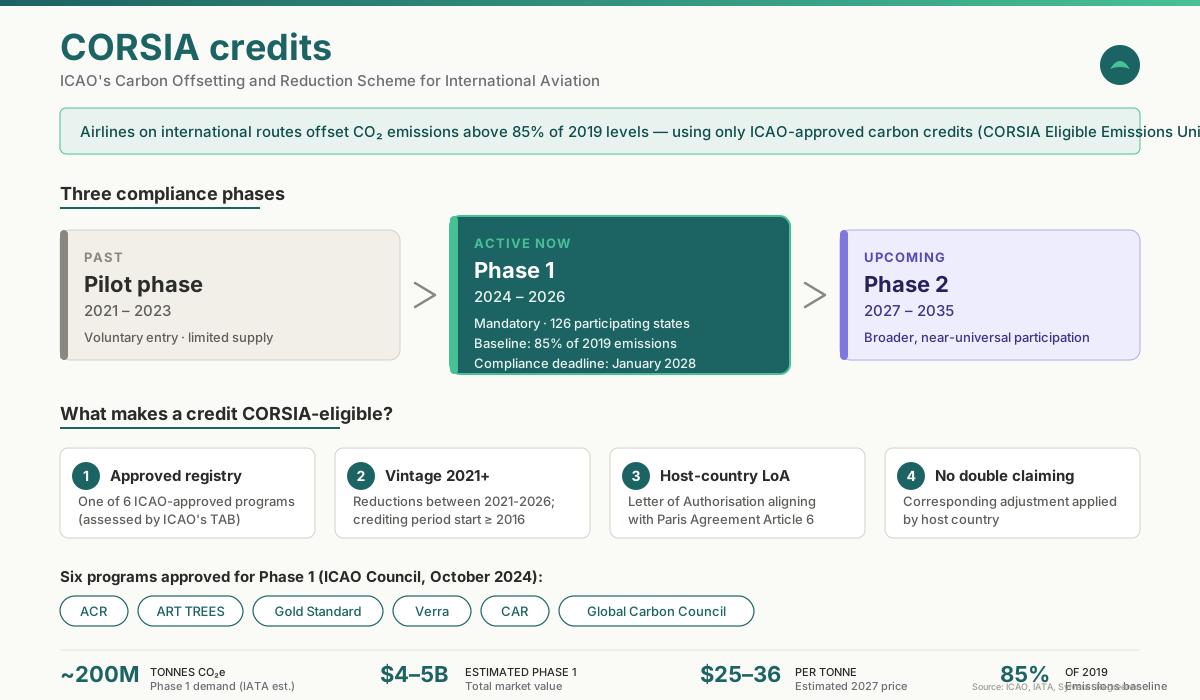
an overview of CORSIA carbon credits in 2026 and beyond

Key Terms Every CORSIA Buyer Should Know

Eligible Emissions Unit (EEU). A carbon credit that meets ICAO's criteria and can be cancelled toward an airline's CORSIA offsetting requirement. Also called CORSIA Eligible Emissions Unit (CEEU).

Letter of Authorization (LoA). A formal statement from the host country confirming that a specific batch of carbon credits has been authorized for use under CORSIA, and that the country will apply a corresponding adjustment.

Corresponding adjustment. A Paris Agreement mechanism, set out in Article 6.2, requiring the host country to deduct the authorized emission reductions from its own Nationally Determined Contribution (NDC). Without it, the same tonne could be claimed both by the country and by the airline, which is called double-claiming.

Article 6 Authorized – International Mitigation Purposes label. The registry label applied to a credit once the host country has issued the LoA. Verra, Gold Standard and others display this label on their registries for credits that qualify.

Sectoral Growth Factor (SGF). The factor ICAO uses to calculate each airline's offsetting obligation, based on the growth of international aviation emissions above the 85% of 2019 baseline.

Cancellation. The permanent retirement of an EEU from a registry. Under CORSIA, cancellation is the act that closes an airline's compliance.

Spot vs. forward. Spot means buying already-issued credits for immediate delivery. Forward means contracting future delivery of credits that have not yet been issued, usually at a discount in exchange for taking on delivery risk.

Want to know which credits fit your company's climate strategy?

Book a free consultation today

The CORSIA Market in 2026: What Buyers Need to Know

Three market realities define CORSIA procurement this year. Anyone buying without accounting for all three will either overpay or end up with credits that cannot be cancelled.

Supply is structurally tight

IATA projects Phase 1 demand of 146 to 236 million EEUs. As of February 2026, only seven countries have issued Letters of Authorization. Guyana was first, authorizing 15.84 million ART TREES credits from its jurisdictional REDD+ programme in February 2024. That issuance remains the benchmark case.

The bottleneck is not the carbon standards. Eight programmes are approved. The bottleneck is political: host countries must voluntarily authorize credits, apply a corresponding adjustment against their own NDC, and accept the resulting reduction in their national climate target. Many countries with strong project pipelines, including Indonesia, Brazil, and several African nations, have moved slowly or imposed restrictions. For buyers, this means that a credit can be fully issued by Verra or Gold Standard and still not be CORSIA-eligible until its host country acts.

The approved programme list has expanded

Eight programmes are approved by ICAO for Phase 1 (2024–2026): American Carbon Registry, Architecture for REDD+ Transactions, Climate Action Reserve, Global Carbon Council, Gold Standard, Isometric, Premium Thailand Voluntary Emission Reduction Program, and Verified Carbon Standard. For Phase 2 (2027–2029), four programmes have been approved so far: ACR, ART TREES, Gold Standard, and VCS, with further approvals expected.

Each programme comes with methodology-level exclusions. A VCS credit, for example, must meet specific conditions on crediting-period start date, project type, and methodology before it qualifies. Procurement teams need to verify CORSIA eligibility at the credit level, not just the registry level.

Prices are rising fast

Guyana's first ART TREES credits transacted at around €19 per tonne in late 2024. Sylvera's Phase 1 market modelling projects CORSIA credit prices of €23 to 33 per tonne by 2027 under base-case assumptions, with supply-constrained scenarios above €55. Total Phase 1 market value is estimated at €1.7 to 4.8 billion.

For comparison, the same underlying voluntary credits without Article 6 authorization typically trade at a fraction of those prices. The CORSIA label itself commands a significant premium, driven entirely by scarcity of host-country authorizations..

Whether you're an airline procuring EEUs or a corporate treating CORSIA as a quality floor for your voluntary portfolio, the vetting process matters. See how Regreener applies a 100+ data point quality framework across five domains to every credit we source.

a plane flying in the sky with the word go written in it

Explore our Guide: the best Carbon Credit Projects of 2026

Learn about the latest best practices, high-quality projects and strategic options

How to Buy CORSIA Credits: A 7-Step Process

Step 1: Calculate your offsetting requirement

For airlines, start with your verified Emissions Report for each compliance year. Multiply the emissions from covered routes by the Sectoral Growth Factor published by ICAO. The result is your offsetting obligation in tCO₂e.

For non-airline buyers, there is no imposed obligation. Decide on the volume of CORSIA-eligible credits you want in your portfolio based on your climate strategy, reporting needs, and how you want to position the credits alongside non-CORSIA voluntary credits.

Step 2: Set your procurement strategy

Three strategic choices drive everything that follows.

Spot or forward. Spot purchases give you certainty of delivery but pay current market prices. Forward contracts lock in lower prices but expose you to delivery risk if host-country authorization lags or is withdrawn.

Concentrated or diversified. Buying a single batch from one registry and one host country is simpler. Diversifying across programmes, project types, and countries reduces exposure to a single regulatory change. For larger buyers, diversification is standard practice.

Compliance-only or strategic. Airlines buying strictly for compliance may optimise for lowest-cost eligible credits. Airlines and corporates building a broader climate narrative often pair compliance EEUs with higher-integrity removals and strong co-benefit projects.

Step 3: Define your eligibility filters

Translate your strategy into concrete hard filters for suppliers:

  • Compliance period (Phase 1: 2024–2026, or Phase 2: 2027–2029)

  • Approved programmes you accept (subset of the eight)

  • Project type whitelist and exclusions (some methodologies are excluded entirely, others conditionally)

  • Crediting period start date from 1 January 2016 onward

  • Vintage window (Phase 1 credits must cover reductions between 1 January 2021 and 31 December 2026)

  • Host country authorization status (LoA in place, or in progress with a supplier guarantee)

Step 4: Choose your procurement channel

There are four serious routes to market for CORSIA credits:

IATA ACE, operated by Xpansiv. A centralized marketplace built for airlines, listing EEUs and the CBL GEO CORSIA CP1 standardized contract. Designed for transparent price discovery.

Climate Impact X (CIX) CORSIA X. A standardized spot contract (CP1X-GM) covering EEUs from all ICAO-approved registries for the Phase 1 compliance period.

Bilateral forward contracts with project developers. Useful for large, multi-year volumes. Best when you want to secure supply from a specific project or jurisdiction.

Specialised carbon providers and brokers. Intermediaries who source, vet, and aggregate credits, often bundling CORSIA-eligible volumes with broader voluntary portfolios. Useful when you need due diligence support and portfolio construction, not just execution.

Step 5: Verify eligibility at the credit level

Before contracting, confirm every batch against three checks:

  1. The credit carries the CORSIA label on the programme registry, searchable by serial number

  2. The Article 6 Authorized – International Mitigation Purposes label is in place, supported by the host country's LoA

  3. The corresponding adjustment is either completed (traceable through the host country's Biennial Transparency Report to the UNFCCC) or covered by a programme-approved guarantee

Documentation failures at this step are the single most common source of procurement disputes. A credit that is "expected to be" CORSIA-eligible is not CORSIA-eligible.

Step 6: Contract with the right protections

Five contract elements matter more than price:

Delivery guarantees. For forwards, require a replacement clause if credits fail to issue or lose eligibility, with substitution at comparable quality.

Loss-of-eligibility protection. If a host country revokes or modifies an LoA, who bears the cost? Specialised products like Carbon Delivery Insurance (CDI) exist to cover this risk.

Retirement documentation. Require a retirement certificate that includes your airline or company name, serial numbers, project ID, host country, and cancellation date. Without it, your compliance filing is not defensible.

Reporting. Require the supplier to provide the full chain of evidence: project documentation, validation and verification reports, LoA copy, and Article 6 label confirmation.

Compliance support. For airlines, the supplier should support filing the Emissions Units Cancellation Report with your competent authority, including the EU-administered airlines' 30 April submission deadline.

Step 7: Cancel the credits and file with your authority

Cancellation is the legal act that completes compliance. Cancel EEUs in a volume equal to your offsetting requirement within the registry. Report the cancellation to your competent authority, including serial numbers, programme, and retirement date. For Phase 1, final retirements must be completed by 31 January 2028.
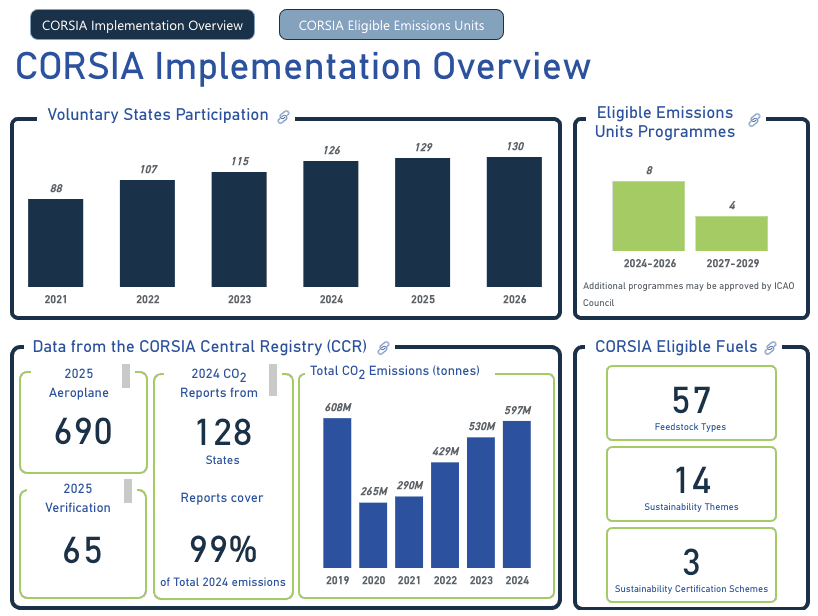
The CORSIA credit market is growing and demand is believed to be picking up towards 2027.

Common Mistakes When Buying CORSIA Credits

Starting too late. Full procurement, including due diligence, contracting, and registry retirement, takes 8 to 16 weeks. With thin spot liquidity, late buyers face price spikes heading into the January 2028 deadline.

Assuming all credits from an approved registry qualify. Eligibility is methodology-level and credit-level. A Verra project on the registry is not CORSIA-eligible until its specific credits carry the Article 6 label backed by a host-country LoA.

Ignoring non-delivery and revocation risk on forwards. Host countries are not legally bound to maintain LoAs indefinitely. Forward contracts without loss-of-eligibility clauses transfer that risk entirely to the buyer.

Over-concentrating in one host country. Guyana dominated early supply. Relying on a single jurisdiction for 100% of your compliance volume is concentration risk disguised as a procurement win.

Treating EEUs as interchangeable with voluntary credits. They aren't. Voluntary credits, even high-quality ones, cannot be cancelled for CORSIA compliance. Mixing them up in portfolio accounting creates audit problems.

No scoring matrix. Airlines and corporates that buy on price alone end up with the cheapest eligible credits, not the most defensible ones. Ratings from BeZero, Sylvera, or Calyx Global, and project-level due diligence, matter even inside the CORSIA-eligible pool.

Beyond Compliance: The Full Climate Story

For airlines, CORSIA is a compliance floor, not a climate strategy. The most credible aviation climate narratives pair compliance EEUs with higher-integrity removals, SDG-aligned co-benefit projects, and a clear story about internal reductions through fleet renewal and sustainable aviation fuel.

The same logic applies to non-airline buyers using CORSIA as a quality benchmark. A portfolio made up entirely of CORSIA-eligible REDD+ credits tells a narrower story than one that blends CORSIA-eligible compliance-grade credits with durable removals and community co-benefits.

At Regreener, we help both airlines and corporates build this layered portfolio: CORSIA-eligible credits where compliance or quality demands it, high-integrity voluntary credits where breadth and impact matter, and full documentation to support CSRD reporting and VCMI claims.

Buying CORSIA Credits: A Buyer's Guide for 2026

Airlines will need between 146 and 236 million CORSIA Eligible Emissions Units to cover Phase 1 compliance. As of early 2026, only seven host countries have issued the Letters of Authorization required to unlock that supply. That gap, not price, is the single biggest problem for anyone trying to buy CORSIA credits today.

This guide explains what you're actually buying, who has to buy it, where the supply is, how much it costs, and the exact seven-step process to procure it without tripping over an eligibility technicality.

Quick Answer: CORSIA credits, formally known as CORSIA Eligible Emissions Units (EEUs), are carbon credits approved by the International Civil Aviation Organization (ICAO) for use by airlines to offset international aviation emissions above their baseline. One EEU represents one tonne of CO₂ reduced or removed.

To qualify as CORSIA-eligible, a credit must meet three conditions: it must be issued by an ICAO-approved programme (eight are approved for Phase 1, including Verra, Gold Standard, ACR, ART TREES, Climate Action Reserve, Global Carbon Council, Isometric, and Premium T-VER); it must fall within the approved project types, vintages, and methodologies; and it must carry a Letter of Authorization from the host country confirming a corresponding adjustment under Article 6 of the Paris Agreement.

Airlines with more than 10,000 tCO₂e of international emissions between participating states must buy and cancel EEUs by 31 January 2028 for Phase 1 (2024–2026). From 2027, participation becomes mandatory for most international aviation. Non-airline buyers can also purchase CORSIA-eligible credits as a compliance-grade quality benchmark.

Who Has to Buy CORSIA Credits, and Who Chooses To

CORSIA applies to commercial airlines operating international flights between participating states, with annual emissions from those flights above the 10,000 tCO₂e exemption threshold. As of January 2026, 130 states participate. Phase 1 runs from 2024 through 2026, with retirement of EEUs due by 31 January 2028.

From 2027, the scheme shifts to mandatory participation for most ICAO member states, with exemptions only for Least Developed Countries, Small Island Developing States, Landlocked Developing Countries, and states accounting for less than 0.5% of global international aviation activity in 2018.

Two audiences buy CORSIA credits:

Airlines under compliance. The obligation is legal, not reputational. Cancellation of EEUs in sufficient volume is a condition of compliance with a state's national civil aviation authority, and failure to comply can trigger enforcement action at the national level.

Non-airline buyers using CORSIA as a quality floor. Corporates, financial institutions, and voluntary buyers increasingly treat CORSIA eligibility as a defensible baseline: if a credit passed ICAO's Technical Advisory Body assessment and carries a host-country corresponding adjustment, it meets a higher integrity bar than an unlabelled voluntary credit. At Regreener, we see this increasingly often among corporates building portfolios that need to withstand CSRD audit and EU Empowering Consumers Directive scrutiny.

One caveat for airlines operating into or within Europe: CORSIA should not double-cover routes already regulated under the EU ETS or UK ETS. Precise route-level alignment with both frameworks is essential to avoid paying twice for the same tonne.

an overview of CORSIA carbon credits in 2026 and beyond

Key Terms Every CORSIA Buyer Should Know

Eligible Emissions Unit (EEU). A carbon credit that meets ICAO's criteria and can be cancelled toward an airline's CORSIA offsetting requirement. Also called CORSIA Eligible Emissions Unit (CEEU).

Letter of Authorization (LoA). A formal statement from the host country confirming that a specific batch of carbon credits has been authorized for use under CORSIA, and that the country will apply a corresponding adjustment.

Corresponding adjustment. A Paris Agreement mechanism, set out in Article 6.2, requiring the host country to deduct the authorized emission reductions from its own Nationally Determined Contribution (NDC). Without it, the same tonne could be claimed both by the country and by the airline, which is called double-claiming.

Article 6 Authorized – International Mitigation Purposes label. The registry label applied to a credit once the host country has issued the LoA. Verra, Gold Standard and others display this label on their registries for credits that qualify.

Sectoral Growth Factor (SGF). The factor ICAO uses to calculate each airline's offsetting obligation, based on the growth of international aviation emissions above the 85% of 2019 baseline.

Cancellation. The permanent retirement of an EEU from a registry. Under CORSIA, cancellation is the act that closes an airline's compliance.

Spot vs. forward. Spot means buying already-issued credits for immediate delivery. Forward means contracting future delivery of credits that have not yet been issued, usually at a discount in exchange for taking on delivery risk.

Want to know which credits fit your company's climate strategy?

Book a free consultation today

The CORSIA Market in 2026: What Buyers Need to Know

Three market realities define CORSIA procurement this year. Anyone buying without accounting for all three will either overpay or end up with credits that cannot be cancelled.

Supply is structurally tight

IATA projects Phase 1 demand of 146 to 236 million EEUs. As of February 2026, only seven countries have issued Letters of Authorization. Guyana was first, authorizing 15.84 million ART TREES credits from its jurisdictional REDD+ programme in February 2024. That issuance remains the benchmark case.

The bottleneck is not the carbon standards. Eight programmes are approved. The bottleneck is political: host countries must voluntarily authorize credits, apply a corresponding adjustment against their own NDC, and accept the resulting reduction in their national climate target. Many countries with strong project pipelines, including Indonesia, Brazil, and several African nations, have moved slowly or imposed restrictions. For buyers, this means that a credit can be fully issued by Verra or Gold Standard and still not be CORSIA-eligible until its host country acts.

The approved programme list has expanded

Eight programmes are approved by ICAO for Phase 1 (2024–2026): American Carbon Registry, Architecture for REDD+ Transactions, Climate Action Reserve, Global Carbon Council, Gold Standard, Isometric, Premium Thailand Voluntary Emission Reduction Program, and Verified Carbon Standard. For Phase 2 (2027–2029), four programmes have been approved so far: ACR, ART TREES, Gold Standard, and VCS, with further approvals expected.

Each programme comes with methodology-level exclusions. A VCS credit, for example, must meet specific conditions on crediting-period start date, project type, and methodology before it qualifies. Procurement teams need to verify CORSIA eligibility at the credit level, not just the registry level.

Prices are rising fast

Guyana's first ART TREES credits transacted at around €19 per tonne in late 2024. Sylvera's Phase 1 market modelling projects CORSIA credit prices of €23 to 33 per tonne by 2027 under base-case assumptions, with supply-constrained scenarios above €55. Total Phase 1 market value is estimated at €1.7 to 4.8 billion.

For comparison, the same underlying voluntary credits without Article 6 authorization typically trade at a fraction of those prices. The CORSIA label itself commands a significant premium, driven entirely by scarcity of host-country authorizations..

Whether you're an airline procuring EEUs or a corporate treating CORSIA as a quality floor for your voluntary portfolio, the vetting process matters. See how Regreener applies a 100+ data point quality framework across five domains to every credit we source.

a plane flying in the sky with the word go written in it

Explore our Guide: the best Carbon Credit Projects of 2026

Learn about the latest best practices, high-quality projects and strategic options

How to Buy CORSIA Credits: A 7-Step Process

Step 1: Calculate your offsetting requirement

For airlines, start with your verified Emissions Report for each compliance year. Multiply the emissions from covered routes by the Sectoral Growth Factor published by ICAO. The result is your offsetting obligation in tCO₂e.

For non-airline buyers, there is no imposed obligation. Decide on the volume of CORSIA-eligible credits you want in your portfolio based on your climate strategy, reporting needs, and how you want to position the credits alongside non-CORSIA voluntary credits.

Step 2: Set your procurement strategy

Three strategic choices drive everything that follows.

Spot or forward. Spot purchases give you certainty of delivery but pay current market prices. Forward contracts lock in lower prices but expose you to delivery risk if host-country authorization lags or is withdrawn.

Concentrated or diversified. Buying a single batch from one registry and one host country is simpler. Diversifying across programmes, project types, and countries reduces exposure to a single regulatory change. For larger buyers, diversification is standard practice.

Compliance-only or strategic. Airlines buying strictly for compliance may optimise for lowest-cost eligible credits. Airlines and corporates building a broader climate narrative often pair compliance EEUs with higher-integrity removals and strong co-benefit projects.

Step 3: Define your eligibility filters

Translate your strategy into concrete hard filters for suppliers:

  • Compliance period (Phase 1: 2024–2026, or Phase 2: 2027–2029)

  • Approved programmes you accept (subset of the eight)

  • Project type whitelist and exclusions (some methodologies are excluded entirely, others conditionally)

  • Crediting period start date from 1 January 2016 onward

  • Vintage window (Phase 1 credits must cover reductions between 1 January 2021 and 31 December 2026)

  • Host country authorization status (LoA in place, or in progress with a supplier guarantee)

Step 4: Choose your procurement channel

There are four serious routes to market for CORSIA credits:

IATA ACE, operated by Xpansiv. A centralized marketplace built for airlines, listing EEUs and the CBL GEO CORSIA CP1 standardized contract. Designed for transparent price discovery.

Climate Impact X (CIX) CORSIA X. A standardized spot contract (CP1X-GM) covering EEUs from all ICAO-approved registries for the Phase 1 compliance period.

Bilateral forward contracts with project developers. Useful for large, multi-year volumes. Best when you want to secure supply from a specific project or jurisdiction.

Specialised carbon providers and brokers. Intermediaries who source, vet, and aggregate credits, often bundling CORSIA-eligible volumes with broader voluntary portfolios. Useful when you need due diligence support and portfolio construction, not just execution.

Step 5: Verify eligibility at the credit level

Before contracting, confirm every batch against three checks:

  1. The credit carries the CORSIA label on the programme registry, searchable by serial number

  2. The Article 6 Authorized – International Mitigation Purposes label is in place, supported by the host country's LoA

  3. The corresponding adjustment is either completed (traceable through the host country's Biennial Transparency Report to the UNFCCC) or covered by a programme-approved guarantee

Documentation failures at this step are the single most common source of procurement disputes. A credit that is "expected to be" CORSIA-eligible is not CORSIA-eligible.

Step 6: Contract with the right protections

Five contract elements matter more than price:

Delivery guarantees. For forwards, require a replacement clause if credits fail to issue or lose eligibility, with substitution at comparable quality.

Loss-of-eligibility protection. If a host country revokes or modifies an LoA, who bears the cost? Specialised products like Carbon Delivery Insurance (CDI) exist to cover this risk.

Retirement documentation. Require a retirement certificate that includes your airline or company name, serial numbers, project ID, host country, and cancellation date. Without it, your compliance filing is not defensible.

Reporting. Require the supplier to provide the full chain of evidence: project documentation, validation and verification reports, LoA copy, and Article 6 label confirmation.

Compliance support. For airlines, the supplier should support filing the Emissions Units Cancellation Report with your competent authority, including the EU-administered airlines' 30 April submission deadline.

Step 7: Cancel the credits and file with your authority

Cancellation is the legal act that completes compliance. Cancel EEUs in a volume equal to your offsetting requirement within the registry. Report the cancellation to your competent authority, including serial numbers, programme, and retirement date. For Phase 1, final retirements must be completed by 31 January 2028.

The CORSIA credit market is growing and demand is believed to be picking up towards 2027.

Common Mistakes When Buying CORSIA Credits

Starting too late. Full procurement, including due diligence, contracting, and registry retirement, takes 8 to 16 weeks. With thin spot liquidity, late buyers face price spikes heading into the January 2028 deadline.

Assuming all credits from an approved registry qualify. Eligibility is methodology-level and credit-level. A Verra project on the registry is not CORSIA-eligible until its specific credits carry the Article 6 label backed by a host-country LoA.

Ignoring non-delivery and revocation risk on forwards. Host countries are not legally bound to maintain LoAs indefinitely. Forward contracts without loss-of-eligibility clauses transfer that risk entirely to the buyer.

Over-concentrating in one host country. Guyana dominated early supply. Relying on a single jurisdiction for 100% of your compliance volume is concentration risk disguised as a procurement win.

Treating EEUs as interchangeable with voluntary credits. They aren't. Voluntary credits, even high-quality ones, cannot be cancelled for CORSIA compliance. Mixing them up in portfolio accounting creates audit problems.

No scoring matrix. Airlines and corporates that buy on price alone end up with the cheapest eligible credits, not the most defensible ones. Ratings from BeZero, Sylvera, or Calyx Global, and project-level due diligence, matter even inside the CORSIA-eligible pool.

Beyond Compliance: The Full Climate Story

For airlines, CORSIA is a compliance floor, not a climate strategy. The most credible aviation climate narratives pair compliance EEUs with higher-integrity removals, SDG-aligned co-benefit projects, and a clear story about internal reductions through fleet renewal and sustainable aviation fuel.

The same logic applies to non-airline buyers using CORSIA as a quality benchmark. A portfolio made up entirely of CORSIA-eligible REDD+ credits tells a narrower story than one that blends CORSIA-eligible compliance-grade credits with durable removals and community co-benefits.

At Regreener, we help both airlines and corporates build this layered portfolio: CORSIA-eligible credits where compliance or quality demands it, high-integrity voluntary credits where breadth and impact matter, and full documentation to support CSRD reporting and VCMI claims.

Buying CORSIA Credits: A Buyer's Guide for 2026

Airlines will need between 146 and 236 million CORSIA Eligible Emissions Units to cover Phase 1 compliance. As of early 2026, only seven host countries have issued the Letters of Authorization required to unlock that supply. That gap, not price, is the single biggest problem for anyone trying to buy CORSIA credits today.

This guide explains what you're actually buying, who has to buy it, where the supply is, how much it costs, and the exact seven-step process to procure it without tripping over an eligibility technicality.

Quick Answer: CORSIA credits, formally known as CORSIA Eligible Emissions Units (EEUs), are carbon credits approved by the International Civil Aviation Organization (ICAO) for use by airlines to offset international aviation emissions above their baseline. One EEU represents one tonne of CO₂ reduced or removed.

To qualify as CORSIA-eligible, a credit must meet three conditions: it must be issued by an ICAO-approved programme (eight are approved for Phase 1, including Verra, Gold Standard, ACR, ART TREES, Climate Action Reserve, Global Carbon Council, Isometric, and Premium T-VER); it must fall within the approved project types, vintages, and methodologies; and it must carry a Letter of Authorization from the host country confirming a corresponding adjustment under Article 6 of the Paris Agreement.

Airlines with more than 10,000 tCO₂e of international emissions between participating states must buy and cancel EEUs by 31 January 2028 for Phase 1 (2024–2026). From 2027, participation becomes mandatory for most international aviation. Non-airline buyers can also purchase CORSIA-eligible credits as a compliance-grade quality benchmark.

Who Has to Buy CORSIA Credits, and Who Chooses To

CORSIA applies to commercial airlines operating international flights between participating states, with annual emissions from those flights above the 10,000 tCO₂e exemption threshold. As of January 2026, 130 states participate. Phase 1 runs from 2024 through 2026, with retirement of EEUs due by 31 January 2028.

From 2027, the scheme shifts to mandatory participation for most ICAO member states, with exemptions only for Least Developed Countries, Small Island Developing States, Landlocked Developing Countries, and states accounting for less than 0.5% of global international aviation activity in 2018.

Two audiences buy CORSIA credits:

Airlines under compliance. The obligation is legal, not reputational. Cancellation of EEUs in sufficient volume is a condition of compliance with a state's national civil aviation authority, and failure to comply can trigger enforcement action at the national level.

Non-airline buyers using CORSIA as a quality floor. Corporates, financial institutions, and voluntary buyers increasingly treat CORSIA eligibility as a defensible baseline: if a credit passed ICAO's Technical Advisory Body assessment and carries a host-country corresponding adjustment, it meets a higher integrity bar than an unlabelled voluntary credit. At Regreener, we see this increasingly often among corporates building portfolios that need to withstand CSRD audit and EU Empowering Consumers Directive scrutiny.

One caveat for airlines operating into or within Europe: CORSIA should not double-cover routes already regulated under the EU ETS or UK ETS. Precise route-level alignment with both frameworks is essential to avoid paying twice for the same tonne.

an overview of CORSIA carbon credits in 2026 and beyond

Key Terms Every CORSIA Buyer Should Know

Eligible Emissions Unit (EEU). A carbon credit that meets ICAO's criteria and can be cancelled toward an airline's CORSIA offsetting requirement. Also called CORSIA Eligible Emissions Unit (CEEU).

Letter of Authorization (LoA). A formal statement from the host country confirming that a specific batch of carbon credits has been authorized for use under CORSIA, and that the country will apply a corresponding adjustment.

Corresponding adjustment. A Paris Agreement mechanism, set out in Article 6.2, requiring the host country to deduct the authorized emission reductions from its own Nationally Determined Contribution (NDC). Without it, the same tonne could be claimed both by the country and by the airline, which is called double-claiming.

Article 6 Authorized – International Mitigation Purposes label. The registry label applied to a credit once the host country has issued the LoA. Verra, Gold Standard and others display this label on their registries for credits that qualify.

Sectoral Growth Factor (SGF). The factor ICAO uses to calculate each airline's offsetting obligation, based on the growth of international aviation emissions above the 85% of 2019 baseline.

Cancellation. The permanent retirement of an EEU from a registry. Under CORSIA, cancellation is the act that closes an airline's compliance.

Spot vs. forward. Spot means buying already-issued credits for immediate delivery. Forward means contracting future delivery of credits that have not yet been issued, usually at a discount in exchange for taking on delivery risk.

Want to know which credits fit your company's climate strategy?

Book a free consultation today

The CORSIA Market in 2026: What Buyers Need to Know

Three market realities define CORSIA procurement this year. Anyone buying without accounting for all three will either overpay or end up with credits that cannot be cancelled.

Supply is structurally tight

IATA projects Phase 1 demand of 146 to 236 million EEUs. As of February 2026, only seven countries have issued Letters of Authorization. Guyana was first, authorizing 15.84 million ART TREES credits from its jurisdictional REDD+ programme in February 2024. That issuance remains the benchmark case.

The bottleneck is not the carbon standards. Eight programmes are approved. The bottleneck is political: host countries must voluntarily authorize credits, apply a corresponding adjustment against their own NDC, and accept the resulting reduction in their national climate target. Many countries with strong project pipelines, including Indonesia, Brazil, and several African nations, have moved slowly or imposed restrictions. For buyers, this means that a credit can be fully issued by Verra or Gold Standard and still not be CORSIA-eligible until its host country acts.

The approved programme list has expanded

Eight programmes are approved by ICAO for Phase 1 (2024–2026): American Carbon Registry, Architecture for REDD+ Transactions, Climate Action Reserve, Global Carbon Council, Gold Standard, Isometric, Premium Thailand Voluntary Emission Reduction Program, and Verified Carbon Standard. For Phase 2 (2027–2029), four programmes have been approved so far: ACR, ART TREES, Gold Standard, and VCS, with further approvals expected.

Each programme comes with methodology-level exclusions. A VCS credit, for example, must meet specific conditions on crediting-period start date, project type, and methodology before it qualifies. Procurement teams need to verify CORSIA eligibility at the credit level, not just the registry level.

Prices are rising fast

Guyana's first ART TREES credits transacted at around €19 per tonne in late 2024. Sylvera's Phase 1 market modelling projects CORSIA credit prices of €23 to 33 per tonne by 2027 under base-case assumptions, with supply-constrained scenarios above €55. Total Phase 1 market value is estimated at €1.7 to 4.8 billion.

For comparison, the same underlying voluntary credits without Article 6 authorization typically trade at a fraction of those prices. The CORSIA label itself commands a significant premium, driven entirely by scarcity of host-country authorizations..

Whether you're an airline procuring EEUs or a corporate treating CORSIA as a quality floor for your voluntary portfolio, the vetting process matters. See how Regreener applies a 100+ data point quality framework across five domains to every credit we source.

a plane flying in the sky with the word go written in it

Explore our Guide: the best Carbon Credit Projects of 2026

Learn about the latest best practices, high-quality projects and strategic options

How to Buy CORSIA Credits: A 7-Step Process

Step 1: Calculate your offsetting requirement

For airlines, start with your verified Emissions Report for each compliance year. Multiply the emissions from covered routes by the Sectoral Growth Factor published by ICAO. The result is your offsetting obligation in tCO₂e.

For non-airline buyers, there is no imposed obligation. Decide on the volume of CORSIA-eligible credits you want in your portfolio based on your climate strategy, reporting needs, and how you want to position the credits alongside non-CORSIA voluntary credits.

Step 2: Set your procurement strategy

Three strategic choices drive everything that follows.

Spot or forward. Spot purchases give you certainty of delivery but pay current market prices. Forward contracts lock in lower prices but expose you to delivery risk if host-country authorization lags or is withdrawn.

Concentrated or diversified. Buying a single batch from one registry and one host country is simpler. Diversifying across programmes, project types, and countries reduces exposure to a single regulatory change. For larger buyers, diversification is standard practice.

Compliance-only or strategic. Airlines buying strictly for compliance may optimise for lowest-cost eligible credits. Airlines and corporates building a broader climate narrative often pair compliance EEUs with higher-integrity removals and strong co-benefit projects.

Step 3: Define your eligibility filters

Translate your strategy into concrete hard filters for suppliers:

  • Compliance period (Phase 1: 2024–2026, or Phase 2: 2027–2029)

  • Approved programmes you accept (subset of the eight)

  • Project type whitelist and exclusions (some methodologies are excluded entirely, others conditionally)

  • Crediting period start date from 1 January 2016 onward

  • Vintage window (Phase 1 credits must cover reductions between 1 January 2021 and 31 December 2026)

  • Host country authorization status (LoA in place, or in progress with a supplier guarantee)

Step 4: Choose your procurement channel

There are four serious routes to market for CORSIA credits:

IATA ACE, operated by Xpansiv. A centralized marketplace built for airlines, listing EEUs and the CBL GEO CORSIA CP1 standardized contract. Designed for transparent price discovery.

Climate Impact X (CIX) CORSIA X. A standardized spot contract (CP1X-GM) covering EEUs from all ICAO-approved registries for the Phase 1 compliance period.

Bilateral forward contracts with project developers. Useful for large, multi-year volumes. Best when you want to secure supply from a specific project or jurisdiction.

Specialised carbon providers and brokers. Intermediaries who source, vet, and aggregate credits, often bundling CORSIA-eligible volumes with broader voluntary portfolios. Useful when you need due diligence support and portfolio construction, not just execution.

Step 5: Verify eligibility at the credit level

Before contracting, confirm every batch against three checks:

  1. The credit carries the CORSIA label on the programme registry, searchable by serial number

  2. The Article 6 Authorized – International Mitigation Purposes label is in place, supported by the host country's LoA

  3. The corresponding adjustment is either completed (traceable through the host country's Biennial Transparency Report to the UNFCCC) or covered by a programme-approved guarantee

Documentation failures at this step are the single most common source of procurement disputes. A credit that is "expected to be" CORSIA-eligible is not CORSIA-eligible.

Step 6: Contract with the right protections

Five contract elements matter more than price:

Delivery guarantees. For forwards, require a replacement clause if credits fail to issue or lose eligibility, with substitution at comparable quality.

Loss-of-eligibility protection. If a host country revokes or modifies an LoA, who bears the cost? Specialised products like Carbon Delivery Insurance (CDI) exist to cover this risk.

Retirement documentation. Require a retirement certificate that includes your airline or company name, serial numbers, project ID, host country, and cancellation date. Without it, your compliance filing is not defensible.

Reporting. Require the supplier to provide the full chain of evidence: project documentation, validation and verification reports, LoA copy, and Article 6 label confirmation.

Compliance support. For airlines, the supplier should support filing the Emissions Units Cancellation Report with your competent authority, including the EU-administered airlines' 30 April submission deadline.

Step 7: Cancel the credits and file with your authority

Cancellation is the legal act that completes compliance. Cancel EEUs in a volume equal to your offsetting requirement within the registry. Report the cancellation to your competent authority, including serial numbers, programme, and retirement date. For Phase 1, final retirements must be completed by 31 January 2028.

The CORSIA credit market is growing and demand is believed to be picking up towards 2027.

Common Mistakes When Buying CORSIA Credits

Starting too late. Full procurement, including due diligence, contracting, and registry retirement, takes 8 to 16 weeks. With thin spot liquidity, late buyers face price spikes heading into the January 2028 deadline.

Assuming all credits from an approved registry qualify. Eligibility is methodology-level and credit-level. A Verra project on the registry is not CORSIA-eligible until its specific credits carry the Article 6 label backed by a host-country LoA.

Ignoring non-delivery and revocation risk on forwards. Host countries are not legally bound to maintain LoAs indefinitely. Forward contracts without loss-of-eligibility clauses transfer that risk entirely to the buyer.

Over-concentrating in one host country. Guyana dominated early supply. Relying on a single jurisdiction for 100% of your compliance volume is concentration risk disguised as a procurement win.

Treating EEUs as interchangeable with voluntary credits. They aren't. Voluntary credits, even high-quality ones, cannot be cancelled for CORSIA compliance. Mixing them up in portfolio accounting creates audit problems.

No scoring matrix. Airlines and corporates that buy on price alone end up with the cheapest eligible credits, not the most defensible ones. Ratings from BeZero, Sylvera, or Calyx Global, and project-level due diligence, matter even inside the CORSIA-eligible pool.

Beyond Compliance: The Full Climate Story

For airlines, CORSIA is a compliance floor, not a climate strategy. The most credible aviation climate narratives pair compliance EEUs with higher-integrity removals, SDG-aligned co-benefit projects, and a clear story about internal reductions through fleet renewal and sustainable aviation fuel.

The same logic applies to non-airline buyers using CORSIA as a quality benchmark. A portfolio made up entirely of CORSIA-eligible REDD+ credits tells a narrower story than one that blends CORSIA-eligible compliance-grade credits with durable removals and community co-benefits.

At Regreener, we help both airlines and corporates build this layered portfolio: CORSIA-eligible credits where compliance or quality demands it, high-integrity voluntary credits where breadth and impact matter, and full documentation to support CSRD reporting and VCMI claims.

About the Author

Boris Bekkering of Regreener
Boris Bekkering

Boris is Commercial Director at Regreener and joined the company in 2022. He holds a masters degree in Environment & Resource Management and has prior professional experience in energy transition focused venture capital. Boris is passionate about helping companies navigate carbon markets and enjoys supporting businesses in aligning sustainability targets. He believes ambitious targets combined with transparent communication can propel companies to sustainable and commercial progress. In his spare time, Boris enjoys his many hobbies that are all happening on the water or in nature.

TABLE OF CONTENTS

Share Article

Share Article

Greenwashing-proof carbon removal

Get a free consultation with Regreener's carbon removal experts