
laat ons je terugbellen.

Carbon Offtake Agreement Case Study: Microsoft and Neustark

Carbon Offtake Agreement Case Study: Microsoft and Neustark

Laatst bijgewerkt:

29 april, 2025

29 april, 2025

5 minuten leestijd

5 minuten leestijd

Most corporate buyers talk about durable carbon removal. Microsoft signs six-year contracts for it. In a multi-year carbon offtake agreement made public in February 2024, Microsoft committed to purchase 27,600 tonnes of durable carbon dioxide removal from Swiss developer Neustark, delivered across six years as the credits are issued.

The deal is small in tonnage by Microsoft's standards, but it is a clean, well-documented example of how a serious buyer structures a long-term removal contract, and it holds lessons for any European company building a credible climate strategy.

The deal at a glance

Element

Detail

Buyer

Microsoft

Supplier

Neustark (Switzerland-based carbon removal developer, founded 2019)

Volume

27,600 tonnes of carbon dioxide removal

Term

Six years, delivered as credits are issued

Removal method

Mineralisation of biogenic CO2 in demolition concrete

Certification

Gold Standard

Pricing

Not publicly disclosed

Announced

February 2024, expanding a relationship that began in 2022

A carbon offtake agreement is a long-term contract in which a buyer commits to purchase a defined volume of credits from a project, delivered over multiple years rather than bought all at once.

Microsoft used exactly this structure with Neustark: a fixed volume, a fixed term, and delivery tied to the project's issuance schedule. That is the instrument doing what it is designed to do, securing future supply of a scarce, high-quality removal while giving the developer the revenue certainty it needs to scale.

The buyer's problem: residual emissions and a 2030 deadline

Microsoft has committed to becoming carbon negative by 2030. Like every company with a removal target, it faces a supply problem: genuinely durable, verifiable carbon removal is scarce, and demand from large corporates is rising faster than projects can deliver. A buyer that waits to purchase removal on the spot market each year is exposed to both shortage and price spikes.

The strategic response is to secure supply early through long-term contracts. By locking in volume now, Microsoft hedges against future scarcity and signals to the market which removal methods it considers credible. The Neustark agreement sits inside a much broader Microsoft removal portfolio, but the logic that drove it applies to companies a fraction of its size.

Want to know which credits fit your company's climate strategy?

Book a free consultation today

Why an offtake, not a spot purchase

A spot purchase solves this year's reporting requirement. It does nothing for next year's. For a removal method that is still scaling, waiting also means competing for limited supply against every other buyer with a 2030 target.

An offtake agreement changes the dynamic. The buyer commits to a multi-year volume, and that commitment becomes the financing case the developer uses to build capacity. The buyer gets first call on credits as they are produced, at terms agreed up front. In a market where supply of durable removal is the binding constraint, securing access matters more than securing the lowest spot price.

What made Neustark the right counterparty

Neustark removes CO2 by mineralisation. Biogenic carbon dioxide is captured at partnering biogas plants, liquefied, and transported to construction-waste recycling sites, where it is injected into granules of demolished concrete.

An accelerated mineralisation process binds the CO2 permanently to the surface and pores of the material, and the carbonated granules are then reused in construction. The storage is physical, measurable, and effectively permanent, with a very low risk of reversal compared with nature-based methods that can release carbon through fire, disease, or land-use change.

Three things make this a strong counterparty choice on the criteria that matter in an offtake:

  • Permanence. Mineralised CO2 is locked into stable mineral form, not held in a forest that has to survive for a century.

  • Verification. Neustark was the first technology-based carbon removal provider to achieve Gold Standard certification, giving the buyer third-party assurance rather than a self-reported claim.

  • Real, scaling capacity. Neustark already operates removal and storage plants across Switzerland and Germany, with more under construction and storage now expanding into Austria and France. The company is working towards permanently removing one million tonnes of CO2 a year by 2030.

Neustark is not Microsoft's only counterparty, and the offtake is not its only contract. UBS committed to 29,500 tonnes in a long-term collaboration, and AXA Switzerland is supporting removal through to 2030, which tells a prospective buyer that the developer has passed due diligence with multiple sophisticated institutions.

How the agreement is structured

The contract is a six-year commitment for 27,600 tonnes of removal, with credits delivered as Neustark issues them rather than handed over upfront. It expands a relationship that started in 2022, when the two companies stored their first tonnes of CO2 together. The pricing was not disclosed publicly, which is normal for bilateral offtake deals.

The phased structure is the point worth studying. Microsoft did not place a single large order and hope the project delivered. It built from an initial collaboration into a multi-year agreement, staging volume as the developer's capacity grew. That sequencing reduces delivery risk for the buyer and gives the developer a predictable revenue base to scale against.

What buyers can learn from this deal

You do not need Microsoft's budget to apply its approach. The transferable lessons are about structure and diligence, not scale.

Match permanence to the claim you want to make. If you are making a removal or net-zero claim, the reversal risk of your credits matters. A mineralisation or other durable removal carries a lower reversal risk than a forestry credit, which affects how defensible your claim is over time.

Insist on third-party verification. Microsoft contracted a Gold Standard-certified provider. For any offtake, ask which standard certifies the credits and how delivery is measured, reported, and verified, and ask to see the evidence.
Use the multi-year structure to secure scarce supply. The value of an offtake is access, not just price. If the removal you want is supply-constrained, a long-term commitment puts you ahead of buyers relying on the spot market.

Start with a relationship, then scale. Microsoft moved from a pilot to a six-year contract. A smaller buyer can begin with a modest volume, confirm delivery and quality, and expand from a position of evidence.

Diversify across methods. Even Microsoft does not rely on a single removal type. A resilient portfolio combines durable removal with other high-quality credits, so delivery is not tied to one technology or site.

Run real due diligence on reversal risk and proof of concept. Be cautious with methods that have higher reversal risk, less transparent measurement, or little operational track record. A developer already removing carbon at scale is a different proposition from one still in development.

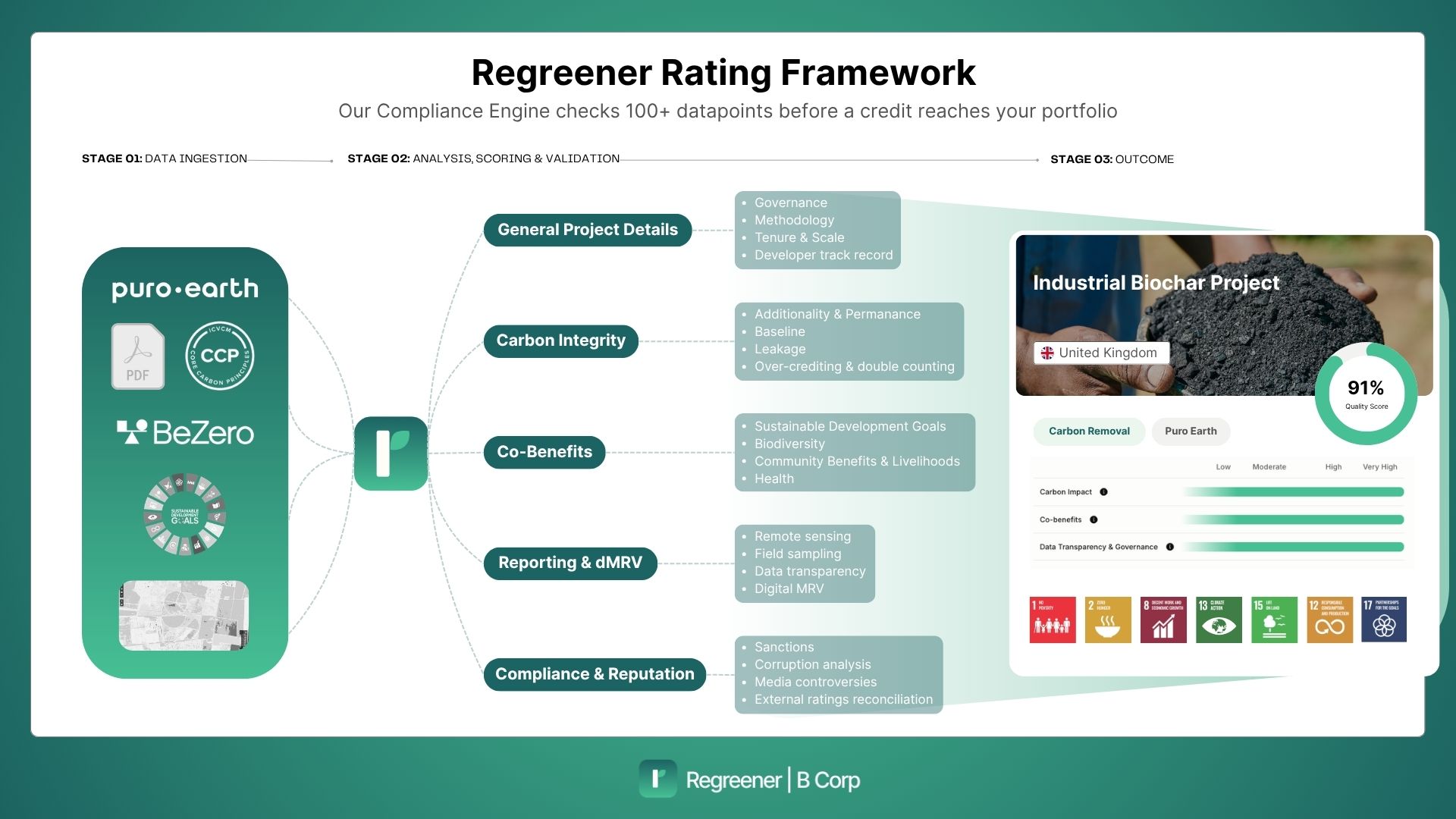
At Regreener, we structure agreements on exactly these principles for European B2B buyers, screening every project against a 100+ datapoint quality framework and handling verification, contracting, and CSRD-ready reporting end to end. Most of our clients are not the size of Microsoft. The structure still works at their scale.

Microsoft secured durable removal years in advance. You can apply the same structure at your own scale. Book a free portfolio review and Regreener's team will model a quality-screened, multi-year offtake around your sector, volume, and reporting requirements.

Want to know which credits fit your company's climate strategy?

Book a free consultation today

Most corporate buyers talk about durable carbon removal. Microsoft signs six-year contracts for it. In a multi-year carbon offtake agreement made public in February 2024, Microsoft committed to purchase 27,600 tonnes of durable carbon dioxide removal from Swiss developer Neustark, delivered across six years as the credits are issued.

The deal is small in tonnage by Microsoft's standards, but it is a clean, well-documented example of how a serious buyer structures a long-term removal contract, and it holds lessons for any European company building a credible climate strategy.

The deal at a glance

Element

Detail

Buyer

Microsoft

Supplier

Neustark (Switzerland-based carbon removal developer, founded 2019)

Volume

27,600 tonnes of carbon dioxide removal

Term

Six years, delivered as credits are issued

Removal method

Mineralisation of biogenic CO2 in demolition concrete

Certification

Gold Standard

Pricing

Not publicly disclosed

Announced

February 2024, expanding a relationship that began in 2022

A carbon offtake agreement is a long-term contract in which a buyer commits to purchase a defined volume of credits from a project, delivered over multiple years rather than bought all at once.

Microsoft used exactly this structure with Neustark: a fixed volume, a fixed term, and delivery tied to the project's issuance schedule. That is the instrument doing what it is designed to do, securing future supply of a scarce, high-quality removal while giving the developer the revenue certainty it needs to scale.

The buyer's problem: residual emissions and a 2030 deadline

Microsoft has committed to becoming carbon negative by 2030. Like every company with a removal target, it faces a supply problem: genuinely durable, verifiable carbon removal is scarce, and demand from large corporates is rising faster than projects can deliver. A buyer that waits to purchase removal on the spot market each year is exposed to both shortage and price spikes.

The strategic response is to secure supply early through long-term contracts. By locking in volume now, Microsoft hedges against future scarcity and signals to the market which removal methods it considers credible. The Neustark agreement sits inside a much broader Microsoft removal portfolio, but the logic that drove it applies to companies a fraction of its size.

Want to know which credits fit your company's climate strategy?

Book a free consultation today

Why an offtake, not a spot purchase

A spot purchase solves this year's reporting requirement. It does nothing for next year's. For a removal method that is still scaling, waiting also means competing for limited supply against every other buyer with a 2030 target.

An offtake agreement changes the dynamic. The buyer commits to a multi-year volume, and that commitment becomes the financing case the developer uses to build capacity. The buyer gets first call on credits as they are produced, at terms agreed up front. In a market where supply of durable removal is the binding constraint, securing access matters more than securing the lowest spot price.

What made Neustark the right counterparty

Neustark removes CO2 by mineralisation. Biogenic carbon dioxide is captured at partnering biogas plants, liquefied, and transported to construction-waste recycling sites, where it is injected into granules of demolished concrete.

An accelerated mineralisation process binds the CO2 permanently to the surface and pores of the material, and the carbonated granules are then reused in construction. The storage is physical, measurable, and effectively permanent, with a very low risk of reversal compared with nature-based methods that can release carbon through fire, disease, or land-use change.

Three things make this a strong counterparty choice on the criteria that matter in an offtake:

  • Permanence. Mineralised CO2 is locked into stable mineral form, not held in a forest that has to survive for a century.

  • Verification. Neustark was the first technology-based carbon removal provider to achieve Gold Standard certification, giving the buyer third-party assurance rather than a self-reported claim.

  • Real, scaling capacity. Neustark already operates removal and storage plants across Switzerland and Germany, with more under construction and storage now expanding into Austria and France. The company is working towards permanently removing one million tonnes of CO2 a year by 2030.

Neustark is not Microsoft's only counterparty, and the offtake is not its only contract. UBS committed to 29,500 tonnes in a long-term collaboration, and AXA Switzerland is supporting removal through to 2030, which tells a prospective buyer that the developer has passed due diligence with multiple sophisticated institutions.

How the agreement is structured

The contract is a six-year commitment for 27,600 tonnes of removal, with credits delivered as Neustark issues them rather than handed over upfront. It expands a relationship that started in 2022, when the two companies stored their first tonnes of CO2 together. The pricing was not disclosed publicly, which is normal for bilateral offtake deals.

The phased structure is the point worth studying. Microsoft did not place a single large order and hope the project delivered. It built from an initial collaboration into a multi-year agreement, staging volume as the developer's capacity grew. That sequencing reduces delivery risk for the buyer and gives the developer a predictable revenue base to scale against.

What buyers can learn from this deal

You do not need Microsoft's budget to apply its approach. The transferable lessons are about structure and diligence, not scale.

Match permanence to the claim you want to make. If you are making a removal or net-zero claim, the reversal risk of your credits matters. A mineralisation or other durable removal carries a lower reversal risk than a forestry credit, which affects how defensible your claim is over time.

Insist on third-party verification. Microsoft contracted a Gold Standard-certified provider. For any offtake, ask which standard certifies the credits and how delivery is measured, reported, and verified, and ask to see the evidence.

Use the multi-year structure to secure scarce supply. The value of an offtake is access, not just price. If the removal you want is supply-constrained, a long-term commitment puts you ahead of buyers relying on the spot market.

Start with a relationship, then scale. Microsoft moved from a pilot to a six-year contract. A smaller buyer can begin with a modest volume, confirm delivery and quality, and expand from a position of evidence.

Diversify across methods. Even Microsoft does not rely on a single removal type. A resilient portfolio combines durable removal with other high-quality credits, so delivery is not tied to one technology or site.

Run real due diligence on reversal risk and proof of concept. Be cautious with methods that have higher reversal risk, less transparent measurement, or little operational track record. A developer already removing carbon at scale is a different proposition from one still in development.

At Regreener, we structure agreements on exactly these principles for European B2B buyers, screening every project against a 100+ datapoint quality framework and handling verification, contracting, and CSRD-ready reporting end to end. Most of our clients are not the size of Microsoft. The structure still works at their scale.

Microsoft secured durable removal years in advance. You can apply the same structure at your own scale. Book a free portfolio review and Regreener's team will model a quality-screened, multi-year offtake around your sector, volume, and reporting requirements.

Want to know which credits fit your company's climate strategy?

Book a free consultation today
Most corporate buyers talk about durable carbon removal. Microsoft signs six-year contracts for it. In a multi-year carbon offtake agreement made public in February 2024, Microsoft committed to purchase 27,600 tonnes of durable carbon dioxide removal from Swiss developer Neustark, delivered across six years as the credits are issued.

The deal is small in tonnage by Microsoft's standards, but it is a clean, well-documented example of how a serious buyer structures a long-term removal contract, and it holds lessons for any European company building a credible climate strategy.

The deal at a glance

Element

Detail

Buyer

Microsoft

Supplier

Neustark (Switzerland-based carbon removal developer, founded 2019)

Volume

27,600 tonnes of carbon dioxide removal

Term

Six years, delivered as credits are issued

Removal method

Mineralisation of biogenic CO2 in demolition concrete

Certification

Gold Standard

Pricing

Not publicly disclosed

Announced

February 2024, expanding a relationship that began in 2022

A carbon offtake agreement is a long-term contract in which a buyer commits to purchase a defined volume of credits from a project, delivered over multiple years rather than bought all at once.

Microsoft used exactly this structure with Neustark: a fixed volume, a fixed term, and delivery tied to the project's issuance schedule. That is the instrument doing what it is designed to do, securing future supply of a scarce, high-quality removal while giving the developer the revenue certainty it needs to scale.

The buyer's problem: residual emissions and a 2030 deadline

Microsoft has committed to becoming carbon negative by 2030. Like every company with a removal target, it faces a supply problem: genuinely durable, verifiable carbon removal is scarce, and demand from large corporates is rising faster than projects can deliver. A buyer that waits to purchase removal on the spot market each year is exposed to both shortage and price spikes.

The strategic response is to secure supply early through long-term contracts. By locking in volume now, Microsoft hedges against future scarcity and signals to the market which removal methods it considers credible. The Neustark agreement sits inside a much broader Microsoft removal portfolio, but the logic that drove it applies to companies a fraction of its size.

Want to know which credits fit your company's climate strategy?

Book a free consultation today

Why an offtake, not a spot purchase

A spot purchase solves this year's reporting requirement. It does nothing for next year's. For a removal method that is still scaling, waiting also means competing for limited supply against every other buyer with a 2030 target.

An offtake agreement changes the dynamic. The buyer commits to a multi-year volume, and that commitment becomes the financing case the developer uses to build capacity. The buyer gets first call on credits as they are produced, at terms agreed up front. In a market where supply of durable removal is the binding constraint, securing access matters more than securing the lowest spot price.

What made Neustark the right counterparty

Neustark removes CO2 by mineralisation. Biogenic carbon dioxide is captured at partnering biogas plants, liquefied, and transported to construction-waste recycling sites, where it is injected into granules of demolished concrete.

An accelerated mineralisation process binds the CO2 permanently to the surface and pores of the material, and the carbonated granules are then reused in construction. The storage is physical, measurable, and effectively permanent, with a very low risk of reversal compared with nature-based methods that can release carbon through fire, disease, or land-use change.

Three things make this a strong counterparty choice on the criteria that matter in an offtake:

  • Permanence. Mineralised CO2 is locked into stable mineral form, not held in a forest that has to survive for a century.

  • Verification. Neustark was the first technology-based carbon removal provider to achieve Gold Standard certification, giving the buyer third-party assurance rather than a self-reported claim.

  • Real, scaling capacity. Neustark already operates removal and storage plants across Switzerland and Germany, with more under construction and storage now expanding into Austria and France. The company is working towards permanently removing one million tonnes of CO2 a year by 2030.

Neustark is not Microsoft's only counterparty, and the offtake is not its only contract. UBS committed to 29,500 tonnes in a long-term collaboration, and AXA Switzerland is supporting removal through to 2030, which tells a prospective buyer that the developer has passed due diligence with multiple sophisticated institutions.

How the agreement is structured

The contract is a six-year commitment for 27,600 tonnes of removal, with credits delivered as Neustark issues them rather than handed over upfront. It expands a relationship that started in 2022, when the two companies stored their first tonnes of CO2 together. The pricing was not disclosed publicly, which is normal for bilateral offtake deals.

The phased structure is the point worth studying. Microsoft did not place a single large order and hope the project delivered. It built from an initial collaboration into a multi-year agreement, staging volume as the developer's capacity grew. That sequencing reduces delivery risk for the buyer and gives the developer a predictable revenue base to scale against.

What buyers can learn from this deal

You do not need Microsoft's budget to apply its approach. The transferable lessons are about structure and diligence, not scale.

Match permanence to the claim you want to make. If you are making a removal or net-zero claim, the reversal risk of your credits matters. A mineralisation or other durable removal carries a lower reversal risk than a forestry credit, which affects how defensible your claim is over time.

Insist on third-party verification. Microsoft contracted a Gold Standard-certified provider. For any offtake, ask which standard certifies the credits and how delivery is measured, reported, and verified, and ask to see the evidence.

Use the multi-year structure to secure scarce supply. The value of an offtake is access, not just price. If the removal you want is supply-constrained, a long-term commitment puts you ahead of buyers relying on the spot market.

Start with a relationship, then scale. Microsoft moved from a pilot to a six-year contract. A smaller buyer can begin with a modest volume, confirm delivery and quality, and expand from a position of evidence.

Diversify across methods. Even Microsoft does not rely on a single removal type. A resilient portfolio combines durable removal with other high-quality credits, so delivery is not tied to one technology or site.

Run real due diligence on reversal risk and proof of concept. Be cautious with methods that have higher reversal risk, less transparent measurement, or little operational track record. A developer already removing carbon at scale is a different proposition from one still in development.

At Regreener, we structure agreements on exactly these principles for European B2B buyers, screening every project against a 100+ datapoint quality framework and handling verification, contracting, and CSRD-ready reporting end to end. Most of our clients are not the size of Microsoft. The structure still works at their scale.

Microsoft secured durable removal years in advance. You can apply the same structure at your own scale. Book a free portfolio review and Regreener's team will model a quality-screened, multi-year offtake around your sector, volume, and reporting requirements.

Want to know which credits fit your company's climate strategy?

Book a free consultation today

Over de Auteur:

INHOUDSOPGAVE

Artikel Delen

Artikel Delen

Veelgestelde vragen

What is the difference between a forward contract and an offtake agreement?

A forward contract is typically a shorter-term commitment (1 to 5 years) for a defined volume of pre-issuance credits, often paid upfront. An offtake agreement is longer (5 to 15 years), with credits delivered annually as the project issues them and payment usually on delivery. Offtakes also tend to include more detailed risk-allocation clauses around make good, reversal, and force majeure.

Are spot prices going to rise?

High-quality spot prices have been rising and are expected to continue rising as supply tightens. Low-quality avoidance credits without integrity labels are likely to remain cheap or fall further. The two ends of the market are diverging, not converging.

Which procurement mechanism is best for a corporate buyer?

Most serious buyers use all three. Spot for flexibility and residual coverage, forward for 3 to 5 year supply security, and offtake for 10 to 15 year commitments on durable removals. The right mix depends on annual volume, net-zero deadline, methodology preference, and risk tolerance.

Why is the average forward offtake price so much higher than the average spot price?

Because the two markets are used for different project types. Spot transactions are dominated by lower-cost avoidance credits and legacy supply across all quality levels. Offtakes are dominated by durable removals (DAC, BECCS, biochar, ERW) which command high prices regardless of how they are sold. The offtake mechanism itself does not add cost. It is the mechanism through which expensive, scarce, high-permanence credits are typically procured, because long-term contracts are what makes those projects financeable in the first place.

How is the price of carbon credits set in a long-term offtake?

Three pricing models dominate: fixed price for the full term, fixed escalating with an annual uplift, and floating or indexed pricing that tracks a market benchmark. Hybrid structures combining a fixed floor with index participation are increasingly common. Payment is usually on delivery, with milestone payments used in pre-issuance offtakes and upfront payments reserved for cases where the buyer is effectively co-financing the project.

Greenwashing-proof klimaatactie

Sluit je aan bij 200+ bedrijven die impact maken met Regreener